Email:
 Phone:
 WhatsApp:

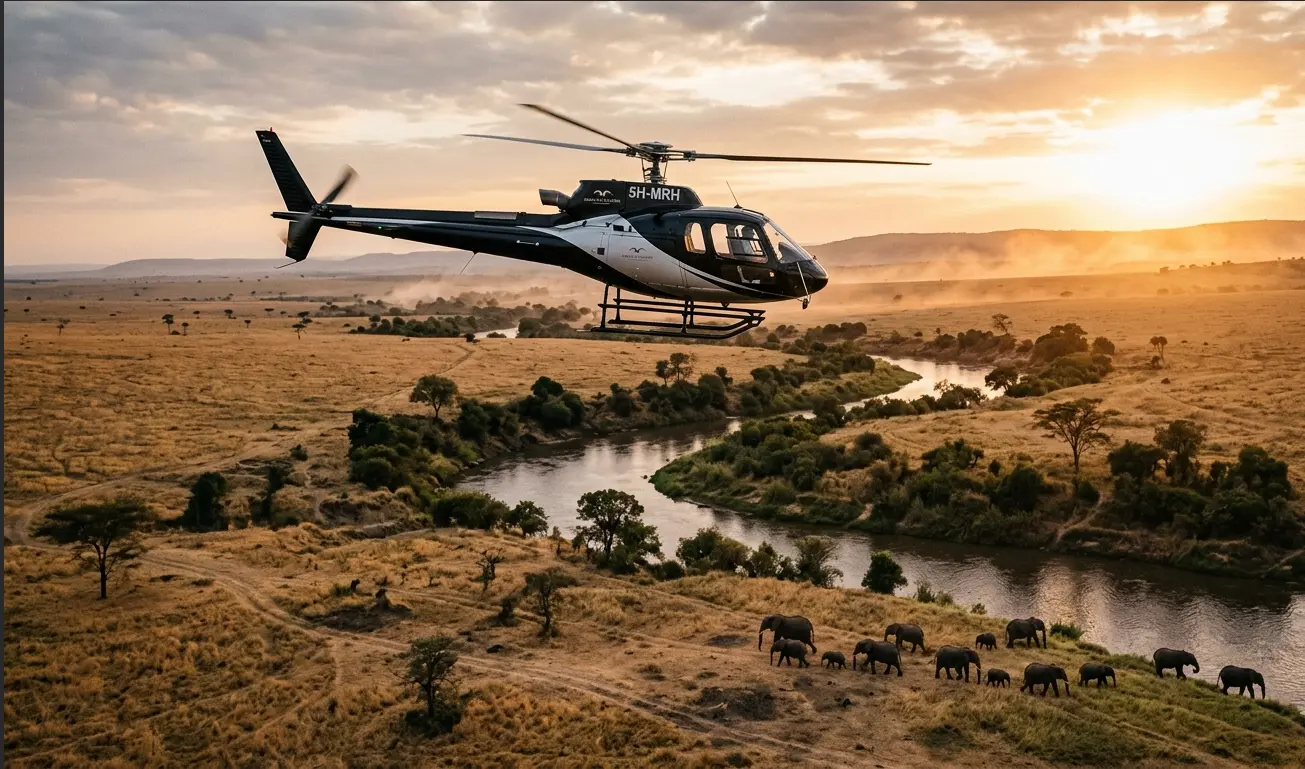
Helicopter transfers Nairobi to Masai Mara in 2026 cost between $1,300 and $2,300 per hour, providing the only direct-to-lodge transport for VIP travelers.
Masai Mara lodges that accept helicopter transfers in 2026 include Angama Mara, Sala’s Camp, Mara Plains, Mara Bushtops, Saruni Mara, Cottar’s 1920s, Sanctuary Olonana, Richard’s Camp, and Mara Ngenche. Most are in private conservancies; confirm landing permissions and fees directly with your lodge when booking.
While luxury booking platforms claim a helicopter is the ultimate comfort upgrade, the 2026 ground reality is that a 4-seat chopper is actually more cramped and has tighter luggage limits (15kg) than a private Cessna charter. Evans Kimojino, a Mara-based safari guide and Hilmuks ground partner with 1,300+ documented wildlife sightings, observed that helicopter arrivals enjoy zero transit fatigue because they land on the lodge lawn, bypassing the dusty 45-minute jeep transfer from public airstrips.
If you are still weighing your options, our fly or drive to Masai Mara full transport comparison covers the complete logistics.
QUICK COMPARISON TABLE
|
Factor |
Helicopter |
Private Charter Cessna |
Scheduled Flight |
|
Journey time |
45–60 minutes |
45–60 minutes |
45–60 minutes |
|
Typical cost |
$1,300–$2,300/hour |
$1,500–$4,000 per aircraft |
$200–$400 per person |
|
Luggage limit |
15–20kg per person |
No limit when cabin owned |
15kg soft bag |
|
Landing options |
Lodge helipad or airstrip |
Airstrip only |
Airstrip only |
|
Comfort |
Vibration, noise, cramped |
Spacious, quieter |
Spacious, quieter |
|
Best For |
Lodge-direct luxury, short stays |
Groups, heavy luggage |
Solo, couples |
|
Hilmuks Verdict |
Premium tier — book only with correct lodge |
Best group value |
Best budget value |
Quick Navigation-Jump to Your Section
The Real Cost — What $1,300 to $2,300 Per Hour Actually Buys
The cost of a helicopter transfer from Nairobi to Masai Mara in 2026 ranges from $1,300 to $2,300 per hour depending on the aircraft type and the operator’s current fuel surcharges. Unlike scheduled flights, you are paying for the entire aircraft, making this a “private cabin” experience from the moment you lift off from Wilson Airport. A one-way journey typically lasts 60 minutes, meaning your total aircraft cost sits within that $1,300 to $2,300 bracket.
For a couple, this breaks down to approximately $650 to $1,150 per person, each way. If you are planning a return journey, expect the total transfer investment to range between $2,600 and $4,600 before factoring in park entry fees or luxury accommodation. For high-end travelers requesting “doors-off” photography or customized scenic routing over the Great Rift Valley, comprehensive VIP packages are often quoted at $4,000 to $5,000 per person.
🛡️ OPERATOR INSIGHT: If your group exceeds four passengers, the math shifts significantly in favor of fixed-wing aircraft. While the helicopter offers unmatched “cool factor,” the per-person economics of Masai Mara private charter flights are often more attractive for larger families because the cost of a Cessna Caravan is shared across more seats.
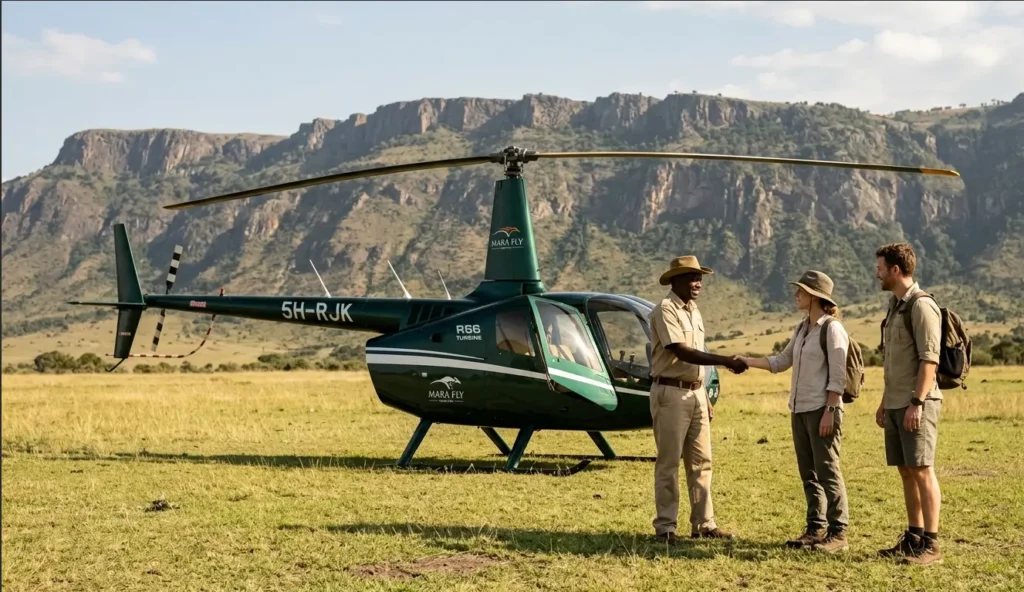
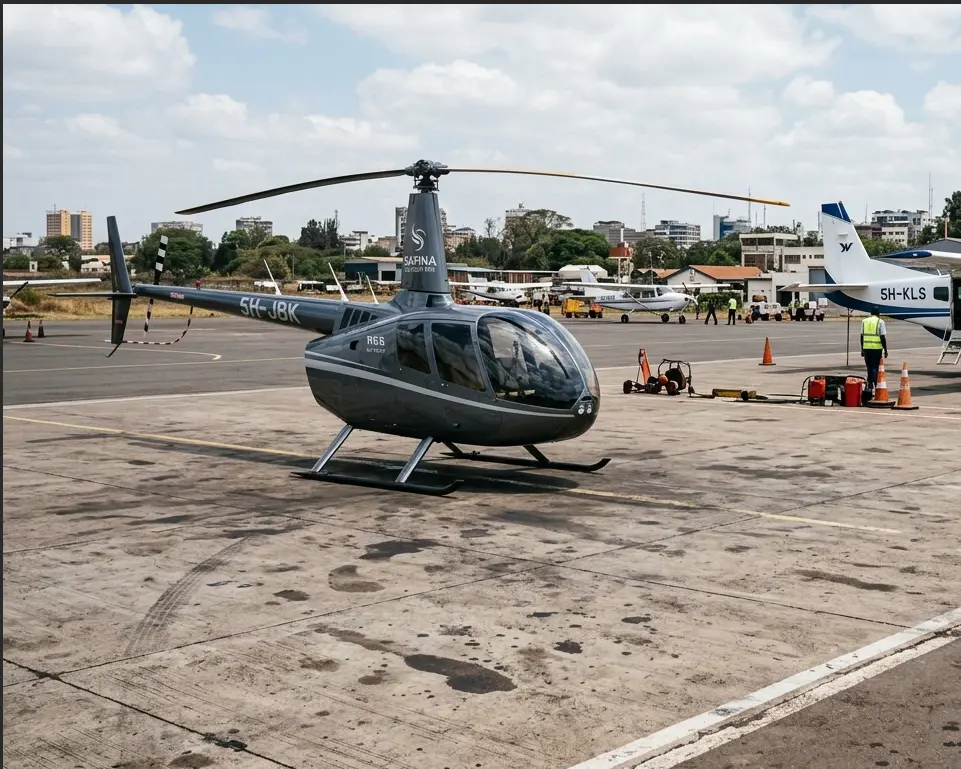
We primarily coordinate transfers using two workhorse aircraft: the Robinson R66 and the Eurocopter AS350B3. The R66 is a 4-seat turbine helicopter that is highly efficient for standard lodge transfers, while the more powerful AS350B3 is the industry gold standard for high-altitude performance and aerial filming. These price ranges are verified against current 2026 rates from licensed Kenya aviation operators, and we confirm exact availability at the time of your booking.
It is important to remember that the helicopter’s value is not found in “group savings” but in its unique landing capability. Because a helicopter can land at a lodge helipad, you are paying a premium to save the 45-minute bumpy jeep ride from the public airstrip. If your lodge doesn’t have a helipad, you are paying for the view rather than the convenience.
The financial picture is now clear. Every traveler in this tier eventually asks the same thing: does the premium price actually deliver the promise of landing directly at the lodge lawn?
Where Helicopters Actually Land — The Lodge Helipad Reality
The primary advantage of a helicopter transfer to Masai Mara in 2026 is the ability to land at or near your lodge—but this is only available at specific properties and must be confirmed before booking. Unlike standard planes that are restricted to public airstrips, a helicopter allows you to bypass the dusty “African massage” of a 45-minute jeep transfer.
The following lodges are the only properties in 2026 with confirmed landing capabilities for private helicopter arrivals:
- Angama Mara: Perched on the Oloololo Escarpment, offering direct helipad access and dramatic cliff-edge arrivals.
- Sala’s Camp: Located in the wild Sand River area, permitting luxury helicopter access within the camp’s vicinity.
- Mara Plains Camp: Situated in the private Olare Motorogi Conservancy with a dedicated helipad for low-impact arrivals.
- Mara Bushtops: A high-end camp in Siana Conservancy known for seamless, private direct access.
- Saruni Mara & Saruni Wild: Exclusive remote lodges in Mara North Conservancy that accommodate helicopter groups.
- Cottar’s 1920s Safari Camp: Set in the Olderkesi Conservancy, combining vintage charm with nearby landing permissions.
- Sanctuary Olonana: A riverside luxury lodge on the Mara River equipped for helicopter arrangement logistics.
- Richard’s Camp: Located in Mara North and frequently featured in high-end, multi-leg helicopter safari itineraries.
- Mara Ngenche Safari Camp: One of the few riverside camps that permits helicopter transfers for premium guest access.
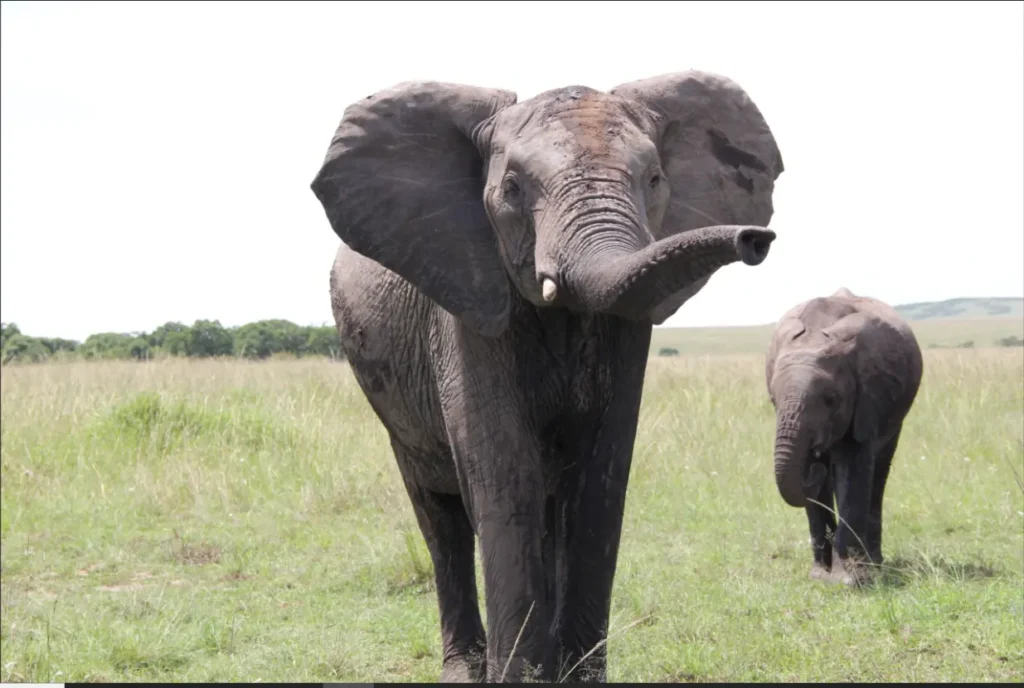
🛡️ OPERATOR INSIGHT: Most of these properties are located within private conservancies rather than the main National Reserve. This is because conservancies like Olare Motorogi and Mara North offer more flexibility for direct landings, whereas the main reserve has stricter noise and airspace restrictions enforced by Narok County. To understand how these landing spots affect your total travel time, see our guide on Masai Mara fly-in safari packages and airstrip logistics.
Do not assume a helipad is open just because it exists. Landing permissions, local landing fees (which can reach $150–$300 per landing depending on the lodge), and time-of-day restrictions must be coordinated during your initial booking.
If your lodge is not on the list above, your helicopter will land at the nearest public airstrip, such as Keekorok or Serena. In these cases, the helicopter’s advantage over a Cessna vanishes, as you will still require a vehicle transfer to reach your final room.
Landing options are now confirmed, but there is one more logistical hurdle every helicopter traveler underestimates: the weight of their bags.
Luggage — The Reality Most Helicopter Guides Omit
The luggage allowance on a helicopter transfer to Masai Mara in 2026 is more restricted than most luxury safari clients expect—and significantly less generous than a private charter Cessna. While the price tag suggests unlimited service, the physics of vertical lift means every kilogram matters. On a typical 4-seat passenger helicopter like the Robinson R66 or Bell 505 used on this route, the payload is strictly capped.
Expect a limit of approximately 15 to 20kg (33–44 lbs) per person, which must be packed in soft-sided bags. This is essentially the same restriction found on scheduled commercial flights, but with a critical difference: helicopters have almost zero tolerance for oversized items. Unlike a private Cessna where you can toss a hard-shell suitcase onto an empty seat, a helicopter’s cargo pods are small, rigid compartments that simply will not close over a standard Samsonite.
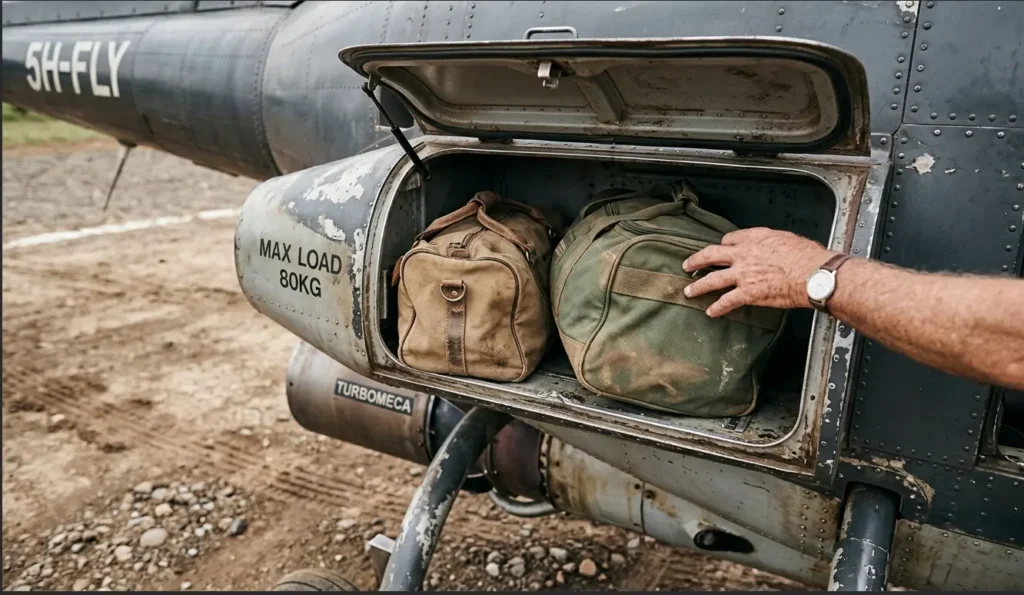
🛡️ OPERATOR INSIGHT: For families or professional photographers with heavy lens kits, weight management becomes a safety priority rather than a suggestion. In the midday heat of the Mara, air density drops and reduces the helicopter’s lift performance, meaning an aircraft that carried four people in the morning might only safely carry two people and their heavy gear at 1:00 PM. If your equipment is non-negotiable, we often recommend booking Masai Mara private charter flights instead, where you own the entire cabin and can utilize floor space for pelican cases and hard luggage.
To solve this for our clients, we provide a secure luggage storage service at the Hilmuks Nairobi office. You can fly to the reserve with your 15kg of safari essentials while we store your international suitcases and formal wear until your return. This ensures you stay within the pilot’s weight-and-balance limits without having to leave expensive belongings at a public airport locker.
If you are arriving direct from JKIA with 30kg+ of luggage and a full camera crew, the helicopter is often the wrong tool for the job. In that scenario, a fixed-wing charter offers better economy and far superior storage flexibility for the same journey time.
With your bags sorted and the landing site confirmed, the final piece of the puzzle is timing—because in a helicopter, when you fly is just as important as where you land.
Morning Departure and the 12-Hour Rule — Why Timing Matters More for Helicopters
The timing of a helicopter transfer to Masai Mara in 2026 determines both the quality of your flight experience and the total value of the park permit purchased upon arrival. While helicopters offer on-demand scheduling, flying between 7:00 AM and 9:00 AM is the only way to avoid the heavy thermal turbulence that builds up over the Rift Valley escarpment by midday. Early departures ensure a smooth, vibration-free journey and provide the crispest visibility for aerial photography of the Mara approach.
A 7:00 AM takeoff from Wilson Airport puts you on the ground by 8:00 AM, giving you a full nine hours of game viewing before the gates close. This morning window is critical because of the strict “day-use” logic enforced by the Narok County Government, where permits are essentially tied to the calendar day’s sunlight hours. By choosing a helicopter, you gain the tactical advantage of outrunning the scheduled flight crowds, arriving at your lodge before the first safari vehicles even depart for the mid-morning heat.
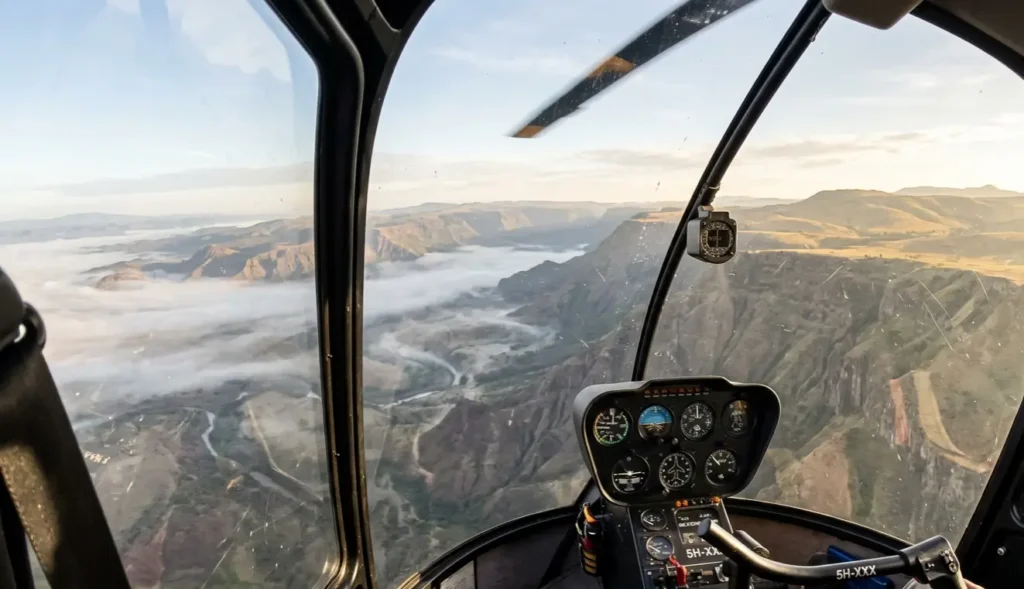
🛡️ OPERATOR INSIGHT: Many travelers believe arriving late via helicopter saves them money on park fees, but the 2026 reality is that the Masai Mara 12-hour rule helicopter arrivals face is identical to road travelers. A landing at 2:00 PM still requires a full day’s payment but leaves you with only four hours of permitted park time before the 6:00 PM cutoff. To avoid overpaying for limited hours, see our detailed guide on the Masai Mara 12-hour permit mechanics to align your landing time with your budget.
At Hilmuks, we coordinate departure times specifically to hit this morning “Golden Hour.” An afternoon departure might seem convenient for those arriving on international flights, but it often results in a bumpy ride and wasted permit fees. We push for the early slot because the combination of stable air and maximum track time is exactly what the helicopter’s premium price is meant to buy.
Now that we have optimized your arrival time and managed the luggage constraints, we must address the “elephant in the room”—the honest scenarios where a helicopter is actually the wrong choice for your trip.
The Honest Trade-Offs — When to Choose a Cessna Instead
Choosing a helicopter transfer to Masai Mara over a private charter Cessna is the right decision in specific circumstances—and the wrong decision in others. While the helicopter is the ultimate status symbol for safari arrivals, it is a specialized tool with inherent limitations that many luxury brokers gloss over. As operators, we believe you should only pay the helicopter premium if the specific logistical benefits apply to your lodge and group size.
A helicopter is the superior choice when your lodge has a confirmed helipad—such as Angama Mara or Mara Plains—allowing you to land exactly where you sleep. It is also ideal for solo travelers or couples where the hourly rate is comparable to the cost of a full aircraft charter. Furthermore, if your 2026 itinerary involves “hopping” from Laikipia to the Mara, the helicopter’s point-to-point capability bypasses the congestion of Wilson Airport entirely, saving you hours of transit.
🛡️ OPERATOR INSIGHT: If you are traveling with more than 20kg of luggage or in a group of four or more, a fixed-wing aircraft is objectively better. You can see our breakdown of Masai Mara private charter flights to understand why “owning the cabin” of a Cessna provides far more comfort and luggage flexibility for a lower per-person price.
Conversely, a private Cessna charter is the better choice for groups and photography teams carrying heavy, rigid equipment. Fixed-wing aircraft offer a much quieter, more stable cabin environment than the high-vibration interior of a small helicopter. If your lodge does not have a private helipad, you will end up landing at a public airstrip anyway, meaning the helicopter premium only pays for the view, not the convenience of a direct arrival.
Hilmuks only recommends a helicopter when the “lodge-direct” landing is confirmed and the aerial Rift Valley experience is a priority for your budget. We advise opting for a Cessna when group economics, luggage volume, or simple flight comfort are the primary goals. An operator who suggests a helicopter for every scenario is likely prioritizing their commission over your actual safari experience.
With the trade-offs clearly defined, the next step is understanding the specialized logistics involved in the Hilmuks booking process.
How Hilmuks Arranges Helicopter Transfers — What to Expect
Hilmuks arranges helicopter transfers to Masai Mara through established relationships with licensed Kenya aviation operators, handling all logistics from Wilson Airport departure to your lodge arrival. We select the specific aircraft type—typically the Robinson R66 or Eurocopter B3—based on your total passenger weight and the technical landing requirements of your chosen camp. Our team coordinates directly with lodge managers to secure helipad clearance and ensures your flight plan is filed for the optimal morning window.
To secure a Hilmuks helicopter safari slot, you will need to provide passport copies for all passengers and a precise estimate of your total luggage weight. During the peak migration season (July to October), aircraft availability is extremely tight, so we recommend finalizing these details at least 60 days in advance. We also require your lodge confirmation to verify their current helipad status, as permissions can change based on seasonal conservancy rules.
🛡️ OPERATOR INSIGHT: For travelers arriving from overseas, the 15kg weight limit is often a deal-breaker—until they use our “Nairobi Pivot” strategy. You can store your heavy international suitcases securely at our Nairobi office and take only your safari essentials to the Mara, a service we provide for all our Masai Mara fly-in safari packages and airstrip logistics.
Weather Disruption Protocol
If adverse weather—such as heavy fog over the Rift Valley or low cloud cover in the Mara—prevents a safe takeoff, we activate a multi-tier contingency plan. Unlike generic booking platforms that leave you stranded at the terminal, Hilmuks monitors KCAA (Kenya Civil Aviation Authority) weather feeds in real-time. We will coordinate either a rescheduled departure for the following morning or an immediate pivot to a fixed-wing charter or luxury road transfer to keep your itinerary on track.
Clients are notified of potential delays before leaving their Nairobi hotel, avoiding unnecessary wait times at Wilson Airport. The specific alternative chosen depends entirely on your international connection timing and how much of the afternoon game drive you are willing to trade for safety.
Conclusion on Helicopter Transfer to Masai Mara
A helicopter transfer to Masai Mara in 2026 is the ultimate choice for a specific traveler: one with a lodge-direct helipad landing, a morning departure secured, and a budget that comfortably absorbs $1,300 to $2,300 per flight hour.
For groups or those with luggage exceeding 20kg, Masai Mara private charter flights offer superior economics and comfort for the same journey time. Hilmuks provides the ground-reality advice to ensure you only pay the helicopter premium when it genuinely delivers on its promise.
FAQ — Expert Answers on Helicopter Transfers to Masai Mara 2026
How much does a helicopter transfer from Nairobi to Masai Mara cost?
A helicopter transfer from Nairobi to Masai Mara in 2026 costs between $1,300 and $2,300 per flight hour depending on the aircraft type and operator. For a one-way journey of approximately one hour, the total aircraft cost is $1,300 to $2,300 — divided between passengers. A full luxury experience including scenic routing and customised landing arrangements is typically quoted at $4,000 to $5,000 or above per person. Hilmuks provides current pricing at booking based on your specific route and lodge.
How long does a helicopter flight from Nairobi to Masai Mara take?
A helicopter flight from Wilson Airport in Nairobi to Masai Mara airstrips or lodge helipads takes approximately 45 to 60 minutes in 2026. The exact duration depends on the specific lodge destination and whether the route includes a scenic deviation over the Rift Valley escarpment or other landmarks.
Can a helicopter land directly at a Masai Mara lodge?
Yes — but only at lodges with confirmed helipad access. In 2026 properties with direct helicopter landing capability include Angama Mara, Sala’s Camp, Mara Plains Camp, Mara Bushtops, Saruni Mara, Cottar’s 1920s Camp, Sanctuary Olonana, Richard’s Camp, and Mara Ngenche. Most are in private conservancies which offer more flexibility than the main reserve. Confirm helipad availability and landing fees directly with your lodge at booking.
What is the luggage limit for a helicopter transfer to Masai Mara?
The luggage allowance on a 4-seat helicopter used for Nairobi to Masai Mara transfers is approximately 15 to 20kg per person in soft bags. Hard-shell suitcases are not practical due to cargo space constraints. This is similar to scheduled flight limits and considerably tighter than a private Cessna charter where passengers own the entire cabin. Hilmuks stores excess luggage at our Nairobi office for helicopter clients.
Which lodges in Masai Mara accept helicopter landings?
Masai Mara lodges confirmed for helicopter transfer access in 2026 include Angama Mara, Sala’s Camp, Mara Plains Camp, Mara Bushtops, Saruni Mara and Saruni Wild, Cottar’s 1920s Safari Camp, Sanctuary Olonana, Richard’s Camp, and Mara Ngenche Safari Camp. Lodges in private conservancies generally offer more helipad flexibility than properties inside the main National Reserve. Always confirm permissions and fees directly with your lodge before finalising the transfer booking.
Does the 12-hour park fee rule apply to helicopter arrivals?
Yes — the Masai Mara 12-hour permit window applies to all arrivals regardless of transport method. Helicopter, fixed-wing charter, and road arrivals all receive the same permit valid from 6:00 AM to 6:00 PM on the day of entry. The helicopter’s advantage is departure time flexibility — choosing an early morning departure maximises the park hours available within the permit window in a way that scheduled flights cannot match.
Is a helicopter better than a private charter Cessna for Masai Mara?
It depends on your lodge and luggage. A helicopter is better when your lodge has a confirmed helipad allowing a direct landing, your group is small, and the aerial experience and time saving justify the premium. A private Cessna charter is better when your luggage exceeds 20kg per person, your group is four or more where per-aircraft Cessna economics are more favourable, or your lodge uses an airstrip making a direct helipad landing unavailable.