Email:
 Phone:
 WhatsApp:

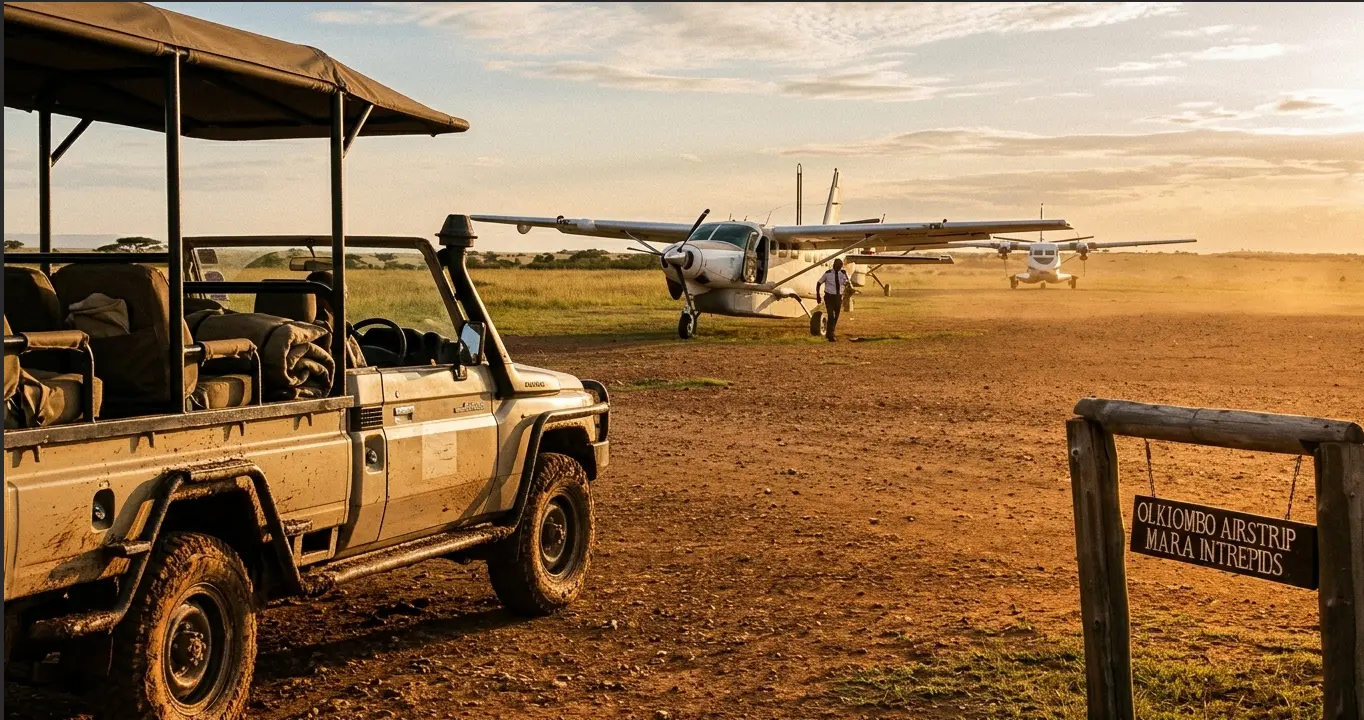
Masai Mara fly-in safari packages in 2026 range from $1,200 to $3,500 per person depending on aircraft type, accommodation tier, and which airstrip your package uses.
The right airstrip for your Masai Mara fly-in safari package depends entirely on your lodge location. Landing at the wrong airstrip can mean a 3-hour transfer instead of 15 minutes—and in rainy season, flooded rivers can make that transfer impossible. Always confirm the airstrip before booking.
While generic booking platforms list one flat price, they rarely explain that the same $1,500 package can deliver a 15-minute transfer or a 3-hour mud-bath depending on the runway used. Evans Kimojino, a Mara-based guide with 1,300+ sightings, observes that fly-in arrivals cover more ground in one afternoon than road clients do in a full day, simply because they arrive with energy rather than road fatigue. If you are still undecided, check our fly or drive to Masai Mara comparison.
Quick Comparison: Masai Mara Fly-In Packages 2026
|
Package Type |
Typical Price Range |
Luggage Limit |
Flight Type |
Best For |
|
Budget fly-in |
$1,200–$1,800/person |
15kg soft bag |
Commercial scheduled |
Solo or couples, flexible schedule |
|
Mid-range fly-in |
$1,800–$2,500/person |
15kg soft bag |
Commercial or small charter |
Couples, small groups |
|
Premium fly-in |
$2,500–$3,500+/person |
No limit if full charter |
Private charter |
Families, groups of 4+ |
|
Helicopter |
$3,500+/person |
Limited — confirm per operator |
Private helicopter |
Ultra-premium, direct lodge landing |
|
Hilmuks arrangement |
All tiers |
All tiers managed |
Operator-selected per lodge |
Any group size — full logistics included |
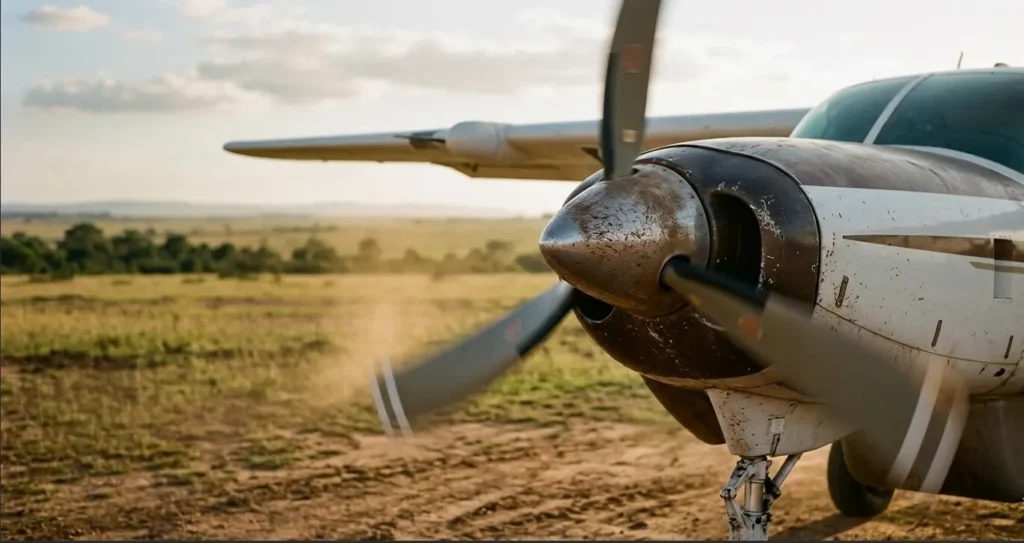
Quick Navigation-Jump to Your Section
1: What “Full Board” Actually Includes — and What It Quietly Leaves Out
Every Masai Mara fly-in safari package in 2026 uses the phrase “full board,” but the specific inclusions vary significantly between operators. While meals and accommodation are standard, the “logistical handshake” between the aircraft and your safari vehicle is where budget packages often fail.
What is consistently included in a standard 2026 fly-in safari full board arrangement:
- Internal Flights: Round-trip or one-way flights from Wilson Airport to your specific Mara airstrip.
- Meals & Lodging: Three daily meals and your tented camp or lodge stay.
- Standard Transfers: The drive from the airstrip to your lodge (provided the airstrip is correctly matched).
- Shared Game Drives: Two daily excursions in the camp’s shared 4×4 vehicles.
What is frequently excluded from a Masai Mara flying safari price:
- The 12-Hour Park Fee: Many “cheap” packages quote prices net of park fees, meaning you must pay the $200 per person per day fee (Source: Narok County Government) at the gate or airstrip.
- Private Vehicles: Unless explicitly booked, you will share your game drives with 4 to 6 other guests.
- The Return Leg: Always check if the quote is for a one-way flight with a road return or a full round-trip air package.
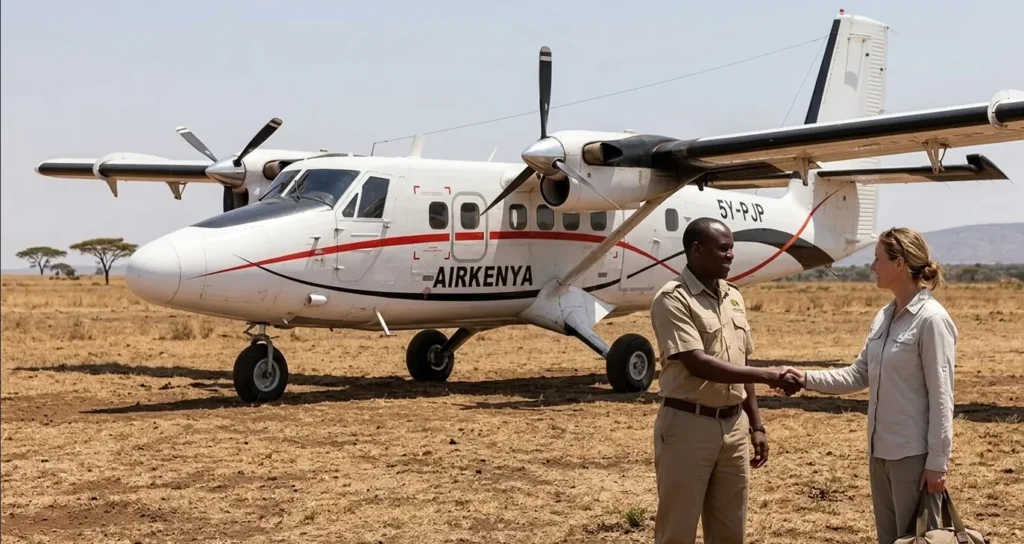
🛡️ OPERATOR INSIGHT: Before finalizing any fly-in safari full board package, confirm three things explicitly: are the daily $200 park fees included, is the return flight confirmed, and which specific airstrip is being used for your lodge? These three questions separate a well-priced package from a hidden-cost nightmare. To avoid payment delays on arrival, see our guide on how to pay Masai Mara park fees.
At Hilmuks Safaris, we prepare the vehicles to meet clients the moment they land, ensuring the ground arrangement matches the aircraft type and lodge tier. We handle the logistical prep in advance so you exit the aircraft into a waiting vehicle rather than standing on a dirt airstrip wondering what happens next. If you are traveling with young children or high-end camera gear, we strongly recommend booking a private vehicle upgrade, as shared camp 4x4s rarely allow for the “patient positioning” required for professional sightings.
With inclusions clearly mapped, the next question every package buyer has is the number—what does a Masai Mara fly-in safari actually cost in 2026 and what drives the price difference between tiers?
2: The 2026 Masai Mara Fly-In Safari Price Guide — What Drives the Range
Masai Mara fly-in safari packages in 2026 range from approximately $1,200 to over $3,500 per person—and the difference is not just about the thread count of your bedsheets. While luxury lodges drive the upper end of that scale, the largest hidden variable is often the aircraft type and the timing of your booking.
The four primary factors driving your 2026 Masai Mara flying safari price are:
- Aircraft Type: A seat on a scheduled commercial flight (like Safarilink or AirKenya) is far cheaper than a private charter, which offers total schedule flexibility.
- Accommodation Tier: The price gap between a mid-range tented camp and a flagship lodge like Angama or Mara Serena can exceed $1,000 per night.
- Seasonality: Peak season (July to October) sees prices surge due to the Great Migration, while the “Green Season” offers significant discounts.
- Duration: While a 3-day Masai Mara fly-in safari is the industry standard, extending to 5 days reduces your “per-day” flight overhead.
Calculating these high-season structural variables is the only way to avoid underfunding your actual field experience. To dissect how these aviation components fit into an overall overland or accommodation spending plan, cross-reference our global Masai Mara safari cost report before routing your flights.
🛡️ OPERATOR INSIGHT: If you are booking for a group of 4 or more, ask us about private charter rates. In 2026, the cost of chartering a dedicated aircraft can actually be lower than buying individual seats on a scheduled flight, plus it eliminates the “airstrip hopping” that common commercial routes require. For a full breakdown of the logistics involved in these flights, see our Nairobi to Masai Mara flights 2026 guide.
For a standard 3-day Masai Mara fly-in safari, you should budget $1,200–$1,800 for a quality budget tier, $1,800–$2,500 for mid-range, and $2,500+ for luxury. Evans, who meets our clients at the dirt runways daily, confirms that fly-in guests consistently cover more of the Reserve in their first afternoon than road clients do in their entire first day. This is because flying buys you the “Golden Hour”—that critical window before dusk when predators begin to move, which road travelers usually spend stuck in Maai Mahiu traffic.
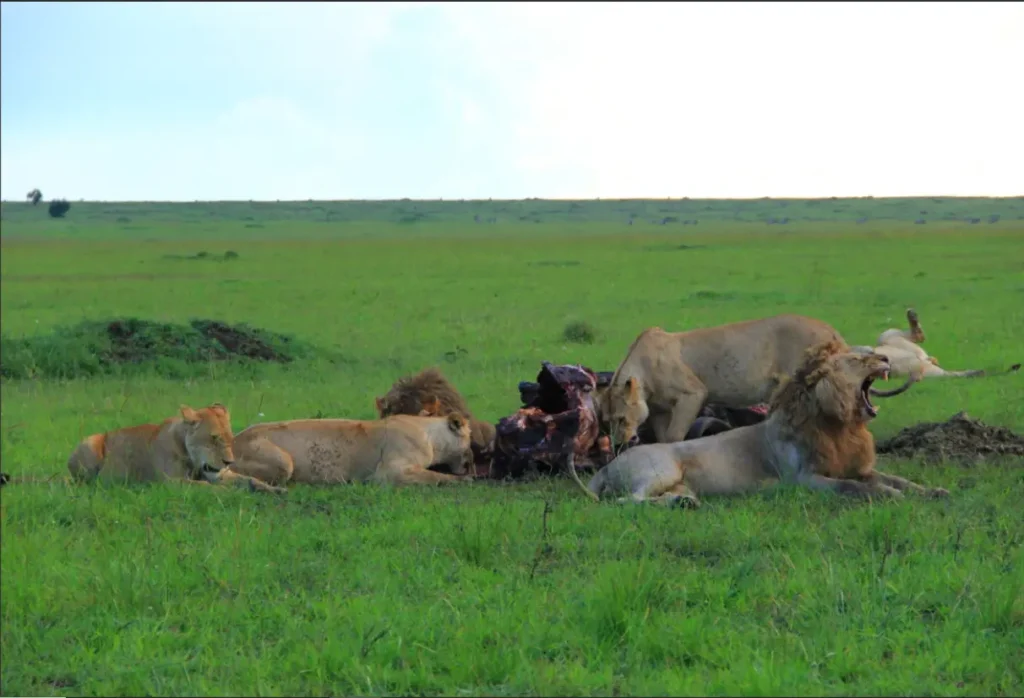
Best time of year for fly-in packages
To get the most value out of your 2026 Nairobi to Masai Mara flight packages, timing is everything. Low season (April to June) offers the lowest rates and widest availability, though you must account for the Masai Mara 12-hour permit mechanics which Narok County enforces strictly regardless of the weather. High season (July to October) is the most expensive and requires booking at least 8 weeks in advance, as the $1,200 budget tiers are usually the first to sell out.
The price is clear and the inclusions are mapped—now comes the information that no aggregator package listing will give you, and the one detail that separates a smooth fly-in from an expensive disaster.
3: The Airstrip Trap — Why the Wrong Runway Costs More Than the Package
The most expensive hidden cost in any Masai Mara fly-in safari package is not the price of the flight—it is landing at the wrong airstrip. While aggregator sites treat every runway as equal, the ground reality is that a mismatched landing point can turn a 45-minute flight into a 3-hour bone-jarring mud drive.
Budget-focused Nairobi to Masai Mara flight packages frequently prioritize airline efficiency over lodge proximity. For example, landing at Keekorok Airstrip when your lodge is located in the Mara Triangle necessitates a grueling 60km transfer across river crossings and dry-season dust roads. During the April-to-June and November rainy periods, we have seen flooded river banks make these specific lodge transfers physically impossible, stranding travelers far from their beds.
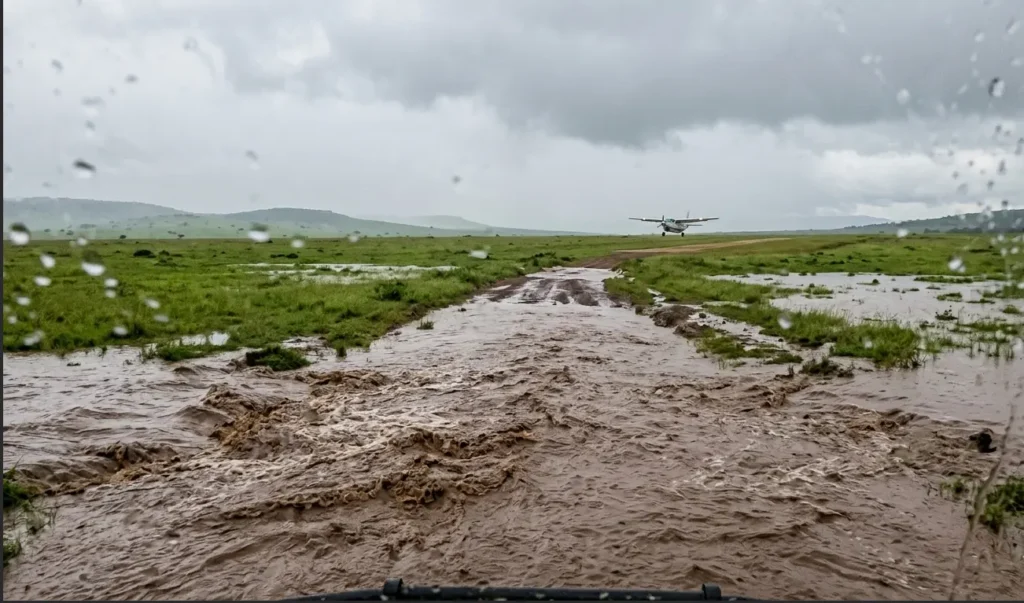
🛡️ OPERATOR INSIGHT: Before confirming any fly-in safari package, ask the operator: which specific airstrip does this flight use, what is the exact transfer time to my lodge, and what is the contingency if that runway is closed? If they cannot answer all three, you are likely looking at an underspecified package that ignores Masai Mara airstrip lodge distance and seasonal flooding risks.
At Hilmuks Safaris, our airstrip matching system is non-negotiable: the lodge destination determines the runway, not the airline’s preference. We match every package to an airstrip within 15 minutes of your camp to ensure you are on a game drive while others are still navigating the “mud traps.” During the rainy seasons, we actively monitor the Talek and Mara river levels to adjust your logistics before you even board at Wilson Airport.
What to do when the flight is disrupted
Airstrip closures due to heavy rain or runway saturation are common in 2026, particularly at smaller dirt strips. Our protocol is to coordinate immediate 4×4 pickups from the nearest serviceable alternative or pivot to a road transfer if the skies remain closed. For self-booked travelers, an airline disruption usually results in a simple refund offer, leaving you stuck in Nairobi while our clients are already deep in the bush.
Airstrip confirmed and transfer sorted—the final logistical trap that most fly-in guides miss entirely is a timing rule that can turn a smooth fly-in into an unexpected extra day’s park fee if departure is not properly coordinated.
4: The 12-Hour Rule for Fly-In Arrivals — Why Landing Time Determines Your Day’s Value
The 12-hour park fee rule that applies at all road gates applies identically at every Masai Mara airstrip—and for Masai Mara fly-in safari packages this creates a specific timing calculation that most operators do not explain. According to the Narok County Government (narok.go.ke), the park permit window is strictly enforced from 6:00 AM to 6:00 PM. Once you land at an airstrip like Musiara or Olkiombo, your permit validity starts the moment you clear the airstrip gate, just as it would at Sekenani or Talek.
This creates a massive advantage for morning flights. An 8:00 AM departure from Wilson Airport typically lands you in the Mara by 9:30 AM, giving you a full 8.5 hours of wildlife viewing before the gates close. Conversely, an afternoon flight landing at 2:00 PM leaves you with only 4 hours of park time for the exact same daily fee, effectively doubling your “cost per hour” in the Reserve.
🛡️ OPERATOR INSIGHT: Your park fee receipt and Narok County QR code must be saved offline or printed before you board at Wilson Airport, as data signals at remote airstrips are notoriously unreliable. If you haven’t secured your digital permits yet, follow our Masai Mara payment guide for fly-in arrivals to avoid being held up at the runway gate.
On the final day of your 3-day Masai Mara fly-in safari, your departure flight time is the difference between a smooth exit and an unexpected extra fee. If your return flight is scheduled late in the afternoon, you may be required to pay for an additional day’s permit to remain inside park boundaries past your initial window. At Hilmuks, we coordinate departure timings in advance to ensure our clients are at the airstrip and cleared before the permit window creates a financial exposure.
To understand the full financial mechanics of these permits, see our guide on Masai Mara 12-hour permit mechanics.
With timing managed and permits secured, one final operational advantage of fly-in packages is often overlooked—and it is the reason Hilmuks consistently recommends the return flight to clients with international connections.
5: Why Flying Back Matters as Much as Flying In — The JKIA Connection
The return flight in a Masai Mara fly-in safari package is not just a convenience—for clients with international departures from JKIA, it is the only reliable way to guarantee making the connection. While driving back to Nairobi might seem like a way to save on the Masai Mara flying safari price, it exposes your travel schedule to the fundamental unpredictability of the Rift Valley escarpment.
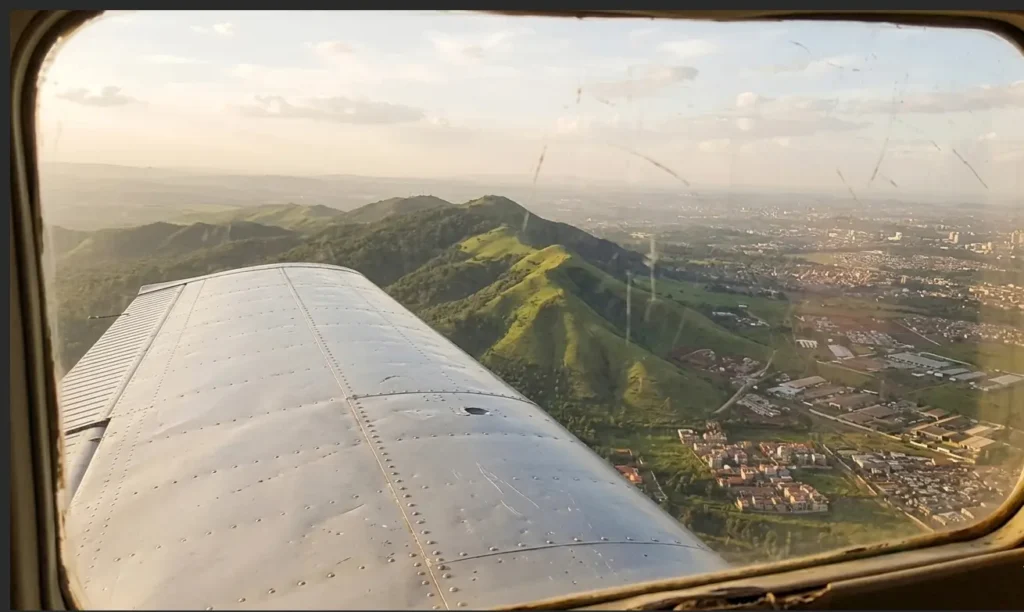
Hilmuks Safaris drivers have witnessed the “road return risk” firsthand, where Mai Mahiu truck stalls turn a 5-hour journey into an 8-hour nightmare. When you have a fixed international flight departure, these road variables are a gamble that often results in missed wings and expensive last-minute rebookings. In contrast, the safari-to-flight timeline is managed by air, taking exactly 45 minutes from the Mara airstrip to Wilson Airport, and a 30-minute transfer to JKIA.
🛡️ OPERATOR INSIGHT: Not all Nairobi to Masai Mara flight packages include the return leg by default; some budget operators quote the inbound flight only to make the headline price look lower. Always confirm explicitly that your fly-in safari return flight is included in the total price to avoid an unexpected $250+ per person surcharge on your final day. For more on how to navigate the city-to-bush logistics, see our Nairobi to Masai Mara drive 2026 report.
Our team specifically recommends the return flight to any client with a booked international departure from JKIA. This pattern reflects the ground reality: clients who fly in almost always choose to fly back once they realize the comfort and time saved for their final evening in Nairobi. By bypassing the 235km “Time Trap,” you ensure your safari ends with a sundowner, not a stressful crawl through traffic.
With every logistical element clear—inclusions, pricing, airstrip selection, timing, and return flight—the final decision is which type of aircraft suits your group best.
6: Choosing Your Wings — Commercial, Charter, or Helicopter
The aircraft tier you choose for your Masai Mara fly-in safari package determines the luggage rules, the departure flexibility, and the total group economics. In 2026, Kenya’s domestic aviation sector is highly specialized, meaning your choice of “wings” should be based on your group size rather than just the headline Masai Mara flying safari price.
For solo travelers and couples, commercial scheduled flights remain the standard tier. Operators like Safarilink and AirKenya offer fixed-schedule departures and per-person pricing, but they strictly enforce a 15kg soft-bag limit due to the payload constraints of the Cessna Caravans used on these routes. These flights often include multi-stop “bus-stops” at various airstrips, which can add 30 minutes to your travel time.
🛡️ OPERATOR INSIGHT: If you are flying on a scheduled commercial flight, do not attempt to bring hard-shell suitcases, as they physically will not fit in the aircraft’s small pod. Hilmuks provides complimentary luggage storage at our Nairobi office for all clients, allowing you to transfer your essentials into a compliant soft bag before heading to Wilson Airport. For those traveling in larger groups, see our Masai Mara private charter flights guide to see how group economics can actually lower your per-person cost.
Private charters are the superior choice for groups of four or more. You hire the entire cabin, allowing you to set the departure time and bypass the 15kg weight limit (within the aircraft’s total capacity). At this tier, the cost per aircraft often approaches the total per-person cost of scheduled seats, but with the added benefit of a direct, non-stop flight to your specific lodge’s runway.
For the ultra-premium experience, helicopters offer direct lodge helipad landings, bypassing airstrip transfers and gates entirely. While this provides maximum privacy and a “James Bond” arrival, the cost is significantly higher and rarely justified by game drive quality alone. Dedicated Nairobi to Masai Mara helicopter transfers are the only way to bypass the “Airstrip Trap” entirely, delivering you straight to your lodge’s private landing pad. We recommend helicopters only for time-sensitive VIP arrivals or those staying at lodges with dedicated pads, such as Angama or Cottar’s 1920s Camp.
7.Conclusion
A Masai Mara fly-in safari package in 2026 is not simply a more expensive version of a road safari—it is a different logistics architecture. The 45-minute flight delivers more game drive hours, protects JKIA international connections, and eliminates road variability entirely. The difference between a smooth fly-in and an expensive disruption is almost always the airstrip. This is why Hilmuks matches every package to the correct landing point before you book, ensuring your safari starts at the lodge, not on a muddy road.
To book your optimized flight experience, see our flagship 3-Day Masai Mara Safari from Nairobi.
8: FAQ — Expert Answers on Masai Mara Fly-In Safari Packages
What is included in a Masai Mara fly-in safari package?
A standard Masai Mara fly-in safari package in 2026 includes return flights between Wilson Airport and your Mara airstrip, accommodation, all meals on full board, shared camp vehicle game drives, and airstrip-to-lodge transfers if the airstrip is correctly matched to your lodge. Park entry fees are frequently charged separately — confirm whether they are included in the quoted package price before booking.
How much does a Masai Mara fly-in safari package cost in 2026?
Masai Mara fly-in safari packages in 2026 range from approximately $1,200 per person for a budget 3-day package using commercial scheduled flights to $3,500 or more for a luxury private charter package. The primary cost drivers are aircraft type, accommodation tier, and whether the package covers high season July to October travel. Park fees of $200 per person per day are often charged separately.
What is the difference between full board and all-inclusive fly-in packages?
Full board Masai Mara fly-in safari packages include accommodation and all meals but typically exclude park entry fees, alcohol, and private vehicle upgrades. All-inclusive packages include these extras in the headline price. Always confirm the specific inclusions rather than assuming the label — the same term means different things across different operators.
Which airstrip should my fly-in safari land at?
The correct airstrip for your Masai Mara fly-in safari package depends entirely on your lodge or camp location. Landing at the wrong airstrip can mean a 2 to 3 hour transfer rather than 15 minutes — and in rainy season, flooded river crossings can make some transfers physically impossible. Always confirm with your operator which specific airstrip your flight uses and how far it is from your lodge before booking.
Does the 12-hour park fee rule apply to fly-in arrivals?
Yes — the Masai Mara 12-hour park permit window applies identically at airstrip gates as at road gates like Sekenani and Talek. Your permit is valid from 6:00 AM to 6:00 PM on the day of entry regardless of how you arrived. Morning flights maximise your game drive value — an 8:00 AM departure from Wilson delivers over 8 hours of permitted park time on arrival day.
Can I bring a hard-shell suitcase on a Masai Mara fly-in safari?
On commercial scheduled flights the 15kg soft-bag limit is strictly enforced — hard-shell suitcases cannot board. On private charter packages where you own the entire aircraft, empty seats can carry luggage including hard-shell cases. Hilmuks stores excess city luggage at our Nairobi office for clients flying on scheduled flights, allowing them to travel to the reserve with a compliant soft bag.
How far in advance should I book a Masai Mara fly-in safari package?
For July to October high season travel, book 6 to 8 weeks in advance at minimum — aircraft availability and lodge space at popular fly-in destinations fill quickly during the Great Migration peak. Low season packages from April to June and November to mid-December have more flexibility. Hilmuks holds airline contracts providing priority access to aircraft during peak periods that independent bookers cannot access.