Email:
 Phone:
 WhatsApp:

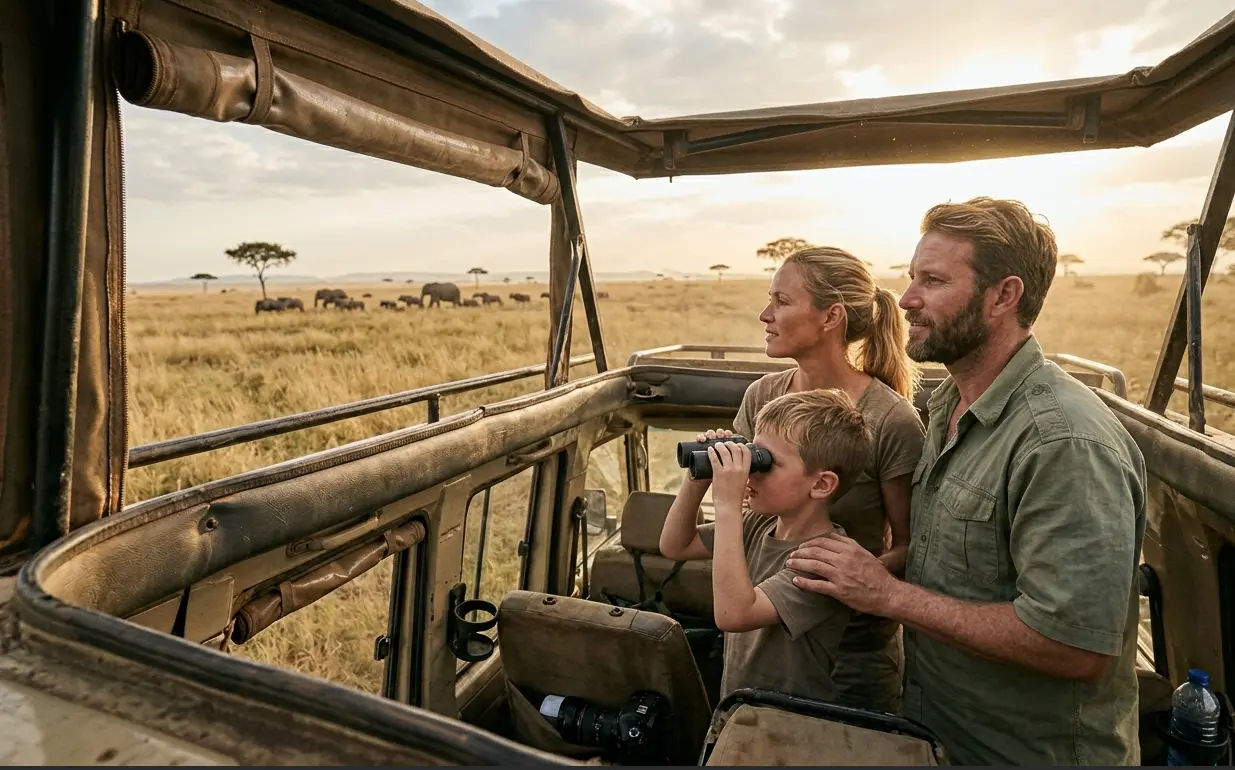
A Masai Mara safari with children in 2026 is entirely possible — and genuinely memorable for kids of the right age — but it requires planning decisions that differ significantly from an adult-only safari, and several of those decisions must be made before booking, not after arriving.
Yes — families with children can visit the Masai Mara in 2026. The National Reserve allows all ages. However, most lodges require children to be at least 6 to 8 years old for shared open-sided game drive vehicles. Families with toddlers under 6 must book a private enclosed vehicle.
Evans Kimojino, a Mara-based safari guide and Hilmuks ground partner with 1,300+ documented wildlife sightings, has guided families with children across multiple age groups through the Masai Mara ecosystem. His most consistent observation about family safaris: the difference between a trip that works perfectly for children and one that ends in frustration is almost always a booking decision made before departure — not anything that happens in the field.
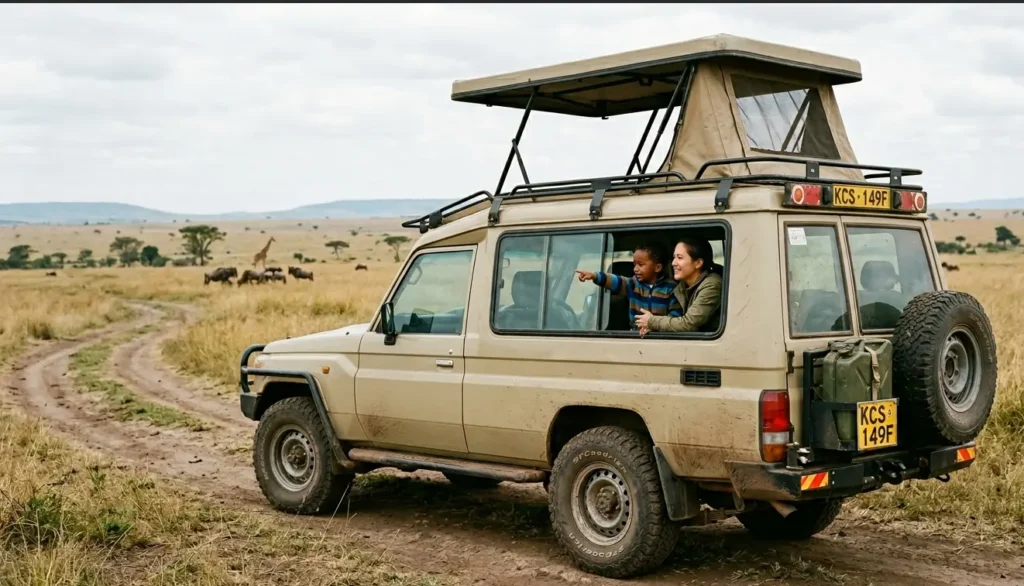
This article answers the specific questions aggregators and luxury lodge blogs do not address clearly — the vehicle age restrictions, the lodge minimum age policies, what children under 8 actually enjoy watching, the toilet logistics of a long bush drive, child pricing tiers, the health considerations at Mara elevation, and where to find paediatric medical care if your child falls ill near the reserve.
Quick Navigation-Jump to Your Section
1. Can You Take Kids to the Masai Mara? The Age Baseline for 2026
The official position of the Narok County Government is that the Masai Mara National Reserve places no minimum age restriction on entry. Children of all ages are legally permitted to enter the gates and explore the savanna. The operational age restrictions that actually matter to families are set independently by luxury lodges and by standard vehicle safety policies, rather than the reserve itself.
Parents frequently search online asking, “Can we go to Masai Mara with kids?” While the technical answer is yes, our ground team enforces a strict safety threshold when it comes to the type of vehicle your family uses. Most safari camps require children to be at least 6 to 8 years old to join standard, shared game drives in open-sided Land Cruisers. Children under 6 are generally barred from these open vehicles because the seating layouts cannot secure small child frames, and sudden predator encounters require passengers to remain perfectly still and quiet—a behavior toddlers cannot reliably maintain.
If you are wondering what age can a child go on an African safari without safety compromises, the solution lies in your transport choices. Families with children under 6 can easily participate in wildlife drives by booking a private enclosed vehicle, such as a custom safari van or a closed Land Cruiser with a heavy-duty pop-up roof. This setup keeps toddlers completely enclosed and safe from dust and wind while still offering excellent elevated tracking views when the roof opens. Private conservancies bordering the main reserve sometimes offer slightly more flexible vehicle configurations for younger children, but these local exceptions depend entirely on the specific property and require direct confirmation during your planning phase.
To plan your trip effectively, you must account for the strict Masai Mara age restrictions applied to different pricing brackets. According to the current fee schedules published by the Narok County Government, the financial framework splits cleanly into three age tiers.
|
Age Group |
Category |
National Reserve Park Entry Fee |
Standard Accommodation Rate |
|
Under 3 Years |
Toddler |
Free |
Free or nominal utility fee |
|
4 to 12 Years |
Child |
Half Adult Price |
50% of the standard adult rate |
|
13 Years and Above |
Adult |
Full Adult Rate Charged |
Full adult rate |
🛡️ OPERATOR INSIGHT: Many international travel agencies promise that an open-sided cruiser is safe for a three-year-old, but our field guides will refuse to load unsecured toddlers into shared open vehicles at the gate. Choosing a private vehicle layout remains the smartest operational decision to ensure your Masai Mara safari families trip runs smoothly without disrupting other travelers.
Now that we have established the safety age baselines and vehicle requirements for your children, let’s look at the strict lodge gatekeeping policies that dictate where your family can actually spend the night…
2. Lodge Age Restrictions in 2026 — Where Families Can and Cannot Stay
Our ground partner Evans confirms the single most important pre-booking research task for families planning a Masai Mara safari in 2026: verify each property’s minimum age policy before paying a non-refundable deposit. While the main reserve itself officially welcomes all ages, many luxury and exclusive tented camps enforce strict internal age limits ranging from 5 to 12 years old. These policies are designed to preserve the quiet, adults-focused atmosphere premium guests pay for, and violating them can leave your family stranded at the gate without accommodation.
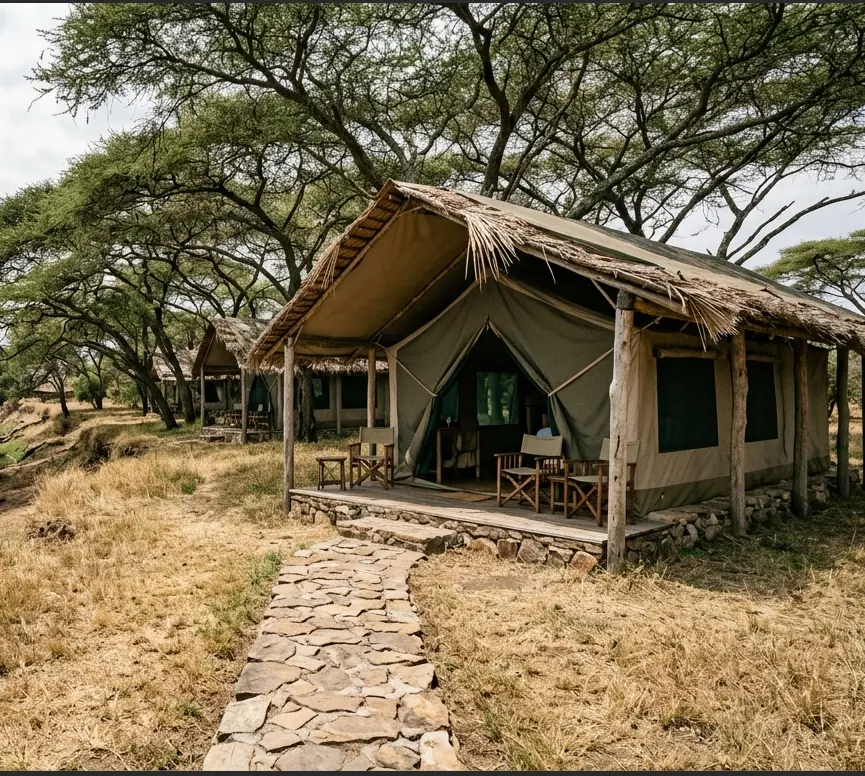
The specific properties we identify from field operations as having strict age guardrails include Entim Mara, Mara Expedition Camp, and Cottar’s 1920s Camp.
- Entim Mara enforces a minimum age policy — confirm the current age requirement directly with the camp at booking.
- Mara Expedition Camp enforces a minimum age policy — confirm the current age requirement directly with the camp at booking.
- Cottar’s 1920s Camp enforces a minimum age policy — confirm the current age requirement directly with the camp at booking.
On the family-welcoming end, we specifically name Mara Siligi Camp and Mahali Mzuri as prime choices for Masai Mara safari families, as these properties actively accommodate toddlers under 3 years old with specialized facilities and flexible daily activities.
Three strict operational reasons drive these property restrictions across the ecosystem. First, many premium camps are entirely unfenced, meaning dangerous nocturnal wildlife routinely walks through the camp grounds at night, creating a genuine safety hazard for unsupervised young children. Second, standard open-sided vehicles operating near large predators present severe safety concerns when young children cannot remain perfectly still or quiet. Finally, specialized bush activities like walking safaris and hot air balloon safaris almost universally enforce a minimum age—typically around 7 years—as an absolute safety requirement mandated by insurers.
🛡️ OPERATOR INSIGHT: Never assume a lodge’s true operational rules from its glossy marketing language. Phrases like “family-friendly” or “welcoming to all ages” on luxury websites rarely reflect the reality of the fine print, and policies frequently change mid-season without public announcements. To avoid losing your investment, see our Masai Mara National Reserve vs Conservancy guide to understand exactly how your geographic location changes the specific property rules you must follow when exploring the Masai Mara with kids.
Beyond daytime camp rules, certain bush track experiences are tightly regulated based on your child’s age. Walking safaris require direct minimum age confirmation with the local conservancy rangers, while hot air balloon operators typically mandate a baseline of 6 to 7 years old so children can safely brace during landings. Night tracking is equally restricted; you can read our comprehensive night game drive Masai Mara guide to learn more on how to navigate the conservancy-specific age limits for after-dark safaris. Finding the best family friendly safari in Kenya requires lookpast marketing fluff and focusing entirely on these hard operational boundaries.
Now that we have mapped out the strict lodge age restrictions and property boundaries, let’s look at the critical vehicle logistics and transport traps that determine whether your children stay safe and comfortable on the bumpy savanna tracks…
3. Vehicle Logistics for Families — Why a Private Vehicle is Non-Negotiable for Young Children
Standard group-joining safaris place four to six independent passengers in a single open-sided Land Cruiser. While this is a highly cost-effective arrangement for solo travelers or adult couples, it routinely compromises the experience for Masai Mara safari families with toddlers or young children under 8. This shared transit configuration creates three immediate operational friction points: small children cannot reliably remain quiet or seated during intense wildlife encounters, a restless or crying child disrupts the premium experience of other paying passengers, and open-sided configurations lack a secure, wind-protected space for a child to nap.
Booking a private, dedicated Land Cruiser or a customized safari van with an adjustable pop-up roof eliminates all three complications simultaneously. Your family gains absolute command over the daily tracking schedule, allowing you to cut a rough afternoon drive short if the kids show signs of extreme fatigue or schedule emergency toilet breaks without inconveniencing other park visitors. Furthermore, the fully enclosed sides of a custom safari van provide a safe, draft-free environment for exhausted infants to sleep comfortably while you continue tracking matching prides across the plains.
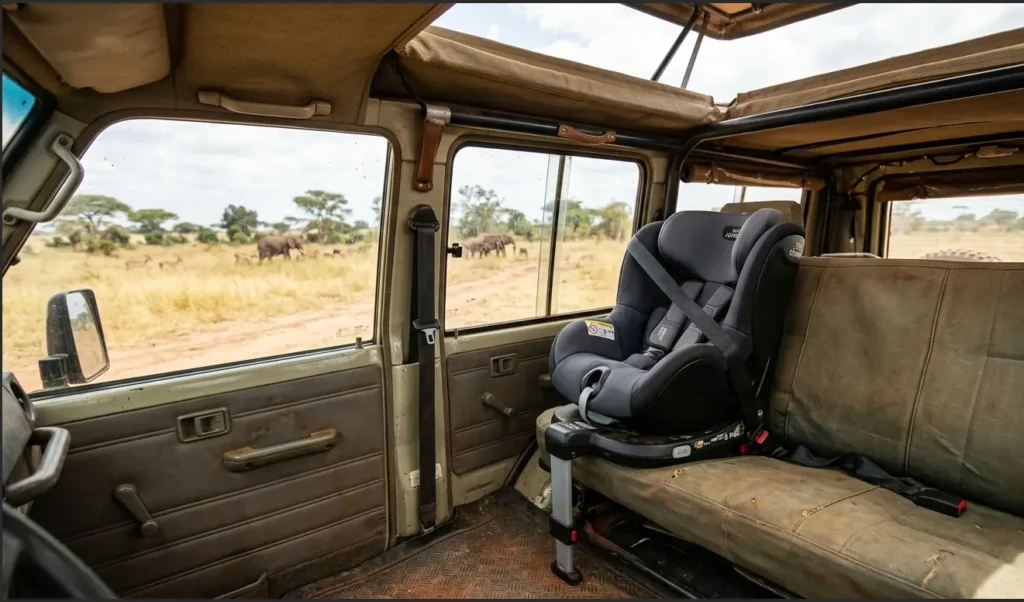
🛡️ OPERATOR INSIGHT: At Hilmuks Safaris, we provide a dedicated child car seat for families traveling with young infants requiring secured, anchored seating on the bumpy Nairobi-to-Mara highway transit—a critical safety provision that the overwhelming majority of standard operators and local car hire yards completely fail to supply. If you are taking the overland route to the reserve, see our 3-day Masai Mara safari from Nairobi itinerary to learn more on how to seamlessly integrate a private vehicle into a balanced family timeline without over-exhausting your children.
A private vehicle option naturally demands a higher upfront operational cost than a shared group seat, but the logistical freedom it guarantees is what determines whether exploring the Masai Mara with kids succeeds or falls apart. It is an indispensable insurance policy for your daily peace of mind on the rough dirt tracks. For parents asking, “Is Masai Mara safe for families?” the answer relies less on the wild animals outside and far more on the safety control you maintain inside your custom vehicle.
Now that your transport logistics and seating configurations are safely locked down, let’s look closely at what your children will actually enjoy out on the plains versus the tracking marathons that will completely bore them to tears…
4. What Children Actually Enjoy on a Masai Mara Safari — and What Bores Them
Our ground team has monitored children under 8 on game drives consistently across multiple savanna seasons. The reality of the field is that a 7-year-old cannot maintain an engaged focus on a three-hour search for a single camouflaged leopard hidden deep within a thicket. Their natural concentration span for a stationary vehicle search in empty-looking terrain is approximately 15 to 20 minutes before fidgeting and restlessness begin. Parents who expect young children to share an adult’s patience for meticulous predator tracking typically find that the child’s frustration disrupts the drive long before the animal is ever spotted.
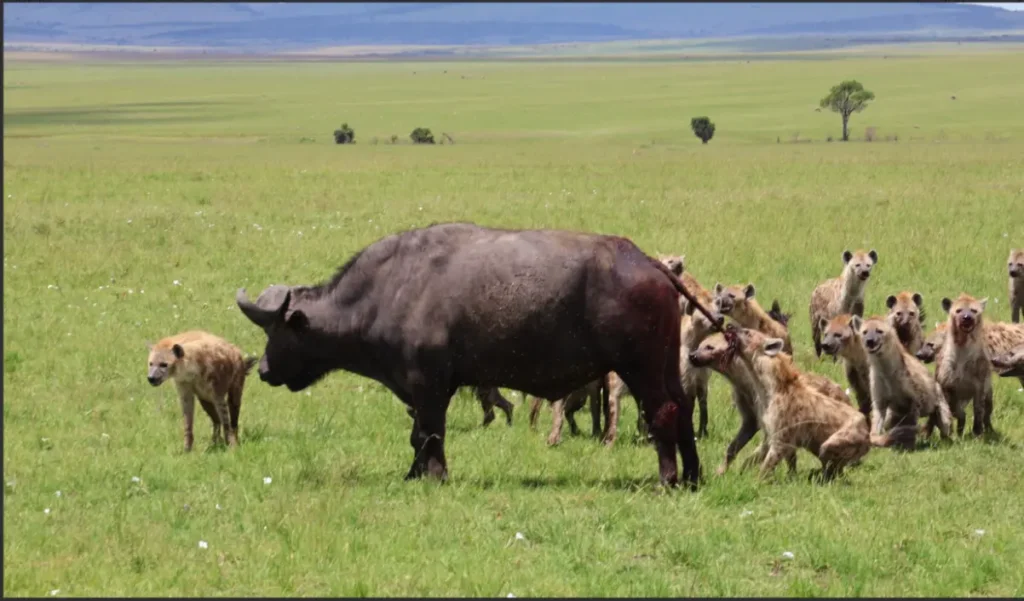
Instead of subtle tracking, our guides observe that younger children engage intensely with high-impact, dynamic, and highly active wildlife sights. The experiences that produce genuine, unforgettable excitement in young minds include watching a large hippo pod grunting and splashing in the Mara River, or an elephant herd crossing directly over the dirt track. Observing a massive Cape buffalo wallowing in a mud wallow or watching a tiny dung beetle roll a ball through your binoculars provides the fast-paced engagement kids crave. These are rarely the stationary, high-resolution shots that professional adult photographers search for, but they are exactly what kids describe to their friends back home.
Conversely, standard tracking techniques that involve sitting completely silent in high grass for an hour will quickly frustrate under-8 travelers. Long stretches of open savanna with hidden wildlife are deeply rewarding for older teenagers and adult purists, but they are a recipe for exhaustion when organizing trips for Masai Mara safari families. To bypass this issue, we recommend structuring your daily calendar around short, high-action viewing windows rather than exhausting eight-hour marathons. Leaving camp at 6:00 AM and returning by 10:00 AM hits the absolute peak morning activity window while keeping young children completely energized.
🛡️ OPERATOR INSIGHT: If you are still trying to determine what age can a child go on an African safari comfortably, we strongly advise waiting until they are at least 6 years old, unless you tailor the entire route around high-density spots like river banks and open cheetah plains.
Designing the best family friendly safari in Kenya comes down to accepting that your children’s priorities are different from yours, and mapping the routes around high-visibility river confluences and elephant feeding zones instead of dense wait-and-see thickets. This proactive routing ensures a highly positive experience for everyone inside the vehicle.
Now that we know exactly how to keep your children actively engaged and excited by tracking high-impact wildlife, let’s address the practical bush realities of managing mid-drive bathroom emergencies, snacks, and dust fatigue…
5. Bush Drive Practicalities — Toilet Logistics, Snacks, and Managing Fatigue
Standard game drives across the core dirt tracks of the Masai Mara National Reserve do not feature public toilet blocks along the wild savannah routes. While adult travelers routinely rely on quick “bush stops”—stepping out of the vehicle briefly in wide-open, low-grass sectors—this arrangement can be highly stressful for families traveling the Masai Mara with kids. To keep your family comfortable, our professional guides proactively plan daily tracking routes so they remain within a short distance of functional, clean porcelain facilities located at the official airfield stations and main reserve gates. Simply notify your driver at morning departure that you require structured restroom intervals so the routing can be tailored cleanly around these specific landmarks.
🛡️ OPERATOR INSIGHT: Stepping out of an engine-off cruiser inside the reserve near dense thickets or active hunting zones is strictly prohibited without an extensive guide assessment of the immediate environment. Our field drivers never permit families to step onto the grass in areas with restricted sightlines or known predator activity. Every single emergency restroom stop is mapped out structurally around wide-open, high-visibility plains to ensure your absolute safety.
Young children exhaust their energy reserves rapidly and become highly irritable on multi-hour game drives without a steady supply of familiar food and hydration. We advise parents to pack a diverse selection of comforting, familiar snacks from Nairobi or your base camp, as the novelty of a spectacular wildlife sighting will not offset a toddler’s hunger-related meltdown. While mineral water can sometimes be omitted from entry-level tour packages, our ground team structurally ensures that every private family vehicle is fully stocked with fresh, clean water before leaving the camp gates.
Managing physical exhaustion effectively requires absolute schedule flexibility that group tours cannot provide. Utilizing a private safari setup gives parents the executive freedom to make a joint operational call with the driver to abandon an afternoon track and head straight back to the swimming pool if the children are fading. On a shared group vehicle, your family is completely locked into the collective timeline of five other independent travelers who may want to stay out until dusk. For parents still debating whether the Masai Mara safe for families, managing fatigue through customizable hours is the ultimate secret to a peaceful and successful safari.
Now that we have successfully navigated the daily bathroom logistics, snack planning, and track-side fatigue management, let’s break down the real financial costs, child pricing tiers, and hidden permit traps that impact your travel budget…
6. Masai Mara Family Safari Cost in 2026 — Child Pricing, Park Fees, and Planning the Budget
The safari industry in Kenya applies consistent pricing tiers to help balance a typical Masai Mara family safari cost. According to the Narok County Government framework, toddlers under 3 years old are accommodated free of charge for both park entry and standard lodging utility fees. Children aged 4 to 12 qualify for a child rate, paying 50% of the standard adult rate for accommodation, while teenagers 13 years and older are legally billed as adults across all transport and lodging categories.
⚠️ The 12-Hour Permit Trap That inflates Family Costs
A critical regulatory change enforced by the Narok County Government is that park entry tickets operate on a strict 12-hour calendar day window (6:00 AM to 6:00 PM) rather than a rolling 24-hour permit. For Masai Mara safari families arriving via an afternoon road transit or a late flight, entering the gates at 3:00 PM means you pay the maximum daily gate fee—which scales up to USD 200 per non-resident adult during peak months—for just three hours of field time before the ticket expires. To protect your budget from this structural deficit, our ground team alters standard routes to guarantee early morning gate arrivals, ensuring you capture the full 12 hours of wildlife tracking for every single fee paid.
If your school calendar allows for travel outside of the traditional July and August summer holiday rush, planning your trip during the shoulder months of January, February, or March will radically lower your Masai Mara safari families prices. During this period, official Narok County gate fees drop by 50%, reducing adult rates from USD 200 to USD 100 per day and child rates from USD 100 to USD 50 per day. Premium family-friendly lodges match these regulatory drops by slashing their nightly villa rates by up to 40%, yet the resident Big Five tracking conditions remain spectacular due to the short savanna grass improving visibility.
🛡️ OPERATOR INSIGHT: Many generic booking platforms hide conservation fees and local vehicle entry levies until the final checkout page, leading to massive budget overruns on arrival day. To accurately map out every mandatory park fee, vehicle tax, and hidden seasonal surcharge before signing a contract, see our Masai Mara safari cost complete breakdown to secure a clear, itemized financial blueprint for your journey.
Choosing your seasonal travel window carefully allows parents to access world-class apex predator sightings and high-quality lodging without absorbing the inflated premium prices of the peak migration months. This strategic financial planning keeps your absolute holiday investment manageable while delivering a superior, crowd-free field experience for your children.
Now that we have itemized the true financial costs and protected your budget from the 12-hour gate permit trap, let’s look at the medical realities on the ground, including malaria prevention, insect protection, and urgent pediatric care facilities…
7. Health and Medical Reality for Families — Malaria, Insects, and Emergency Paediatric Care
The Masai Mara sits at an elevation of approximately 1,500 to 1,800 metres above sea level. This high altitude and the resulting cooler night temperatures mean that mosquito activity is significantly lower than in low-lying, humid areas like Mombasa or the Kenyan coast. While it is not a zero-risk zone—malaria is present in the broader East African region—the Mara’s elevation meaningfully reduces mosquito density compared to coastal destinations. Our ground team confirms this lower density from direct field observations across multiple tracking seasons.
Just as adults arrange personal medical consultations before traveling to Kenya, parents must consult a qualified paediatrician about appropriate malaria protection for their children before departure day. All established luxury lodges and tented camps within the reserve boundaries and surrounding conservancies provide protective mosquito netting for all bedding configurations, including dedicated children’s beds. Additionally, you should pack anti-mosquito repellent and insect-defense oils formulated specifically for children’s skin to protect them against daytime tsetse flies and other savanna insects.
If a child requires emergency paediatric medical care during a bush trip, the primary medical facilities with comprehensive treatment capabilities are located in Narok Town, roughly a one-to-two-hour drive from the core reserve gates. According to official facility registries, the top-tier regional institutions equipped to handle acute pediatric cases include:
- The Mara Specialist Hospital: Emergency Line: +254 700 158 888 | Portal: maraspecialisthospital.com
- Medicatia Hospital: Contact: +254 746 869 867 | Portal: medicatiahospital.com
- Narok Cottage Hospital: Verified listings can be cross-referenced via regional healthcare databases like easyclinic.io.
For immediate, localized first aid and stabilization outside the main reserve gates, families can access the CHP Talek Health Centre located right at the Talek gate area, which features a resident doctor and emergency surgical capabilities. Alternatively, the Mara Rianda Health Center offers immediate medical triage outside the northern reserve boundary.
Ultimately, the ecosystem is entirely safe for toddlers and young children, but parents must remember that the reserve is a wild, unfenced habitat rather than a manicured theme park. Young children are naturally adventurous and do not inherently understand the strict behavioral rules required during close predator encounters. While our professional guides enforce strict field safety protocols, continuous parental vigilance remains the non-negotiable layer of protection for Masai Mara safari families. Managing these health parameters correctly ensures you enjoy world-class wildlife viewings without compromising your family’s absolute peace of mind or inflating your overall Masai Mara safari families prices.
8: Conclusion — Masai Mara Safari Families
A Masai Mara safari families trip in 2026 works when the pre-booking decisions are made correctly — the right vehicle, the right lodge, the right age confirmation, the medical preparation, and the honest expectation about what children enjoy versus what tests their patience. One of our guides, who has seen both the magical family safaris and the difficult ones, offers the same closing advice to every parent who asks: the Mara will deliver memories your children carry for decades. Your job is to remove the avoidable obstacles before you leave Nairobi. Do that, and the ecosystem handles the rest.
9: FAQ — Expert Answers on Masai Mara Safari with Kids 2026
Can we go to Masai Mara with kids?
Yes — families with children can visit the Masai Mara National Reserve in 2026. The reserve officially allows children of all ages to enter. However, most standard lodges require children to be at least 6 to 8 years old to join shared open-sided game drive vehicles. Families with toddlers under 6 must book a private enclosed vehicle. Some lodges enforce minimum age requirements from 5 to 12 years old regardless of vehicle type — always confirm directly with your chosen camp before booking.
What age can a child go on an African safari?
Children can go on a Masai Mara safari in 2026 at any age, but the practical minimum for a comfortable shared game drive experience is approximately 6 years old. Children under 6 require a private enclosed vehicle. Under 3 years old is possible with appropriate camp selection — properties like Mara Siligi Camp and Mahali Mzuri specifically accommodate toddlers. Walking safaris and hot air balloon safaris have their own minimum age requirements — confirm with the specific operator.
Is the Masai Mara safe for families with toddlers?
The Masai Mara is safe for toddlers with appropriate planning — the right vehicle, the right camp, and close parental supervision throughout. The reserve is wildlife habitat, not an enclosure. Toddlers require a private vehicle with enclosed seating for game drives, a camp that accommodates young children, and mosquito protection appropriate for their age. Emergency medical facilities are approximately one hour from the main reserve gates in Narok Town.
What is the 12-hour rule for Masai Mara and how does it affect family budgets?
The Masai Mara 12-hour rule means park entry permits are valid from 6AM to 6PM on the day of purchase only — they do not carry over to the next day. For families, this means a late afternoon arrival that enters the gate at 3PM costs the full daily fee — $200 per non-resident adult in high season — for only three hours of game driving. Children at 50% of adult rate still pay their share. Our team plans all family arrivals at the earliest morning entry to maximise every permit purchased.
Which Masai Mara camps are best for families with young children in 2026?
Mara Siligi Camp and Mahali Mzuri are specifically confirmed as welcoming toddlers under 3 years old with appropriate camp facilities. Lodges that enforce strict minimum age restrictions include Entim Mara, Mara Expedition Camp, and Cottar’s 1920s Camp — confirm current age policies directly with each property before booking. Private conservancy camps generally offer more flexible age policies than the National Reserve luxury lodges but vary significantly by property.
What do children actually enjoy on a Masai Mara game drive?
Children under 8 engage most intensely with high-impact, dynamic sightings — a pod of 30 to 40 hippos grunting and splashing in the Mara River, an elephant herd walking directly across the track and surrounding the vehicle, buffaloes in a mud pool at close range, and examining dung beetles through binoculars. They find patient predator tracking — sitting quietly in empty bush searching for a hidden leopard — frustrating and boring after approximately 20 minutes. Plan game drives around morning activity windows and shorter durations for children under 8.
What should I pack for children on a Masai Mara game drive?
Essential items for children on a Masai Mara game drive in 2026 include: sufficient water for the full drive duration plus contingency, familiar snack foods to prevent hunger-related fatigue, insect repellent appropriate for children’s skin, a hat and sunscreen for sun exposure through the pop-up roof, a light fleece or jacket for early morning temperature, and binoculars for children — a set of binoculars dramatically increases a child’s engagement with distant sightings. See our Masai Mara packing list guide for the complete family-ready kit.