Email:
 Phone:
 WhatsApp:

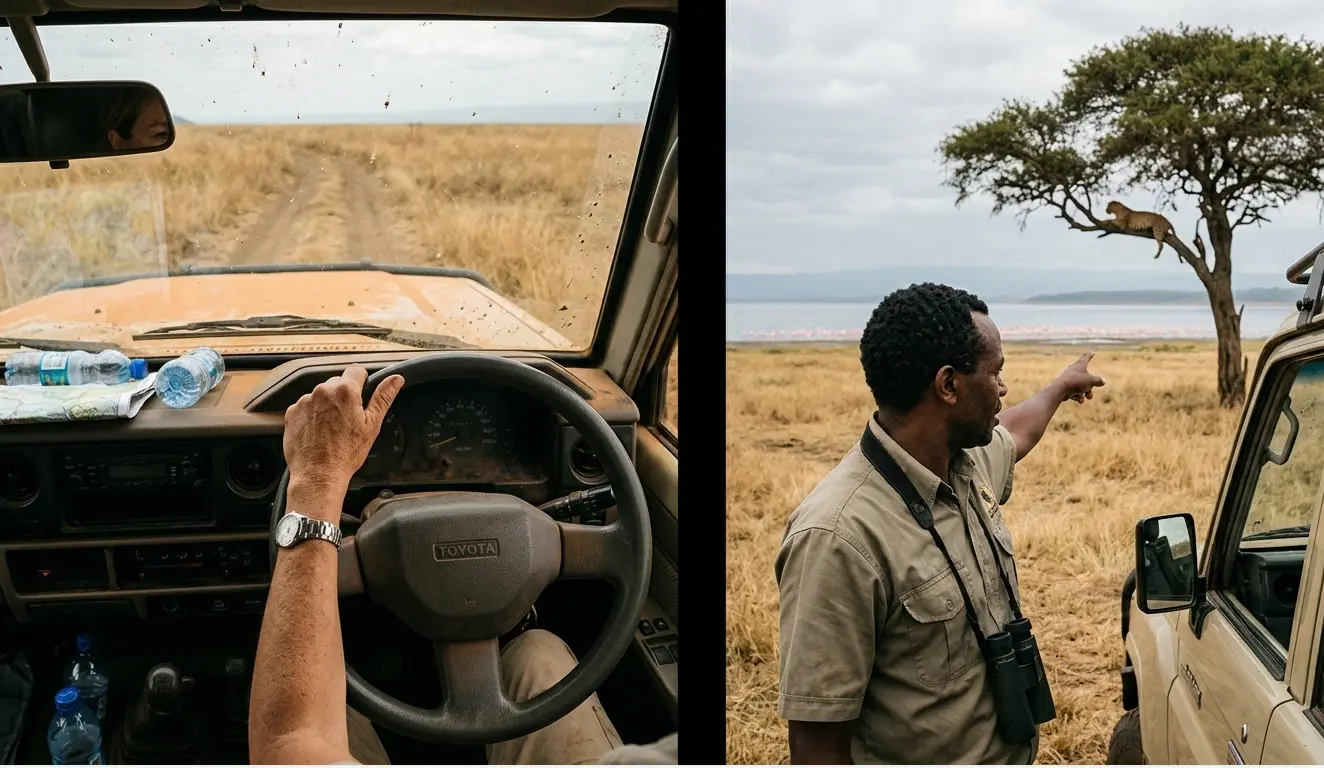
Choosing between a Lake Nakuru Safari: self-drive vs guided is the difference between having a steering wheel in your hands or having a leopard in your viewfinder. While the independence of a rental car is tempting, 2026 ground realities—ranging from submerged shoreline tracks to complex eCitizen gate clearances—have shifted the “value” scale significantly.
A Lake Nakuru Safari: Self-Drive vs Guided comparison reveals that while self-driving offers maximum flexibility and lower upfront costs, a guided safari is superior for wildlife spotting. Expert guides utilize radio networks to locate leopards and navigate 2026 water-level changes that often trap unguided 2WD vehicles.
Is a guide worth it for Lake Nakuru? Yes. If your goal is to see the rare tree-climbing lions or the park’s elusive leopards, a guide is worth the investment. Without the real-time radio communication used by professionals, self-drivers often spend 80% of their time navigating Lake Nakuru’s underwater roads rather than spotting game. However, if you are a seasoned local traveler on a tight budget, a self-drive expedition remains a viable, albeit challenging, adventure.
Quick Navigation: Jump to your Section
Comparing the Total Cost of a Lake Nakuru Safari: Self-Drive vs Guided
When weighing a Lake Nakuru safari: self-drive vs guided, most travelers only look at the base vehicle rental price versus a tour quote. In 2026, the “hidden” math of a DIY trip—including the mandatory vehicle supplement and the fluctuating cost of fuel—often narrows the price gap significantly. To truly determine ‘is a guide worth it for Lake Nakuru’, you must account for the logistical friction that an all-inclusive tour pricing model silently absorbs.
2026 Cost Comparison Table
|
Expense Item |
Self-Drive (Est. USD) |
Guided Tour (Est. USD) |
|
Vehicle Rental/Hire |
$80 – $150 (Per Day) |
Included |
|
$90 (Adult Non-Res) |
Included | |
|
Vehicle Entry Fee |
$7 – $15 (Based on Tare) |
Included |
|
Fuel & Insurance |
$40 – $70 (Daily Avg) |
Included |
|
Professional Guide |
Optional ($30 at Gate) |
Included |
|
Total Daily Est. |
$227 – $335 |
$250 – $450 |
📝Note: Self-drive costs spike if you fall for common Kenya car hire pitfalls or underestimate the fuel consumption of a 4×4 on muddy terrain.
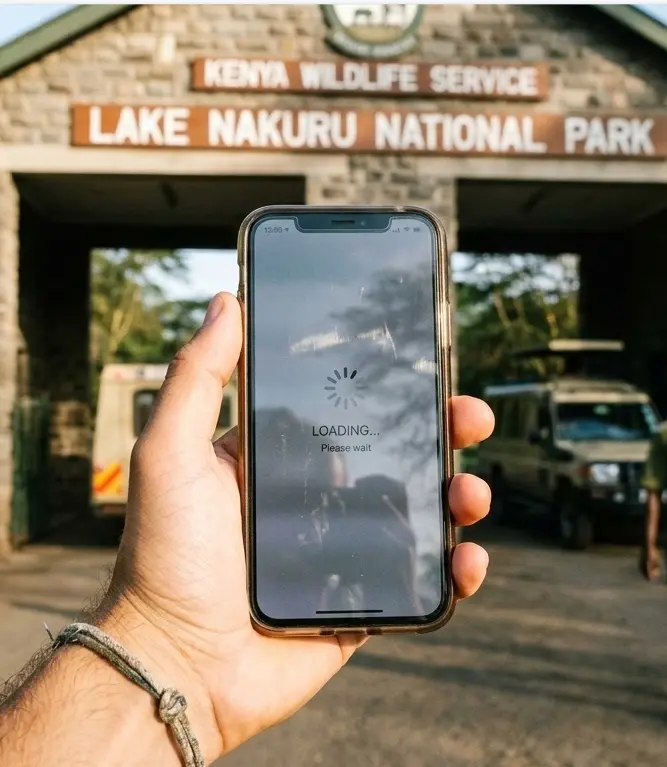
🛡️ OPERATOR INSIGHT: One cost travelers always miss is the eCitizen “convenience fee” and the potential for double-billing during system timeouts. When you book a guided trip, the operator uses a KWS Corporate Wallet, shielding you from the eCitizen payment hacks required to navigate a glitchy portal on a slow mobile connection. This “logistics insurance” alone often makes a guide the more economical choice for those who value their time.
The reality of 2026 pricing is that a self-drive is only “cheap” if you are a group of four or more sharing one vehicle. For solo travelers or couples, the margin for error is razor-thin, and a single mechanical issue in the park can cost more than a week-long guided tour.
Now that we’ve crunched the numbers, let’s look at the wildlife reality on the ground and why having a steering wheel isn’t the same as having a spotter…
Wildlife Sightings in a Lake Nakuru Safari: Self-Drive vs Guided
The biggest divide in a Lake Nakuru safari: self-drive vs guided is the “Information Gap.” While a self-driver relies on visual luck and outdated maps, professional guides operate within a real-time safari radio network that functions as a live hive-mind for the park. This invisible communication system is why guided tours consistently boast an 85% success rate for major predators compared to roughly 40% for independent travelers.
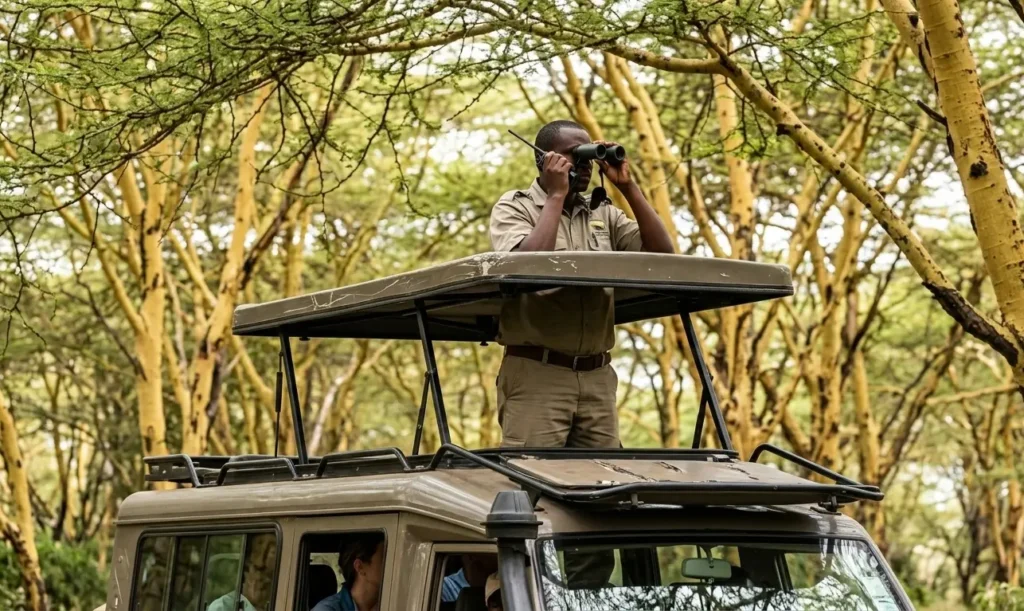
In 2026, the park’s dense acacia woodlands make leopard tracking notoriously difficult for the untrained eye. Professional spotters don’t just look for spots; they monitor alarm calls from baboons and impalas that signal a predator’s movement. By choosing a guided expedition, you are essentially paying for a network of twenty sets of eyes rather than just your own, which directly impacts your chance of seeing a leopard by nearly 45%.
⚠️ 2026 ROAD ALERT: The southern sector near the Makalia Falls mud traps has become a graveyard for rental SUVs due to rising water levels. If you are self-driving, stay strictly on the high-ground tracks indicated in our updated Lake Nakuru water levels guide to avoid a $200 KWS recovery fee, which is strictly enforced this year.
Sighting Probability: The Statistical Reality
The following table reflects 2026 ground data based on operator logs for a standard 4-hour game drive:
|
Wildlife Species |
Guided (Radio Linked) |
Self-Drive (Visual Only) |
|
Greater & Lesser Flamingos |
90% (Shoreline Tracking) |
55% |
|
White & Black Rhino |
95% (Rhino Sanctuary) |
70% |
|
Leopard |
65% |
15% |
|
Tree-Climbing Lions |
70% |
30% |
|
Rothschild’s Giraffe |
90% |
85% |
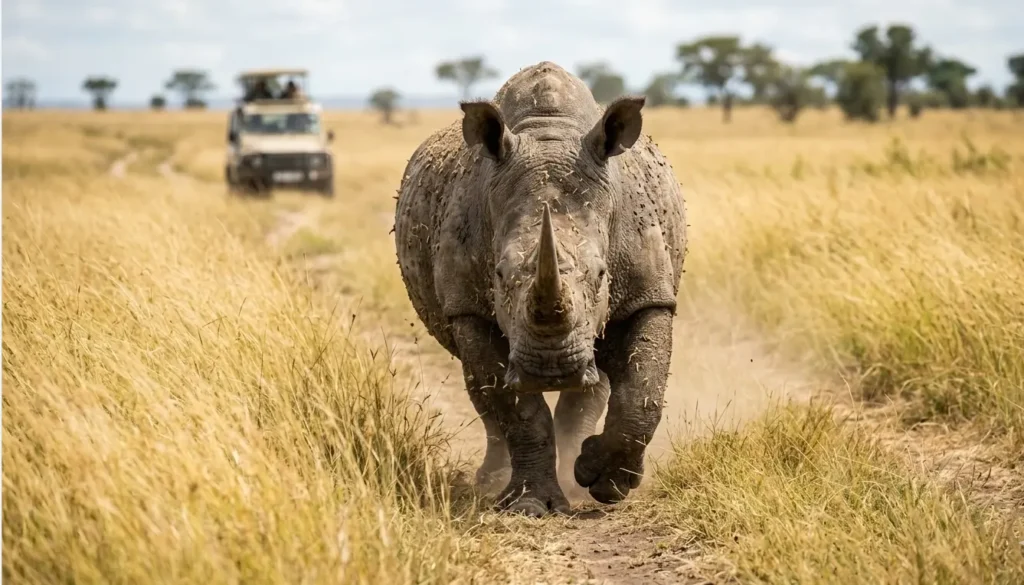
While the Rhino Sanctuary is relatively easy to navigate alone, the tree-climbing lions are frequently found in specific “wet-paw” zones that change weekly. Guides share these coordinates instantly, whereas a self-driver might spend their entire afternoon circling the wrong cluster of fever trees.
🛡️ OPERATOR INSIGHT: Beyond the radio, there is a “silent etiquette” among local drivers. When a rare sighting occurs, guides often prioritize other commercial vehicles in the queue; a self-drive car often gets blocked out or arrives just as the animal retreats into the bush. For the best photographic results, see our Lake Nakuru photography gear guide to understand why a 600mm lens is now mandatory for those stuck behind the “guide line.”
While Nakuru’s radio network reveals fever tree secrets, the stakes escalate in larger ecosystems where tracking becomes a survival skill. Contrast these local tactics with our Masai Mara Self Drive vs Guided verdict to see how predator intelligence shifts when the fences disappear.
Now that you understand the wildlife success rates, let’s tackle the administrative nightmare that can stall your safari before you even pass the gate…
Navigating Park Entry in 2026: The Guided Advantage
The administrative reality of a Lake Nakuru Safari: self-drive vs guided often hits home before you even see a rhino. In 2026, the transition to a fully digital payment ecosystem has created a significant “logistical friction” at the Lake Nakuru main gate. While the system is designed for efficiency, the “on-the-ground” truth for independent travelers involves a series of hurdles that can stall your morning game drive by nearly an hour.
For self-drivers, eCitizen personal account issues are the most common cause of delayed entry. If the portal experiences high traffic or local network latency, you may find yourself stuck at the gate trying to validate a payment that won’t “sync.” This is where the gap between an amateur and a professional trip becomes clear, and many travelers realize that avoiding these headaches is a huge part of why is a guide worth it for Lake Nakuru.
💡 PRO TIP: To avoid being turned away at the gate, ensure you have pre-loaded your eCitizen wallet or completed your payment before leaving Nairobi or Nakuru town. For a step-by-step breakdown of the eCitizen payment hacks needed to bypass the “System Down” error, see our KWSPay survival guide.
The Corporate Wallet Advantage
Licensed tour operators utilize a KWS Corporate Wallet, a specialized account that bypasses the standard public login portal. This allows guided safaris to receive instant clearance because their payments are pre-validated and deducted from a bulk balance. While self-drivers are often left troubleshooting OTP (One-Time Password) errors on their phones, a guided vehicle typically clears the gate in under five minutes.
🛡️ OPERATOR INSIGHT: Most travelers don’t realize that in 2026, KWS gate rangers have strictly enforced a “No-Cash, No-Manual-Receipt” policy with zero exceptions. If your eCitizen account fails and you haven’t booked through an operator, you cannot simply pay a “convenience fee” to enter. Using a guide means the operator handles the updated KWS entry fees through their business portal, ensuring you don’t waste the golden hour of photography in a parking lot.
This administrative ease is a primary “invisible” cost-benefit of booking a tour. It eliminates the risk of missing the peak morning wildlife activity due to server downtime.
With your entry permits finally validated, you now face a final choice: do you risk the park’s tricky terrain alone, or do you employ the “secret” hybrid option that many operators don’t want you to know about?
The “Hybrid” Solution: Can You Hire a Guide at the Lake Nakuru Gate?
If you are leaning toward a Lake Nakuru safari: self-drive vs guided but feel intimidated by the 2026 navigation challenges, there is a “middle ground” that many large operators purposely omit. You can actually hire a KWS-certified ranger or a freelance guide directly at the Lake Nakuru main gate to join you in your own vehicle. This hybrid approach allows you to keep the privacy of your rental car while gaining the professional “eyes” needed to spot a leopard in the high-canopy fever trees.
While this solves the “finding the animals” problem, it does not solve the vehicle capability issue. If you are in a small sedan, a gate-guide cannot magically prevent you from bottoming out on the submerged shoreline roads. However, for about $30 to $50 (plus a tip), these local experts provide a massive shortcut to the park’s most active tree-climbing lions and hidden viewpoints.
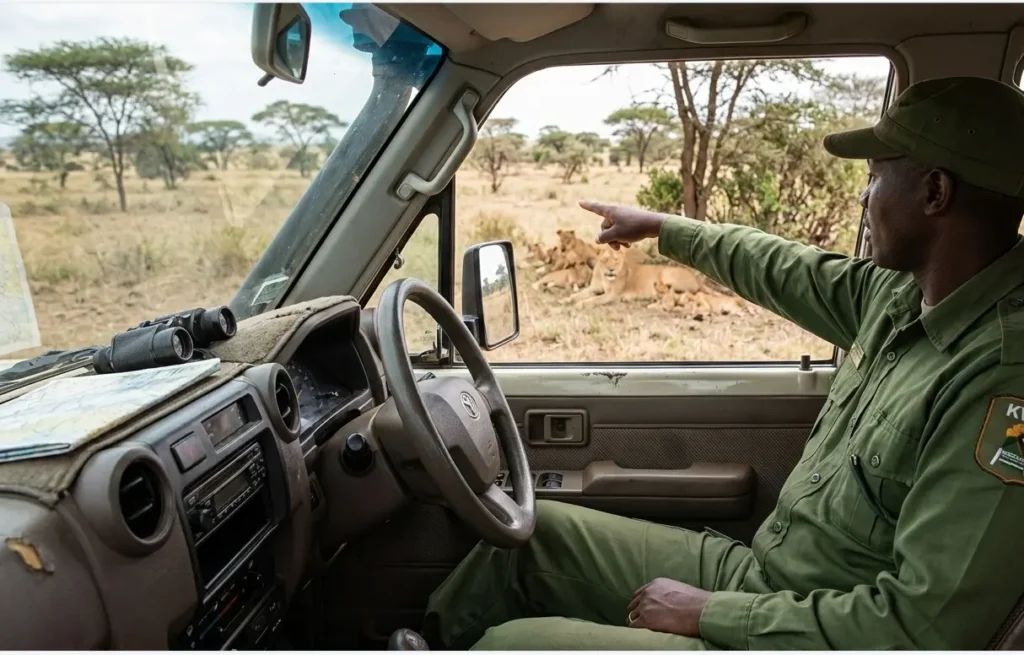
📌 IMPORTANT: Hiring a guide at the gate is “first-come, first-served.” During the peak season, these rangers are often reassigned to patrol duties by 9:00 AM. To secure this hybrid advantage, you must arrive at the gate exactly at opening time; see our guide on Lake Nakuru opening hours to time your arrival perfectly.
🛡️ OPERATOR INSIGHT: Be aware that a “gate-guide” is not a concierge. While they are brilliant at tracking, they won’t handle your eCitizen payment hurdles or provide the high-end binoculars and refreshments found in a professional Nairobi to Lake Nakuru day trip. It is a “budget-expert” fix, not a luxury service.
This “secret” option is perfect for the adventurous traveler who already has a capable 4×4 but lacks the local “radio” intel.
With your guide (or your gut) ready, the next step is knowing exactly where the roads turn from gravel to “quicksand”—here is the 2026 terrain report…
Safety and Navigation: Why 2WD is a Risk in 2026
A common myth found in outdated 2026 travel forums is that a standard sedan can navigate a Lake Nakuru Safari: self-drive vs guided without issue. While the main tarmac roads are accessible, the reality of 2026 water levels means that most high-density wildlife areas are now guarded by treacherous Black Cotton Soil. If you venture off the main strip in a 2WD vehicle, you aren’t just risking a stuck tire; you are risking a costly recovery operation in a high-density buffalo zone.
The geographical shift has made the 4×4 requirement a non-negotiable for anyone wanting to see more than just the gate. Many submerged shoreline roads have forced the creation of new, unofficial tracks that are steep and uneven, particularly around the northern bypass. Attempting these in a small car is the quickest way to end your trip with a cracked oil sump or a ruined suspension.
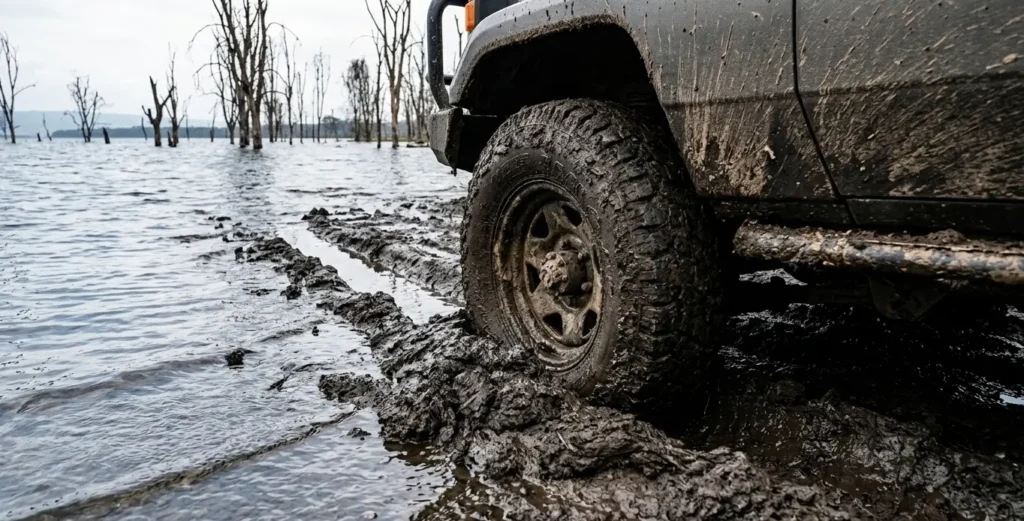
⚠️ 2026 ROAD ALERT: The transition from Leopard Loop vs. Baboon Cliff is currently the park’s most dangerous segment for independent drivers. While the view from the cliff remains spectacular, the descent toward the loop is plagued by deep ruts that can swallow 16-inch tires whole. Check our latest Lake Nakuru water levels report for the exact GPS coordinates of the current “Dead Zones” before you drive.
Is Nakuru Safe for Independent Drivers?
When evaluating the Lake Nakuru safari: self-drive vs guided framework, the primary concern for international travelers is often security. While the park is exceptionally well-patrolled by KWS rangers, the real risk to your safety is mechanical isolation—being stranded in a predator-rich environment with a disabled vehicle. For a full breakdown of security protocols, see our guide on is Lake Nakuru National Park safe for solo and family travelers in 2026.
🛡️ OPERATOR INSIGHT: KWS has recently increased the “Off-Roading and Recovery” fine to approximately $200 (Ksh 25,000) for vehicles that wander off marked tracks to avoid mud. This is a strictly enforced rule in 2026 to protect the fragile ecosystem around the rising lake. Hiring a professional guide ensures you stay on legal, safe paths while still getting close enough to the Rothchild’s Giraffes without risking a heavy fine or a night spent in the bush.
Choosing a guide isn’t just about finding lions; it’s about having a professional who knows which “shortcuts” are actually dead ends. For those still determined to drive themselves, ensure you’ve read our 2026 car hire survival guide to verify your rented car is actually up to the task.
Now that we’ve navigated the mud, let’s look at the unconventional travel routes that are trending in 2026, including a rail option most tourists completely overlook…
Getting to Nakuru: SGR, Flights, and Transport Hacks
Navigating the logistics of a Lake Nakuru safari: self-drive vs guided starts with how you reach the “City of flamingos” from Nairobi. While most travelers assume a 3-hour highway drive is the only option, 2026 has introduced more specialized travel methods that cater to both budget explorers and luxury seekers. Understanding these nuances is key to deciding ‘is a guide worth it for Lake Nakuru’, especially when factoring in the exhaustion of Kenya’s current highway construction.
Can You Take the SGR to Lake Nakuru?
A common “ghost query” appearing in 2026 travel searches is for an SGR Nairobi to Nakuru map. It is vital to clarify that the Standard Gauge Railway (SGR) currently terminates at Suswa or Mai Mahiu, roughly 90 kilometers short of Nakuru town. While you can take the train to Suswa, you would still need to arrange private transport from Nairobi to Nakuru to complete the journey, making the train a scenic but logistically complex choice for a safari.
💡 PRO TIP: If you choose the SGR to Suswa, ensure you have pre-booked a vehicle to meet you at the station, as reliable taxi apps do not operate in that rural sector. For those who prefer a direct, cost-effective public route, see our breakdown of Nairobi to Nakuru matatu fares and Rironi road hacks to save hours in city traffic.
Flying into Lanet vs. Naishi Airstrip: The 2026 Report
For those prioritizing time over a grueling highway drive, flying into Lake Nakuru is the ultimate “operator secret.” However, deciding where to land is a critical part of the Lake Nakuru Safari: Self-Drive vs Guided choice. While many outdated maps point travelers toward the southern bush strips, 2026 water levels have made one option significantly more reliable than the other.
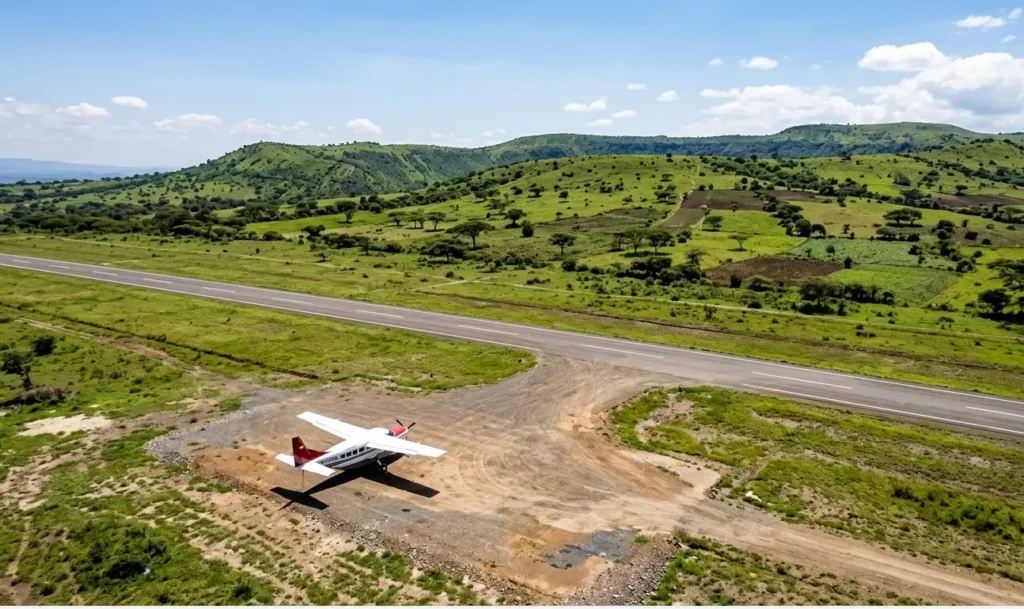
Lanet Airstrip (The Civil Choice): Located just 10km from the main gate on high ground, Lanet is the most dependable airstrip in 2026. Because it sits outside the park’s immediate flood zone, it remains operational even during heavy rains. If you fly into Lanet, you can easily arrange for car hire in Nakuru town to meet you at the terminal, giving you a head start on the Rhino Sanctuary tracks.
Naishi Airstrip (The Safari Gamble): Naishi is technically more immersive because it is located inside the park, but in 2026, it is a logistical risk. Situated on the southern plains, the runway is prone to “mud-outs” during the rainy season. Furthermore, the surrounding thickets are currently claimed by territorial “Dagga Boy” buffaloes, making a landing here a true “wild” experience that requires an armed escort to reach the nearby Naishi Bandas.
🛡️ OPERATOR INSIGHT: In 2026, most professional pilots prefer Lanet Airstrip for its safety margin. If you book a flight to Naishi and the ground is too soft, your pilot will divert to Lanet anyway, often incurring extra transfer costs. By choosing Lanet from the start, you can perform the 7 mandatory car hire checks in a controlled environment before heading into the bush.
If you are staying at one of the southern Lake Nakuru lodges, check with the manager 24 hours before your flight. They have a direct line to the KWS rangers at Naishi who can confirm if the strip is dry enough for a safe landing or if you should stick to the Lanet tarmac.
Whether you arrive by air, rail, or the classic matatu route, your choice of transport sets the tone for your entire wildlife experience. Now that your arrival is sorted, let’s wrap up with the final verdict on which safari style truly wins the 2026 title…
The 2026 Verdict: Which Lake Nakuru Safari Style Wins?
The choice between a Lake Nakuru safari: self-drive vs guided ultimately depends on what you value more: the thrill of the hunt or the guarantee of the find. In 2026, the “Goldilocks” zone for most international travelers has shifted toward guided options, not because of a lack of adventure, but because the rising water levels have made the park’s navigation a professional-grade challenge.
Choose a Self-Drive Safari If…
You are a seasoned Kenya traveler with a high-clearance 4×4 and a “patience-first” mindset. If you enjoy the technical challenge of navigating mud traps and don’t mind missing a leopard sighting in exchange for the solitude of your own vehicle, then a self-drive expedition is your best bet. Just ensure you’ve mastered the eCitizen payment hacks before you reach the gate.
Choose a Guided Safari If…
You have one day to see the tree-climbing lions and rhinos and cannot afford to spend it stuck in a ditch or a gate queue. If your priority is photography and “Information Gain” from the safari radio network, then a guided tour is overwhelmingly superior. For most, the extra $50–$100 investment is a small price to pay for the security of a guaranteed rhino sighting and a stress-free entry.
🛡️ OPERATOR INSIGHT: If you are still torn, my “Spiky Opinion” is this: do not self-drive in 2026 if you are using a rental RAV4 or X-Trail. These vehicles lack the low-range gearing required for the new southern tracks, and a $200 KWS recovery fine will instantly ruin your budget. If you can’t afford a full Land Cruiser rental, book a Nairobi to Lake Nakuru day trip and let a professional handle the “wet-paw” terrain.
Summary: Is a guide worth it for Lake Nakuru?
Yes. For 90% of visitors in 2026, the answer is a resounding yes. Between the radio-linked leopard tracking and the seamless KWS gate clearance, a guide transforms a “scenic drive” into a “wildlife masterclass.”
Now that your strategy is set, ensure you have the right gear to capture the action—check our Lake Nakuru safari packing list to avoid the common 2026 mistakes.