Email:
 Phone:
 WhatsApp:

Is Lake Nakuru Worth It in 2026? The short answer is yes, but only if you prioritize seeing black and white rhinos and tree-climbing lions over the famous “pink” flamingo blankets. While flooding has altered the landscape, the high predator density makes it a premier 2026 safari destination.
The 2026 Reality Check: Is Lake Nakuru Worth It?
If you are looking at postcards from five years ago, you are being misled. Having tracked this park’s evolution through 35+ operator-led guides, I can tell you that the Lake Nakuru reality in 2026 has fundamentally shifted. The water levels have reached historic highs, the salinity has dropped, and the “Pink Lake” phenomenon has largely migrated.
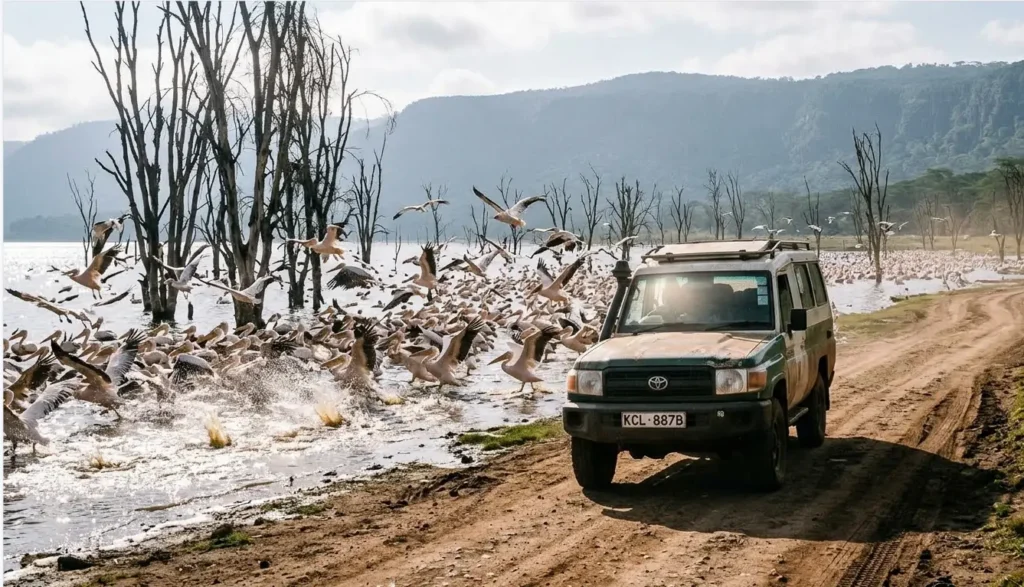
However, for the savvy traveler, this “new” Nakuru is a tactical goldmine. While the roads are tougher due to the Nairobi to Nakuru road construction status, the reduced dry land has concentrated wildlife into smaller, high-ground corridors. In 2026, you aren’t just visiting a park; you are entering a high-density sanctuary where the tree-climbing lions and rare Rothschild’s giraffes are easier to spot than ever before.
Before you book your 2026 permit, you need to understand the trade-offs between the “Pink Myth” and the current “Predator Reality.”
Quick Navigation: Jump to your Section
The 2026 “Pelican Paradox”: Why the Pink is Gone (And Why it Matters)
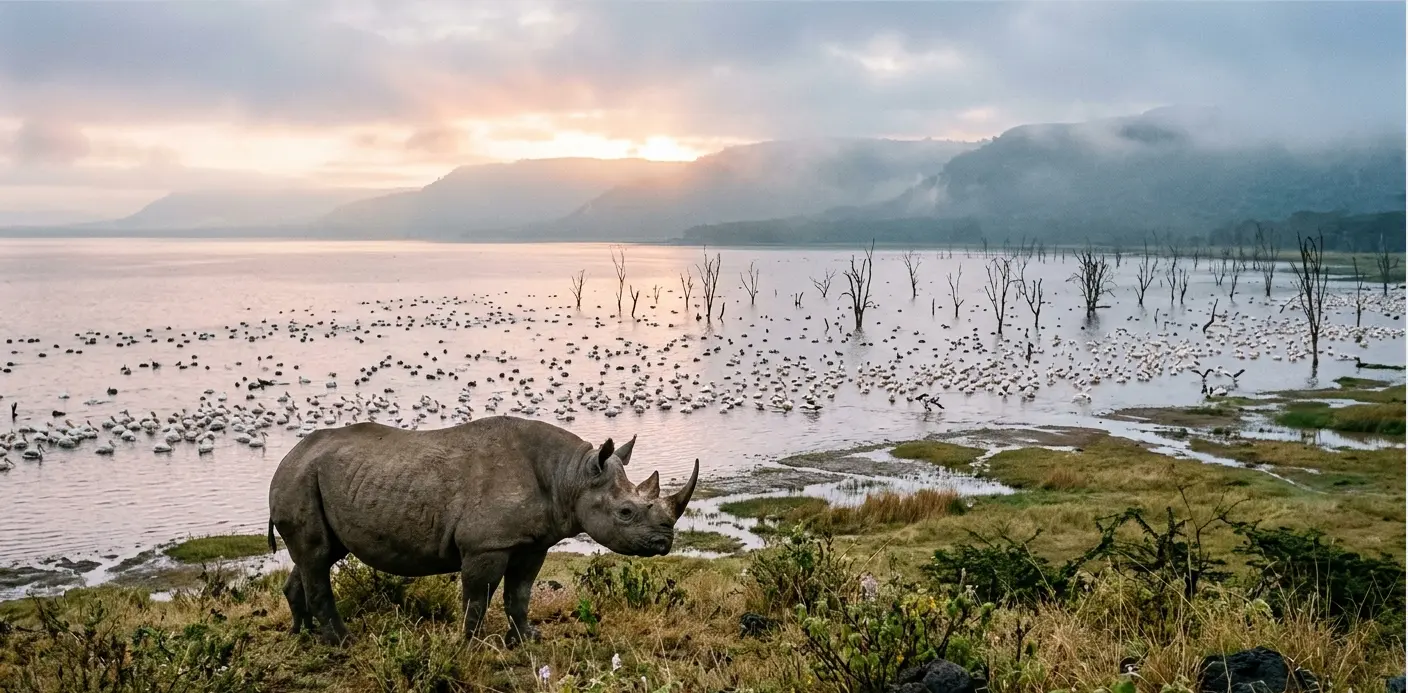
The most common question travelers ask is whether the lake is still “pink” with flamingos. The Lake Nakuru reality in 2026 is that while the flamingos have not completely disappeared, they are no longer the primary spectacle. Due to historic water levels reaching over 80km², the lake’s salinity has diluted, causing the blue-green algae that flamingos feed on to decline.
Instead of a pink shoreline, you will now witness a massive explosion of Great White Pelicans and Cormorants. This “Pelican Paradox” means the park has transitioned from a soda lake into a freshwater haven. For bird watchers, this shift is actually a logistical win, as the pelican colonies in 2026 are more stable and easier to photograph than the nomadic flamingo swarms of the past.
If your primary goal for asking is Lake Nakuru worth it in 2026 is to see millions of flamingos, you may feel underwhelmed by the current density. However, the sheer volume of pelicans nesting on the submerged acacia trees provides a hauntingly beautiful, prehistoric landscape that most generic guides fail to mention.
🛡️ OPERATOR INSIGHT: Do not let old brochures fool you into thinking the lake is shrinking; it is actually expanding into the forest. To understand how these rising floods have literally changed the driving tracks and viewing points, see our latest ground report on Lake Nakuru Water Levels.
While the birds have shifted their zip codes, the most dramatic impact of these rising waters isn’t found in the air, but on the ground where the big cats live.
Now that we’ve addressed the birdlife shift, let’s look at why these same floods have made predators easier to find…
Predator Patterns: The Unexpected Benefit of the 2026 Floods
While flooding has swallowed much of the low-lying grasslands, it has created a unique tactical advantage for wildlife photographers. In the current Lake Nakuru reality, the density of predators has increased simply because there is less dry land for them to occupy. This makes the park one of the most reliable places in Kenya for high-impact sightings in a single afternoon.
The tree-climbing lions of Nakuru have become a hallmark of the 2026 season. Unlike the lions in the Tarangire that climb primarily for a breeze, Nakuru’s prides climb to escape the abrasive, alkaline mud of the rising shoreline. We call this the “Wet-Paw” syndrome, and it means you should be looking up into the yellow-fever acacias rather than scanning the plains.
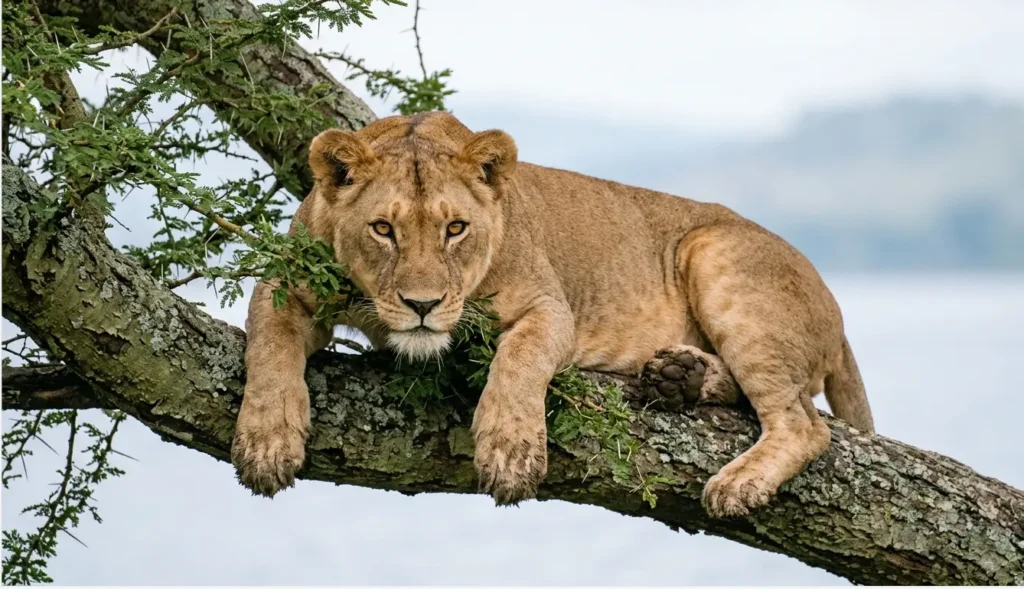
🛡️ OPERATOR INSIGHT: If you are specifically hunting for big cats, the lions here are most active in the trees between 11:00 AM and 3:00 PM when the ground heat makes the alkaline mud most irritating to their paws. To master the specific tracks where these prides hang out, see our guide on the tree-climbing lions of Lake Nakuru.
Leopards have also adjusted their territory, moving away from the flooded forest floors to the rocky outcrops near Lion Hill and Baboon Cliff. Because the prey species like impala and waterbuck are squeezed into these same high-ground corridors, the hunting action is intense and localized. This concentration of life is a major reason why Lake Nakuru is worth it in 2026 for travelers who only have a few hours to spare.
The 2026 Predator Strategy: Forget the old maps that show leopards in the dense riverine forests; those areas are currently submerged. Focus your drive on the eastern ridges and the elevated tracks behind Sarova Lion Hill. For a visual breakdown of these new territories, check our leopard sighting map.
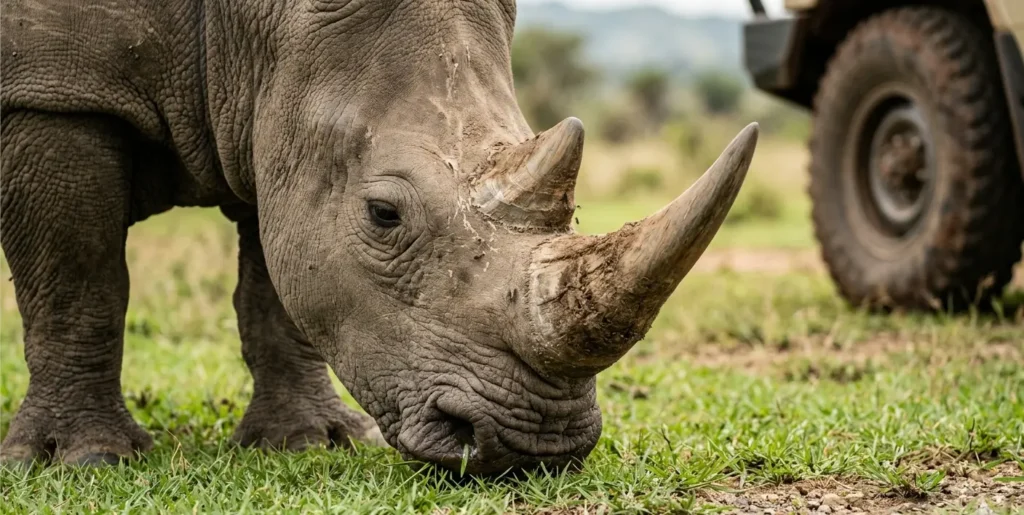
Don’t forget that Nakuru remains the most reliable sanctuary in East Africa for spotting both Black and White rhinos in a single morning. These prehistoric giants are often found grazing on the higher fringes of the park where the grass is still sweet and accessible. You can learn exactly how to distinguish between the two species in our insider’s guide to rhino sightings.
Once you have secured your predator sightings, it is vital to understand the logistical hurdles that could make or break your 2026 visit.
The “Rironi Trap”: How Construction Impacts Your Safari Timing
If you are reading an outdated guide that claims the drive from Nairobi is a “breezy two hours,” you are headed for a logistical nightmare. The current Nairobi to Nakuru road construction status regarding the Rironi–Mau Summit dualling project has fundamentally changed the math of your trip. In 2026, a realistic transit time is now between 3.5 and 4.5 hours depending on truck traffic at the Escarpment.
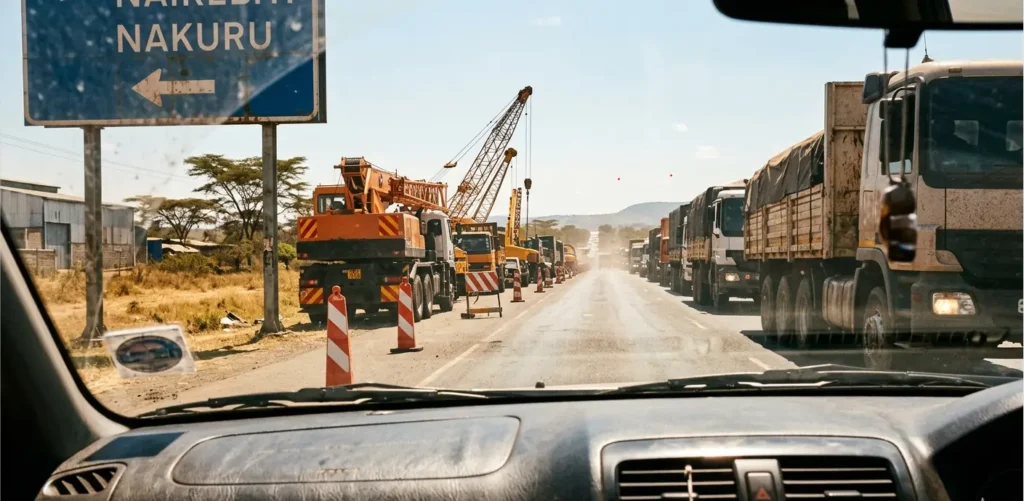
This delay is a critical factor when deciding is Lake Nakuru worth it in 2026, especially for those planning a single-day excursion. Attempting a day trip without acknowledging this “Rironi Trap” results in more time spent behind a slow-moving trailer than watching rhinos.
⚠️ 2026 ROAD ALERT: The construction diversions are most aggressive between 7:00 AM and 10:00 AM. If you are self-driving, ensure you have reviewed our Nairobi to Nakuru transport guide to understand the specific flyover detours that GPS often misses.
For many, the increased travel time makes an overnight stay almost mandatory to justify the fuel and effort. If you try to rush the return journey after 4:00 PM, you will likely hit the “Friday Exodus” of trucks heading to the border, which can push your return to Nairobi past the 5-hour mark. You can compare the logistical stress levels of these two options in our day trip vs. overnight stay report.
The 2026 “Early-Bird” Penalty: Note that KWS rangers at the main gate have increased enforcement of the “No Entry After 6:00 PM” rule. If construction delays your arrival, you cannot “negotiate” your way in; you will be turned away to find accommodation outside the park. Always check the latest opening hours and seasonal tips before you depart Nairobi.
Now that we’ve navigated the hurdles of the highway, let’s find a place to rest where the water hasn’t reached the lobby…
Lodge Accessibility: Which 5 are “Worth It” in the High-Water Era?
In the current landscape, the best lodges Lake Nakuru 2026 offers are no longer defined by thread count, but by elevation. Many traditional lakeside properties now face “wet-lobby” syndrome or submerged access roads that can swallow a small sedan. Choosing the wrong base can result in a 40-minute detour just to reach the park’s operational tracks.
To ensure your stay is actually functional, we have vetted the top properties based on their 2026 environmental standing. Properties like Sarova Lion Hill and The Cliff remain the “Gold Standard” because they sit on high ridges, providing a panoramic view of the rising waters without the risk of being cut off by the tide. Conversely, some lower-tier camps now require a high-clearance 4WD just to navigate their entrance.
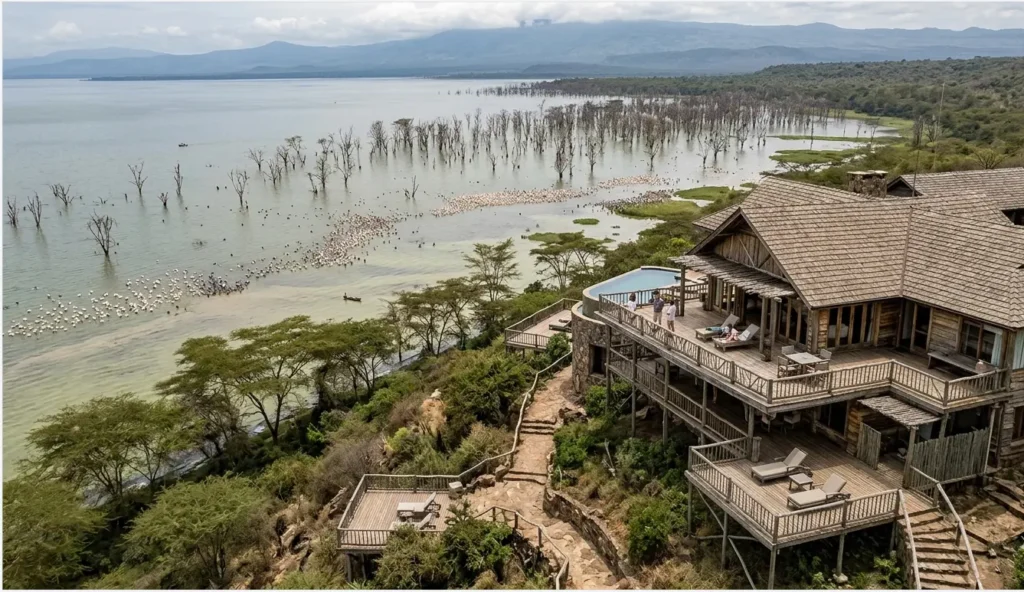
🛡️ OPERATOR INSIGHT: If you are traveling with heavy camera gear, prioritize lodges on the eastern ridge to avoid the muddy “black cotton” soil traps prevalent on the western side. To see a side-by-side comparison of which balconies currently offer the best flood-view photography, see our report on the 5 best lodges for photography.
For a streamlined selection, we recommend focusing on these five specific categories for your 2026 stay:
- The Luxury Elevation: The Cliff (Unaffected by water levels; 180-degree views).
- The Classic Reliable: Sarova Lion Hill (High ground; paved access).
- The Photography Hub: Lake Nakuru Sopa Lodge (Elevated; great for morning light).
- The Mid-Range Winner: Flamingo Hill Camp (Strategic location near the main gate).
- The Budget Alternative: Punda Milias Nakuru Camp (Located just outside the park to avoid the “flood premium” rates).
The 2026 “Submerged” Warning: Several public campsites and low-lying bandas are currently closed due to water ingress. If you are planning a budget trip, do not rely on 2026 Google Maps data for “available” spots; instead, check our public vs. special camping reality check to see what is actually dry.
Selecting the right lodge solves your comfort, but it doesn’t solve the final hurdle: the cold, hard math of the 2026 park fees and eCitizen logistics…
The Final Verdict: The 2026 “Worth-It” Scorecard
Deciding is Lake Nakuru worth it comes down to your specific safari priorities for 2026. If you are chasing a 1990s National Geographic cover of a solid pink lake, you will be disappointed. However, if you are a serious wildlife enthusiast looking for rare species in a compact, high-density environment, Nakuru remains a top-tier contender.
To help you make a final call, we have synthesized the current ground data into a quick-decision scorecard. This is the reality of the park as it stands today.
Go to Lake Nakuru in 2026 if:
- You want a “Big 4” experience in half a day: The proximity of rhinos, leopards, buffaloes, and lions makes it the most efficient park for short-stay travelers.
- You are a Rhino enthusiast: It is arguably the most reliable place in East Africa to see both species in a single game drive.
- You value Bird diversity over color: The Great White Pelican colonies and 450+ other species offer a more complex birding experience than the old flamingo monoculture.
Skip Lake Nakuru in 2026 if:
- You only want “The Pink”: The current water levels mean flamingos are scattered; you may find a better “pink lake” experience in our Lake Nakuru or Lake Elementaita comparison.
- You are sensitive to traffic: If the 4-hour transit due to the Nairobi to Nakuru road construction status sounds exhausting, you might prefer a flight-based safari.
- You dislike “submerged” landscapes: The sight of dead trees and flooded buildings can feel “apocalyptic” to some, rather than beautiful.
🛡️ OPERATOR INSIGHT: If you decide to go, the biggest “Worth It” killer is the gate delay. In 2026, KWS has moved strictly to eCitizen, and the network at the main gate can be notoriously slow. To save an hour of your life, see our guide to paying Lake Nakuru park fees before you leave Nairobi.
For most, the unique opportunity to see rhinos grazing against a backdrop of rising water and prehistoric pelicans makes the answer to is Lake Nakuru worth it in 2026 a resounding yes. It is a park in transition, and there is a raw, natural beauty in witnessing that change firsthand.
Now that you have the verdict, the next step is ensuring you don’t overpay for the privilege—let’s break down the Lake Nakuru safari cost per person to keep your budget on track.
Frequently Asked Questions: Is Lake Nakuru Worth It in 2026?
Is Lake Nakuru worth visiting in 2026 for guaranteed rhino sightings and tree-climbing lions?
Yes, Lake Nakuru is worth visiting in 2026 for guaranteed rhino sightings and tree-climbing lions. While the famous pink flamingo blankets have thinned due to rising water levels, the high predator density and easy rhino tracking make it a tactical win for time-pressed safari travelers. Learn more about the Lake Nakuru safari cost per person to plan your budget.
How much is the Lake Nakuru National Park entrance fee in 2026 and how do I pay?
Expect to pay $80 to $100 per adult for 2026 entry fees via the eCitizen portal. Since KWS transitioned to a fully digital payment system, you must have an active eCitizen account and pre-paid permits to avoid being denied entry at the main gate kiosks. See our guide on how to pay Lake Nakuru park fees on eCitizen before you travel.
Can you actually see rhinos at Lake Nakuru in 2026?
Yes, Lake Nakuru remains Kenya’s most reliable sanctuary for both Black and White rhinos in 2026. With a high-density population of over 70 white and 25 black rhinos squeezed into a smaller land area due to flooding, your chances of a sighting in a single morning are nearly 100%. Don’t miss our insider’s guide to rhino sightings to learn where they graze during the floods.
How long is the drive from Nairobi to Lake Nakuru taking in 2026 due to construction?
The drive from Nairobi to Lake Nakuru in 2026 takes between 3.5 and 4.5 hours. Ongoing road construction at Rironi and the Mau Summit dualling project have introduced significant delays, turning the old 2-hour commute into a test of patience for day-trip safari visitors. Review our Nairobi to Nakuru transport guide to navigate the diversions.
When is the best time to see flamingos in Lake Nakuru during 2026?
The best time for birding is during the dry months of June to October 2026. While flamingos are nomadic, these months offer the best salinity balance for algae growth. However, expect to see massive Great White Pelican colonies regardless of the specific month you visit. Read more on the best time to visit Lake Nakuru for peak sightings.
What happens if I arrive at the Lake Nakuru gate after 6:00 PM?
You will be denied entry, as KWS rangers strictly enforce the 6:00 PM gate closure in 2026. Missing this cutoff due to Nairobi traffic is a common disaster; you’ll either be forced to find a hotel outside the park or pay for an expensive “rescue escort” to reach a lodge inside. To avoid being stranded, check out Lodges inside and outside Lake Nakuru Park for your choosing.
Which are the best lodges in Lake Nakuru to avoid flooding in 2026?
Prioritize high-elevation properties like The Cliff or Sarova Lion Hill for a dry 2026 stay. Several low-lying camps have experienced water ingress; staying on the eastern ridge ensures your vehicle isn’t stuck in black cotton soil while attempting to reach the park’s main tracks. Explore the complete guide to Lake Nakuru lodges to secure your booking.