Email:
 Phone:
 WhatsApp:

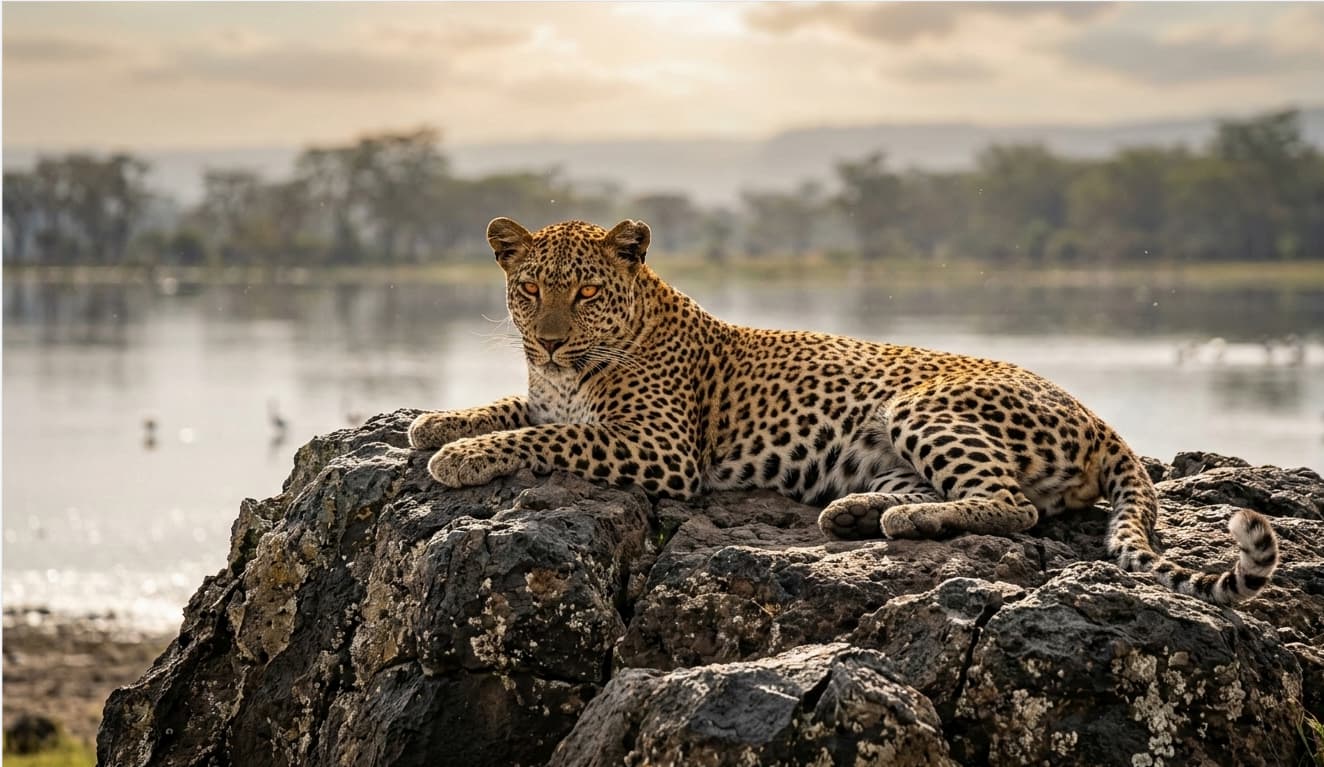
Are there leopards in Lake Nakuru? Yes. Leopards in Lake Nakuru National Park 2026 are most frequently found on the high-ground basalt ridges and rocky escarpments, such as Baboon Cliff and Lion Hill. Due to rising water levels, they have largely abandoned the flooded, low-lying acacia forests for drier, vertical terrain.
If you are currently scanning the yellow-barked acacia trees near the shoreline for a tail or a spotted limb, you are likely looking at a “ghost forest.” Most 2026 safari guides and outdated blog posts still tell travelers to focus on the woodland “fever trees,” but as an operator on the ground, I can tell you that the Lake Nakuru water levels have turned those traditional leopard haunts into an underwater graveyard.
The secret to a guaranteed sighting in 2026 isn’t just “patience”—it’s knowing that these Lake Nakuru big cats have made a dramatic “High-Ground Shift.” To find them today, you must stop looking at the branches and start looking at the rocks.
In this guide, I will reveal the exact 2026 coordinates where these elusive predators have relocated, ensuring your Lake Nakuru National Park safari doesn’t end with an empty camera roll and a “mud-trap” recovery bill.
Quick Navigation: Jump to your Section
The 2026 Reality: Why the “Old” Leopard Maps are Now Underwater
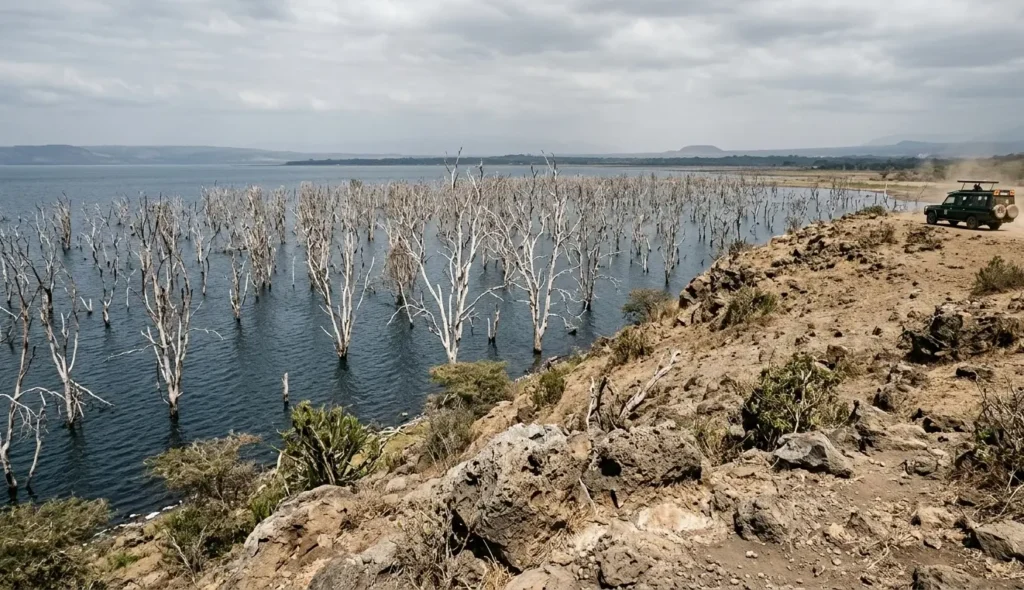
The 2026 expansion of the lake surface to over 82km² has fundamentally rewritten the rules of tracking Leopards in Lake Nakuru National Park. If you are following a guidebook printed before the recent floods, you are likely navigating toward what we now call the “Dead Forest”—a skeletal graveyard of yellow-barked acacias that are completely submerged. These traditional leopard haunts have suffered a massive habitat shift, as the acidic lake water has rotted the root systems of the very trees these Lake Nakuru big cats once used for midday lounging.
🛡️ OPERATOR INSIGHT: Most drivers still attempt to use the northern shoreline tracks to find leopards, but these are now high-risk flooded tracks that can easily swallow a standard SUV. To avoid a costly recovery fee and a ruined day, see our Lake Nakuru self-drive guide for the specific route hacks that bypass these 2026 “mud traps” while keeping you within sight of the new predator corridors.
According to my recent operator ground report, the leopards have not disappeared; they have simply moved to higher, drier ground where they can maintain their “dry-paw” hunting advantage. While generic travel sites still describe them as “elusive” dwellers of the acacia woodlands, the reality is that Leopards in Lake Nakuru National Park have traded the rotting forests for the basalt ridges and rocky outcroppings. This migration has concentrated the population in a much smaller, albeit more vertical, territory than in previous years.
Now that we understand why your old safari map is technically “underwater,” let’s look at the specific probability of actually spotting these predators during your visit…
Are there leopards in Lake Nakuru? (The2026 Probability Report)
Yes, Leopards in Lake Nakuru National Park are present in high numbers, boasting one of the densest populations of solitary cats in the Great Rift Valley. While the famous flamingos often take the spotlight, seasoned safari operators consider this park the best place to see leopards in Kenya due to its compact size and the restricted movement caused by the perimeter electric fence. Unlike the vast Serengeti or Mara where leopards can vanish into thousands of miles of scrub, Nakuru’s leopards are “hemmed in,” significantly increasing your encounter probability.
🛡️ OPERATOR INSIGHT: Many travelers waste hours searching the swampy northern plains where the water is highest, but the “smart” money is on the southern rhino sanctuary. Since leopards are opportunistic hunters of small calves, they linger where the prey density is highest; see our Lake Nakuru rhino guide to understand how to navigate the sanctuary zones where these predators are most active.
In 2026, the predator density here has reached a unique tipping point because the rising lake has physically squeezed the available dry land. This “Squeeze Effect” means that Leopards in Lake Nakuru National Park are now sharing a smaller territory with the park’s famous tree-climbing lions, often leading to rare, high-stakes sightings on the rocky ridges. If you are looking for a high-probability “Big Cat” day without the 6-hour drive to the Mara, this park currently offers the most reliable leopard tracking in the country—provided you avoid the flooded shoreline.
While the “Squeeze Effect” makes a sighting highly likely, these cats remain masters of the twilight hours. If you are trying to decide if you can track them effectively on a quick dash from Nairobi or if you need the 6:00 AM “Predator Window,” see our honest comparison of a Lake Nakuru day trip vs overnight stay. This guide breaks down why an overnight stay is often the “Leopard Insurance” you need to ensure you aren’t stuck in Rironi traffic while the cats are most active on the ridges.
Now that we’ve established the high probability of a sighting, let’s pinpoint the exact rocky coordinates where these cats are hiding in 2026…
The “High-Ground” Secret: 3 Spots to Find Leopards in 2026
Since the lake expansion, Leopards in Lake Nakuru National Park have become vertical specialists, abandoning the swampy lowlands for the park’s rugged perimeter. Finding these Lake Nakuru big cats in 2026 requires shifting your gaze from the shoreline to the rocky ridges that define the Rift Valley escarpment. Most visitors fail because they focus on the “dead forest” zones, but my recent ground scouts confirm that the leopards are now concentrated in three very specific high-altitude landmarks.
1. The Basalt Ridges (South of the Rhino Sanctuary)
The dark basalt formations in the southern sector have become the preferred daytime lounging spot for Leopards in Lake Nakuru National Park. Unlike the damp, rotting acacia bark, these volcanic rocks absorb heat and provide a dry, elevated vantage point for hunting young calves in the tall grass below. Because these rocks perfectly match the rosettes of a leopard’s coat, you will need high-quality optics to distinguish a resting cat from a shadow.
💡 PRO TIP: If you are planning to spend the day tracking predators on these ridges, see our Lake Nakuru safari packing list to ensure you have the correct high-contrast binoculars, as standard lenses often struggle with the heat haze reflecting off the basalt.
2. Baboon Cliff Escarpment: The “Vertical Hunter” Strategy
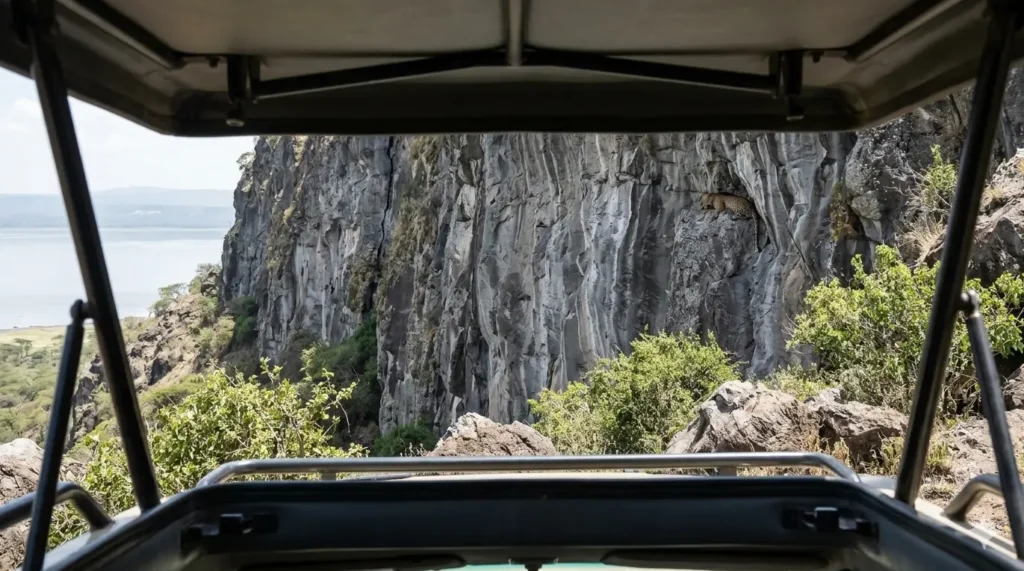
The Baboon Cliff lookout is no longer just for the view; the steep cliff faces below the parking lot are now prime leopard territory. Leopards use the vertical terrain to stay out of reach of the park’s tree-climbing lions while maintaining a 360-degree view of the herbivores gathered at the new water line. These “vertical hunters” often hide in the small crevices or behind the hardy scrub clinging to the cliffside, waiting for the evening cool-down to descend.
🛡️ OPERATOR INSIGHT: KWS rangers are strictly enforcing the “No Off-Road” rule around the cliff edges to prevent soil erosion into the lake, with fines reaching up to $200 for violators. To stay on the right side of the law while getting the best angle, see our Lake Nakuru self-drive guide for the specific legal pull-off points that offer a clear line of sight into the escarpment crevices.
3. Lion Hill Thickets: The Dry-Side Hiding Spots
While the name suggests another predator, the dense Euphorbia (Candelabra) thickets along the Lion Hill ridges are the top leopard tracking tips for 2026. These succulent trees provide deep shade and thick cover that the rising water hasn’t touched, making it a “fortress” for mothers with cubs. Because the foliage is so dense, you aren’t looking for a whole leopard; you are looking for the flick of a white-tipped tail or the glint of an eye within the dark green stalks.
Now that you know exactly which landmarks to punch into your GPS, let’s look at how the shrinking dry land is forcing a dangerous rivalry between Nakuru’s apex hunters…
Leopard vs. Lion Territory: Navigating the “Squeeze”
The dramatic rise in 2026 water levels has forced a territorial “squeeze” that is unique to this park. As the shoreline encroaches on the traditional hunting grounds, Leopards in Lake Nakuru National Park are being pushed into the same narrow, elevated corridors as the resident lion prides. This lack of buffer zone has triggered intense inter-predator competition, leading to more frequent daytime sightings as both species scramble for the remaining dry land.
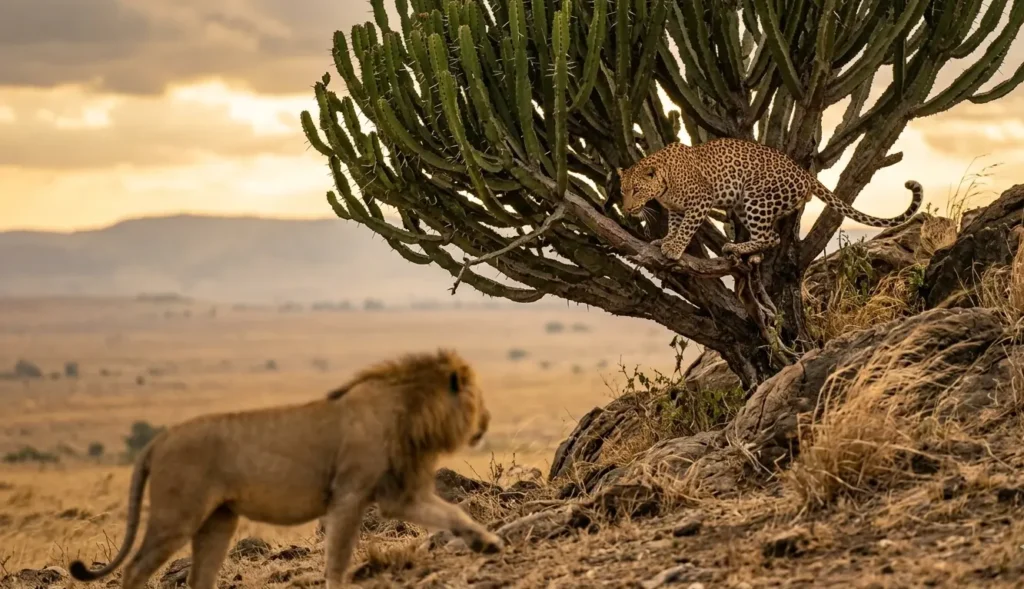
🛡️ OPERATOR INSIGHT: Because leopards are being forced onto the same rocky paths as lions, we are seeing a rare behavioral shift where leopards are becoming even more vertical to avoid ground-level confrontations. To better understand this phenomenon, you should check out our guide to tree-climbing lions in Lake Nakuru which details the specific “wet-paw” trees these predators now share.
For those seeking professional-grade results, these cramped quarters offer some of the most dramatic safari photography tips you’ll find in Kenya. When these Lake Nakuru big cats cross paths, the tension is visible; look for leopards perched in the high Euphorbia branches while lions patrol the base of the same ridge. This overlap means you can often photograph both of the park’s apex predators in a single game drive, provided you focus your search on the dry southern transition zones.
Now that you understand the high-stakes rivalry on the ridges, let’s make sure your camera is actually capable of capturing these distant, high-ground cats…
Best Time & Gear for Leopard Photography in Nakuru
Capturing professional-grade images of Leopards in Lake Nakuru National Park in 2026 requires a total departure from traditional forest photography tactics. Because the rising water levels have pushed these cats onto high-altitude ridges like Baboon Cliff, your subjects are no longer ten feet away in a shaded tree; they are often hundreds of yards away on a sun-drenched basalt outcrop. This distance means the 70-200mm “portrait” lens that worked five years ago is now insufficient for the vertical reality of today’s sightings.

🛡️ OPERATOR INSIGHT: Since leopards are now predominantly spotted on high, rocky escarpments, a low-light lens with at least 500mm or 600mm of reach is essential to bypass the atmospheric heat haze reflecting off the rocks. If you are unsure which focal length to bring for these high-ground shots, see our Lake Nakuru safari photography gear guide for the specific equipment tweaks needed to shoot the “rock-leopards” without losing sharpness.
The “Golden Hour” in Nakuru is particularly short due to the surrounding escarpments blocking the sun earlier than in the flat Mara plains. To maximize your chances, ensure your 4×4 safari vehicle is positioned near the southern ridges by 4:30 PM, as the leopards begin to move from their basalt hiding spots toward the lower thickets to hunt. Using a beanbag for stabilization on the vehicle’s roof hatch is a non-negotiable hack here, as the steep angles required to shoot upward at the ridges can lead to significant camera shake.
With your camera settings dialed in and your long lens mounted, let’s address the final logistical questions most travelers have before they head out to track these elusive cats…
Frequently Asked Questions About Leopards in Lake Nakuru National Park
Finding Leopards in Lake Nakuru National Park in 2026 requires more than just luck; it requires a solid logistical plan. Below are the most common questions we receive from travelers trying to track these high-ground predators.
What is the best gate for leopard sightings?
The Lanet Gate is currently the best entrance for those targeting Leopards in Lake Nakuru National Park because it provides the quickest access to the Lion Hill and eastern basalt ridges. Entering through the Main Gate often involves navigating heavily flooded shoreline tracks that are currently impassable for most vehicles. To save time and avoid the 2026 “mud traps,” check out our guide on which Lake Nakuru gate to use to find the best route for your specific lodge location.
Can I see leopards on a self-drive?
Yes, you can see leopards on a self-drive, but you must be extremely cautious about the new 2026 track closures caused by rising water levels. Many of the rocky ridges where leopards now hide are accessed via steep, loose-surface tracks that require a high-clearance 4×4 and experienced handling. To ensure you don’t get stuck in a remote predator zone, see our Lake Nakuru self-drive guide for the essential rules and route hacks used by local operators.
Is it safe to see leopards with kids?
It is perfectly safe to see leopards with children as long as you remain inside your vehicle at all times and follow park regulations. Leopards in this park are well-habituated to vehicles, but they are apex predators that should never be underestimated, especially near the rocky Baboon Cliff area. For a complete breakdown of park security and family-friendly tips, see our Lake Nakuru safety guide to learn how to keep your family secure while exploring big cat territory.
🛡️ OPERATOR INSIGHT: KWS rangers have increased patrols on the southern ridges in 2026 to prevent visitors from alighting their vehicles for photos—a violation that carries an immediate 10,000 KES fine. If you are traveling from the city, be sure to read our guide on Nairobi to Nakuru transport to learn more on how to beat the city traffic and reach the park gates before the peak predator activity at dusk.
Now that your logistics are sorted and you know where to look, you are ready to experience one of the most reliable leopard sightings in East Africa.