Email:
 Phone:
 WhatsApp:

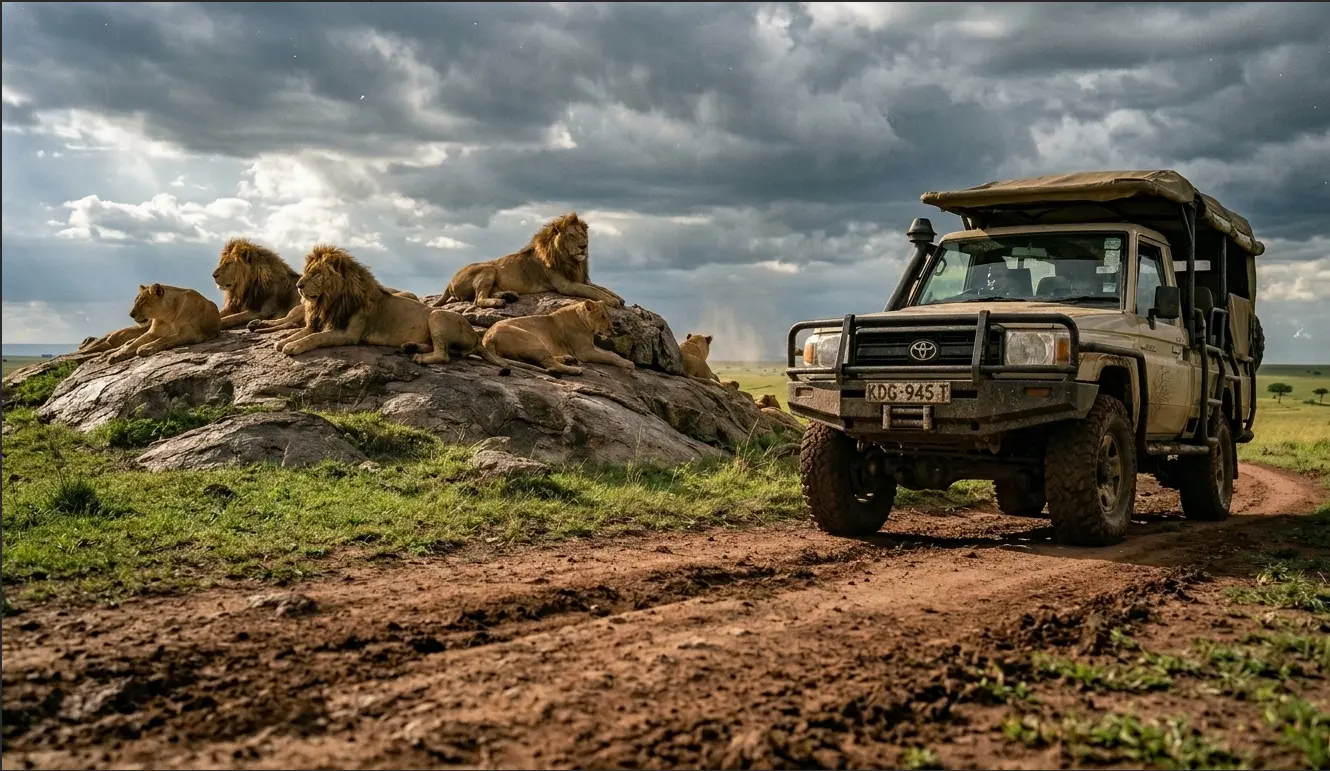
A Masai Mara budget safari in 2026 is not a compromise on wildlife—it is a compromise on accommodation comfort, vehicle exclusivity, and dining elegance. The lions, leopards, and wildebeest crossing the Mara River do not check the price of your tented camp bedsheets.
The cheapest way to do a Masai Mara safari in 2026 is a 3-day group joining package from Nairobi starting at $380 per person in low season, plus $100 per day in park entry fees. Total per non-resident: approximately $580 for a 3-day, 2-night safari including transport, full board, and game drives.
Evans Kimojino, a Mara-based safari guide and Hilmuks ground partner with 1,300+ documented wildlife sightings, has navigated every terrain condition the Mara produces across multiple seasons. His consistent field observation: the vehicle you travel in determines whether you reach the sighting — not the amount you paid for your tent.
This article covers exactly what a budget package includes, what it deliberately excludes, what the camps are like on the ground, and whether the total experience — wildlife, vehicle, meals, camp — delivers genuine value for the money. By the end you will know precisely what $410 buys and whether it matches your expectations before you book anything.

Quick Navigation-Jump to Your Section
A typical 3-Day Masai Mara Budget Safari Package — What Is Included
Booking a 3 day Masai Mara budget safari requires clear visibility into where your money goes. A baseline price of $410 per person handles your fundamental logistical framework so you can focus entirely on tracking the Big Five. Our core operational blueprint details exactly what this entry-level price secures from departure to return.
The Baseline Logistics Matrix 2026
| Component | What It Covers |
| Duration | Masai Mara 3 days 2 nights total trip framework |
| High Season Price | $410 USD per person (July to October) |
| Low Season Price | $380 USD per person (January to June) |
| Assembly Point | Biashara Street, Nairobi CBD — strict 6:30 AM departure |
| Vehicle Standard | Shared 4×4 Safari Land Cruiser with custom pop-up roof |
| Accommodation | 2 nights in a vetted, secure budget tented camp outside the gates |
| Meals Provided | Full board buffet breakfast, lunch, and dinner (drinks excluded) |
| Tracking Scope | Comprehensive, full-day game drives led by a licensed local guide |
| Return Transfer | Direct drop-off back at Biashara Street, Nairobi |
This configuration covers all your road transit, mid-drive guide tracking, and essential baseline camp sustenance. If you want to visualize the exact hour-by-hour route timeline, browse our 3-day Masai Mara safari from Nairobi full itinerary.
Inclusions vs. Explicit Exclusions
The upfront price guarantees your transport inside a heavy-duty 4×4 vehicle, two nights of double-occupancy canvas accommodation, and standard buffet meals. However, your cash reserves must account for personal extras like premium soft drinks, alcohol, medical travel insurance, and crew tips. The most notable exclusion is the mandatory park entry fee, which is a separate statutory county charge paid directly through the Narok County government channels.
Choosing to travel during the low season window between January and June drops the operator baseline package price to $380 and unlocks massive conservation fee savings. According to the official Narok County Government tariff listings, low-season non-resident park fees drop by half, meaning a couple minimizes their total outlay significantly while accessing the identical resident ecosystem. Planning a flexible calendar window remains the ultimate shortcut to securing an exceptionally cheap, top-tier wildlife adventure.
🛡️ OPERATOR INSIGHT: Any operator quoting you a complete Masai Mara budget safari from Nairobi for under $400 total as a non-resident in high season is excluding your park fees from the headline number. The mandatory $200 per day park entry fee is a strict Narok County government charge—no operator can legitimately bundle it into a base package at that price point. To see how these upfront numbers translate into real-world cash flow, read our Masai Mara safari cost complete breakdown.
Now that we have stripped down the core package infrastructure, let’s tackle the hidden municipal gate traps that can easily break an unprimed travel budget…
The 2026 Park Fee Trap — The $200 That Every Budget Package Excludes
The single most common friction point on a Masai Mara budget safari is the unquoted fee trap at the gate. Many third-party aggregators advertise cheap Masai Mara safari packages from Nairobi with incredibly low headline rates, only to bury mandatory conservation fees in the fine print. Understanding how the local municipal tax structure operates is vital to keeping your trip expenses predictable.
The Statutory Fee Structure 2026
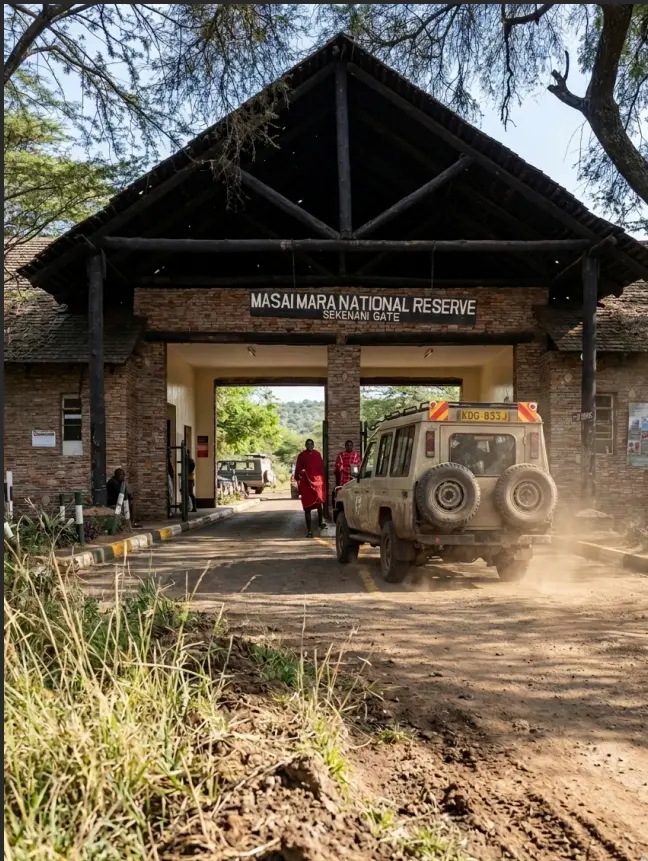
The Masai Mara National Reserve is managed directly by the Narok County Government, not the Kenya Wildlife Service (KWS). Because of this administrative division, entry fees cannot be bundled into standard baseline tour rates and must be processed as a strict regulatory pass-through charge. According to the official Narok County Government schedules, the non-resident adult fee sits at $200 per day during peak months, making it an essential line item you must compute independently.
| Visitor Type | High Season (July–December) | Low Season (January–June) |
| Non-Resident Adult | $200 USD per day | $100 USD per day |
| Kenyan Citizen | KSH 3,000 per day | KSH 1,500 per day |
The 12-Hour Ticket Myth Exploded
A massive percentage of legacy travel blogs and forums still claim that your entry ticket runs for a rolling 24 hours from the exact minute you clear the gate. This information is completely outdated and can destroy a tight traveler’s budget in a single afternoon. The Narok County Government enforces a rigid 12-hour calendar-day rule: all permits expire at 6:00 PM on the day of activation, regardless of when you arrived.
+------------------------------------------+-----------------------------------+
| Legacy 24-Hour Myth                      | Official 12-Hour Regulation       |
+------------------------------------------+-----------------------------------+
| "Enter the reserve gates at 3:00 PM on   | "Every permit expires at 6:00 PM. |
| Day 1 and use it until 3:00 PM on Day 2  | Arriving at 3:00 PM gives you 3   |
| without paying extra fees."              | tracking hours before a new fee." |
+------------------------------------------+-----------------------------------+
If you pass through the gate at 3:00 PM for an evening drive, your $200 ticket expires three hours later at 6:00 PM, requiring a completely fresh payment the next morning. Our operations team coordinates morning highway transits specifically to ensure you reach the gates early on day one, maximizing every single hour of your conservation investment. To see the full step-by-step gate mechanics and payment validation protocols, see our Masai Mara park fees and 12-hour rule guide.
The Total Combined Outlay Calculation
When analyzing cheap Masai Mara safari packages from Nairobi, you must combine the operator’s transit fees with two full days of mandatory municipal entry permits. This mathematical reality gives you the true, transparent financial baseline required to experience a Masai Mara budget safari without surprise out-of-pocket demands.
| Season Tier | Operator Base Price | Mandatory Park Fees (2 Days) | Total Real Investment |
| High Season | $410 USD | $400 USD | $810 USD |
| Low Season | $380 USD | $200 USD | $580 USD |
Now that your park permits are cleared and the real gate costs are accounted for, let’s look at the actual vehicle configuration you will be riding in across the rugged Mara plains…
Inside the Shared Land Cruiser — The 3-Day Group Joining Safari Reality
Selecting a 3 days Masai Mara group joining safari is the ultimate structural mechanism to slash your transportation costs. In this arrangement, between four and six non-resident passengers split the fuel overhead, vehicle wear, and driver-guide logistics by paying an individual $410 share. The group assembles as complete strangers at the Biashara Street collection point in Nairobi on departure morning, transforming an expensive long-distance expedition into an incredibly cost-effective setup.
The Non-Negotiable 4×4 Fleet Standard 2026
Our field team draws a hard line on vehicle selection, entirely rejecting the low-cost, 2WD transit vans used by high-volume corporate travel aggregators. Evans confirms the terrain reality that makes the vehicle specification non-negotiable for a successful Masai Mara budget safari. After heavy rain, which can catch operators by surprise at any point in the season, the black cotton soil tracks across the reserve transform into deep, slick mud traps. Evans has watched under-specified tour vehicles spin their wheels and get permanently stuck on the main tracking lines, completely ruining the game drive for the stranded passengers inside.
+------------------------------------------+-----------------------------------+
| Standard 2WD Micro-Van                   | Heavy-Duty 4x4 Safari Cruiser     |
+------------------------------------------+-----------------------------------+
| Low ground clearance; highly prone to    | High-clearance chassis; low-gear  |
| getting stuck in wet black cotton soil;  | traction; easily clears deep mud  |
| ruins game drive tracking hours.         | without interrupting the journey. |
+------------------------------------------+-----------------------------------+
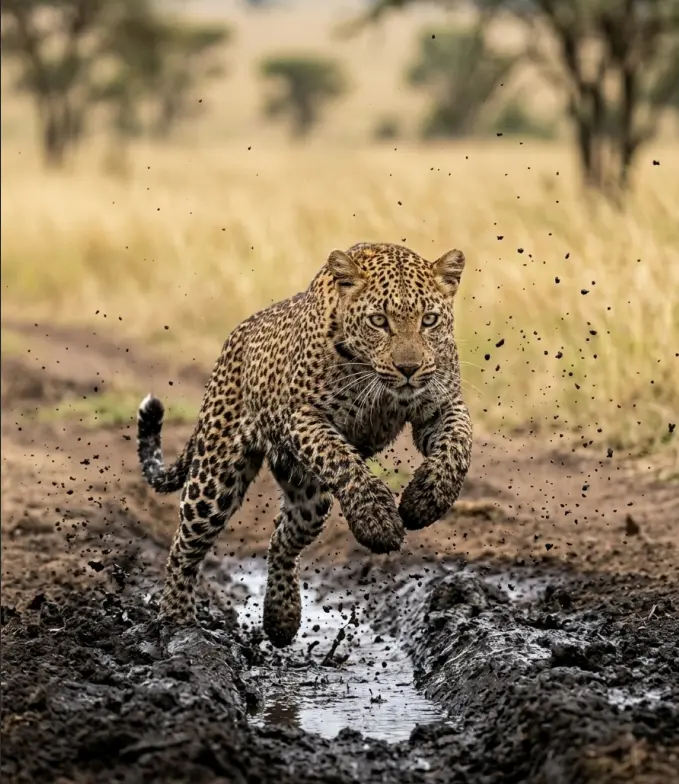
Our custom-built fleet relies exclusively on heavy-duty, high-clearance 4×4 Land Cruisers to guarantee operational reliability. These vehicles utilize exactly the same internal engineering specifications as those deployed on premium luxury packages. The only operational difference is that you are sharing the cabin space with a few fellow travelers rather than booking out the entire chassis exclusively.
Group Cabin Dynamics and Window Seat Guarantees
Every vehicle in our fleet features an expansive, custom pop-up roof that opens to deliver unhindered 360-degree visibility for photography and big cat tracking. We cap group sizes strictly to ensure that every passenger has an unobstructed window seat, avoiding the cramped center-aisle configurations common in cheap, mass-market transport. This structural configuration gives you premium, wide-angle access to major predator encounters without requiring a luxury financial outlay.
Embracing a 3 days Masai Mara group joining safari means maintaining a flexible, cooperative mindset throughout your journey. Tracking paths, resting breaks, and specific animal viewing durations are collective decisions coordinated between the guide and the passengers. You cannot demand that the vehicle halt for an additional two hours at a single leopard sighting if your cabin mates are ready to return to base. This shared decision-making is the core operational trade-off of the group model, and managing it realistically is how you secure a premium safari experience at a fraction of the cost.
Now that you know how the shared vehicle mechanics operate on the dirt tracks, let’s look at where you will be sleeping and eating once the sun drops below the horizon…
Budget Camp Reality — What Lenchada and Ol Moran Deliver on the Ground
Managing your expectations around accommodation is what separates a successful 3 day Masai Mara budget safari from a disappointing one. Budget-tier establishments like Lenchada Tourist Camp and Ol Moran Tented Camp are strategically situated on private land plots immediately outside the National Reserve boundaries, clustered tightly around the Sekenani and Oloolaimutia gate areas. This positioning means you will trade away waking up directly inside a high-traffic wildlife corridor for a brief 10 to 20-minute morning drive to the park gates each day.
What Your Safari Tent Actually Delivers 2026
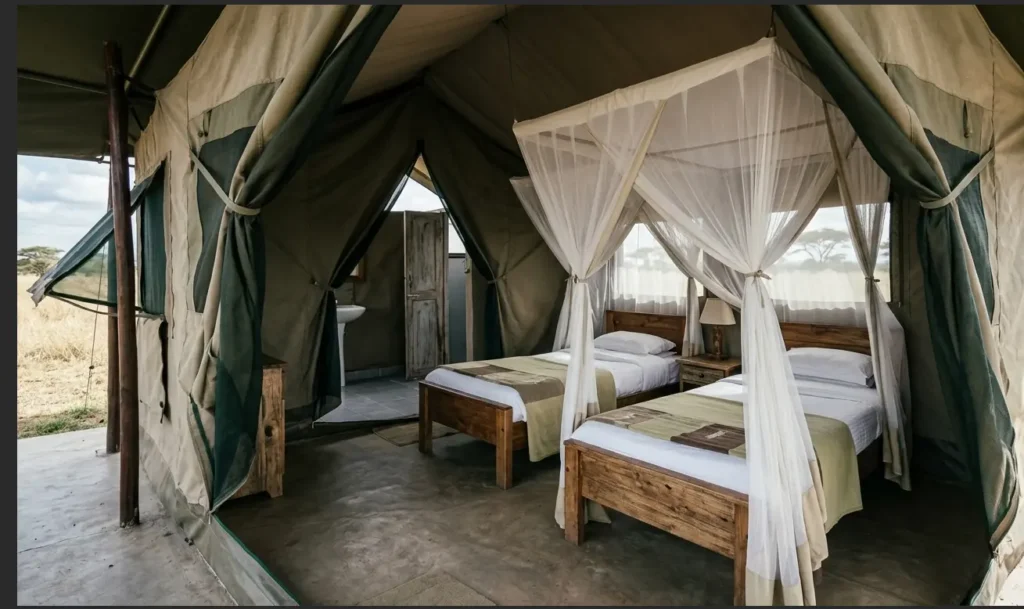
The physical infrastructure at these grounds consists of permanent canvas safari tents anchored to solid concrete bases, sheltered under protective stone or local thatch roofing. Inside, you will find clean twin or double wooden beds, fresh linens, protective mosquito netting, and private, en-suite bathrooms equipped with functional hot-water plumbing systems. There are no infinity swimming pools, manicured spa facilities, or fine-dining menus here; these setups are built purely to provide clean, secure, and restful sleep after spending ten hours enduring the elements out on a rugged game drive.
+------------------------------------------+-----------------------------------+
| Luxury Lodge Inside Reserve              | Budget Tented Camp Outside Gate   |
+------------------------------------------+-----------------------------------+
| Infinity pools, high-end fine dining,    | Functional en-suite canvas tents, |
| and wild animals wandering past your     | hearty local buffets, and a short |
| wooden deck. Costs: $500–$2,000+ / night.| morning drive to gate. Cost: Low. |
+------------------------------------------+-----------------------------------+
Full-board catering at an affordable Masai Mara safari camp translates to three solid, filling meals served daily inside a central communal dining canvas. The kitchen teams specialize in fresh, locally sourced Kenyan staples—think hearty beef stews, baseline rice, ugali, mixed vegetables, and fresh seasonal fruits to keep your energy high. It is worth noting that specialty soft drinks, bottled sodas, and alcoholic beverages are strictly excluded from the standard buffet billing and must be settled independently in cash.
The Ground Reality of Staying “Outside the Gate”
Siting a property within the official municipal reserve boundary commands a premium luxury lease fee, an overhead cost that forces those interior lodges to skyrocket their prices. Staying on private communal land right outside the boundary fences keeps your overall accommodation package remarkably low while keeping you remarkably close to the action. Because the local wildlife does not track geographic boundary markers, it is incredibly common to spot grazing zebras, gazelles, and baboons skirting the camp perimeters during the early dawn and late dusk hours.
🛡️ OPERATOR INSIGHT: The single most common complaint we see from travelers on a Masai Mara budget safari stems from expecting a luxury wilderness lodge inside the park while paying a budget price point. We explicitly clarify this geography at booking: the raw wildlife tracking experience inside the national reserve remains identical regardless of where you lay your head, because every vehicle shares the exact same dirt track network. The only elements that shift are your immediate camp ambiance and the absence of high-end resort luxuries. To make sure your personal gear matches this rugged, outside-the-fence environment, see our Masai Mara packing list guide.
Now that we have demystified the physical reality of the budget camps, let’s look at the premium optional excursions that can either elevate your journey or quietly derail your entire travel budget…
Optional Excursions — What Budget Travellers Should and Should Not Add
Navigating the upgrade menu on an affordable Masai Mara safari requires aggressive prioritization. High-volume operators selling cheap Masai Mara safari packages from Nairobi routinely push optional add-ons during transit to pad their margins. Knowing which field excursions offer genuine, uncompromised value—and which ones completely shatter an entry-level budget—is key to keeping your finances intact.
The $500 Hot Air Balloon Dilemma 2026
The hot air balloon safari is undeniably the most visually spectacular add-on available over the Savannah, but it is fundamentally at war with budget design. Priced at a strict, non-negotiable $500 per person by local concessioners, this single 1-hour flight costs more than double your entire baseline 3-day operator package. For an independent traveler managing a $580 low-season total, adding a flight increases your immediate out-of-pocket trip expenses by a massive 86%.
+--------------------------------------------------------------------------+
|  EXPEDITION FINANCIAL COMPARISON (High Season Baseline)                 |
+--------------------------------------------------------------------------+
|  [■■■■■■■■■■■■■■■■■■■■] Core 3-Day Safari Base: $410 USD                  |
|  [■■■■■■■■■■■■■■■■■■■■■■■■] Single 1-Hour Balloon Flight: $500 USD       |
+--------------------------------------------------------------------------+
Our operational advice for those on a tight budget is unvarnished: completely skip this luxury addition unless it is a non-negotiable bucket list dream you specifically financed before landing in Kenya. If you decide to pursue it, see our Masai Mara balloon safari guide to see exactly how to time your flight window to avoid missing your core morning ground game drive. To save cash for this upgrade, we highly recommend booking your entire itinerary inside the low-season window to offset the high flight overhead through lower gate conservation permits.
High-Value, Cost-Effective Alternatives
If you want to experience the open Savannah beyond the canvas walls of your camp without breaking the bank, a bush breakfast is an outstanding alternative. Curated directly by your camp guide upon request, this setup allows you to eat a freshly prepared meal at an open scenic vantage point inside the reserve for a fraction of the cost of a balloon flight. It adds a memorable, highly tactile dimension to your morning routine without introducing heavy financial stress.
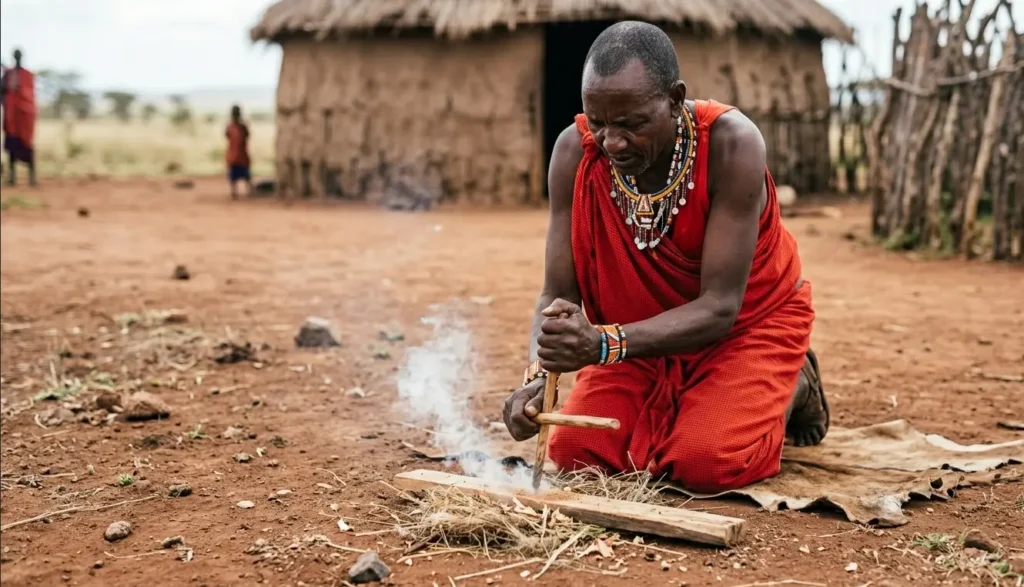
Similarly, a guided visit to a traditional Maasai homestead stands as the most accessible cultural excursion for anyone managing a Masai Mara budget safari. This 90-minute experience costs a flat entrance fee of $20 per person, which our guides deliver directly to the village elder to support community structural development, clean water wells, and school supplies. The experience delivers immense educational value through live fire-making demonstrations, traditional jumping dances, and intricate beadwork displays, all at a highly sustainable price point.
🛡️ OPERATOR INSIGHT: Never let your day-to-day cash reserves drop completely to zero before accounting for localized tipping practices, which are customary across the industry but omitted from standard online invoicing. The field standard for a professional, licensed driver-guide sits at $10 to $20 per person, per day, which translates to a total out-of-pocket allocation of $30 to $60 for a standard 3-day run. Factoring this human expense into your initial calculations prevents it from feeling like an unwelcome surprise cost on your final morning.
Now that we have separated the necessary cultural excursions from the luxury price inflation, let’s pinpoint the exact calendar sweet spots where the seasonal cycles work directly in your favor…
The Best Time for a Budget Masai Mara Safari — When Low Season Delivers Maximum Value
Timing your entry window perfectly is the ultimate structural lever to maximize a Masai Mara budget safari. While peak months attract massive global crowds and premium accommodation pricing, the seasonal calendar offers incredible sweet spots for savvy travelers. Choosing the right month ensures you extract top-tier wildlife value without overpaying for your seat in the vehicle.
The Financial Case for Low Season 2026
The official low season framework runs from January through June annually, presenting an unmatched financial discount for budget-conscious explorers. During this calendar stretch, our baseline package price drops from $410 to $380 per person due to lower camp operating costs. Far more importantly, the official Narok County Government tariff listings state that non-resident park entry fees drop by half, moving from $200 down to $100 per day.
+--------------------------------------------------------------------------+
|  TOTAL NON-RESIDENT TRIP COST COMPARISON (3 Days / 2 Nights)            |
+--------------------------------------------------------------------------+
|  HIGH SEASON (Jul-Oct):  $410 Base + $400 Fees = $810 USD                |
|  LOW SEASON  (Jan-Jun):  $380 Base + $200 Fees = $580 USD [SAVE $230]    |
+--------------------------------------------------------------------------+
This means an independent couple organizing a Masai Mara 3 days 2 nights tracking run saves a combined $460 simply by avoiding the peak summer rush. If your personal vacation timeline allows for flexible planning, traveling during these quieter months is the smartest administrative adjustment you can make. It transforms an otherwise expensive bucket-list excursion into an incredibly affordable Masai Mara safari.
The Low Season Wildlife Reality
The single biggest misconception circulating on legacy travel forums is that the plains empty out completely once the megahers of the Great Migration return to Tanzania’s Serengeti. In reality, the reserve’s dense resident wildlife populations—including territorial lion prides, solitary leopards, cheetah coalitions, massive elephant herds, and Cape buffaloes—remain permanently stationed in the valley year-round. For travelers whose primary goal is capturing classic apex predator behavior and ticking off the traditional Big Five, the low-season months deliver an identical field experience at a drastically lower cost.
+------------------------------------------+-----------------------------------+
| High Season (July–October)               | Low Season (January–June)         |
+------------------------------------------+-----------------------------------+
| Mega-thousands of migrating wildebeest,  | Resident apex predators, large    |
| intense river crossings, high vehicle    | elephant herds, pristine green    |
| congestion, and maximum peak pricing.    | plains, and rock-bottom entry fees.|
+------------------------------------------+-----------------------------------+
Paying the peak premium between July and October is only justified if your primary, non-negotiable objective is witnessing the dramatic wildebeest river crossings along the Mara River. If you are determined to see that specific migratory event, then budgeting for the high-season rates is a necessary expense. However, if you are focused on general wildlife density and keeping your out-of-pocket expenses minimal, a January to March run offers immaculate tracking conditions before the long April rains arrive.
Now that we have mapped out the seasonal price fluctuations and wildlife cycles, let’s deliver our unvarnished operational verdict on whether this entry-level model makes sense for you…
Is a Budget Masai Mara Safari Worth It? The Honest Operator Verdict
The clear, operational answer is yes—provided you align your baseline expectations with reality before pulling out your credit card. A Masai Mara budget safari delivers uncompromised, front-row access to one of the most prolific wildlife sanctuaries on earth for a highly manageable financial layout. The lions, leopards, cheetahs, and massive elephant herds you trail from a shared vehicle are identical to the animals observed by travelers paying thousands of dollars per night inside exclusive luxury developments. The open dirt tracks are the same, the professional guides share the same radio frequencies, and the wildlife remains entirely indifferent to the cost of your accommodation canvas.
Navigating the True Operational Limitations 2026
Choosing a budget framework requires a deliberate acceptance of specific structural trade-offs. You will forgo vehicle exclusivity, meaning all daily game drive routes, departure times, and rest intervals are shared group decisions. Your camp base will sit a short distance outside the reserve gates rather than inside the main park boundaries, necessitating a brief morning commute to the entrance points each day. Meals will consist of wholesome local buffets rather than bespoke culinary dining menus, and you will share your cabin interior with four to five fellow travelers.
+------------------------------------------+-----------------------------------+
| Perfect Fit For                          | Better Suited for an Upgrade      |
+------------------------------------------+-----------------------------------+
| Solo travelers, budget-conscious         | Professional wildlife photographers,|
| couples, and local resident tourists     | families with toddlers, and       |
| focusing strictly on apex predators.     | honeymooners prioritizing ambiance.|
+------------------------------------------+-----------------------------------+
An affordable Masai Mara safari is an exceptional match for independent solo travelers eager to merge into group dynamics to split high transit overheads. It is equally brilliant for couples embarking on their first African journey who want to experience premium big cat tracking without making a massive long-term financial commitment. However, if you are traveling with very young children requiring a flexible, private schedule, or if you are a professional photographer needing specific vehicle positioning flexibility, prioritizing a private cruiser upgrade is a highly necessary adjustment.
🛡️ OPERATOR INSIGHT: According to the official Narok County Government Reserve schedules, the strict 12-hour calendar-day ticket rule is strictly verified at all exit points, meaning overstaying your afternoon window even by a few minutes can trigger a full additional day’s entry charge. Our chief guide closes with this perspective: a budget traveler who arrives fully prepared, manages their personal expectations honestly, and commits entirely to the early morning tracking window will return home with vibrant wildlife memories that are completely indistinguishable from those of a client who paid five times more for a private lodge. To visualize how these specific day-to-day gate timings flow across a live trip framework, review our 3-day Masai Mara safari from Nairobi full itinerary.
Conclusion
A Masai Mara budget safari in 2026 is the most accessible entry point to one of the world’s great wildlife destinations—and for travelers who understand what they are buying, it delivers in full. The $380 to $410 base cost combined with $200 to $400 in park fees produces a total of $580 to $810 per non-resident person for a complete 3-day, 2-night experience. Evans, whose thousands of wildlife sightings span every accommodation category in the Mara, puts the verdict simply: book early, arrive at the gate before 6:00 AM, and let the Mara do the rest.
FAQ — Expert Answers on Masai Mara Budget Safari 2026
What is the cheapest way to do a Masai Mara safari?
The cheapest way to do a Masai Mara safari in 2026 is a 3-day group joining package from Nairobi in low season. The base package costs $380 per non-resident person including transport, full board accommodation, and game drives. Park entry fees are additional at $100 per day in low season. Total per non-resident for a 3-day, 2-night safari is approximately $580 including two days of park fees.
Are there budget Masai Mara packages from Nairobi?
Yes — budget Masai Mara packages from Nairobi are available as group joining safaris starting from $380 per person in low season or $410 per person in high season for a 3-day, 2-night itinerary. These packages include transport from Nairobi in a shared 4×4 Land Cruiser, full board accommodation in a budget tented camp, and professional guide-led game drives. Park entry fees are additional and must be budgeted separately.
What does a 3-day Masai Mara budget safari include?
A standard 3-day Masai Mara budget safari includes 2 nights full board accommodation in a budget tented camp, round-trip transport from Nairobi in a shared 4×4 Land Cruiser with pop-up roof, full-day comprehensive game drives with a professional guide, and pick-up and drop-off at Biashara Street in Nairobi. It excludes park entry fees, drinking water, drinks, medical insurance, and tips.
What is the 12-hour rule for Masai Mara?
The Masai Mara 12-hour rule means your park entry permit is valid from 6AM to 6PM on the day of purchase only — it does not carry over to the next day. Unlike KWS national parks where tickets run for 24 hours from entry, the Masai Mara National Reserve is managed by Narok County Government under a strict calendar-day permit system. Entering the reserve at 3PM gives you three hours of game drive time for the same $200 high-season fee as someone who enters at 6AM.
Is a budget Masai Mara safari worth it?
Yes — a budget Masai Mara safari is worth it if your primary goal is wildlife viewing rather than luxury accommodation. The Big Five, predators, and migration herds are viewed from the same tracks and with the same quality of guide regardless of your accommodation tier. The trade-offs are shared vehicle space, outside-the-gate camp location, and buffet meals rather than fine dining. None of these affect your game drive quality or wildlife sighting opportunities.
How many people share a vehicle on a group joining safari?
A group joining safari shares one 4×4 Land Cruiser between four to six non-resident passengers. All passengers share the same game drive routes and timing decisions. The vehicle is a heavy-duty 4×4 Land Cruiser with a pop-up roof and guaranteed window seats — not a standard transit van or low-clearance vehicle. Group joining is the mechanism that keeps the per-person package cost at $380 to $410 rather than the $800-plus cost of a fully private vehicle.
What are the hidden costs of a budget Masai Mara safari?
The most significant hidden cost in a budget Masai Mara safari is the park entry fee — $100 per non-resident per day in low season and $200 per day in high season. This fee is excluded from the base package price by all operators and is paid separately at the gate. For a standard 2-day permit on a 3-day safari this adds $200 to $400 to your total. Other costs to budget for include drinking water, any alcohol or soft drinks, optional activities such as a balloon safari or village visit, and guide tips of $10 to $20 per person per day.