Email:
 Phone:
 WhatsApp:

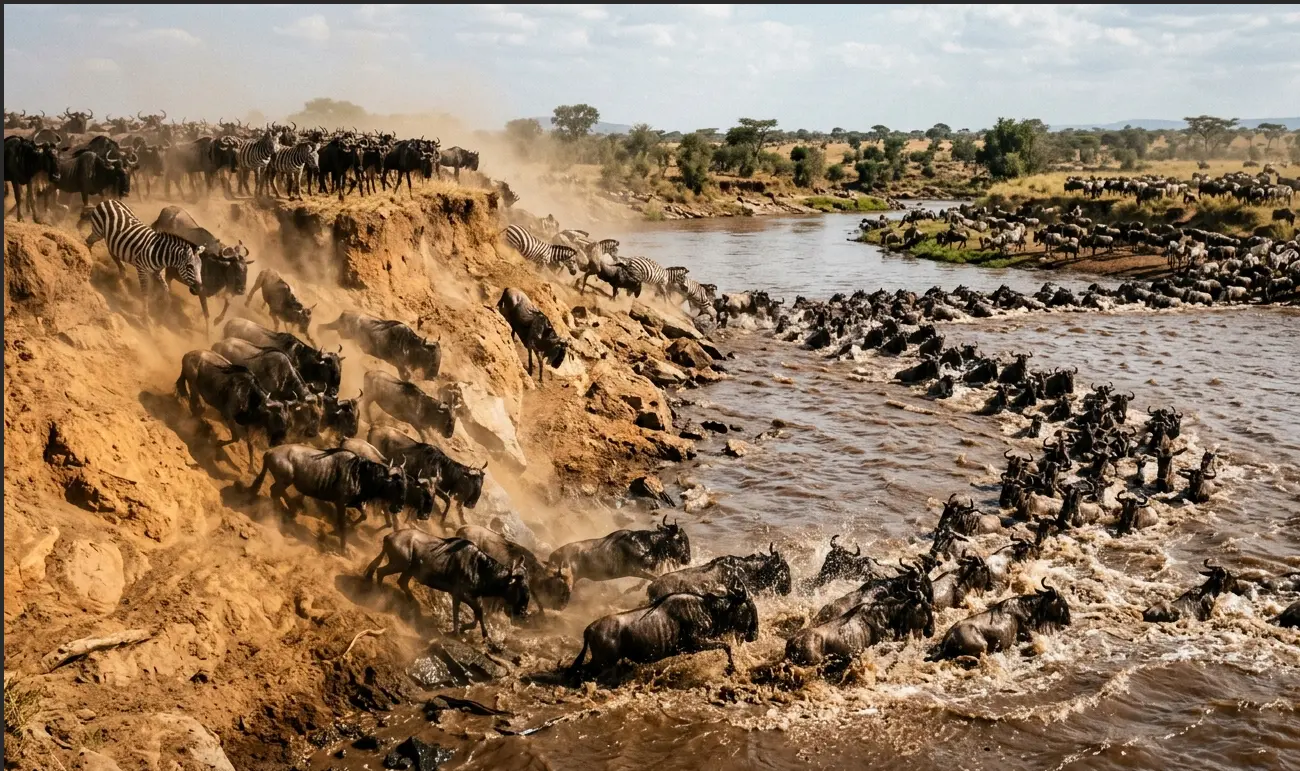
The best time for Great Migration Masai Mara 2026 is a window from late June to October, with peak river crossings typically occurring between August and September. While the herds follow the rain rather than a calendar, late July through September offers the highest frequency of dramatic Mara River crossings.
Wildebeest cross the Mara River multiple times during the Great Migration in 2026—not just once. When it rains on the Tanzania side, herds move back south. When the Mara grass recovers, they return north. This to-and-fro pattern continues throughout the July to October window.
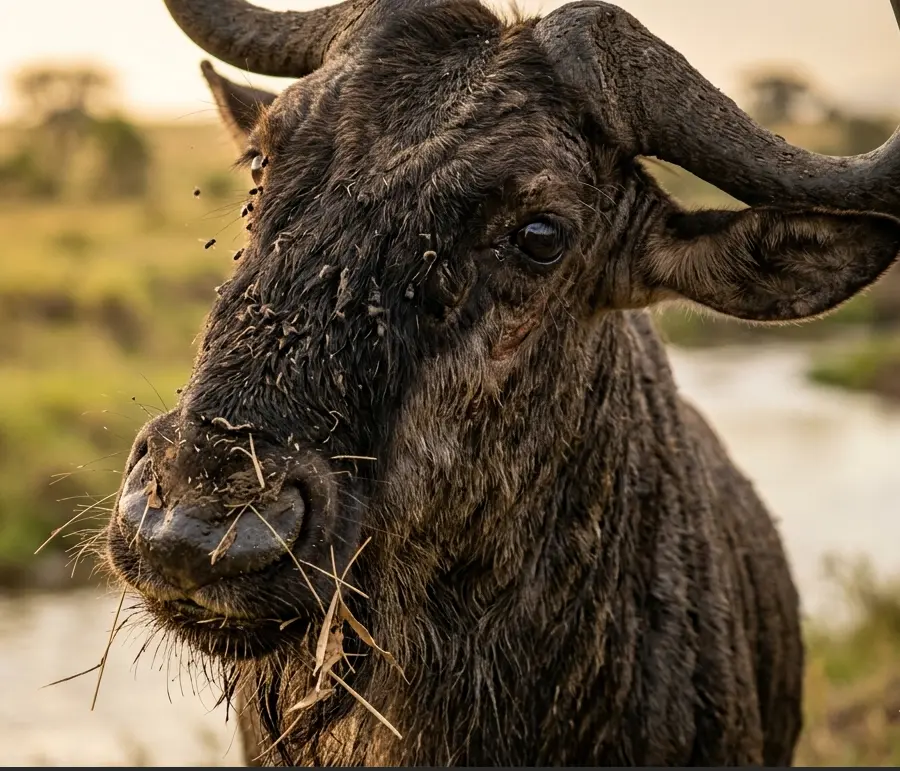
While generic booking platforms claim the migration is a fixed July-to-October event, the 2026 reality on the ground is that late June offers the best “information gain” at the Sand River, where you can witness the first arrivals in near-solitude. Evans Kimojino, a Mara-based safari guide and Hilmuks ground partner with 1,300+ documented wildlife sightings, observed that the migration does not move in one direction; it is a dynamic, rainfall-driven cycle. For the complete logistics of river crossing mechanics, see our Great Migration Masai Mara complete operator’s guide.
QUICK REFERENCE TABLE
|
Month |
What You See |
Crowd Level |
Fee |
Hilmuks Verdict |
|
Late June |
First Sand River arrivals — quiet, intimate |
Very low |
Lower pre-peak rate |
Best for peaceful first views |
|
July |
Herds massing at Lookout Hill, tension builds |
Building |
$200 peak begins |
Best for photographers wanting space |
|
August |
Main Event — maximum crossings, maximum chaos |
200+ vehicles |
$200 peak |
Best for spectacle seekers |
|
September |
Back-crossings — energised predators, fewer cars |
Moderate — 30% fewer |
$200 peak |
Best overall for drama plus access |
|
October |
Quiet departure toward Serengeti |
Low |
$200 peak |
Best value for luxury camps |
Quick Navigation-Jump to Your Section
The 2026 Migration Forecast: Why La Niña is Shifting the Timing
The best time for Great Migration Masai Mara 2026 is dictated entirely by the sky, as the herds follow the scent of rain rather than a calendar. When the southern Serengeti plains dry out, the wildebeest move north in search of fresh grass, returning south only when the rains replenish their birthing grounds. Because these patterns shift annually based on moisture levels, there is no fixed date—only a seasonal window influenced by the movement of clouds.
Meteorological patterns for the 2026 season suggest a shift in the traditional arrival window. According to the Eastern Africa Climate Seasonal Outlook via ReliefWeb, the 2025/2026 La Niña cycle has caused drier-than-average conditions in northern Tanzania. When the Serengeti grass depletes faster due to drought, it creates an earlier “push” for the herds to cross the border into Kenya.
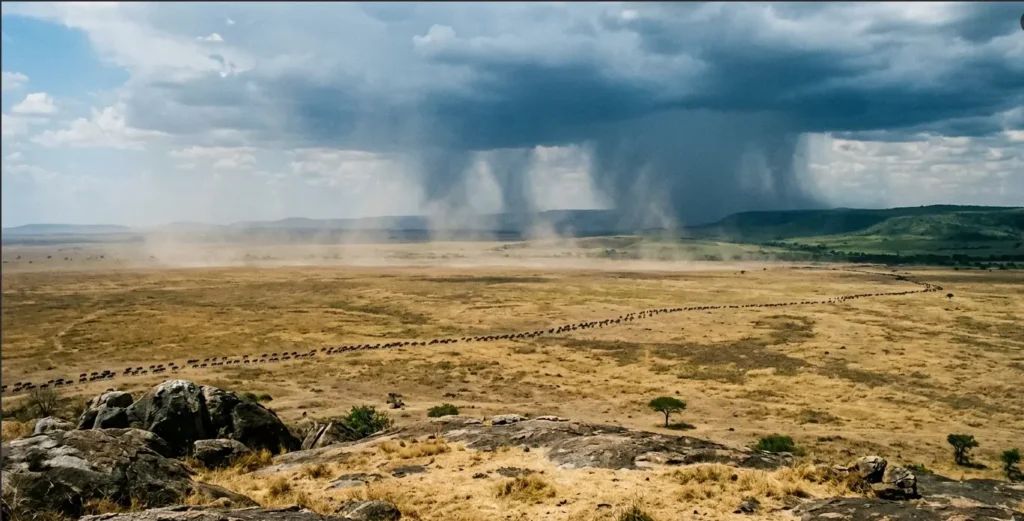
🛡️ OPERATOR INSIGHT: Based on these climate signals, our operational team anticipates the wildebeest migration 2026 dates and weather impact could result in an arrival as early as late June. Therefore, arriving ten days early in 2026 could place you at the river before the peak-season vehicle congestion begins.
Despite the scientific forecasts, it is important to remember that wild animals do not follow meteorological models with 100% precision. Our lead guide’s field observations confirm that while the “front of the wave” may arrive early, the July to October window remains the most reliable timeframe for consistent activity. The specific day you witness a crossing will still depend on localized rain showers that occur just 48 hours before your game drive.
With the 2026 forecast context clear, let’s look at what each month in the window actually delivers—and the secrets most guides won’t tell you about each phase.
Masai Mara Migration Month-by-Month Forecast 2026: The Operator’s Reality
The best time for Great Migration Masai Mara 2026 is often misunderstood as a one-way ticket north, but the ground reality is far more fluid. River crossings do not happen just once; during the July to October window, the herds move to and fro across the Mara River depending on localized rainfall. If a storm hits the Serengeti side, the herds cross back south; when the Mara grass regenerates, they pivot north again, making the Masai Mara migration month-by-month forecast a study in dynamic animal behavior rather than a fixed calendar.
Late June: The Sand River Curtain Raiser
The migration’s first entry into Kenya happens at the Sand River, a shallow crossing on the Tanzania border that most generic guides completely ignore. Because the water level is low, the herds cross with minimal drama—no plunging jumps or crocodile ambushes—offering a quiet, intimate view of the “scouts” moving across open plains. This is the best time for Wildebeest Migration Masai Mara 2026 if you want to avoid the 200-vehicle scrums and capitalize on pre-peak lodge rates before the July 1st price hikes.
July: The Tension Phase
By July, the herds mass near Lookout Hill, testing the steeper banks of the Mara River as the wildebeest migration 2026 dates and weather impact begin to dictate their nerves. This is the “will-they-won’t-they” month where thousands of animals gather at the water’s edge, frequently turning back in a dust-filled panic before the first brave leader finally plunges in. July offers a superior balance for photographers, providing dramatic bank action with significantly fewer vehicles than the mid-August peak.
🛡️ OPERATOR INSIGHT: While many travelers wait for the “Main Event” in August, mid-July is often the smartest window for high-action sightings without the vehicle gridlock. If you are timing your arrival to beat the crowds, see our guide on the Nairobi to Masai Mara drive time 2026 to ensure you don’t waste your first permit window sitting in traffic.
August: The Main Event
August is the statistical peak for those seeking the maximum best time for Great Migration Masai Mara 2026 spectacle, characterized by the largest herd concentrations and the most frequent jumping sequences. It is the most aggressive month for crocodile activity, but it comes with a high “UX cost” in the form of massive vehicle clusters at every major crossing point. If you choose August, expect a high-pressure environment where driver positioning and patience are tested to the limit.
September: Photographer’s Gold
September is the “back-crossing” month and, arguably, the best time for Great Migration Kenya 2026 for serious wildlife enthusiasts. As local showers return to the Serengeti, the herds cross south from the Mara Triangle back to Greater Mara, often moving in both directions within the same week. Vehicle density drops by nearly 30%, and the crocodiles—now fully energized after a month of feeding—are faster and more aggressive in their attacks.
October: The Quiet Departure
October marks the final phase as the survivors move south through the Mara Triangle toward their Tanzanian breeding grounds. While crossings still occur, they are less frequent, but the reward is a “softening” of lodge rates at high-end properties and a much more relaxed game-viewing experience. It is the perfect window for travelers who prioritize luxury accommodation and quiet landscapes over the high-octane chaos of August.
Each month possesses a unique character, but understanding which specific river crossing point suits your travel dates is the secret to a successful safari. Now that we’ve broken down the calendar, let’s look at the “Sand River vs. Mara River” showdown to see where you should actually be standing…
Sand River vs. Mara River: Which Crossing Suits Your Month?
Choosing the best time for Wildebeest Migration Masai Mara 2026 involves more than just picking a month; it requires choosing the right river. While the Mara River is the star of National Geographic, the Sand River is the operator’s secret for those who hate crowds. Understanding the physical differences between these two locations will determine whether you see a peaceful procession or a high-stakes survival drama.
| Factor | Sand River (Late June – Early July) | Mara River (July – October) |
| Water Level | Shallow — walk-through crossing | Deep — jumping, plunging, crocodile territory |
| Drama Level | Low — no jumping or ambush | High — full spectacle crossing |
| Vehicle Density | Very low — first arrivals only | Up to 200+ vehicles at peak crossings |
| Photography | Clean, unobstructed, intimate | Chaotic, dramatic, competitive positioning |
| Best For | Peaceful, front-of-the-wave views | Drama seekers and action photographers |
| Fee Context | Often falls in the pre-peak rate window | Strict peak $200 fee season |
The Hilmuks Recommendation
Our team takes clients to the Sand River in late June specifically to experience the “front of the wave.” This is the most underused timing in the migration calendar, allowing you to witness the quiet arrival of the first scouts before the main herds—and the main crowds—clog the reserve. If you value an intimate connection with the landscape over the noise of a hundred idling engines, this is your target.
🛡️ OPERATOR INSIGHT: The Sand River crossing is often the only place to see the migration without the “spectator” atmosphere of the main river. To ensure you have the correct documentation for these border-adjacent tracks, see our Masai Mara park fees and payment guide to avoid permit delays at the gate.
The Mara River remains the king of drama, where the steep banks and deep currents force the iconic “plunging” behavior that travelers dream of seeing. However, the sheer volume of vehicles in August can make positioning a nightmare for serious photographers. If you want the intensity of the Mara River but with a professional edge, you need to look at the month most tourists overlook.
While August gets the fame, September delivers a fundamentally different crossing experience that Evans considers the highlight of the entire season. Let’s dive into why the “back-crossing” month is actually the deadliest—and most rewarding—window for a safari.
The September Back-Crossing: Why the Deadliest Month Has the Best Action
September is the “insider’s month” for the Great Migration because it introduces a counter-intuitive movement known as the back-crossing. While generic guides focus on the northward arrival, our ground team confirms that September is defined by herds moving from the Mara Triangle back across the river into Greater Mara (the Sekenani and Talek side). This shift occurs as local rainfall patterns dictate the wildebeest migration 2026 dates and weather impact, forcing the herds into a high-frequency, two-way river crossing cycle.
The Energized Predator Factor
By September, the Nile crocodiles have been feeding actively for over two months and have reached peak hunting aggression. Unlike the sluggish first strikes of July, September attacks are observably faster and more strategic, providing the raw wildlife drama that National Geographic photographers wait all year to capture. On the banks, lions and cheetahs are at their maximum hunting efficiency after weeks of easy prey, making this the most lethal month for the herds and the most rewarding for observers.
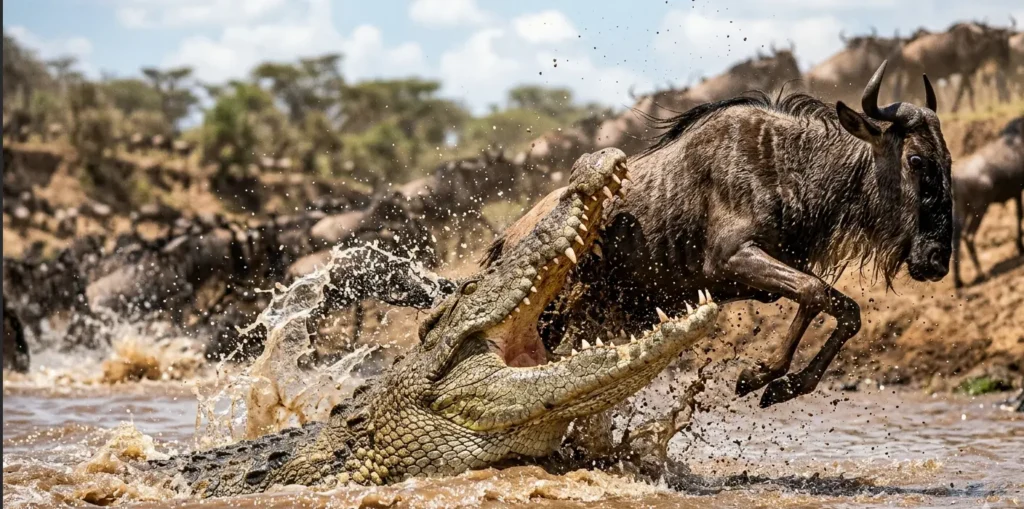
🛡️ OPERATOR INSIGHT: A critical behavioral detail many travelers miss is the “Predator Stay-Behind.” While the wildebeest eventually return to Tanzania, the resident lion prides and cheetah families do not; they remain in their Mara territories. This means September visitors witness intense crossing drama while the predators—who have no reason to follow the herds south—remain concentrated at the river banks in peak condition.
The Crowd Advantage
Choosing September offers a significant logistical edge, as vehicle density at major crossing points typically drops by 25 to 30 percent compared to the August peak. This reduction in noise and “car-clutter” allows for better positioning and longer, uninterrupted sightings of the back-crossing herds. Because the animals are mature and the herds are spread out across the Triangle and Greater Mara, you get a much more expansive view of the ecosystem’s survival mechanics.
IMPORTANT: The shift in herd movement toward the Talek and Sekenani sides in September changes your gate strategy. To ensure you aren’t caught on the wrong side of the river at sunset, see our Masai Mara park fees 12-hour rule guide to plan your exit times and avoid the heavy fines for late departure.
With the seasonal wildlife reality now clear, the final practical question is how to translate this ground intelligence into a concrete booking and budget decision.
Planning Your 2026 Migration Visit: Booking Timing, Cost, and When to Avoid
The best time for Great Migration Masai Mara 2026 requires a strategic booking window that generic travel sites often overlook. For travel during the July and August peak, you should book your accommodation at least 6 to 12 months in advance. The premier river-adjacent camps sell out their peak allocations early, and because of high demand, these properties rarely offer last-minute discounts.
The Migration Cost Calendar
Timing your visit can significantly impact your budget and the quality of your sightings. Late June is the “secret window” where you may still benefit from lower pre-peak entry rates and lodge prices before the high-season surge. From July 1st through October, the Narok County Government sets the Masai Mara park entry fee at a flat $200 per person per day, which is the highest rate of the year.
🛡️ OPERATOR INSIGHT: Whichever month you choose, remember that your park permit is not valid for 24 hours; it expires at 6:00 PM on the day of entry. To maximize your time at the river crossings without paying for an extra day, see our Masai Mara 12-hour permit timing guide to learn how to structure your gate entry.
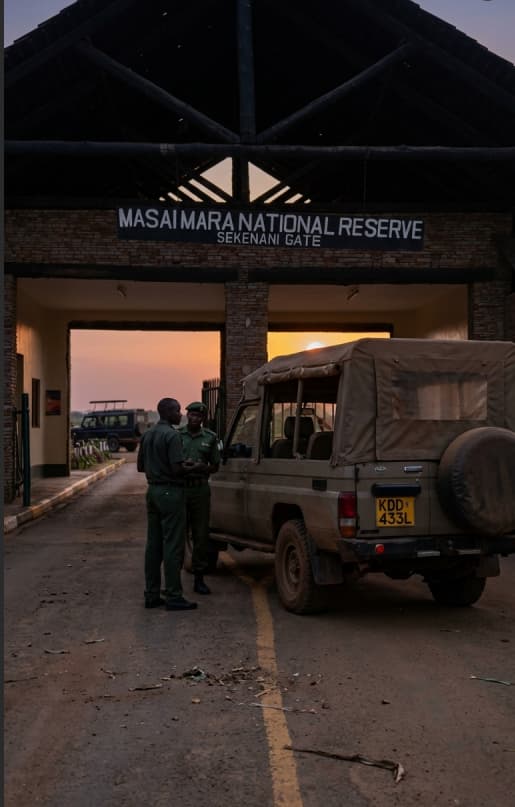
Logistics and Payment Reality
The Masai Mara does not use the KWS eCitizen system for park fees; it operates under the Narok County payment portal. To ensure you aren’t stuck at the gate while the herds are crossing, see our Masai Mara park fees and payment guide for the correct step-by-step process. Additionally, your arrival method determines how much of the migration you actually see on day one; for a comparison on arrival efficiency, see our guide to fly or drive to Masai Mara for migration season.
When to Avoid the Masai Mara for the Migration
While the Mara is a year-round destination, certain months offer zero migration activity. April and May are the “Long Rains” period; the plains are muddy, many tracks are impassable, and the wildebeest are still 500 miles south in the Serengeti. November marks the “Short Rains” and the departure of the final herds, meaning crossing activity is minimal and the high-stakes drama has largely ended.
💡 PRO TIP: If you want the best time for Great Migration Kenya 2026 but can’t book a year in advance, aim for September or October. These months often see late cancellations from August travelers, and because the herds are back-crossing, you get elite-level action with slightly more flexibility in lodge availability.
Conclusion on Best Time for Great Migration Masai Mara 2026
The best time for the Great Migration Masai Mara in 2026 is the month that matches your specific goals — late June for intimate first-arrival solitude, July for building tension without August’s gridlock, August for maximum spectacle, September for the back-crossing drama and energised predators, October for value and quiet departure. Evans, who has guided clients through every phase of this cycle across multiple seasons, puts it simply: choose your month based on what you want to feel, not what the calendar tells you is “best.” Then arrive early, stay patient, and let the river decide the rest.
FAQ — Expert Answers on the Best Time for Great Migration Masai Mara 2026
What is the best month to see the Great Migration in Masai Mara?
The best month for the Great Migration in Masai Mara in 2026 depends on your priority. August delivers the highest crossing frequency and largest herd concentration but with up to 200 vehicles at popular crossing points. September delivers almost as much drama with 25 to 30 percent fewer vehicles and back-crossing action. Late June at the Sand River offers the first arrivals in near-solitude. For most first-time visitors balancing action and access, late July to mid-September is the optimal window.
When do wildebeest arrive in Masai Mara in 2026?
Wildebeest typically begin entering Kenya via the Sand River in late June or early July, with the main Mara River crossing season running from July through October. In 2026, La Niña weather patterns affecting northern Tanzania may push the arrival slightly earlier than average. Exact arrival dates cannot be predicted — the herds follow rainfall, not a calendar.
How long do the wildebeest stay in Masai Mara?
The wildebeest typically remain in the Masai Mara from approximately July through October — roughly four months. The exact departure depends on when rains return to Tanzania’s Serengeti, pulling the herds south. September is the primary month for the return movement, though stragglers can remain into November.
Do wildebeest cross the Mara River more than once during the migration?
Yes — wildebeest cross the Mara River multiple times during the July to October window. When it rains on the Tanzania side, herds move back south across the river. When Mara grass recovers, they return north. This to-and-fro pattern based on local rainfall means crossings can happen in both directions within the same week, and September in particular delivers multiple back-crossings as the final departure begins.
Is September or August better for the Great Migration in Masai Mara?
Both months deliver exceptional crossing action, but September has specific advantages. Crocodiles are fully energised from a month of feeding, making their attacks faster and more aggressive. Predators are at peak hunting condition. Vehicle density is typically 25 to 30 percent lower than August. The back-crossing phenomenon — herds moving south toward Tanzania — creates additional crossing drama. For wildlife photographers specifically, September is the month our team consistently recommends.
When should I avoid Masai Mara during migration season?
Avoid the Masai Mara in April and May — these are the long rains when the wildebeest are still in Tanzania’s Serengeti, access roads are muddy, and migration activity in Kenya is zero. June is acceptable with pre-migration buildup and lower rates. November marks the tail of migration activity with decreasing crossing frequency as the short rains return.
How far in advance should I book for the Great Migration 2026?
For July and August travel, book accommodation 6 to 12 months in advance. The best-positioned river-proximity camps sell out their peak season allocations early. September and October offer more booking flexibility — 3 to 4 months advance notice is typically sufficient. For the Great Migration specifically, earlier is always safer as this period represents the highest demand window of the entire Kenya safari calendar.