Email:
 Phone:
 WhatsApp:

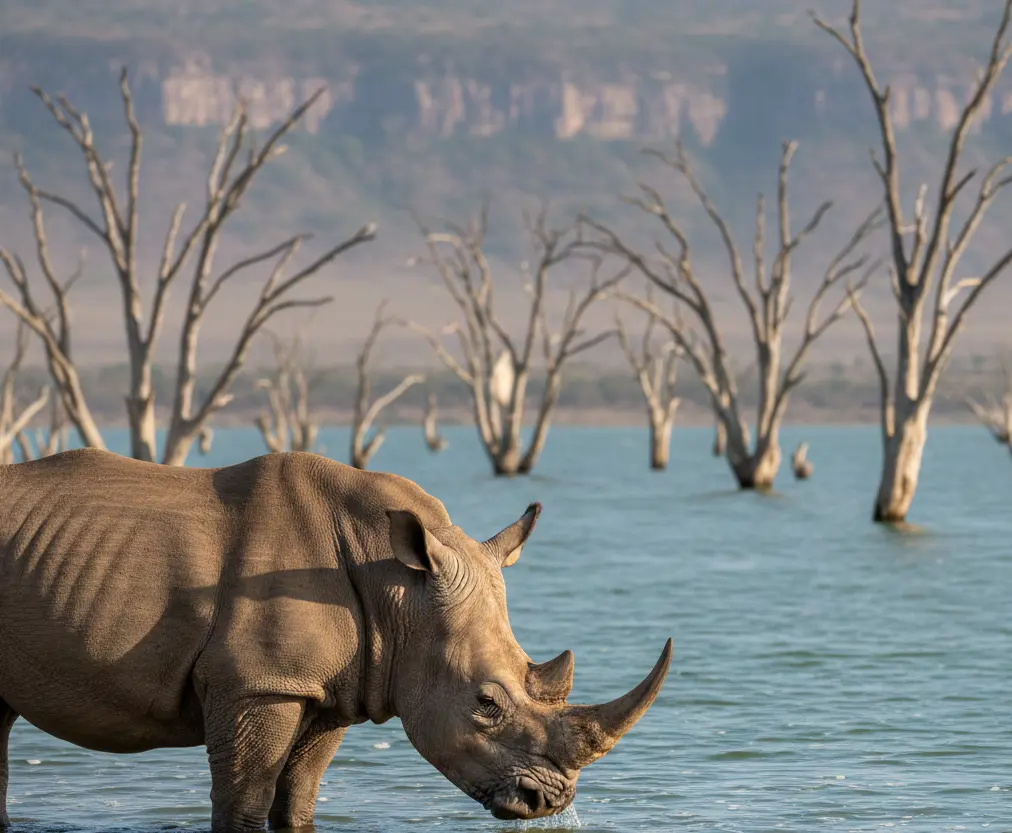
Lake Nakuru Safari Photography in 2026 is a technical challenge where success depends on adapting to the lake’s dramatic water expansion. The best Lake Nakuru photography tips involve using a 600mm lens for birdlife and entering via Lanet Gate to keep the morning sun behind your sensor.
Quick Answer: Lake Nakuru Safari Photography is the practice of capturing wildlife and landscapes in a park defined by rising water levels. In 2026, it requires focal lengths of 600mm+ for rhinos and flamingos, as submerged roads have increased shooting distances, making old 400mm lens recommendations largely obsolete for professionals.
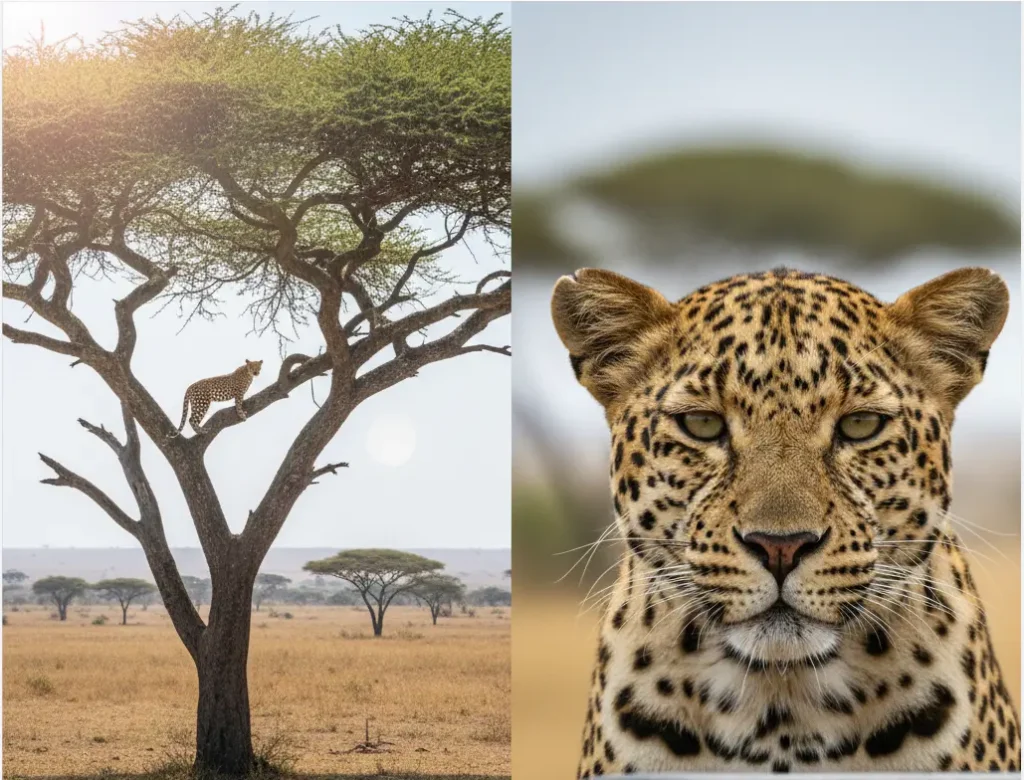
While most travelers arrive expecting the classic “pink rim,” the ground reality has shifted. If you are packing gear based on a 2022 guide, you are likely bringing the wrong tools for the current environment. From the “Dead Forest” acacia skeletons to the high-contrast light at Baboon Cliff, mastering the “New Lake Nakuru” requires an operator’s specialized knowledge.
Before you mount your tripod, ensure you have cleared your park fees on eCitizen and protected your glass from the alkaline dust, as sensor spots are the #1 photo-killer this season… but that is not all.
Quick Navigation: Jump to your Section
The Focal Length Conflict: 2026 Ground Reality
The golden rule of Lake Nakuru Safari Photography has officially changed because the lake itself has moved. Since the massive water level spikes of the last few seasons, the traditional shoreline tracks where photographers used to park are now several meters underwater. This means the wildlife—specifically the rhinos and the remaining flamingo colonies—are standing significantly further away from the current drivable roads.
The 2026 Photography Reality Check
| Feature | Legacy Guide Advice (Pre-Flooding) | Hilmuks Operator Reality 2026 |
| Recommended Lens | 300mm – 400mm Zoom | 600mm Prime or 1.4x Extender |
| Primary Subject | The “Pink Rim” Shoreline | The “Dead Forest” Gothic Skeletons |
| Shooting Distance | 20m – 50m from shoreline | 100m+ (Due to submerged tracks) |
| Best Gate Entry | Main Gate (Closest to Town) | Lanet Gate (For the “Sun Hack”) |
| Morning Threat | Generic Haze | Rironi Construction Dust & Alkaline Silt |
| Park Fee System | Cash or Card at Gate | 100% Pre-paid eCitizen (KWSPay) |
Why this matters for your 2026 shots: Relying on old data isn’t just a matter of preference; it’s the difference between a sharp, frame-filling rhino portrait and a grainy, heavily-cropped disappointment. The water hasn’t just risen; it has fundamentally changed the physics of light and distance in the park.
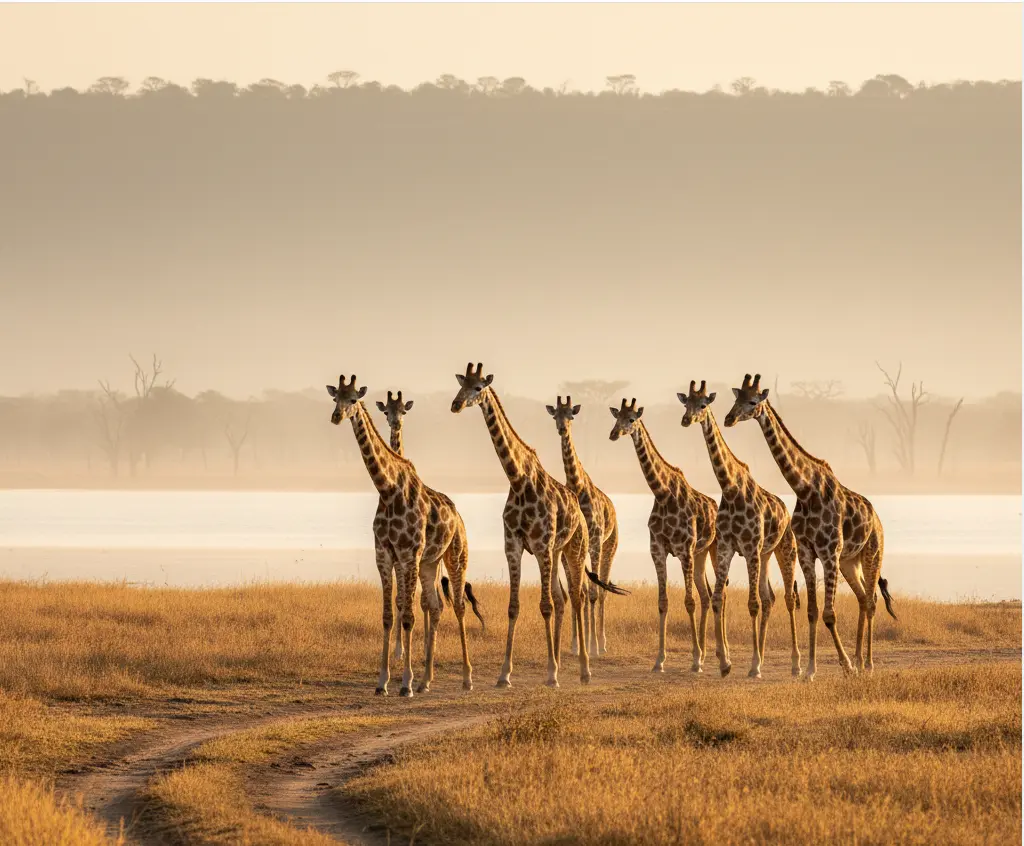
Because the park described in 2022 travel blogs no longer exists, your old tactical approach must change. While a 400mm lens was once the “gold standard” for the Rift Valley, the increased wildlife photography distance in 2026 has made this focal length feel like a wide-angle lens. You will find yourself constantly cropping images, which destroys the detail in the rare Rothschild giraffe’s coat or the textures of a leopard in the yellow fever trees. This distance makes it even harder to spot the subtle markers of the park’s rarest residents; see our Rothschild’s giraffe identification guide to learn how to distinguish these ‘white-stocking’ giants from their reticulated Masai cousins before you hit the shutter.
🛡️ OPERATOR INSIGHT: In 2026, the 600mm lens vs 400mm debate is over; you absolutely need the extra reach or a high-quality 1.4x teleconverter. Because the 2026 lake levels have pushed the shoreline back, a 600mm equivalent is now the minimum requirement to capture a frame-filling shot of a rhino without risking a “harassment” fine for off-roading. For more on the specific items you’ll need to protect this heavy glass, see our Lake Nakuru safari packing list.
I’ve seen too many photographers leave frustrated because they couldn’t get “the shot” with their standard kit. The rising water hasn’t just moved the animals; it has changed the perspective and the compression required to make the background Rift Valley walls pop. Stick to the longer glass, and you’ll find that the “New Lake Nakuru Park” offers a unique, flooded-forest aesthetic that older guides simply cannot describe.
If you are combining this Rift Valley shoot with a trip down south, your glass will face an entirely different test against the fast-moving river crossings covered in our Masai Mara Migration Photography 2026 logistics guide.
With the gear reality settled, the next step is positioning your vehicle to win the light battle before the Rift Valley haze sets in…
The “Lanet Gate” Light Strategy (The Sun Hack)
In 2026, your choice of entry point is the single most important factor for a successful Lake Nakuru Safari Photography morning session. Most photographers instinctively head to the Main Gate because it is closer to the city center, but this is a tactical error for those chasing world-class images. Entering from the west side (Main Gate) at sunrise forces you to shoot directly into the rising sun and the thick lake haze that characterizes the Rift Valley floor.
🛡️ OPERATOR INSIGHT: The “Sun Hack” for 2026 is to use Lanet Gate for your morning entry. This positioning puts the sun directly behind your shoulder as you drive toward the shoreline, illuminating the rhinos and giraffes with crisp, front-lit golden light. For a deep dive into the logistics of this maneuver, including exact coordinates and transit times, check our guide on which Lake Nakuru gate to use.
By the time the sun is high enough to wash out the colors, you will have already secured your best shots with perfect contrast. Following these specialized Lake Nakuru photography tips ensures you avoid the “milky” white-out effect that ruins 70% of morning shots taken from the opposite side of the park. Lanet is objectively the best gate for photos because it allows you to hit the wildlife-heavy eastern acacia forests before the heat shimmer begins to distort your long-lens compression.
💡 PRO TIP: If you are coming from Nairobi, don’t let the matatu drivers convince you that the Main Gate is the only way in. You can save significant time and sensor-cleaning costs by taking the Lanet shortcut. If you are driving, you can learn more on how to beat the city traffic and Rironi dust to ensure you arrive at the gate while the light is still soft and usable.
Capturing the wildlife in this “front-lit” glory is just the first step; now we need to look at the “Gothic” landscape that has emerged from the rising waters…
The “Dead Forest” Aesthetic: Capturing the Gothic Landscape
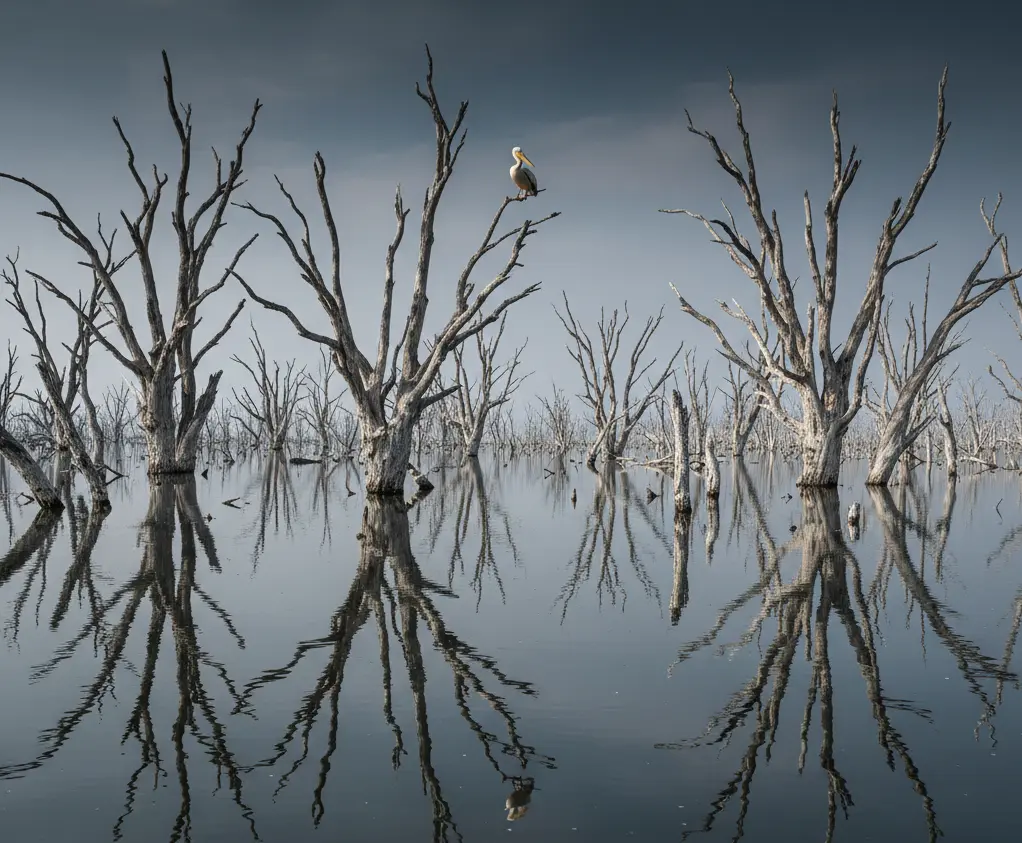
The most striking change in 2026 is the disappearance of the wide, grassy shorelines that once hosted millions of birds. Instead, Lake Nakuru Safari Photography now centers on the “Dead Forest”—thousands of submerged acacia trees that have been bleached white by the alkaline water. These skeletal structures provide a haunting, high-contrast background that creates much more “Information Gain” for your portfolio than a standard grassy plains shot.
This shift means that structural landscape photography has become a critical skill for anyone visiting the park. You are no longer just looking for a bird on a log; you are composing shots where the reflections of these white branches in the dark, still water provide a symmetrical, “Gothic” frame for a passing buffalo or a lone pelican. Because of the flamingo migration 2026 patterns, which have seen many flocks move to Lake Bogoria, these trees now serve as the primary visual anchor for the park’s identity.
🛡️ OPERATOR INSIGHT: Don’t waste your morning chasing the “pink rim” fantasy of 2010; the current water depth makes it impossible. Instead, focus your lens on the flooded acacia groves near the northern end. To understand why the birds moved and where the few remaining clusters hide, see our honest insider guide to flamingos in Lake Nakuru.
When shooting in the Lake Nakuru dead forest, pay close attention to your exposure compensation. The white, salt-crusted wood can easily trick your camera’s meter into underexposing the rest of the scene. These Lake Nakuru photography tips 2026 are what separate a professional gallery from a set of grey, muddy snapshots.
Now that we’ve mastered the flooded landscape, we need to climb higher to avoid the Rift Valley haze at the park’s most famous overlook…
The Baboon Cliff Photography Secret
Most photographers fail at Baboon Cliff because they arrive at the wrong time, usually following the standard mid-day tourist flow. For Lake Nakuru Safari Photography, this overlook is a double-edged sword; while it offers the most expansive view of the Rift Valley, it is also the first place to be ruined by “heat shimmer.” Between 11:00 AM and 3:00 PM, the rising air currents from the lake bed create a blurry distortion that makes sharp wide-angle safari shots nearly impossible to achieve.
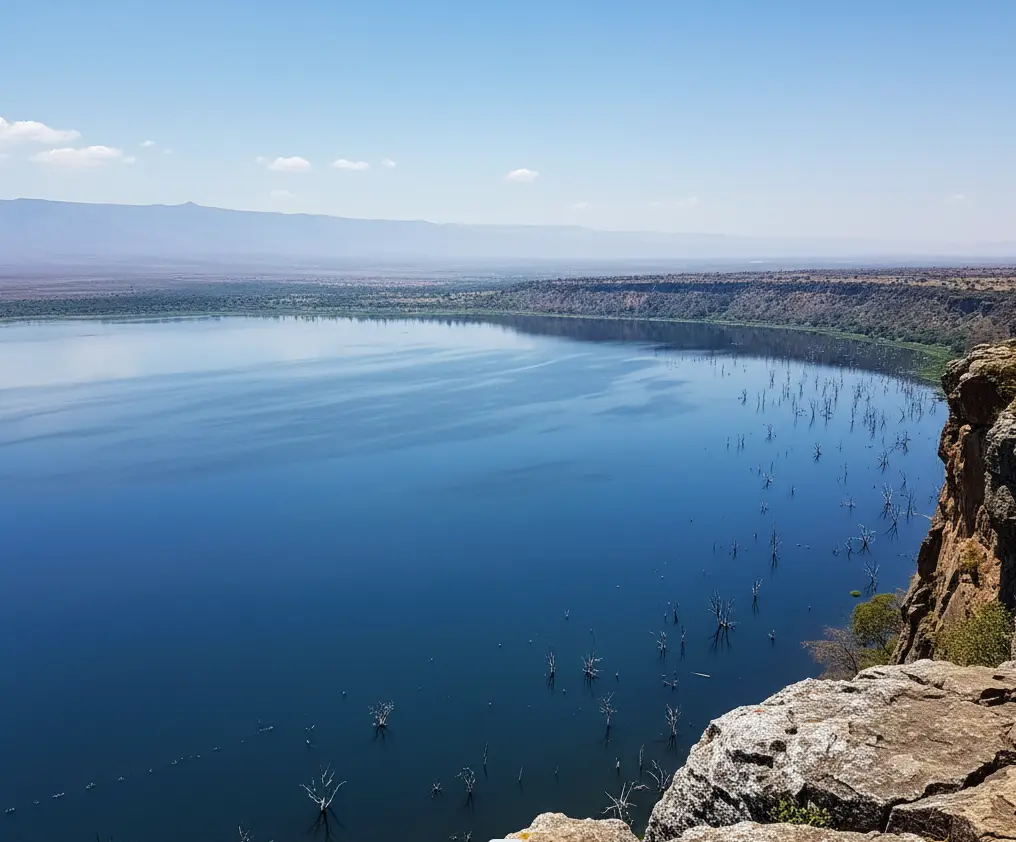
To secure publication-quality Baboon Cliff photos, you must be at the summit by 6:45 AM or wait until the final hour before the gates close. During these windows, the air is stable, allowing you to capture the distinct blue-to-pink gradient of the water and the crisp silhouettes of the submerged acacias below. This specific heat haze timing is the secret to why some galleries look professional while others look like amateur snapshots.
🛡️ OPERATOR INSIGHT: If you miss the early morning window, don’t try to “fix it in post” with dehaze tools—it never looks natural. Instead, use that high-sun period to relocate to the lower-altitude forests where the canopy provides shade. To plan your movement between these elevations without getting lost in the new 2026 road detours, see our Lake Nakuru self-drive guide.
When practicing view point photography at this height, remember that the “New Nakuru” water levels have brought the lake much closer to the base of the cliff. This has created a spectacular reflection of the sky that wasn’t there five years ago, offering a fresh perspective for Lake Nakuru photography tips 2026. The unique “mirror effect” is only visible when the wind is low, typically in the first thirty minutes after sunrise.
🐒⚠️CAUTION: While your eyes are on the horizon, keep your gear bag zipped shut and close to your body. The baboons here are “operator-level” thieves who have learned that camera bags often contain snacks. For a full breakdown of the best spots to set up your tripod safely, check our guide on the best viewpoints in Lake Nakuru.
Now that we’ve mastered the high-altitude vistas, let’s head back down to the dusty reality of the transit roads where your sensor faces its biggest threat…
The Rironi Dust & Sensor Trap
The greatest threat to your Lake Nakuru Safari Photography doesn’t happen inside the park; it happens on the way there. The ongoing Rironi-Mau Summit road works have created a permanent plume of fine volcanic silt that bypasses standard weather sealing on even professional-grade camera bodies. This abrasive Rironi construction dust is notorious for finding its way into your lens barrels and, more critically, onto your sensor during lens changes.
If you arrive at the gate with a contaminated sensor, every shot of the “New Nakuru” shoreline will be marred by dark “dust bunnies” in the sky portions of your frame. To maintain professional-grade camera gear protection, you must avoid changing lenses anywhere along the A104 highway. Even a five-second exposure to the air near the construction zones can necessitate an emergency sensor cleaning in Kenya, which is difficult to find once you have passed Limuru.
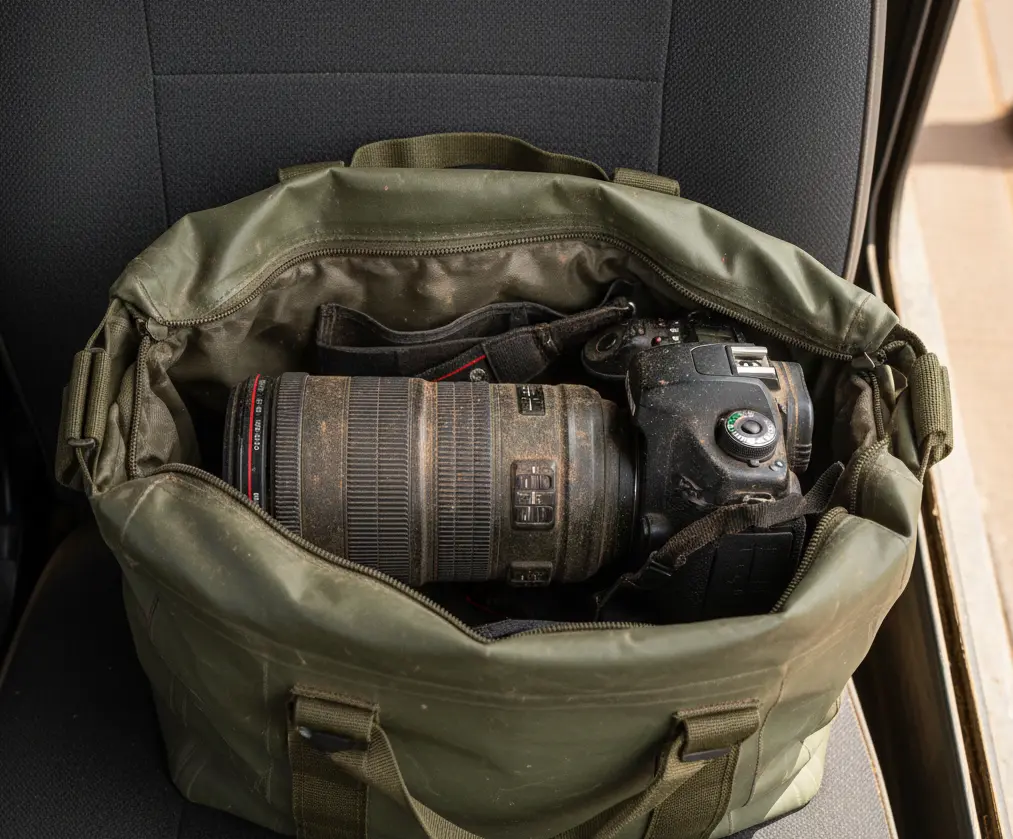
⚠️ 2026 ROAD ALERT: The current Nairobi to Nakuru road status involves several dusty diversions that can trap fine particles in your vehicle’s air vents, which then settle on your equipment. To avoid a gear disaster, keep your camera inside a sealed dry bag or a wrapped padded case until you are safely past the construction-heavy Rironi stretch. For a full breakdown of the current transit times and the best lanes to take to minimize exposure.
Applying these Nakuru photography tips 2026 before you even see a rhino will save you hours of “spot-healing” in post-production. I have seen countless photographers ruin $5,000 setups because they left their gear on the car seat while driving through the Rift Valley escarpment. A simple plastic cover or a dedicated gear trunk is the “moat” that protects your investment during the Nairobi to Nakuru transit.
Once you have safely navigated the dust traps and arrived at the gate, you’ll need to navigate the latest digital and legal requirements for professional shooting…
The 2026 Photography Logistics (eCitizen & Drones)
Navigating the legal side of Lake Nakuru Safari Photography is no longer as simple as showing up with a long lens. In 2026, the Kenya Wildlife Service (KWS) has fully integrated the “KWSPay” system, requiring all technical fees to be cleared before you reach the gate. If you are carrying professional-grade equipment, rangers often perform a “visual audit” of your gear bag to ensure your entry permit matches your equipment level.
One of the most overlooked Lake Nakuru photography tips involves the “Professional vs. Personal” gear distinction. While standard DSLRs for personal use are covered by your entry ticket, using large-scale tripods or commercial filming rigs requires a professional photography permit. Failing to declare commercial intent can result in an on-the-spot fine of up to $200, a detail many generic guides fail to mention.
Logistical friction decreases when your base is built for technical workflows. We have ranked the best Lake Nakuru lodges for photography based on vibration stability and 4:00 AM gate accessibility to ensure your gear investment isn’t neutralized by poor infrastructure.
🛡️ OPERATOR INSIGHT: The eCitizen system can be temperamental when processing international cards at the gate due to poor network connectivity. To avoid being stuck at the entrance for hours, ensure you complete your eCitizen park payments at least 24 hours in advance. For a step-by-step walkthrough on avoiding common portal errors, see our guide on how to pay Lake Nakuru park fees on eCitizen.
When it comes to aerial perspectives, the drone laws in Kenya parks are extremely strict and actively enforced in 2026. You cannot simply launch a drone from your sunroof; you must possess a Remote Operator Certificate (ROC) and a specific KWS authorization letter for that day. Without these, your drone will be confiscated at the gate, and you may face legal action under the Civil Aviation Act.
💡 PRO TIP: If you are planning a multi-day shoot, consider staying at a lodge inside the park to maximize your “Golden Hour” access. Staying inside the gates allows you to be on location 30 minutes before the day-trippers arrive from the city. To compare the best bases for your gear setup, check our complete guide for Lake Nakuru lodges.
With your permits secured and your gear protected from the dust, you are finally ready to capture the raw, flooded beauty of Nakuru. I’ll see you behind the lens on the Lanet tracks!
📸 Lake Nakuru Photography FAQs 2026
Do I need a professional permit for a high-end mirrorless camera?
No, as long as the photos are for personal use or social media. However, in 2026, KWS rangers at the Lanet and Main gates have been instructed to flag “Commercial Rigs.” If you are using a tripod larger than a standard travel mount, a gimbal, or multiple bodies with fixed 600mm+ prime lenses, you may be asked to pay the Professional Photography fee (approx. $200 per week for a small crew).
Can I fly a drone over the flamingos in 2026?
Absolutely not without a three-tier permit process that takes 3–6 months. You require KCAA registration, a Ministry of Defence “No Objection” letter, and a specific KWS filming license. Attempting to fly a drone “stealthily” from your sunroof is a high-risk move; KWS has increased drone-detection patrols in 2026, and unauthorized use carries an immediate equipment confiscation and a heavy fine.
What is the fine for off-roading to get a closer shot?
The current 2026 fine for off-roading or “encroaching the shoreline” is KSh 10,000 ($75 – $100) per vehicle. With the lake expansion reaching record levels, the ground near the water is extremely unstable. Rangers are strictly enforcing the 100-meter “Buffer Zone” rule to prevent vehicles from sinking into the alkaline silt, which can swallow a 4×4 tire in seconds.
Is there a fee for “Lens Changes” or extra gear?
There is no specific fee per lens, but the eCitizen entry permit covers your presence in the park, not commercial production. If you are a “content creator” selling a course or high-res prints, you are legally required to declare this. Hilmuks Operator Secret: Always carry your eCitizen receipt as a PDF on your phone; the network at the gate is notoriously slow, and “checking the system” can eat up 45 minutes of your precious morning light.
Can I hire a professional photography guide at the gate?
While KWS rangers are excellent spotters, they are not photographers. If you need a guide who understands “Rule of Thirds” and positioning the vehicle for the best light angle, you should book a specialist operator in advance. Our guides at Hilmuks are trained specifically in vehicle positioning to ensure your lens isn’t blocked by brush or other safari vans.