Email:
 Phone:
 WhatsApp:

Quick Answer:
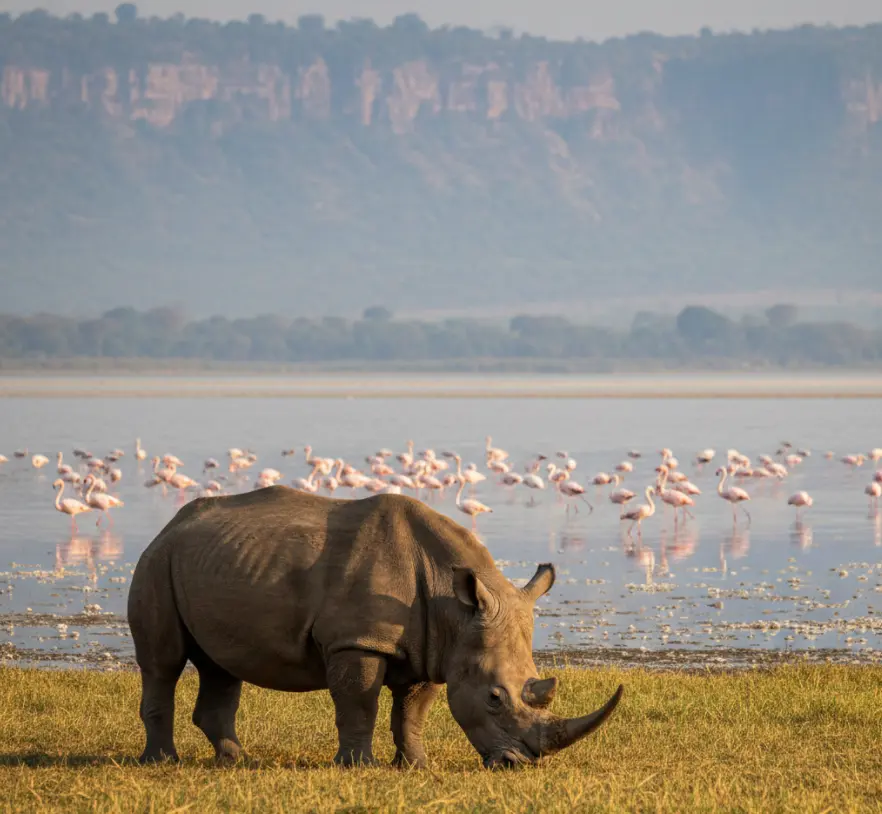
Yes, there are flamingos in Lake Nakuru 2026, but the flocks are currently smaller and more nomadic. As of January 2026, we are seeing nomadic clusters of approximately 10,000–30,000 birds near the Naishi plains. Due to the lake’s expansion to 82 square kilometers, the iconic “pink blanket” has largely shifted to Lake Bogoria, though Nakuru remains a premier destination for rhino and flamingo photography.
If you are planning a safari, you might have seen old photos of a lake so pink you couldn’t see the water. However, the reality of flamingos in Lake Nakuru 2026 has changed significantly due to rising water levels and shifting salinity.
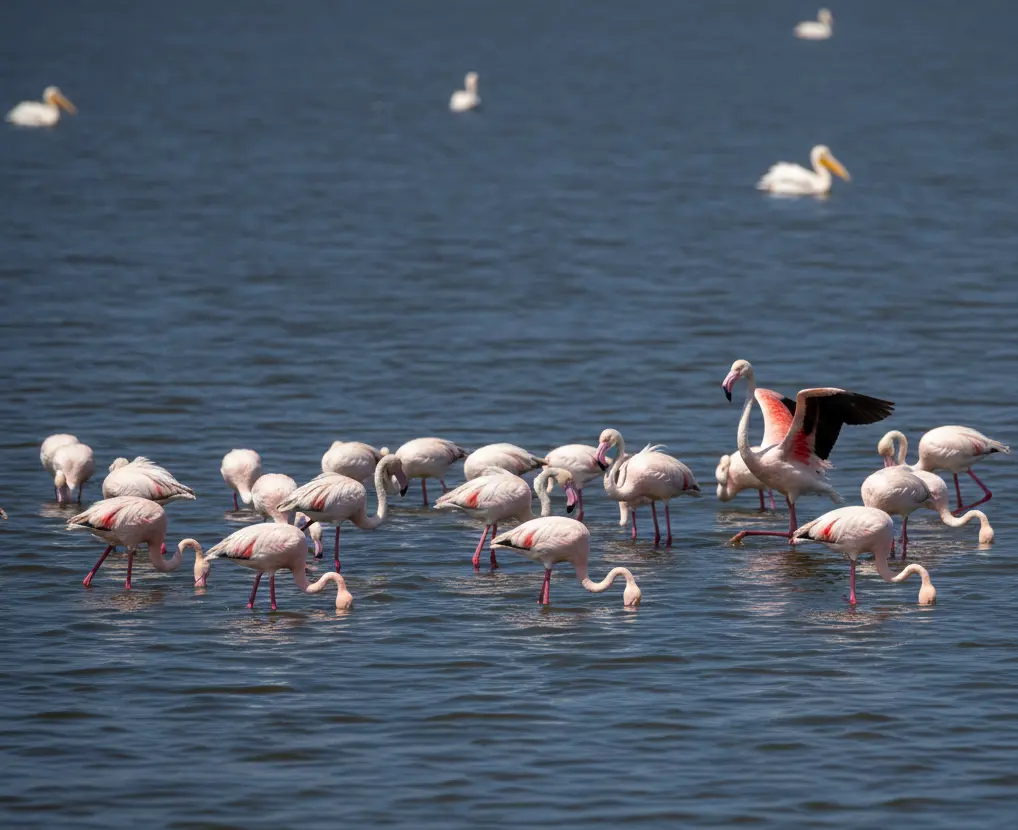
While the “mega-flocks” are no longer a daily guarantee, the park is currently experiencing a fascinating ecological transition. From the ambitious WRTI Spirulina re-seeding project to the rise of Great White Pelicans, the lake is far from empty. But that is not all… if you know exactly which gate to enter and which viewpoints to prioritize, you can still witness the spectacular pink fringe that makes this UNESCO site world-famous.
Quick Navigation: Jump to Your Section
The 2026 Reality: Where Did the “Pink Blanket” Go?
The legendary “pink blanket” that once covered the lake has transitioned into a more nomadic phenomenon. Currently, the Lake Nakuru water level 2026 has stabilized at approximately 82 square kilometers (82 km2), a significant increase from its historical 43 square kilometer average. This expansion has fundamentally altered the alkaline lake chemistry, diluting the concentration of Arthrospira platensis (spirulina algae) that flamingos rely on for food.
Because the salinity levels have dropped, the flamingos in Lake Nakuru 2026 have become highly migratory, frequently moving between the Rift Valley lakes in search of optimal feeding grounds. While you will no longer see millions of birds in a single glance, you will observe smaller, vibrant clusters that are often more active. This shifting of migratory patterns means the birds are no longer “resident” in the millions, but rather “seasonal visitors” depending on the weekly algae blooms.
If your goal is photography rather than a general safari, evaluating Lake Nakuru or Lake Elementaita ensures you don’t miss the current season’s pink carpet. This comparison reveals which shoreline currently offers the most stable feeding grounds for 2026 birders.
🛡️ OPERATOR INSIGHT Travelers often ask about the difference between Lake Nakuru vs Lake Bogoria regarding bird density. If your primary goal is to see the “pink mass,” Bogoria and Elementaita are currently the more reliable bets, but Nakuru remains the only place to photograph flamingos with rhinos in the same frame. See our 2-Day Lake Nakuru & Lake Naivasha Safari guide to learn more on how to combine the best of both worlds in a single trip.
When evaluating the current status of flamingos in Lake Nakuru 2026, it is crucial to understand that the “disappearance” is actually a redistribution. The birds are simply following the food, often returning to Nakuru in the thousands when the sun is hot enough to trigger a fresh algae bloom in the shallower southern pockets. This ecological “hide and seek” makes the services of a professional spotter more valuable than ever in 2026.
Now that we understand why the birds are on the move, let’s look at the science behind the water levels and why depth is the deciding factor for a flamingo…
The Algae Crisis: Why Water Depth Matters in 2026
The shifting population of flamingos in Lake Nakuru 2026 is a direct result of a complex hydrological puzzle. Historically, the lake was a shallow “soda pan,” but the current flooding impact has pushed the surface area to a staggering 82 Square Kilometers. This expansion isn’t just about more water; it has fundamentally altered the lake salinity levels, diluting the alkaline concentration required for the “superfood” of the Rift Valley to thrive.
The primary food source for the Lesser Flamingo is Spirulina platensis, a microscopic blue-green algae that requires a very specific, high-alkaline environment. When the lake deepens beyond its optimal 1-meter threshold, sunlight cannot penetrate to the bottom, and the salinity drops, causing the Spirulina blooms to collapse. Consequently, flamingos in Lake Nakuru 2026 have become climate refugees, frequently flying to the steeper, deeper shores of Lake Bogoria where the chemistry remains more stable.
While deep water limits feeding here, our Ol Pejeta Lake Bogoria Safari Itinerary leverages the stable shoreline chemistry of the north to guarantee the concentrated pink mass travelers expect.
🛡️ OPERATOR INSIGHT
The Wildlife Research and Training Institute (WRTI research) is currently monitoring “Spirulina pockets” near the southern Naishi shores. If you are planning to scout these remote southern sections, see our guide on Lake Nakuru National Park Gates to learn more on how to use the Nderit Gate for direct access to the flamingo-rich southern mudflats.
The 2026 Information Gain: The “Algae Re-Seeding” Effort
| Factor | Historical Average | 2026 Ground Reality |
| Surface Area | 43 Square Kilometers | 82 Square Kilometers |
| Avg. Water Depth | 2.5 meters | 4.5 meters |
| Primary Algae | Spirulina (Dense) | Mixed Diatoms (Sparse) |
One unique insight for 2026 is the emergence of “freshwater” diatoms in the northern sector near the town’s storm drains. While this is bad for the pink flamingos, it has invited a massive surge of Great White Pelicans, who now compete for space on the submerged acacia branches. How environmental shifts affect the population of flamingos in Lake Nakuru 2026 is no longer just about the birds; it is a total ecosystem reboot.
Now that we’ve analyzed the science behind the disappearing algae, let’s distinguish between the two types of pink birds you’ll encounter on the shore…
Lesser vs. Greater Flamingos: Who is Staying in 2026?
While both species contribute to the famous pink haze, the 2026 ratio has shifted dramatically due to the deepening waters. Historically, the Lesser Flamingo made up the bulk of the “pink carpet,” but the current environment favors the taller, more resilient Greater Flamingo. Identifying the specific species of flamingos in Lake Nakuru 2026 is a matter of looking at their height and how they handle the new 4.5-meter depths.
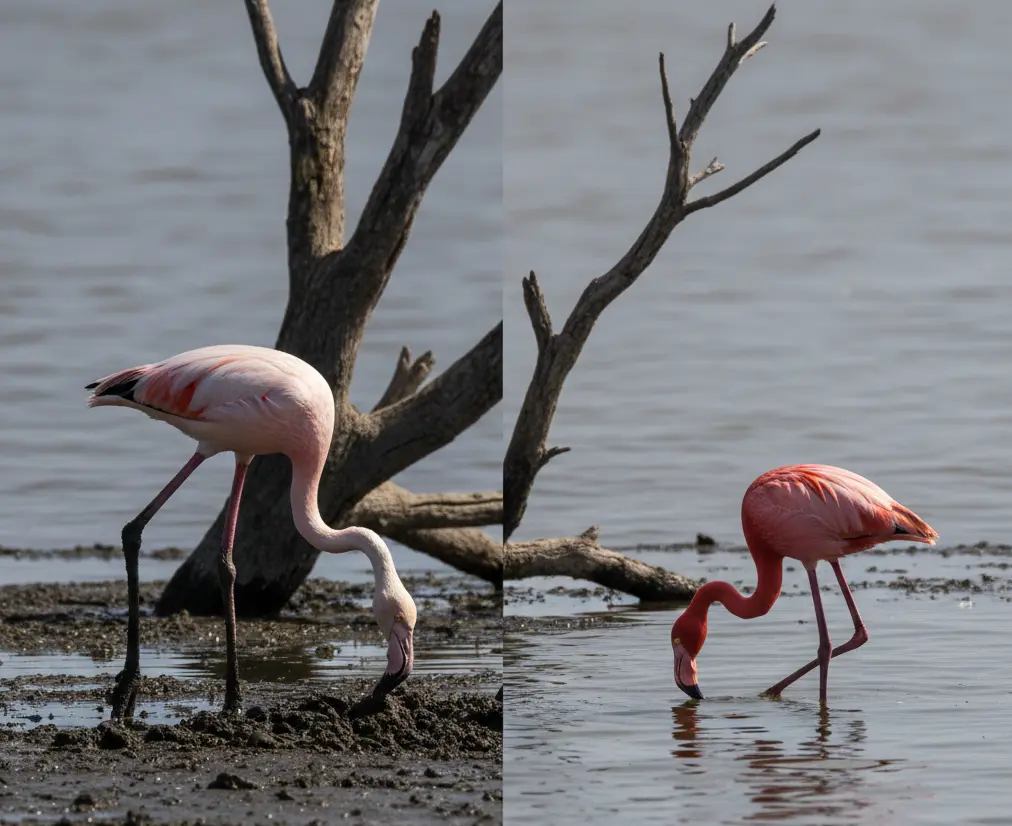
The Lesser Flamingo is a specialist filter-feeder that relies almost exclusively on microscopic Spirulina algae found in very shallow, highly alkaline water. Because the lake has expanded to 82 square Kilometers, the salinity has dropped, causing the Spirulina to collapse and forcing these smaller birds to become nomadic. In 2026, you will often find them “lake-hopping” toward Bogoria or Natron the moment Nakuru’s chemistry fluctuates even slightly.
The 2026 Spotter’s Cheat Sheet
| Feature | Lesser Flamingo | Greater Flamingo |
| Size | Small & Deep Pink | Tall & Pale/White |
| Bill | Dark Red (Deep-Keeled) | Pink with Black Tip (Shallow) |
| Diet | Microscopic Algae | Crustaceans & Insects |
| Behavior | Surface Skimming | Bottom Probing |
🛡️ OPERATOR INSIGHT: Don’t be confused by the massive white birds crowding the shoreline; these are Great White Pelicans, not “faded” flamingos. These pelicans have moved in to exploit the new fish populations that thrive in the fresher 2026 water, often competing with flamingos for space. If you want to avoid the pelican “noise” and find the concentrated pink pockets, see our Lake Nakuru National Park Guide to learn more on how to navigate the specific southern wildlife loops where flamingos still congregate.
The Greater Flamingo is staying in Nakuru because it is a generalist feeder that uses its bill to scavenge for insect larvae and small crustaceans in the mud. Their longer legs allow them to wade into deeper sections where the Lesser Flamingo cannot reach, making them the most consistent “pink” residents you will photograph in 2026. While they are less “neon” in color, their black-winged flight patterns against the Rift Valley escarpment remain a top-tier safari highlight.
The shift in 2026 is so pronounced that researchers are now seeing Greater Flamingos nesting in areas previously thought too deep for any wading bird. This adaptability is the only reason the lake hasn’t lost its “Pink Jewels” entirely, even as the ecosystem reboots into a more freshwater-leaning habitat. To ensure you don’t miss these resilient flocks during your visit, check out our 2 Days Lake Nakuru & Lake Naivasha Safari guide to learn more on how to time your arrival for the best shoreline light.
Having identified which birds are toughing it out in the deeper water, let’s look at the “Operator Map” for the exact gates and viewpoints you need to use in 2026 to find them…
Where to Find Flamingos in Lake Nakuru 2026 (Best Gates & Spots)
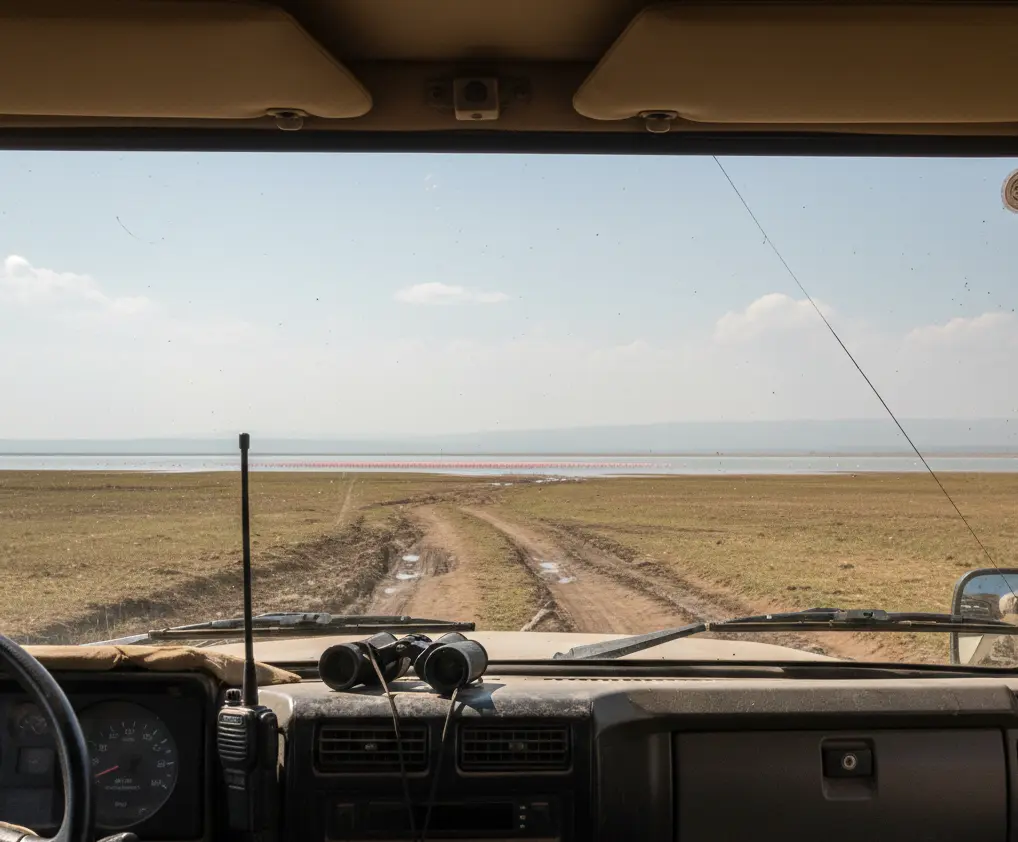
Navigating the park to find flamingos in Lake Nakuru 2026 requires a shift in strategy compared to older guides. Because the northern sector near the city has become deeper and dominated by Great White Pelicans, the pink flocks have retreated to the shallower, quieter southern mudflats. If you want a clear sighting, you must bypass the flooded northern tracks and focus your game drive on the corridor between the Naishi Airstrip and the southern shoreline.
While many travelers head straight for the Baboon Cliff viewpoint, the elevated perspective can actually make the flocks look smaller due to the lake’s expansion. For the best ground-level photography, the tracks leading toward Makalia Falls offer the most intimate views. These southern “Spirulina pockets” are currently the most stable feeding grounds, away from the engine noise and urban runoff found near the main entrance.
🛡️ OPERATOR INSIGHT: If you are driving from Nairobi, do not use the Main Gate; the traffic through Nakuru town is a notorious time-sink and the northern lake roads are often submerged. Instead, use the Lanet Gate for a faster connection to the eastern tracks, or better yet, the Nderit Gate if you are arriving from the south. See our guide on which Lake Nakuru gate to use to learn more on how to match your gate choice to your vehicle type and save over an hour of transit time.
For those conducting a self-drive, the 2026 road conditions demand respect as the rising lake levels have reclaimed many of the old lower-loop tracks. The southern plains consist of “black cotton soil” which has turned previously firm paths into deceptive mud traps, making a high-clearance 4WD strictly mandatory if you plan to scout the flamingo-rich southern mudflats near Naishi. To avoid an expensive KWS recovery fee or getting stuck in these silt traps, see our Lake Nakuru self-drive guide to learn more on how to navigate the current road network safely.
Local Knowledge: As of 2026, KWS has increased patrols near the southern marshes to enforce the 10-meter vehicle rule. Many photographers are tempted to edge closer to the water for the perfect shot, but off-roading here carries a strictly enforced fine of KES 20,000. The silt is deceptively soft; what looks like a dry salt crust can swallow a Land Cruiser in seconds, requiring an expensive KWS recovery tractor.
Positioning your vehicle near the Naishi plains in the late afternoon often yields the “Hilmuks Triple”: white rhinos, Rothschild giraffes, and a shimmering pink line of flamingos in Lake Nakuru 2026 all in a single frame. This southern loop is the park’s best-kept secret for those who value quiet, high-quality sightings over the crowded northern circuits.
Now that we’ve mapped out the “where,” let’s talk about the “when”—because the timing of your arrival is the difference between a grey lake and a pink spectac
Best Time to Visit for Flamingo Sightings in 2026
Planning your trip to see flamingos in Lake Nakuru 2026 is no longer just about the month; it is about matching your arrival with the lake’s salinity peaks. The most reliable windows for massive flocks are the dry seasons from January to March and July to October. During these hot, dry spells, evaporation causes the water to recede, concentrating the alkaline minerals and triggering the “super-blooms” of Spirulina algae that draw the birds back to the shore.
While matching your calendar to the dry season is the first step, matching your daily schedule to the Rift Valley’s unpredictable traffic is just as critical. Given the current 2026 road construction at Rironi, a poorly timed departure can cost you the golden morning light at the shoreline. To ensure you beat the gridlock and arrive at the southern mudflats while the birds are most active, follow our optimized Nairobi to Lake Nakuru day trip itinerary, which utilizes the Lanet Gate shortcut to maximize your actual game-viewing time.
While the “long rains” from April to June turn the park into a lush green paradise, the influx of fresh water can dilute the lake’s chemistry and disperse the birds. However, the 2026 birdwatching calendar suggests that even during the wetter months, the park remains a world-class destination for Great White Pelicans and migratory species from Europe. For those focused on the pink spectacle, the “short dry” window in February is currently proving more productive than the traditional July peak due to more stable water levels at the southern mudflats.
🛡️ OPERATOR INSIGHT: Don’t just look at the date; look at the clock. The famous “pink reflection” shots are only possible during the golden hours of 6:30 AM to 8:30 AM before the Rift Valley winds ripple the water’s surface. To ensure you are at the shoreline before the sun gets too high, see our guide on Lake Nakuru lodges to find the best accommodation located within 15 minutes of the prime flamingo feeding zones.
If you are a photographer, the morning vs evening light in 2026 offers two completely different results. Morning light at the Naishi shore provides a soft, pastel glow that highlights the delicate pink plumage of the Greater Flamingo. In contrast, the evening light from the Baboon Cliff viewpoint offers a dramatic silhouette of the flocks against the deepening blue of the lake, though the birds are often further from the shore during the heat of the day.
Since catching that perfect “pink reflection” depends entirely on your arrival time at the southern mudflats, timing is your most valuable asset. If you are struggling to decide if a 4-hour “dash” from Nairobi is enough to find the current week’s bloom, see our honest comparison of a Lake Nakuru day trip vs overnight stay. This guide breaks down the “1 PM Sighting Gap” and explains why staying the night is often the only way to guarantee you aren’t looking at empty shorelines while the sun is at its peak.
Worth Noting: In 2026, many travelers are making the mistake of visiting Nakuru as a “quick stop” on the way to the Mara. Because the birds are more nomadic now, you need at least one full morning dedicated specifically to birding to find where the current week’s “bloom” is located. A rushed two-hour drive at noon will likely result in seeing nothing but pelicans and distant grey dots.
Now that we’ve secured your timing, let’s look at the “big picture”—the scientific efforts currently underway to restore the lake to its former glory and what the future holds for this UNESCO site.
The WRTI “Algae Re-Seeding” Project: Future Outlook
The Wildlife Research and Training Institute (WRTI) is currently spearheading several conservation efforts 2026 to stabilize the ecosystem and secure the long-term prospects for flamingos in Lake Nakuru 2026. The most talked-about initiative is the experimental mapping of “Spirulina pockets”—specific areas in the southern Naishi region where the water remains shallow enough for natural algae regeneration. While a full-scale “re-seeding” of the entire 82 Square Kilometer lake is physically impossible, WRTI is focusing on protecting these high-salinity micro-habitats from urban runoff and siltation.
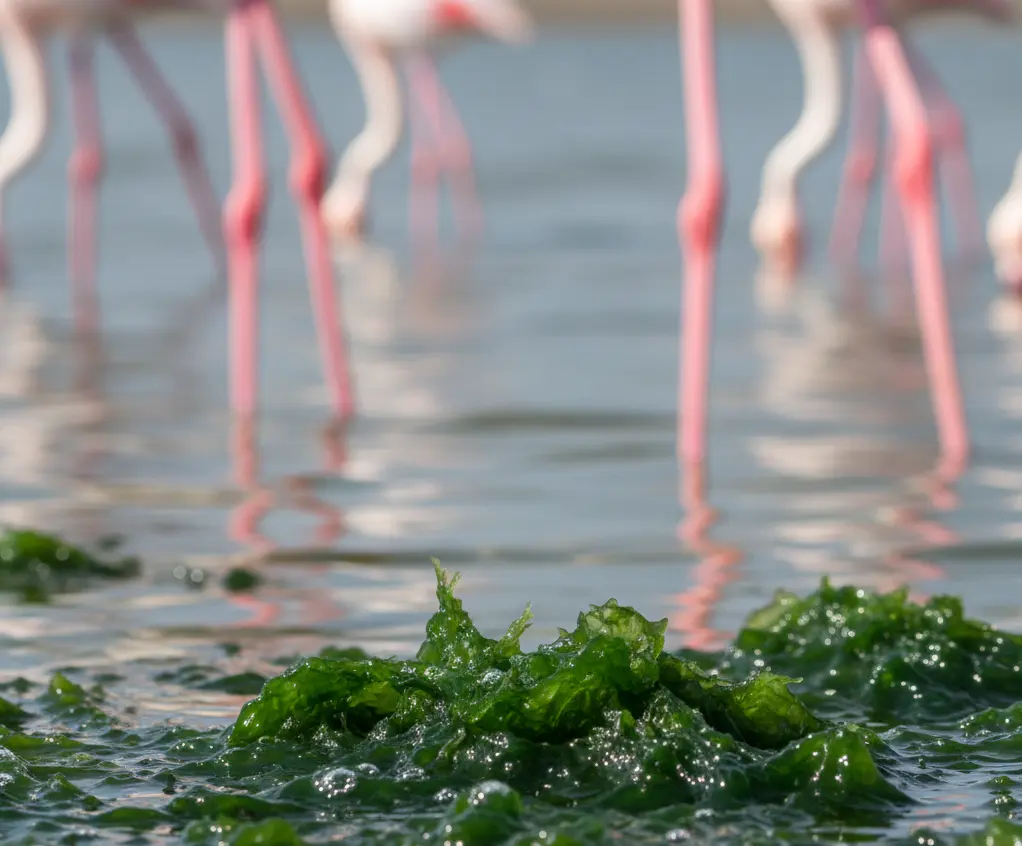
These Kenya Wildlife Service initiatives are part of a broader 2024–2028 Strategic Plan that utilizes satellite imagery and water-quality sensors to monitor the lake’s chemistry in real-time. By managing the inflow from the Njoro and Makalia rivers, conservationists hope to encourage the return of the Spirulina ponds that once made the lake a pink haven. The future of Nakuru tourism depends on this transition from a “one-trick” flamingo destination to a resilient, multi-species sanctuary that can withstand climate-driven water fluctuations.
🛡️ OPERATOR INSIGHT: Don’t wait for the “millions” to return before you visit; the park’s current ecological shift has actually made it a superior destination for other rare sightings. The lower salinity has invited an explosion of fish life, making it the best place in Kenya to see the African Fish Eagle and giant Great White Pelican colonies in action. To see how these changes affect your daily safari route, see our Lake Nakuru National Park guide to learn more on how to spot the “New Big Five” of the flooded forest.
The WRTI research team is also working closely with the Nakuru County government to decommission old sewage treatment plants that sit on the lake’s northern edge. This move is designed to reduce the nutrient loading that causes “bad” algae blooms, which compete with the flamingos’ preferred food source. For travelers in 2026, this means the park is cleaner and more scientifically managed than it has been in decades, even if the “pink blanket” remains nomadic.
Local Knowledge: There is a little-known landmark near the southern Nderit Gate called the “Spirulina Gauging Station.” If you see WRTI researchers in white coats working near the water’s edge, you are in the prime feeding zone for that week. In 2026, following the scientists is often more effective than following the tour van crowds if you want to find the most vibrant bird clusters.
As we look toward the next decade of conservation, it’s clear that the park is finding its new identity. But after all these changes, you might still be asking the most important question: Is the park still worth your time and money?
Is Lake Nakuru Still Worth It in 2026?
The short answer is a resounding yes, but you must adjust your expectations away from the outdated “pink lake” postcards of the 1990s. While finding flamingos in Lake Nakuru 2026 requires more effort and better timing than in previous decades, the park has evolved into a much more diverse birding haven. The trade-off for fewer flamingos is a massive surge in Great White Pelicans and a flourishing ecosystem that supports some of the highest wildlife densities in the Great Rift Valley.
Beyond the water’s edge, the park remains the premier rhino sanctuary Kenya has to offer, providing near-guaranteed sightings of both Black and White rhinos. In 2026, the high water levels have pushed the rhinos closer to the forest fringes, making for incredible photography of these prehistoric giants against a lush, green backdrop. When you factor in the healthy populations of the rare Rothschild giraffe and the park’s famous tree-climbing lions, the overall safari value 2026 remains exceptionally high for both first-timers and seasoned birders.
🛡️ OPERATOR INSIGHT Don’t make the mistake of choosing between Lake Nakuru and Lake Bogoria; they offer entirely different experiences. If your only goal is a “sea of pink,” Bogoria is the current winner, but if you want a complete safari experience with leopards, rhinos, and diverse birdlife, Nakuru is irreplaceable. See our safari package on the 2 Days Lake Nakuru & Lake Naivasha Safari to learn more on how to combine the best flamingo spots with the top rhino sighting zones in a single, efficient trip.
🛡️ OPERATOR INSIGHT: Don’t make the mistake of choosing between Lake Nakuru and Lake Bogoria; they offer entirely different experiences. If your only goal is a “sea of pink,” Bogoria is the current winner, but if you want a complete safari experience with leopards, rhinos, and diverse birdlife, Nakuru is irreplaceable. See our safari package on the 2 Days Lake Nakuru & Lake Naivasha Safari to learn more on how to combine the best flamingo spots with the top rhino sighting zones in a single, efficient trip.
My final thoughts on finding flamingos in Lake Nakuru 2026 are simple: treat the birds as a beautiful bonus rather than the sole reason for your visit. The park’s compact size makes it one of the easiest places in Kenya to spot the Big Five (minus elephants) in a single afternoon. By using the southern gates and following the “Spirulina pockets,” you can still find those iconic pink fringes while enjoying a much richer, more balanced wildlife encounter than the old guides ever promised.
Local Knowledge: If you find the lake levels too high for your liking near the main gate, head to the “Outofrica” lookout point. In 2026, this specific elevation has become the best spot to see the new “Islands” formed by the rising water, where many birds now roost away from land-based predators. It’s a sight most generic tours skip, but it offers the best perspective of how the park is reclaiming its wild, watery heritage. Don’t let the big travel agencies lie to you with old photos. If you want a 1990s pink blanket, go to Bogoria. If you want the most unique rhino-and-flamingo photo on earth, stay in Nakuru.
Frequently Asked Questions: Flamingos in Lake Nakuru 2026
Are there still flamingos in Lake Nakuru in 2026?
Yes, but the spectacle has changed from a single “pink blanket” to concentrated clusters. In 2026, the lake’s surface area has expanded to approximately82 Square Kilometers, which has diluted the alkalinity in the northern sector. As a result, the flamingos have moved to the southern mudflats near Naishi and Makalia, where the water remains shallow and the Spirulina algae is most abundant.
Why did the flamingos leave the main shoreline?
The primary reason is the rising water levels which began in 2011 and have stabilized at record highs in 2026. This deeper, fresher water has caused a collapse in the specialized algae that Lesser Flamingos eat, while simultaneously inviting fish-eating birds like the Great White Pelican. While the “millions” of birds often move to Lake Bogoria during the heavy rains, a resident population of several thousand Greater Flamingos remains in Nakuru year-round.
Is Lake Nakuru or Lake Bogoria better for flamingos in 2026?
If your sole objective is to see the highest density of birds, Lake Bogoria is currently the “Flamingo Capital.” However, Lake Nakuru is the superior choice for a complete safari experience. In Nakuru, you can photograph flamingos in the morning and spend the afternoon tracking Black and White rhinos or leopards, a combination you won’t find at Bogoria. To see how to combine both destinations.
Can I fly a drone to see the flamingos from above?
Strictly no. In 2026, KWS regulations regarding drone usage are extremely firm to prevent the disturbance of nesting birds and rhinos. Operating a drone without a specific, pre-authorized permit from the KWS warden and the Kenya Civil Aviation Authority (KCAA) can result in immediate equipment confiscation and a heavy fine. For the best aerial-style views without a drone, we recommend the Baboon Cliff or Out of Africa viewpoints
How much are the Lake Nakuru entry fees in 2026?
As of 2026, KWS has implemented a flat-rate structure for Premium Parks. For non-resident adults, the fee is USD 90 for a 24-hour period, while children pay USD 45. For East African Citizens, the rate is KES 1,500.
It is vital to remember that cash is no longer accepted at any gate; all payments must be processed through the eCitizen platform using the KWSPay portal. See our step-by-step guide on how to pay Lake Nakuru park fees on eCitizen to ensure your QR code is generated before you lose mobile signal near the park entrance.
Do flamingos breed in Lake Nakuru?
No, Lake Nakuru is primarily a feeding and “vacation” ground. The flamingos in the Rift Valley almost exclusively breed at Lake Natron in Tanzania, where the caustic salt flats provide a natural barrier against predators. Once the chicks are strong enough, they migrate north to Nakuru and Bogoria to feast on the algae blooms.