Email:
 Phone:
 WhatsApp:

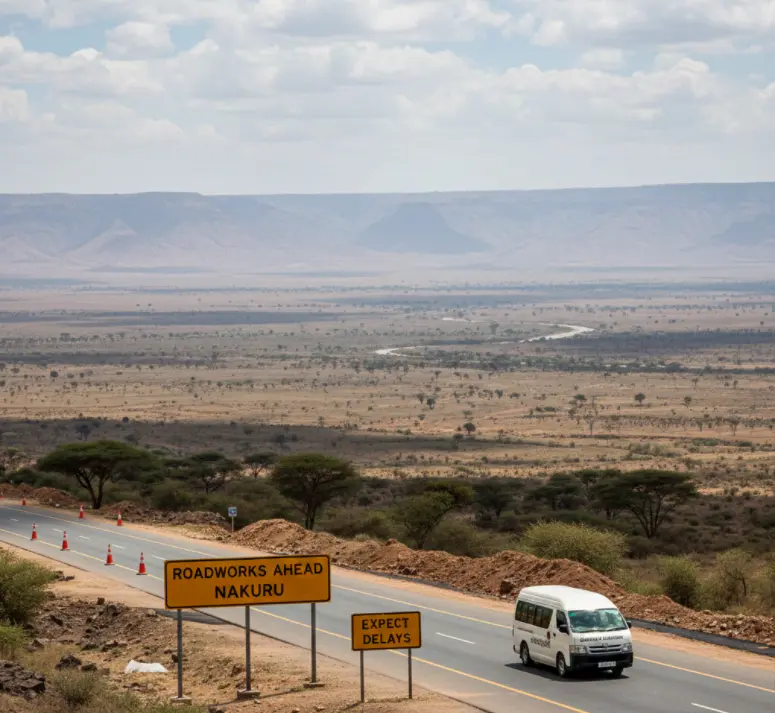
If you are planning to travel from Nairobi to Nakuru in 2026, the “2-hour drive” found in older guidebooks is officially a thing of the past. Due to the active Rironi–Mau Summit highway construction, travel times have shifted significantly, but accessibility remains excellent for those who know how to navigate the current 2026 infrastructure updates.
Quick Answer: For travelers in a hurry, here is the current ground reality for the Nairobi to Nakuru route as of 2026:
- Distance: Approximately 160 km (99 miles).
- Travel Time: 3.5 to 4.5 hours (Expect heavy Rironi construction updates and diversions).
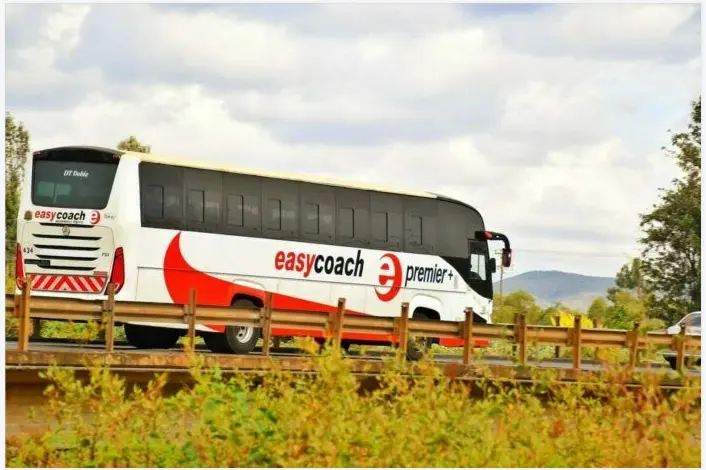
- Best Mode: Private car for flexibility; Easy Coach (standard fare as at 2026 for Easy Coach is KES 1450) for reliable public transport.
- Matatu Fare: KES 500-800 (Standard 2026 rate for shuttles like Mololine/2NK).
- The “Insider” Shortcut: Use the Lanet Gate instead of the Main Gate to save 45 minutes of Nakuru City traffic if your destination is the Lake Nakuru National park.
🛡️IMPORTANT FOR THOSE HEADED FOR LAKE NAKURU PARK:> Once you navigate the Rironi construction and reach the gate, the challenge isn’t over—the park has changed. Don’t waste your safari on flooded tracks; see our updated guide on the 12 Best Things to Do in Lake Nakuru National Park to find where the rhinos have moved in 2026.
Quick Navigation: Jump to Your Section
Nairobi to Nakuru: The 2026 Road Reality Check
Whether you are heading to the “Pink City” for a weekend safari or a Monday morning business meeting, the journey from Nairobi to Nakuru is currently defined by one major infrastructure project: the Ksh 184 Billion Rironi–Mau Summit Highway Dualling. While this project will eventually cut travel time by half, the current construction means you are sharing the road with multiple “work gangs” operating simultaneously between Rironi and Naivasha.
Why the “2-Hour Drive” is a Myth
Diversions at the Rironi interchange and lane narrowing near Gilgil have made the Nairobi to Nakuru travel time 2026 much more unpredictable. Because you will be spending nearly double the usual time in transit—often with windows closed against the construction silt or open to the Rift Valley’s unpredictable heat—your carry-on choices are critical. To protect your camera sensors from “highway dust” and stay comfortable during these 4-hour bottlenecks, ensure your day bag is packed according to our Lake Nakuru Safari Parking List before you leave Nairobi.
Choosing Your 2026 Route at Rironi
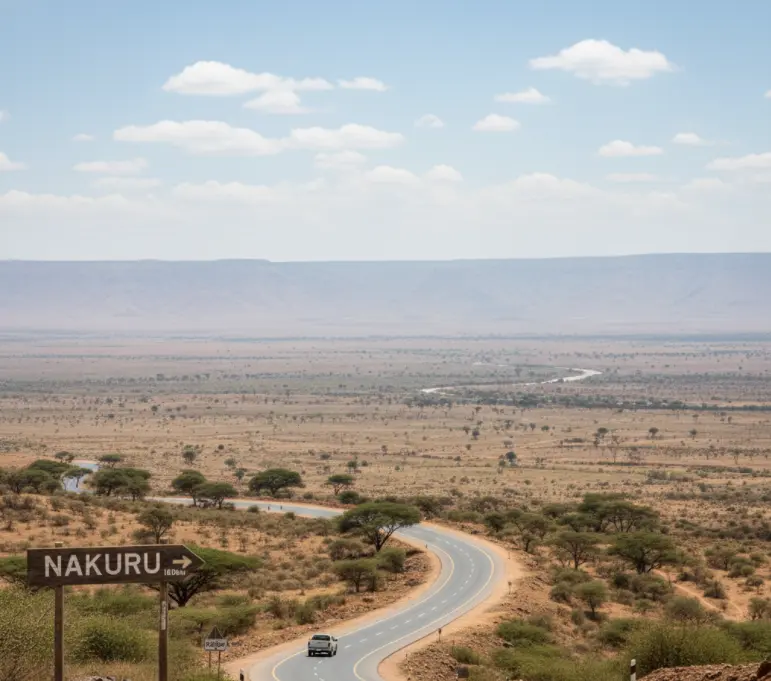
At the Rironi interchange (approximately 40km from Nairobi), the road splits into two distinct paths. Both lead to Nakuru, but your 2026 experience will differ based on your choice:
- The Upper Highway (A8 via Limuru & Kimende): This is the main construction zone for the dualling project. It is the most direct path and passes the famous Great Rift Valley Viewpoint. However, it is prone to sudden “construction crawls” and diversions.
- The Lower Road (A8 South via Mai Mahiu): Historically used by heavy trucks, this route is also being upgraded in 2026 to handle overflow traffic. It is incredibly scenic but steep.
💡 IMPORTANT: > In early 2026, KeNHA has introduced a “Heavy Vehicle Divert” rule during peak construction windows. If there is a major blockage on the Upper A8 (Kimende area), traffic is often pushed to the Mai Mahiu road. If you are a self-driver, check the digital signage at Rironi—if it says “Phase 1 Diversion Active,” take the Mai Mahiu route even if it looks longer; you will avoid the 60-minute bottleneck near the Njabini flyover.
Choosing Your Final Gate/Entry Point.
Depending on your final destination, your strategy should change at the Lanet junction:
- For Nakuru City Center (CBD): Stay on the main A104 highway. You will pass through the Lanet area and descend into the city. Expect heavy traffic at the interchange near the main bus terminus.
- For Lake Nakuru National Park: Exit the highway at the Lanet turn-off. This allows you to enter the park via the Lanet Gate, bypassing the city’s gridlock entirely and saving you roughly 45 minutes of urban traffic. But remember, entering through Lanet puts you directly into the southern rhino circuit—check out our breakdown of things to do in Lake Nakuru National Park to plan your first game drive route from this specific gate.
2026 Traffic & Fines
NTSA Enforcement: Watch out for mobile speed traps between Gilgil and Lanet. In 2026, overlapping in construction zones carries an instant KES 5,000 to KES 10,000 fine enforced via the eCitizen portal.
Best Departure Time: Leaving Nairobi before 6:30 AM is mandatory to beat the Rironi construction backlog.
Trip Planning: If you are visiting for leisure, check the Best Time to Visit Lake Nakuru to plan your arrival around peak traffic.
Public Transport: Shuttles, Buses & Fares 🚌
Navigating the Nairobi to Nakuru route via public transport is the most popular choice for locals and budget-conscious travelers alike. In 2026, the sector has become increasingly professionalized, with most major operators moving toward digital booking to manage the high demand caused by highway construction delays.
The Shuttle Kings: Mololine and 2NK
If you want the “fill-and-go” experience, 14-seater shuttles are the fastest way to travel. These vehicles depart as soon as they are full, typically every 10–15 minutes during peak hours.
- Mololine Services: Located at Mololine House, Cross Road (Nyamakima). They remain the gold standard for speed and discipline on the A104.
- 2NK Sacco: Located near Afya Centre/Mfangano Street. Known for a massive fleet and high frequency.
- Nairobi to Nakuru Shuttle/Matatu fare 2026: The standard fare for a one-way trip ranges at KES 500-800.
The Executive Coach: Easy Coach and ENA Coach
For travelers with large safari bags or those who prefer more legroom, the larger “Executive” coaches are the best choice.
- Easy Coach (Haile Selassie Avenue): This is the most reliable option for international tourists. Unlike matatus, these buses follow a strict departure schedule.
- Easy Coach Nairobi to Nakuru price: Tickets typically range between KES 1,400 and KES 1,450.
- The Booking Hack: In 2026, the Easy Coach Booking App is the safest way to secure a seat. It allows you to pick your seat number and pay via M-Pesa, preventing the need to carry large amounts of cash in the busy downtown stages. 📱
💡 IMPORTANT: > In 2026, many Mololine shuttles have introduced “Prestige” 11-seater vans. While the fare is slightly higher, these vehicles are legally capped at a lower passenger count, meaning more shoulder room and a faster security clearance at the Central Police Station check-point in Nakuru. If you’re traveling for business, the extra KES 200 is a worthy investment for the comfort.
Street Safety
Nairobi CBD Tip: The Nyamakima and Afya Centre areas are extremely busy. If you are carrying high-value camera gear for your 2 Days Lake Nakuru & Lake Naivasha Safari, avoid walking with your bags exposed. Use a taxi (Uber/Bolt) to drop you directly at the branded booking office of Mololine or Easy Coach. 🚕
Flying to Nakuru: The “Secret” Airstrip ✈️
If you are searching for Nairobi to Nakuru flights on standard booking sites like Expedia or Skyscanner, you will likely be met with “No direct flights found.” As of 2026, there are still no scheduled commercial flights (such as Jambojet or Kenya Airways) operating between Jomo Kenyatta International Airport (NBO) and Nakuru City.
The closest commercial airport is Eldoret International, which still requires a 2.5-hour drive back toward Nakuru—making it a no choice for most. However, for luxury travelers and safari-goers, there is a high-end “secret” route.
The Luxury Pivot: Naishi Airstrip
While the city lacks a commercial terminal, Lake Nakuru National Park is home to the Naishi Airstrip, located in the park’s southern sector. This is the primary gateway for those who prefer to bypass the Nairobi to Nakuru road construction entirely.
- Departure Point: Wilson Airport (WIL), Nairobi.
- Flight Time: Approximately 35–45 minutes.
- The Experience: A spectacular aerial transit over the Great Rift Valley, offering bird’s-eye views of Lake Naivasha and Mount Longonot.
- Logistics: Upon landing at Naishi Airstrip, your lodge (such as Sarova Lion Hill or Lake Nakuru Lodge) will provide a 4×4 transfer, which doubles as your first mini-game drive.
Booking Charter Flights to Lake Nakuru
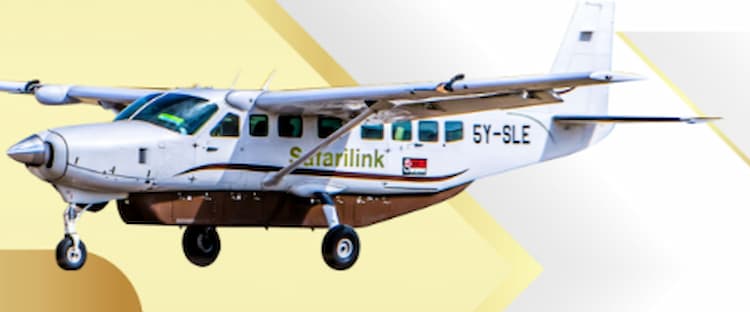
Since there is no scheduled “bus in the sky,” you must book charter flights to Lake Nakuru through private operators like Safarilink, AirKenya, or specialized charter firms.
- 2026 Estimated Cost: Chartering a 12-seater Cessna Caravan typically costs between $2,500 and $4,500 per flight hour, depending on the season and aircraft availability.
- Who it’s for: Large groups, high-end safari packages, or travelers with extreme time constraints.
💡 IMPORTANT: > In 2026, the Kenya Wildlife Service (KWS) has tightened “Landing & Take-off” protocols at Naishi. All private charters must now be cleared through the eCitizen/KWSPay portal at least 48 hours in advance to secure a landing slot. If you are hiring a private jet or helicopter in Kenya, ensure your pilot has the digital receipt, as physical cash payments are no longer accepted at the airstrip’s radio room.
The Flight vs. Road Verdict
Road: Best for budget, business, and flexibility. Takes 4+ hours in 2026.
Flight: Best for luxury and photography. Takes 40 minutes.
Recommendation: If you are on a 3-Day Masai Mara Safari and adding Nakuru as a stop, a charter flight between the two parks (Mara to Nakuru) is much more common and cost-effective than a direct flight from Nairobi.
The SGR Myth: Why the Train Isn’t the Answer 🚂
While the Madaraka Express is world-class, using it to reach Nakuru in 2026 is a logistical trap. The passenger service currently bypasses Nakuru City entirely, terminating at a remote station in Narok County.
Booking a Nairobi to Nakuru by SGR train ticket leads to a remote terminus in Suswa, 132km from your destination. This gap requires a 3-hour transfer, costing more than a direct shuttle. Avoid this route unless your errand is Narok-based.
This Suswa railhead is a transit void that also fails for the Masai Mara safari-bound travelers. While the Nairobi to Masai Mara drive time 2026 takes 6 hours by road, the “SGR shortcut” actually adds 3 hours of logistical delays and expensive taxi transfers
💡 OPERATOR WARNING: Security at the Suswa railhead is strictly enforced, and “trekking” out is prohibited due to wildlife corridors. Without a pre-arranged private transfer, you risk being stranded in a transport void with no public matatus available.
The Final Transport Verdict on Train
Best Way: For a reliable Nairobi to Nakuru trip, stick to the road.
Efficiency: A shuttle from Nyamakima or an Easy Coach bus will get you directly to the Nakuru CBD in 4 hours, whereas the “SGR + Taxi” route will take 6+ hours and cost a fortune.
Safari Link: If you are visiting the Lake Nakuru National Park, skipping the train allows you to use the Lanet Gate entry, which is the ultimate 2026 time-saver.
Driving Yourself: 2026 Road Hacks & Safety 🚗
Taking a road trip from Nairobi to Nakuru is the ultimate way to experience the Great Rift Valley, but in 2026, it requires more tactical planning than ever before. With the Nairobi to Nakuru 2026 landscape dominated by the Rironi–Mau Summit highway dualling, your choice of lane and timing will determine whether your trip takes 3 hours or 6.
The Route Duel: A104 vs. Mai Mahiu Detour
When driving Nairobi to Nakuru by car, you must decide at the Rironi interchange which version of the Rift Valley you want to see:
- The Main Highway (A8 via Limuru): This is the fastest route for the Nairobi to Nakuru journey, passing through Karai and the famous Rift Valley viewpoints. In 2026, this road is a massive “living” construction site. It is the best choice for reaching Nakuru City directly.
- The Scenic Detour (A8 South via Mai Mahiu): If you prefer a winding descent with views of Mt. Longonot, take this turn. While beautiful, it is frequently congested with heavy transit trailers. It is the better route if your first stop is Lake Naivasha.
- If the A8 congestion threatens your itinerary, weighing Lake Nakuru or Lake Elementaita helps determine if the shorter drive to the Elementaita shoreline serves your birding goals better than pushing through to Nakuru. This tactical pivot saves two hours of transit while keeping you on all-weather roads.
The 2026 Construction “Gangs”
As of February 2026, KeNHA has deployed approximately 12 distinct work teams (or “gangs”) along the 175km stretch.
- Impact: You will encounter sudden “Stop-and-Go” sections, particularly between Rironi and Kimende.
- Safety Hack: Watch for the yellow-vested “Flag Men.” In 2026, their instructions are legally binding; ignoring a manual stop signal in a construction zone can lead to an immediate vehicle impoundment.
⚠️ Don’t skip this: If you are renting a car for this drive, Nairobi’s rental yards are full of 4x4s that won’t survive the Rironi diversions or the Nakuru mud. Use our Car Hire Survival Checklist to inspect your vehicle before you pay a deposit.
Law Enforcement: The 2026 Digital Crackdown
The Nairobi to Nakuru highway is now the most heavily policed road in East Africa. The NTSA and National Police Service have shifted from static roadblocks to multi-agency mobile patrols.
- Speed Traps: Modern “Laser-Cam” units are frequently stationed at the Gilgil weighbridge and the long descent into Naivasha.
- The 2026 “Overlapping” Fine: Due to construction bottlenecks, many drivers try to pass on the shoulder. In 2026, this is a “Zero Tolerance” offense. Expect a KES 5,000 to KES 10,000 fine delivered via a text link to your eCitizen account before you even reach Nakuru.
- Compliance Checks: Random “Alcoblow” and speed-limiter checks are common near Rironi and Nakuru City outskirts.
💡IMPORTANT: > Look out for the “Traveller’s Chapel” (Mai Mahiu Church) if you take the lower road. While most people stop for photos, few know that in 2026, the local community has opened a small “Construction Museum” nearby. It houses artifacts found during the highway excavations, including Italian POW tools from the 1940s. It’s a 10-minute stop that competitors always miss.
Self-Drive Checklist
Fuel: Fill up in Nairobi or Kikuyu. Fuel prices at the “Viewpoint” stations are often KES 2–3 higher due to transport costs.
Tolls: While the 2026 project includes tolling infrastructure, no fees are being collected yet. Ignore anyone asking for “road tax” at diversions.
Park Entry: If your destination is the park, save yourself from the CBD traffic by using our Lake Nakuru Self-Drive Guide to find the Lanet shortcut as well as rules for self drive game viewing.
The Lanet Gate Strategy
If you are using Google Maps for your Nairobi to Nakuru journey, you are likely being set up for a frustrating delay. Most navigation apps default to the “Main Gate” because it is the administrative hub. However, for the smart safari traveler in 2026, the Main Gate is often the wrong choice.
The Logic: Why the Main Gate is a Mistake
The Main Gate is located just 4 km from the Nakuru CBD. To reach it, you must drive through the heart of Nakuru’s urban center, navigating the heavy gridlock of matatus, boda-bodas, and street markets. In Nairobi to Nakuru 2026 terms, this “final 4 kilometers” can easily add 45 to 60 minutes to your total travel time.
The Shortcut: Lanet Gate vs. Main Gate
The Lanet Gate is the ultimate “insider” entry point. It is located roughly 10 km before you reach the city center, sitting just off the main A104 highway.
- The Strategy: Instead of driving all the way into the city, you take the left turn-off at the Lanet junction.
- The Result: You bypass the CBD traffic entirely and enter the park’s eastern circuit in less than 10 minutes from the highway.
- Best For: Travelers coming from Nairobi who are staying at Sarova Lion Hill Game Lodge or those starting their game drive immediately upon arrival.
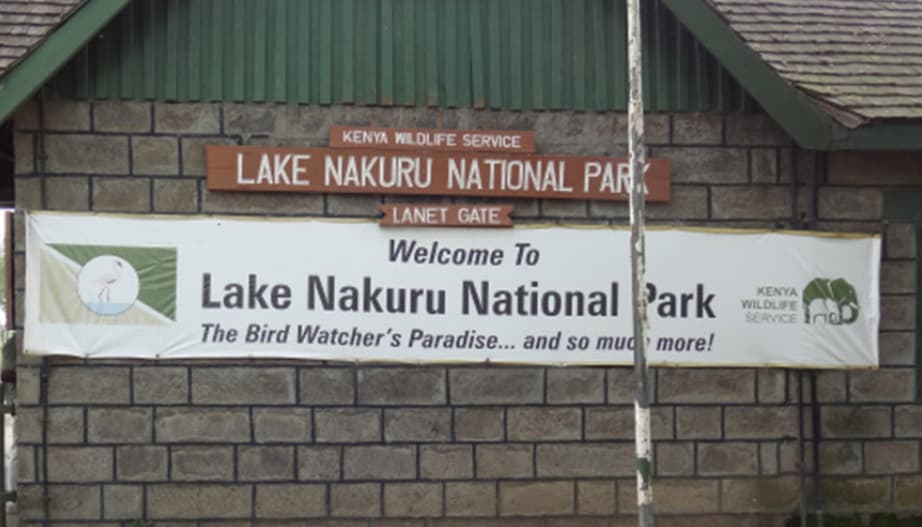
💡 IMPORTANT: > In 2026, the KWS has implemented a strict QR-code-only entry at Lanet. While the Main Gate has a customer service desk to help with eCitizen issues, the Lanet Gate is purely functional. If your eCitizen payment hasn’t synced or you haven’t generated your QR code, the rangers at Lanet will likely turn you away, forcing you to drive back into the city to the Main Gate to resolve it. Pay your Lake Nakuru park fees at least 2 hours before you reach the Lanet turn-off.
How to get to Lake Nakuru National Park from Nairobi
Step 1: Follow the A104 past Gilgil and the weighbridge.
Step 2: Ignore the “Nakuru 10km” signs and look for the Lanet/Kenyatta Barracks turn-off.
Step 3: Follow the brown KWS signposts. The road is tarmacked right up to the gate, making it accessible for even small 2WD vehicles.
Why do this? Avoiding Nakuru traffic allows you to spend that extra hour at the Baboon Cliff Viewpoint instead of in a traffic jam on Kenyatta Avenue.
Conclusion: The 2026 Nairobi to Nakuru Travel Summary 📋
The journey from Nairobi to Nakuru in 2026 is a balance between navigating major infrastructure upgrades and enjoying the classic Rift Valley scenery. While the Nairobi to Nakuru 2026 travel time has increased due to the Rironi-Mau Summit dualling project, the arrival of executive shuttle services and digital payment systems has made the trip more organized than ever.
2026 Fast Facts: Mode, Cost & Time Estimates
The following table provides a quick reference for planning your road trip from Nairobi to Nakuru or choosing the best public transport option based on current 2026 data.
| Mode of Travel | Estimated Cost (One-Way) | 2026 Travel Time | Best For… |
| Private Car (Self-Drive) | KES 4,500 – 6,000 (Fuel) | 3.5 – 4 Hours | Families & Safari-goers (Lanet Gate access) |
| Executive Shuttle (Mololine/2NK) | KES 500 – 800 | 4 – 4.5 Hours | Speed & frequency for business travelers |
| Executive Coach (Easy Coach) | KES 1,400 – 1,450 | 4.5 – 5 Hours | Tourists with heavy luggage & comfort-seekers |
| Charter Flight (to Naishi) | $2,500+ (Total Plane Hire) | 45 Minutes | Luxury travelers & high-end safari guests |
| MGR Train (Friday Only) | KES 800 (First Class) | 8 – 10 Hours | Slow-travel enthusiasts & budget backpackers |