Email:
 Phone:
 WhatsApp:

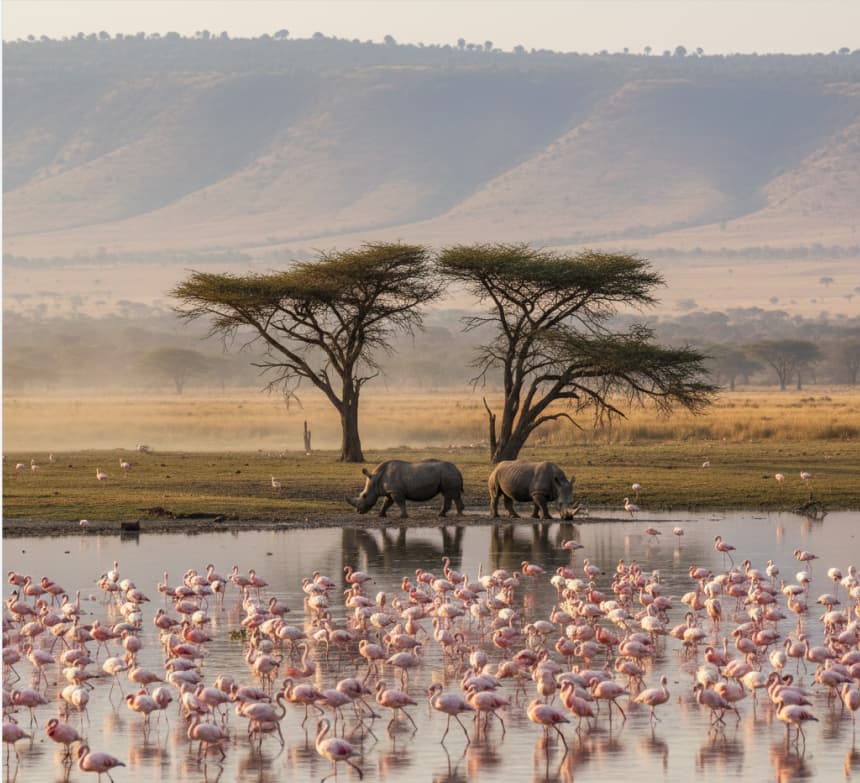
Lake Nakuru National Park is a protected wildlife reserve in the Great Rift Valley of Lake Nakuru, Kenya, famous for flamingos, rhinos, and scenic viewpoints. Located about 160 km from Nairobi, it is ideal for both day trips and short safaris.
Got a few minutes? Optional: Watch this short video for a stunning glimpse of Lake Nakuru National Park, from its iconic flamingos to wildlife & breathtaking landscapes— perfect for a quick virtual safari!
⬇️Use the tabs below to explore different sections of this Lake Nakuru guide.
Lake Nakuru National Park is one of Kenya’s most iconic and accessible wildlife destinations, located in the central Rift Valley region of Lake Nakuru, Kenya. The park sits just outside Nakuru City and is part of the greater Kenya Lake Nakuru ecosystem, making it an easy and popular safari stop for travelers coming from Nairobi.
Set around a shallow alkaline lake, Lake Nakuru Park is globally known for its dramatic landscapes, rich birdlife, and conservation success stories. The park is fully fenced and protected, which makes wildlife viewing more predictable compared to larger, open ecosystems. This unique setup allows visitors to experience big game, birdwatching, and scenic viewpoints within a compact area.
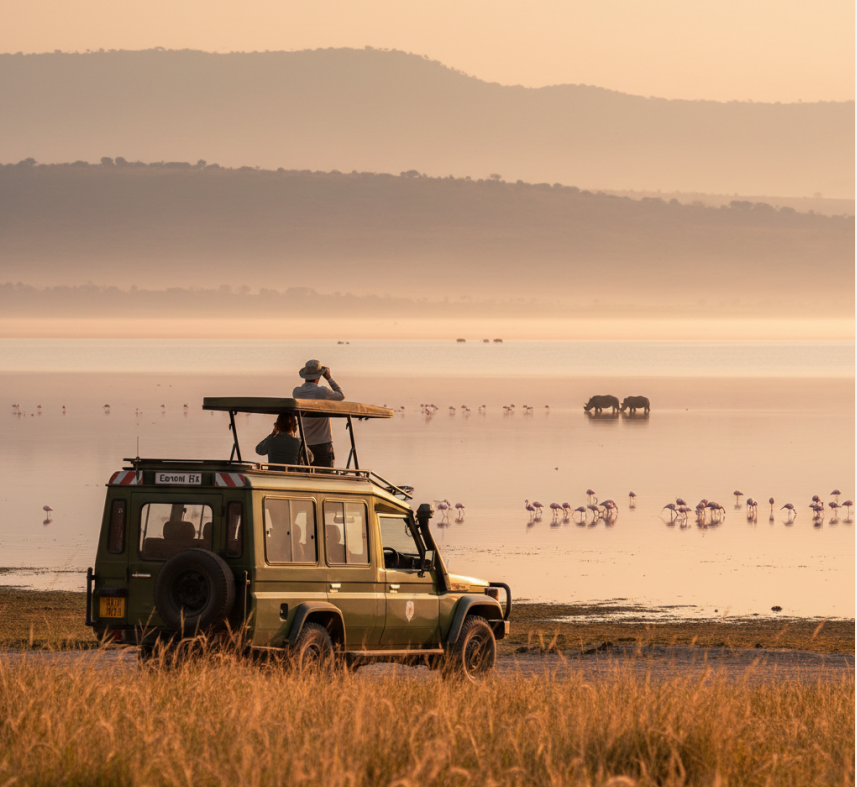
From rolling grasslands and acacia woodlands to rocky escarpments along the Rift Valley floor, Lake Nakuru National Park offers a diverse natural environment despite its relatively small size. Because of its location and variety of wildlife, the park serves both short safari travelers and those exploring multiple destinations across Kenya Lake Nakuru and the wider Rift Valley circuit.
For many visitors, Lake Nakuru National Park is the first introduction to safari travel in Kenya — combining accessibility, biodiversity, and striking scenery in one well-managed protected area.
Lake Nakuru National Park is situated in Kenya’s scenic Rift Valley, making it accessible for travelers from Nairobi and other major towns. If you’re planning a day trip or short safari, knowing the location and distance is key for smooth travel.
The park lies approximately 156 km northwest of Nairobi, which translates to a 3–4 hour drive, depending on traffic and weather conditions. Because of the active Rironi highway construction and new 2026 diversions, we have created a dedicated guide on the Nairobi to Nakuru route.
This guide covers the latest road hacks, current matatu fares, and the best times to depart to avoid the morning backlog, making it ideal for both short safaris and extended multi-day trips.
Got some time to plan your route? View the exact route and driving directions from Nairobi to Lake Nakuru National Park on Google Maps to see distances, driving time, and key stops along the way.
The map above shows the common Nairobi–Rift Valley–Lake Nakuru route.
Whether you’re aiming for a Lake Nakuru day trip from Nairobi or combining it with nearby destinations like Naivasha, having this map handy ensures a stress-free journey.
Which gate/entrance should you target? While the highway gets you to Nakuru, the gate you choose determines your total travel time and ease of access to your lodge. To avoid getting stuck in Nakuru city traffic or taking the long way around the lake, see our breakdown of which Lake Nakuru gate to use based on your specific route.
Lake Nakuru National Park is known for offering some of the most concentrated and rewarding wildlife viewing in Kenya, especially for travelers with limited time. Its compact size, varied habitats, and well-managed ecosystem make animal sightings frequent and easy, even on a short safari.
Flamingos and rich birdlife
One of the park’s most iconic attractions is the presence of flamingos at Lake Nakuru, which gather along the shallow alkaline shores when conditions are favorable. Their numbers fluctuate depending on water levels and food supply, but the lake remains one of the Rift Valley’s most important flamingo habitats.
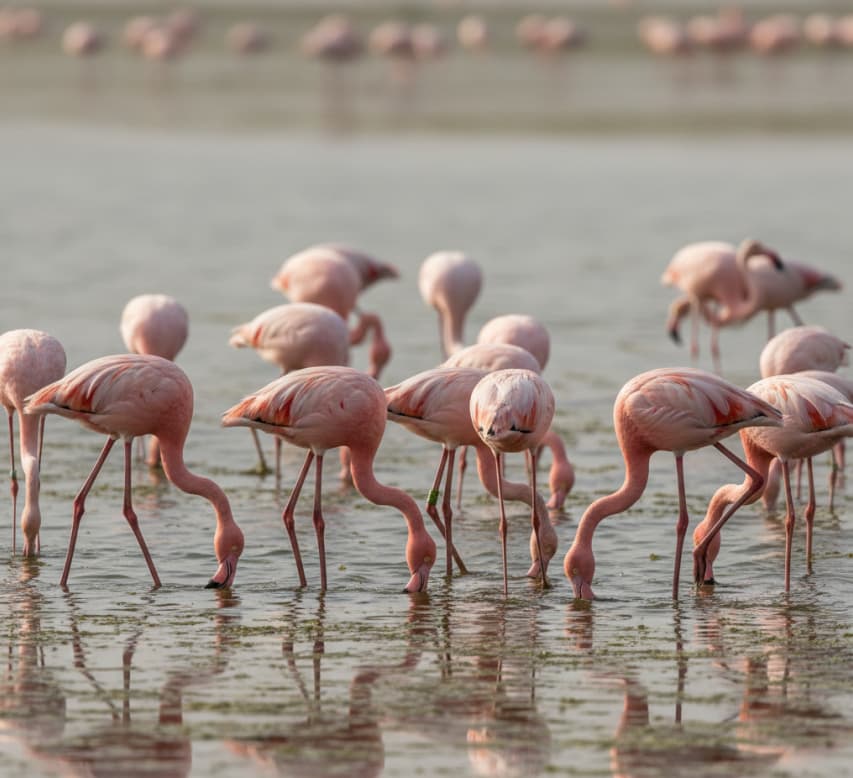
Beyond flamingos, the park hosts over 400 bird species, making wildlife at Lake Nakuru particularly appealing to birdwatchers and photographers.
Rhinos and conservation highlights
Seeing rhinos Lake Nakuru is one of the park’s biggest highlights. The park operates as a protected sanctuary for both black and white rhinos, offering some of the most reliable rhino sightings in Kenya.
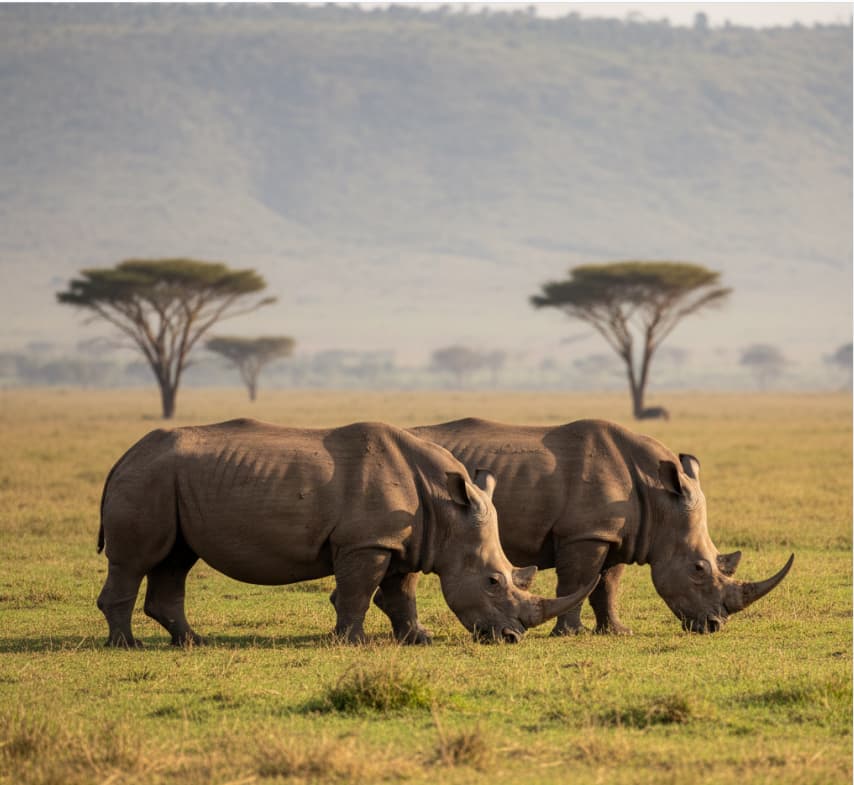
This strong conservation record makes Lake Nakuru National Park a standout destination for travelers interested in endangered species protection alongside classic safari experiences.
Large mammals and plains wildlife
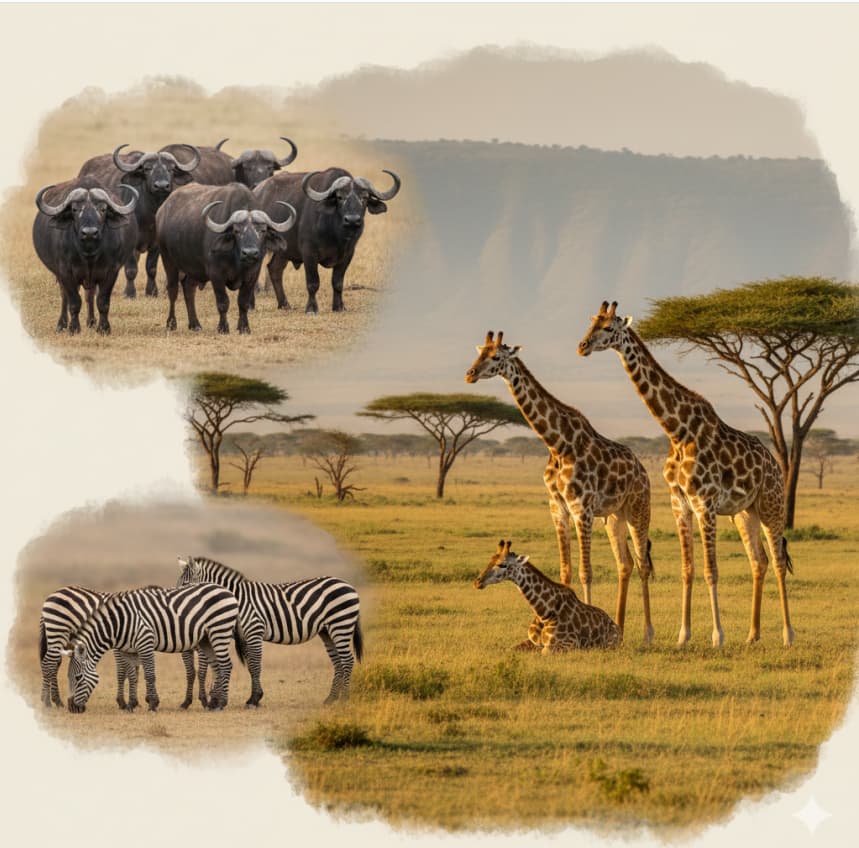
In addition to birds and rhinos, visitors can expect to encounter a variety of big animals in Lake Nakuru, including buffaloes, zebras, waterbucks, and warthogs. The park is also home to giraffes Lake Nakuru, most notably the endangered Rothschild’s giraffe, often seen browsing quietly along acacia woodlands and open grasslands.
Why wildlife viewing here stands out
What sets wildlife at Lake Nakuru apart is its accessibility and consistency. Well-maintained game-drive routes, open viewing areas, and the park’s fenced boundaries help keep animals within reachable ranges. For first-time safari visitors, weekend travelers, or anyone planning a short safari from Nairobi, Lake Nakuru delivers rich and dependable wildlife encounters without the need for long distances or extended itineraries.
Flamingos are one of the biggest draws to Lake Nakuru National Park, but they are also the most misunderstood. If you’re planning a visit, it helps to know what’s normal, what changes seasonally, and what you’re likely to see right now at Lake Nakuru National Park.
Are there Flamingos in Lake Nakuru today?
Yes — ‘are there flamingos in Lake Nakuru today’ is a fair question, and the honest answer is often yes, but numbers vary. Flamingos move in response to water levels and food (algae) conditions. Some days you’ll see large flocks lining the shoreline; other times they appear in smaller groups or shift to different sections of the lake.
Understanding Flamingos at Lake Nakuru
Historically, flamingos at Lake Nakuru were present in massive numbers, sometimes forming pink stretches along the shore. While environmental changes have affected concentrations over the years, Nakuru remains one of Kenya’s most reliable places to spot flamingos within a broader wildlife-rich setting that includes rhinos and giraffes.
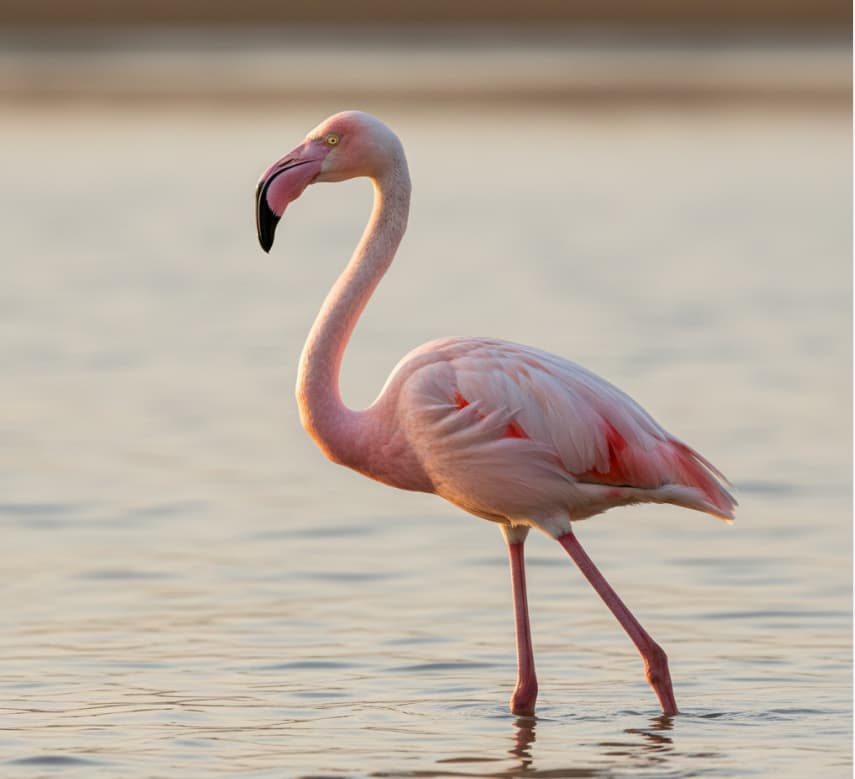
Lake Nakuru Flamingo Season Explained
There is no fixed Lake Nakuru flamingo season like a calendar event. Instead:
- Flamingo presence peaks when water salinity and algae levels are favourable
- Numbers may drop temporarily during periods of very high or very low water
- Sightings can improve unexpectedly after seasonal shifts or rainfall changes
This natural movement is normal and part of the Rift Valley ecosystem, not a disappearance.
What Travellers Should Realistically Expect
Rather than promising “millions,” a visit to Lake Nakuru offers:
- A strong chance of seeing flamingos at varying scales
- Rich birdlife even when flamingo numbers are modest
- Consistent big game viewing alongside the lake
This balance helps set realistic expectations and ensures visitors appreciate the full safari experience, not just a single highlight.
Bottom line: Flamingos remain an important part of the Lake Nakuru story, but they are dynamic. Arrive informed, flexible, and you’ll enjoy what the park reliably delivers — diverse wildlife, dramatic scenery, and rewarding game drives, whether the lake is lightly pink or vividly so.
Curious why flamingo numbers at Lake Nakuru change so dramatically?
If you have a minute, this short YouTube news report documents the recent return of thousands of flamingos to the lake after several years away. It offers real-world context on migration patterns, water levels, and why flamingos may appear in large numbers again — even when conditions seem unchanged.
A Lake Nakuru National Park visit fits a wide range of travel styles, especially for travellers looking for a well-structured Lake Nakuru safari without committing to long itineraries. Thanks to its proximity to the capital, most Lake Nakuru safaris from Nairobi are designed to maximise wildlife viewing within a short time frame while keeping logistics simple.
For time-constrained travellers, the park is one of the best choices for a short safari from Nairobi, offering rewarding game drives, diverse wildlife, and easy road access. Options typically range from focused day visits to overnight and multi-day extensions, depending on how much time you want to spend inside the park and nearby Rift Valley destinations like Masai Mara and Amboseli.
Day Trip to Lake Nakuru National Park
A Lake Nakuru National Park day trip is ideal for travellers pressed for time but eager to experience Kenya’s iconic wildlife. Many ask, can you visit Lake Nakuru in one day? The answer is yes — a well-planned Lake Nakuru day trip from Nairobi allows you to enjoy flamingos, rhinos, giraffes, and other wildlife without needing an overnight stay.
This Lake Nakuru one day safari typically starts early in the morning from Nairobi, with 3–4 hours of game drives inside the park before returning in the evening. It’s perfect for weekend travellers, business visitors, or anyone wanting a compact but rewarding safari experience.
2-Day Lake Nakuru Safari
For travellers seeking a fuller experience, the 2-day Lake Nakuru safari is the perfect balance between time and wildlife encounters. Often combined with a Lake Naivasha safari, this itinerary allows you to explore two of the Rift Valley’s most iconic destinations in one short trip.
An overnight Lake Nakuru safari lets you enjoy extended game drives, catch flamingos at sunrise, and spot rhinos, giraffes, and other wildlife without feeling rushed. Many visitors choose this Lake Nakuru weekend safari option, making it ideal for weekend getaways from Nairobi or short breaks.
This option is popular because it maximizes wildlife viewing, offers comfortable lodge stays, and provides a complete safari experience in just two days.
Knowing the best time to visit Lake Nakuru National Park can make a huge difference in your safari experience. The park is spectacular year-round, but understanding Lake Nakuru weather patterns, seasonal wildlife movements, and peak bird activity helps travellers plan effectively.
Whether you are visiting during the dry January heat or the lush April rains, Lake Nakuru’s alkaline environment and fluctuating Rift Valley temperatures require specific gear. To ensure you have the correct UV protection and moisture-wicking layers for your chosen month, refer to our Lake Nakuru Safari Packing List before you start your preparations.
Dry Season Lake Nakuru
The dry season Lake Nakuru typically runs from June to October and again from December to February. During this time, wildlife concentrates around water sources, making it easier to spot big animals in Lake Nakuru such as rhinos, giraffes, and buffaloes. Roads are more accessible, and game drives are generally smoother, ideal for photography and short safaris.
⚠️ 2026 Travel Advisory: While the park tracks are at their best in the dry season, the journey from the capital is currently impacted by the Rironi–Mau Summit highway dualling. To ensure your morning game drive doesn’t turn into a 6-hour construction delay, check our updated Nairobi to Nakuru travel guide for the latest road hacks, matatu fares, and the ‘Lanet shortcut’ that bypasses city traffic.
Flamingo Season Lake Nakuru
If you’re hoping to see the iconic flamingos, timing your visit with the flamingo season Lake Nakuru is key. Flamingos flock to the alkaline shores when food availability and water levels are optimal, usually peaking after the rains. Even if the numbers fluctuate, the sight of these vibrant birds lining the lake remains one of the most memorable experiences in the park.
💡Plan Your Trip: For a breakdown of the best time to visit Lake Nakuru National Park, including best time to see predators, how to use the 2026 “24-Hour Ticket Rule” to save money, and the latest update on where to find flamingos as water levels shift, read our full seasonal guide.
Game viewing at Lake Nakuru National Park is designed to be efficient, scenic, and rewarding, especially for travellers with limited time. The park’s compact layout and well-maintained road network make it easy to experience multiple habitats and wildlife zones within a single visit to Lake Nakuru National Park.
Game drives at Lake Nakuru are the main activity and are typically done in the early morning and late afternoon, when animals are most active. The drives can be guided or self drive. Either way, they offer excellent chances to spot rhinos, giraffes, buffaloes, zebras, and other large mammals against the backdrop of the Rift Valley escarpment.
For bird enthusiasts, bird watching at Lake Nakuru is a major highlight. Beyond flamingos, the park supports hundreds of bird species, including pelicans, herons, fish eagles, and migratory birds. The lake shorelines, woodlands, and grasslands each provide different birding environments, making sightings varied throughout the day.
The park is also well suited for photography at Lake Nakuru, thanks to its open landscapes, elevated viewpoints like the Baboon Cliff, and consistent wildlife visibility. Scenic lookouts, acacia woodlands, and lakeside settings allow photographers to capture both close-up wildlife moments and wide, dramatic Rift Valley scenes without long off-road drives.
Together, these activities make Lake Nakuru an excellent stop for short safaris, overnight stays, and multi-day itineraries that prioritize rich experiences without exhausting travel schedules.
Most Lake Nakuru lodges fall into three broad categories: budget, mid-range, and luxury. Prices vary by season, lodge location, and room type, which is why travellers often compare Lake Nakuru lodge prices before finalising their safari plans. Staying closer to the park generally offers better wildlife access, while lodges outside the park may provide more flexibility and value.
📌 We’ve put together a dedicated guide on the best lodges in and near Lake Nakuru National Park.
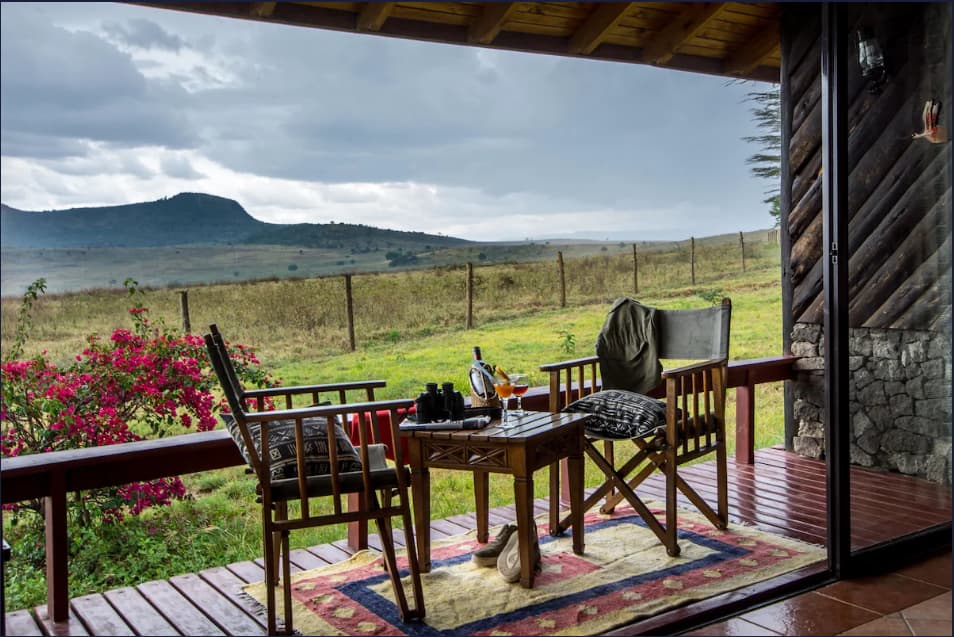
Photo: The Lake Nakuru Lodge
For travellers who want verified lodge details, including Lake Nakuru lodge contacts and recent Lake Nakuru lodge photos, it’s best to consult reliable sources. This keeps your planning streamlined and helps you choose accommodation that matches your safari schedule and expectations.
If you’re planning a visit to Lake Nakuru National Park, knowing the official entry fees, payment methods, and operating hours in advance helps you budget accurately and plan your safari smoothly.
Lake Nakuru Entry Fees (year 2026)
Lake Nakuru park fees are charged per person, per day, and are set by the Kenya Wildlife Service (KWS). The current Lake Nakuru entry fees are:
- Kenyan & East African Citizens:
Adult – KES 1,500
Child (3–17 years) – KES 750 - Kenya Residents (non-citizens):
Adult – KES 2,025
Child – KES 1,050 - African Citizens:
Adult – USD 50
Child – USD 25 - Non-Residents (International Visitors):
Adult – USD 90
Child – USD 45
For a full breakdown of categories, vehicle charges, camping levies, payment rules, and what to present at the gate, refer to our detailed Lake Nakuru National Park entry fees guide.
Mode of Payment
Payment for Lake Nakuru entry fees is made through the official eCitizen platform. Accepted payment methods typically include:
- M-Pesa
- Visa card
- RTGS
- Electronic Funds Transfer (EFT)
This cashless system helps ensure faster entry and smoother processing at the park gates.
Lake Nakuru Opening Hours
Lake Nakuru opening hours are usually from 6:00 AM to 6:00 PM daily. Entry outside these hours is not permitted, which is why early departure from Nairobi is recommended for day trips and short safaris.
Understanding the entry fees, payment process, and opening hours makes planning a visit to Lake Nakuru National Park easier, whether you’re visiting for a single day, an overnight stay, or as part of a longer safari itinerary.
Lake Nakuru National Park has three official entry gates, allowing flexible access depending on your travel route. The main gate is located approximately 4 km from Nakuru Town Centre, making it the most commonly used entry point for visitors arriving from Nairobi.
- The Main Gate connects directly to the Nairobi–Nakuru road and is the preferred entrance for most day trips and short safaris from Nairobi. It offers the easiest and most straightforward access into the park.
- The Lanet Gate provides an alternative entry from the main Nairobi–Nakuru highway and is often used by travellers approaching Nakuru from the eastern side of the Rift Valley.
- The Nderit Gate is typically used by visitors entering the park from the southern and western Rift Valley circuit, especially those travelling from Lake Elementaita or the Masai Mara direction.
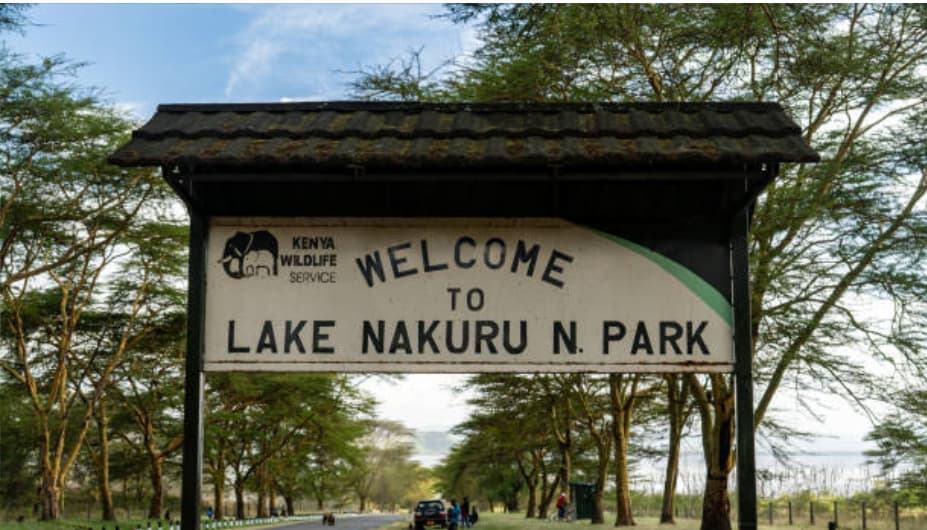
Understanding which gate to use helps reduce driving time and ensures smoother entry into Lake Nakuru National Park, particularly when combining the park with other destinations in the Rift Valley.
🛑 Gate Entry Tip: Lake Nakuru is a 100% cashless park. You cannot pay at the gate with cash. Save time by reading our 2026 Guide to Paying Lake Nakuru Fees on eCitizen before you start your safari.
Yes — Lake Nakuru National Park fits naturally into many Kenya safari circuits, making it easy to combine with other destinations depending on time, interests, and travel pace. Its central Rift Valley location allows travellers to extend their safari without excessive driving.
One of the most common combinations is Lake Nakuru and Lake Naivasha, often paired together over two or three days. This route blends classic game drives with boat rides, walking safaris, and scenic landscapes, making it ideal for short and medium-length itineraries.
For travellers seeking iconic savannah wildlife, combining Samburu, Lake Nakuru and Masai Mara works exceptionally well. Nakuru’s rhino sanctuary and birdlife complement the open plains and big cat sightings of the Masai Mara, creating a well-rounded safari experience.
Nature-focused travellers often link Masai Mara, Lake Nakuru and Aberdares.
Is Lake Nakuru National Park worth visiting if I have limited time?
Yes. Lake Nakuru National Park is one of Kenya’s best parks for short safaris, offering concentrated wildlife sightings in a compact area. Even a one-day visit delivers strong value.
Can I visit Lake Nakuru National Park as a day trip from Nairobi?
Yes. A day trip from Nairobi is very doable with an early start, allowing several hours of game drives before returning the same day.
How far is Lake Nakuru National Park from Nairobi?
The park is about 156 km from Nairobi and takes roughly 3–4 hours by road, depending on traffic and weather.
What animals can I see in Lake Nakuru National Park?
Common sightings include black and white rhinos, giraffes, buffaloes, zebras, warthogs, and abundant birdlife. Lions and leopards are present but less predictable.
Are flamingos always present at Lake Nakuru?
Flamingo numbers vary. Their presence depends on water levels and food availability, so sightings range from large flocks to smaller groups at different times.
What is the best time of day for game drives in Lake Nakuru?
Early morning and late afternoon are best, when wildlife is most active and lighting is ideal for photography.
Is Lake Nakuru suitable for first-time safari visitors?
Yes. The park is well fenced, easy to navigate, and offers reliable wildlife sightings, making it ideal for first-time safari travellers.
Can Lake Nakuru be combined with other destinations?
Yes. It’s commonly combined with Lake Naivasha for short trips or with Masai Mara, Amboseli, or Aberdares on longer safaris.
Do I need a 4×4 safari vehicle to visit Lake Nakuru?
A 4×4 is recommended, especially during the rainy season, to ensure smooth access to all game-viewing areas.
How long should I spend in Lake Nakuru National Park?
One full day covers the highlights, but an overnight or 2-day stay allows for relaxed game drives and better wildlife viewing.
Final Thoughts on Lake Nakuru National Park
Whether you are drawn by the iconic flamingo-filled horizons or the rare chance to track black and white rhinos in their natural habitat, Lake Nakuru National Park remains a crown jewel of Kenya’s Rift Valley. It is one of the few places where high-density wildlife sightings and breathtaking landscapes are accessible in a single day trip from Nairobi.
Are you planning a visit in 2026? We recommend booking your safari early, especially during the peak dry seasons, to secure the best views of the lake. If you found this guide helpful, feel free to share it with your safari partners.