Email:
 Phone:
 WhatsApp:

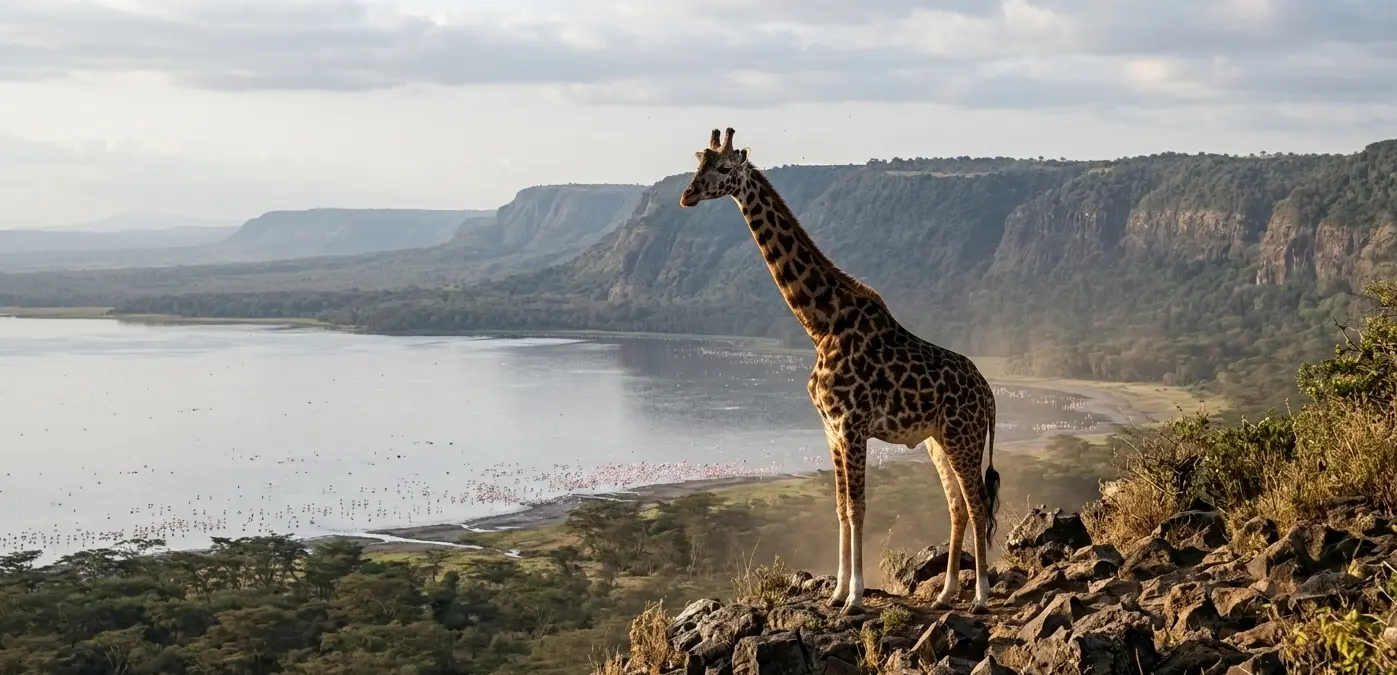
Rothschild’s Giraffes in Lake Nakuru National Park are a rare, endangered subspecies distinguished by their “white stockings”—legs completely with no spots below the knees. Unlike the common Masai giraffe, these 2026 residents often feature five ossicones (horns) and are primarily found on the park’s higher southern basalt ridges.
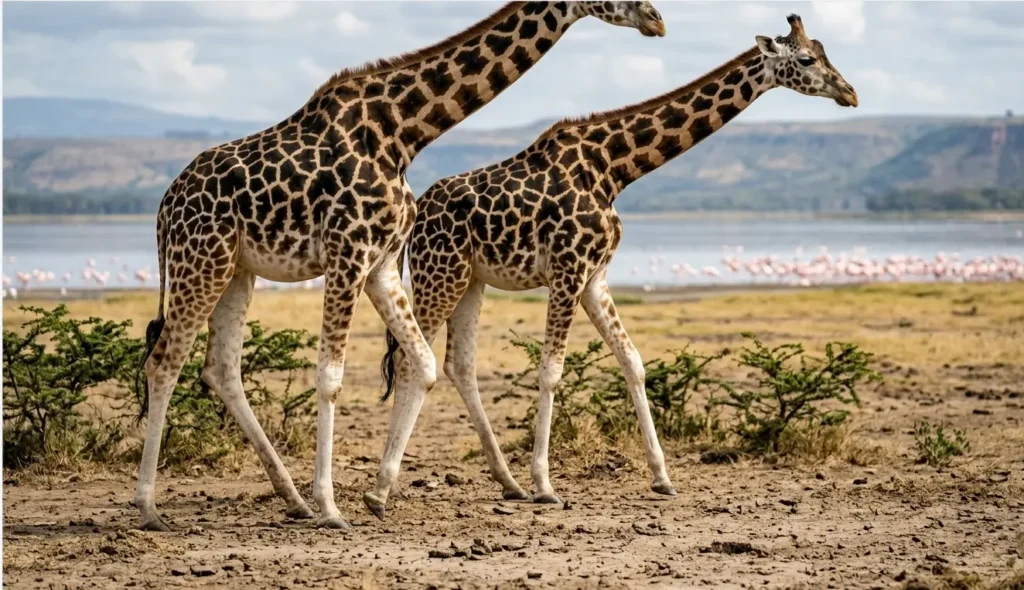
If you are planning a Lake Nakuru National Park wildlife safari, you need to ignore the outdated 2010 guidebooks. The Endangered Rothschild Giraffe Kenya populations have made a dramatic “High-Ground” shift in 2026. Because of the rising alkaline Lake Nakuru water levels, the famous yellow-fever acacia forests on the floor have become “Ghost Forests”—submerged and abandoned.
To see these giants now, you must look toward the Naishi Plains and the southern cliffs. As an operator on the ground, I’ve watched this herd adapt; while other sites claim you can see them “anywhere,” the truth is that the 2026 “White-Stocking” sightings are now concentrated in specific higher-elevation corridors. This guide gives you the updated sighting map and the “5-horn” secret most tourists miss.
Quick Navigation: Jump to your Section
The “White-Stocking” Secret: How to Identify Rothschild’s Giraffes in 2026
The easiest way to identify Rothschild’s Giraffes in Lake Nakuru National Park is to look at their legs. While other giraffe species have patterns that run all the way down to the hooves, the Endangered Rothschild Giraffe Kenya population wears distinct “white stockings” from the knee down. This lack of markings makes them appear as if they are wading through a field of white even when standing on dry ground.
Beyond the legs, the difference between Masai and Rothschild giraffe markings is found in the edges of their spots. Masai giraffes have messy, star-shaped spots reaching their ankles, whereas the Rothschild’s have defined patches separated by thick cream-colored borders. It is a common 2026 mistake to confuse the Rothschild with the Reticulated Giraffe because both have “cleaner” patterns than the Masai; however, the Reticulated variety lacks the “white stockings” and features much narrower, brighter white lines between its spots.
🛡️ OPERATOR INSIGHT: Most travelers forget that Rothschild’s Giraffes in Lake Nakuru National Park were originally translocated here to save them from extinction. To ensure you don’t miss these rare giants while navigating the 2026 flooded routes, see our guide on which Lake Nakuru gate to use to enter closest to their preferred high-ground feeding zones.
The “5-Horn” Mystery Most Guides Miss
There is a specific anatomical secret to Rothschild’s Giraffes in Lake Nakuru National Park that even seasoned safari-goers often overlook. While most giraffes have two “horns” (ossicones), the Rothschild’s often displays up to five. This includes the primary two on top, a third prominent horn in the center of the forehead, and two smaller protrusions behind the ears.
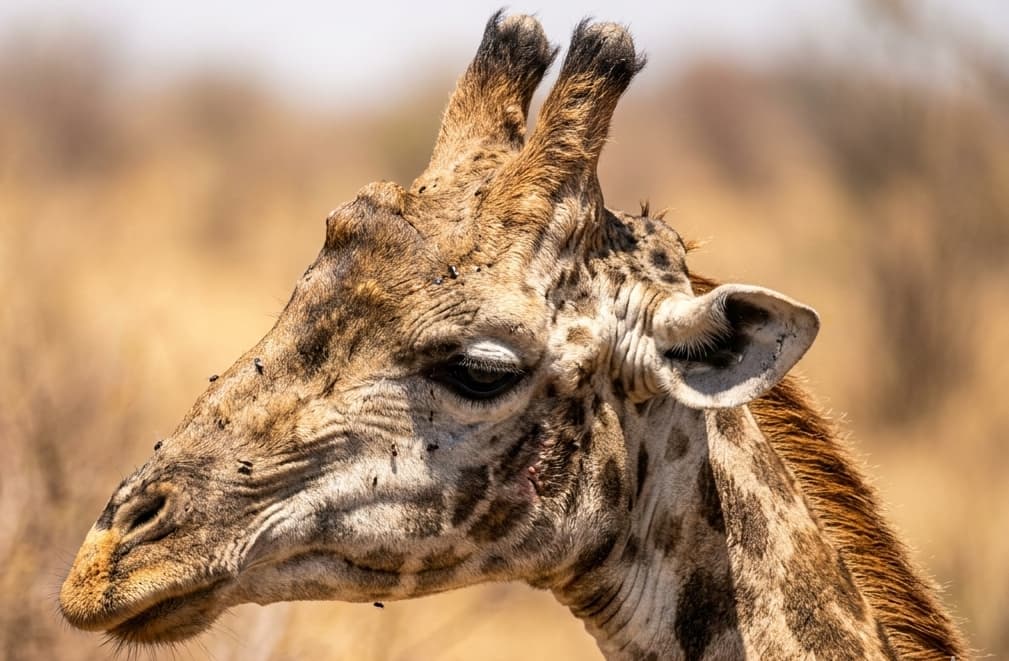
This unique bone structure is a major indicator of the Endangered Rothschild Giraffe Kenya lineage and is best spotted using a side-profile view. In 2026, these extra horns are particularly visible on the dominant bulls often seen patrolling the Naishi airstrip. If your guide only mentions two horns, you are officially more informed than the average tourist.
💡 PRO TIP: Because these giraffes are the tallest in the world, capturing their full scale against the shrinking shoreline requires specific glass. To avoid “cutting off” their white stockings in your shots, check our Lake Nakuru safari photography guide for the right lens choice in 2026.
Now that you can distinguish the “5-horn” giants from their common cousins, we need to address why the traditional maps are leading people to empty forests…
Why the “Ghost Forests” are Empty: The 2026 High-Ground Shift
If you are following a map from five years ago, you will likely spend your afternoon staring at dead wood. The iconic Yellow Fever tree forests (Acacia xanthophloea) that once lined the lake shores have become salt-saturated “Ghost Forests” due to the sustained rise in Lake Nakuru water levels. As the roots drowned in alkaline water, the trees died, forcing the Rothschild’s Giraffes in Lake Nakuru National Park to abandon their traditional lowland feeding grounds.
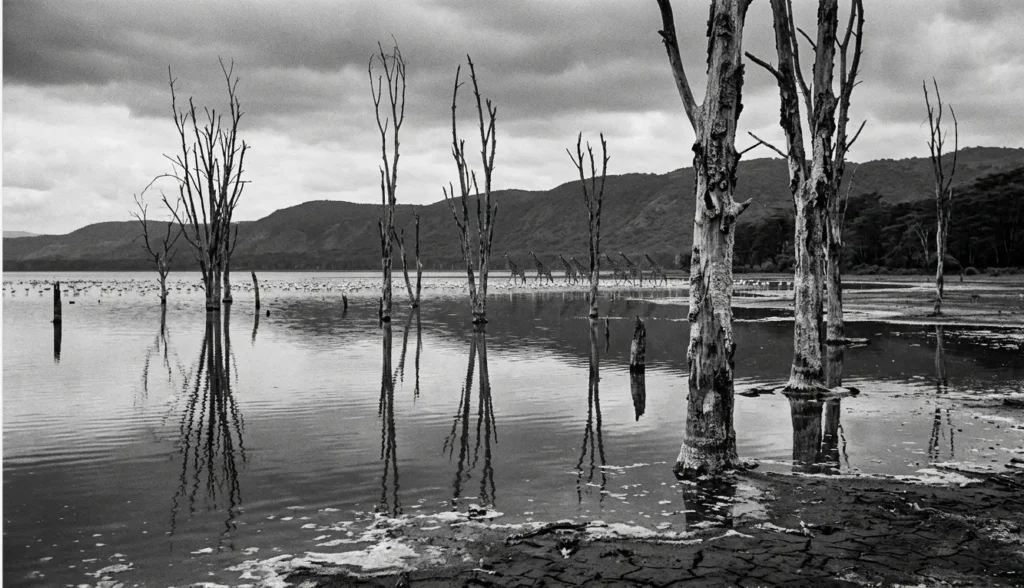
This environmental shift has completely changed the logic of giraffe sightings Lake Nakuru travelers expect. The giraffes have moved away from the waterlogged “bones” of the forest and migrated toward the drier, nutrient-rich basalt ridges. In 2026, searching for them near the old shoreline is a waste of fuel; they have relocated to where the acacia bark is healthy and the ground is firm.
🛡️ OPERATOR INSIGHT: Do not let your driver spend hours in the flooded western acacia zones hoping for a “classic” forest shot. The Rothschild’s Giraffes in Lake Nakuru National Park have established a new 2026 residency in the Naishi Plains and the higher elevations near the Out of Africa lookout. To navigate these new dry-ground corridors without getting stuck, check our Lake Nakuru self-drive guide for the latest route hacks.
The Movement: From Shoreline to Basalt Ridges
The migration of Rothschild’s Giraffes in Lake Nakuru National Park is not just about food; it is about survival and calf safety. The higher basalt ridges provide better visibility against predators and keep their sensitive hooves away from the corrosive alkaline mud of the expanding lake. During my last ground report in 2026, the largest towers (groups) were consistently spotted moving between the Lanet Gate area and the southern hills.
If you are entering the park specifically for giraffe sightings Lake Nakuru photography, your strategy must be vertical. Most travelers mistakenly look “down” toward the flamingos, but the giants are now “up” on the ridgelines. This shift means your old wide-angle forest shots are being replaced by dramatic, high-contrast ridge-top silhouettes.
⚠️ 2026 ROAD ALERT: The transition to high-ground sightings means you will be traversing steeper, rockier tracks than the old lake-circuit roads. Ensure your vehicle’s 4WD is fully engaged before climbing toward the ridges; see our Kenya car hire survival guide to ensure your rental is cleared for these basalt inclines.
With the “Ghost Forests” behind us and the herd located on the ridges, let’s pinpoint the exact 2026 coordinates you need for a guaranteed encounter…
The 2026 Sighting Map: Finding the Naishi Herd
Finding Rothschild’s Giraffes in Lake Nakuru National Park in 2026 requires a complete departure from the “lake-loop” tradition. While most visitors hug the shoreline looking for birds, the primary giraffe population has consolidated around the Naishi airstrip and the elevated southern cliffs. These high-drainage areas offer the firm ground these 2,000kg giants need to avoid the marshy “hoof-rot” conditions currently found at lower elevations.
If you are hunting for high-quality giraffe sightings Lake Nakuru guides often miss, aim your vehicle toward the southern basalt ridges between the Makalia junction and the Naishi plains. This is a specific 2026 wildlife corridor where the herd moves to avoid the thickest bush, making them easier to spot against the horizon. For the best approach to this terrain without risking a “mud trap,” see our ground report on navigating to Makalia Falls.
🛡️ OPERATOR INSIGHT: The Nakuru giraffe population isn’t just a random occurrence; it’s a living legacy of a 1970s translocation from the Soy area near Eldoret. Because they were introduced into a fenced sanctuary, they are significantly more habituated to vehicles than those in the Mara. If you want to watch them from a balcony rather than a dusty jeep, check our updated guide on Lake Nakuru lodges to see which properties overlook these specific Naishi movement corridors.
Timing the Shot: The Mid-Day Photography Secret
While most giraffe sightings Lake Nakuru photography happens during the “Golden Hour,” the best time to capture the Rothschild’s is actually between 11:00 AM and 2:00 PM. During this window, the harsh overhead sun illuminates their unique “white stockings,” which can otherwise be lost in the long shadows of early morning. Furthermore, because they are “high-feeders,” they don’t hide in the shade like lions or leopards, giving you clear, unobstructed vertical shots when other animals have disappeared.
In 2026, the contrast between the burnt-orange patches of the Rothschild’s Giraffes in Lake Nakuru National Park and the surviving green acacia at higher altitudes is a photographer’s dream. To ensure you have the right focal length to handle these mid-range ridge sightings, see our Lake Nakuru safari photography gear guide before you pack your bag. You’ll find that a 600mm lens is now essential to bridge the gap between the road and the ridges.
💡 PRO TIP: KWS rangers are currently strictly enforcing off-road rules near the Naishi airstrip to protect the delicate nesting grounds of ground birds. Straying even 5 meters off the designated track for a “better angle” can result in an immediate 2026 on-the-spot fine of KES 10,000; keep your wheels on the gravel and use a zoom instead.
Now that we’ve pinned their 2026 coordinates on the map, we need to look at how these giants stack up against their famous cousins from the Mara…
Rothschild vs. Masai vs Reticulated: The Difference between them
Understanding the difference between Masai and Rothschild giraffe markings is the hallmark of an educated safari-goer. In 2026, many tourists mistakenly call every tall mammal they see a “giraffe” without realizing that Rothschild’s Giraffes in Lake Nakuru National Park are a distinct genetic lineage. While the Masai giraffe features jagged, “vine-leaf” spots and the Reticulated Giraffe (found in Northern Kenya) boasts a sharp, brick-red lattice of thin white lines, the Rothschild’s sports clean, geometric patches with distinct cream borders.
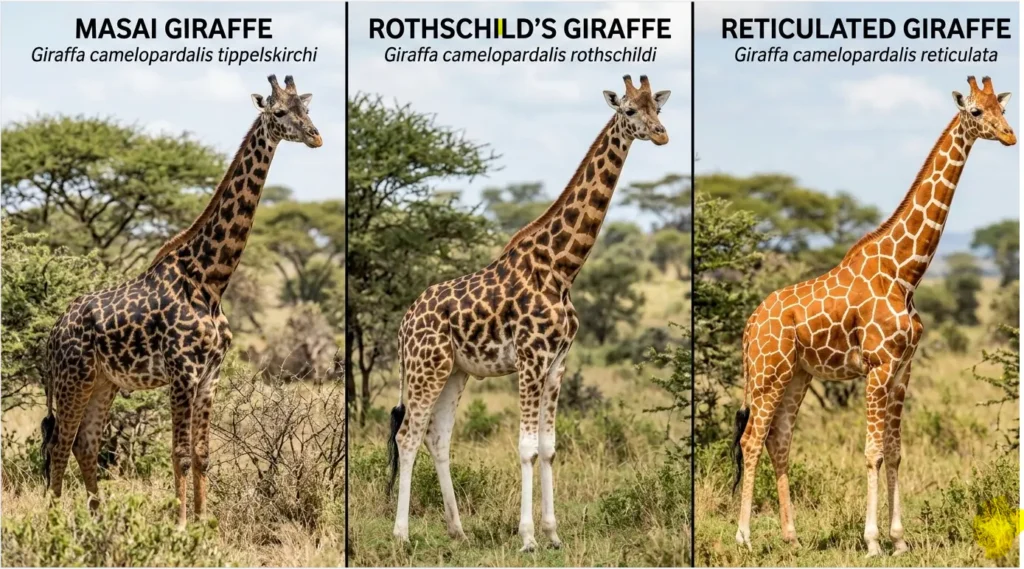
These patches on the Rothschild’s Giraffes in Lake Nakuru National Park are separated by thick, bright cream-colored channels, giving them a much “neater” appearance from a distance. Up close, you will notice that the Masai’s spots often extend down to the hooves, whereas the Rothschild’s always stops at the knee. This visual contrast is so sharp that once you see it on the Naishi Plains, you will never confuse the two again.
🛡️ OPERATOR INSIGHT: Because the park is fully electric-fenced to protect the Endangered Rothschild Giraffe Kenya population from cross-breeding and poaching, you will never see a Masai giraffe inside Nakuru. If you are desperate to see the “vine-leaf” patterned cousin after your Nakuru trip, check our practical Masai Mara safari guide to plan your transition to the southern reserves where the Masai herds dominate.
The Genetic Gap: Why the Fence Matters
The isolation of Rothschild’s Giraffes in Lake Nakuru National Park is a deliberate conservation “moat” built by the Kenya Wildlife Service. Scientists and operators agree that keeping the Rothschild’s separate from the Masai is the only way to prevent hybrid patterns that would dilute this rare 2026 subspecies. If you are tracking wildlife in the 2026 “High-Ground” zones, remember that every giraffe you spot here is a pure-bred survivor of that original 1970s translocation.
This genetic purity also preserves the “5-ossicone” head structure that defines the Rothschild’s Giraffes in Lake Nakuru National Park. While a Masai giraffe typically only develops two horns, the Rothschild’s bulls in Nakuru often look “bumpy” or “armored” due to the three additional calcified protrusions on their skulls. It is a rugged look that reflects their status as the world’s most endangered giraffe variant.
💡 PRO TIP: Many visitors assume that because they saw giraffes in Amboseli, they don’t need to look for them in Nakuru. This is a mistake—Amboseli is Masai territory, and skipping the Rothschild’s means missing a completely different species; see our Amboseli safari travel guide to compare the two experiences side-by-side.
Now that we have settled the visual rivalry between these two giants, let’s talk about the specific rules of engagement for photographers and eco-travelers…
Ethics & Photography: Capturing the “Tallest” Giraffes
Photographing Rothschild’s Giraffes in Lake Nakuru National Park requires more than just a long lens; it requires an understanding of the strict 2026 KWS conservation boundaries. To protect the Endangered Rothschild Giraffe Kenya population from stress, rangers are strictly enforcing a 50-meter proximity rule. Approaching closer than this not only disturbs their feeding but can result in a 2026 “harassment fine” exceeding KES 20,000, especially if you are caught off-track in the Naishi high-ground.
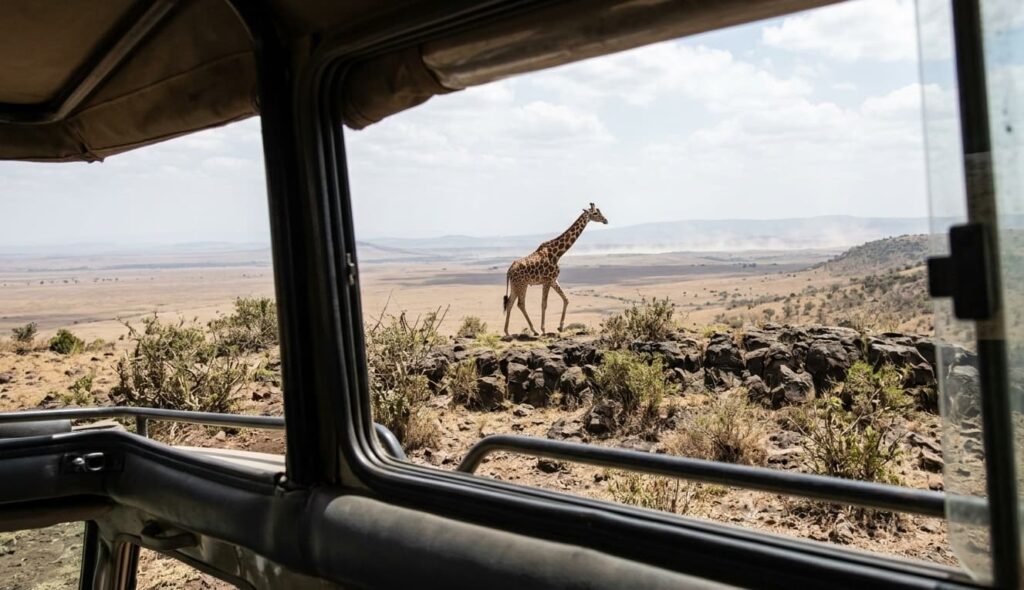
The goal is to capture their immense height without the “stumpy leg” distortion caused by wide-angle lenses used too close. Because the Rothschild’s Giraffes in Lake Nakuru National Park are often positioned on basalt ridges above the road, shooting from a low angle is common. However, for a true professional finish, you should aim for eye-level shots from the Out of Africa lookout or higher ridge tracks.
🛡️ OPERATOR INSIGHT: If you are struggling with the distance, do not be tempted to “call” or whistle at the giraffes to make them look your way. Instead, wait for a natural movement toward the Naishi watering holes where they are most active. To ensure you have the right reach for these 2026 sightings without breaking the 50-meter rule, see our Lake Nakuru safari photography gear guide for the best focal lengths to use.
Mastering the “White-Stocking” Shot
The most coveted photo of the Endangered Rothschild Giraffe Kenya subspecies is a clear, full-body profile showing the unspotted white legs against the dark basalt rocks. In 2026, the high sun can “blow out” these white sections, making them look like glowing sticks. To prevent this, underexpose your shot by one stop or wait for the light to soften as they move toward the western cliffs in the late afternoon.
When framing Rothschild’s Giraffes in Lake Nakuru National Park, always leave “walking room” in the frame. These giraffes move with a synchronized gait (both legs on one side move together), and capturing this mid-stride shows off the white stockings perfectly. If you are a solo traveler or a family group, check our Lake Nakuru safety and family guide to ensure you are utilizing the safest designated photography pull-offs in the southern sector.
💡 PRO TIP: Many photographers waste their battery on the floor of the park where the light is flat. The best 2026 “trophy” shots happen on the ridges near the Naishi airstrip; to learn more on how to manage your time and battery for the best results, see our report on the 12 best things to do in Lake Nakuru.
Now that your memory cards are full of the tallest residents, we need to conclude why Nakuru remains the only true sanctuary for these rare five-horned giants…
Conclusion: Why Lake Nakuru is the Last True Sanctuary
Rothschild’s Giraffes in Lake Nakuru National Park represent one of the most successful conservation translocations in East African history. In 2026, this park remains the most reliable place on earth to see the pure-bred “five-horned” giants in a wild, manageable setting. While other parks offer quantity, Nakuru offers the rare genetic quality of the Endangered Rothschild Giraffe Kenya lineage that you simply cannot find in the open plains of the south.
Choosing to visit this sanctuary isn’t just about ticking a box; it’s about witnessing the resilience of a subspecies that nearly vanished. The 2026 shift to the high basalt ridges has only added to their majesty, placing these giants against the dramatic backdrop of the rift valley cliffs. As an operator, my “spiky opinion” is clear: if you only have one day for wildlife near Nairobi, skip the generic plains and head here for the white-stockinged specialists.
🛡️ OPERATOR INSIGHT: To make this trip a reality, your first logistical hurdle is the eCitizen portal which can be a “digital mud trap” for the unprepared. To avoid being turned away at the Lanet or Main Gate, see our guide on how to pay Lake Nakuru park fees on eCitizen for a 2026 step-by-step walkthrough.
The Next Adventure: Beyond the Tallest Residents
While the Rothschild’s Giraffes in Lake Nakuru National Park dominate the skyline, the park’s rising water levels have created another unique phenomenon just a few kilometers away. The same environmental changes that pushed the giraffes to the ridges have forced the local predators to adapt in a way that defies typical feline behavior.
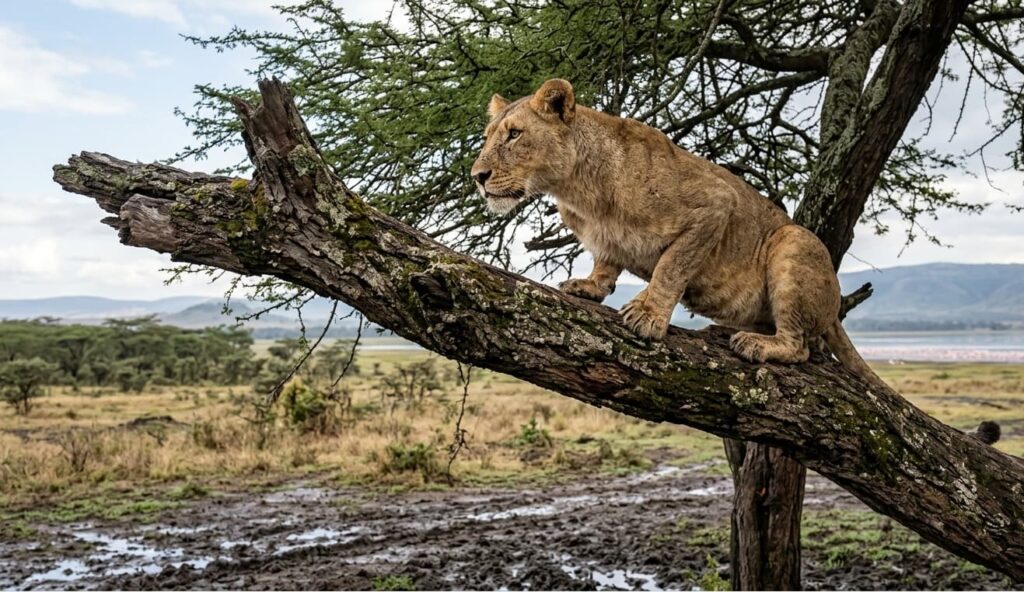
Now that you’ve mastered the “5-horn” identification and mapped the Naishi herd, you are ready for the “Wet-Paw” challenge. Most travelers think you have to go to Ishasha in Uganda or Tarangire in Tanzania to see lions in branches, but Nakuru’s pride has developed the same habit to escape the 2026 sodden ground. Once you’ve secured your giraffe photos, head over to our guide on the tree-climbing lions of Lake Nakuru to find the specific fever trees where the kings of the park are currently hanging out.