Email:
 Phone:
 WhatsApp:

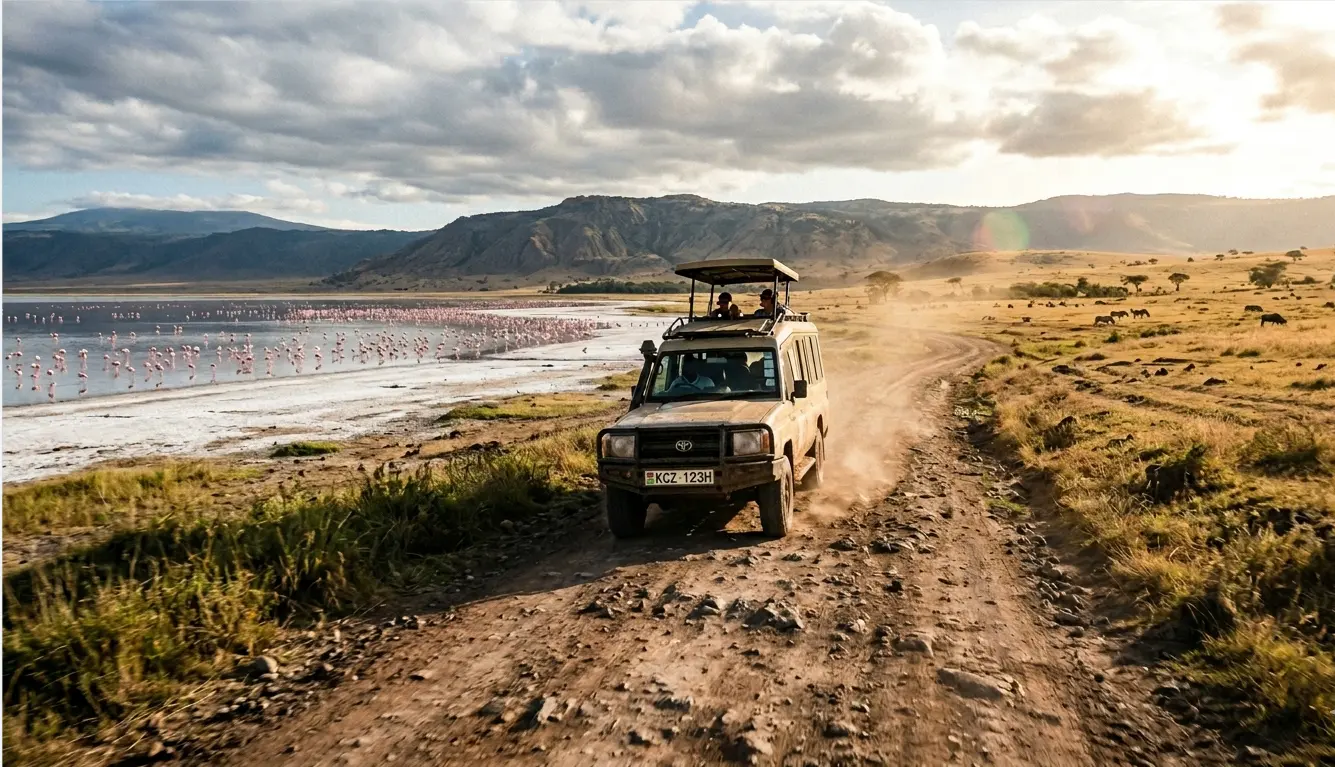
A Nairobi to Masai Mara via Lake Nakuru itinerary is a 2026 strategic 5-day loop that connects Kenya’s premier rhino sanctuary with the world-famous savannah. It is the most efficient route to see the “Big Five” by linking the Rift Valley floor to the Mara plains without backtracking to the city. Driving involves a 3.5 to 4.5-hour morning leg to Nakuru, followed by a scenic 5.5-hour transition to the Mara via the Mau Narok shortcut.
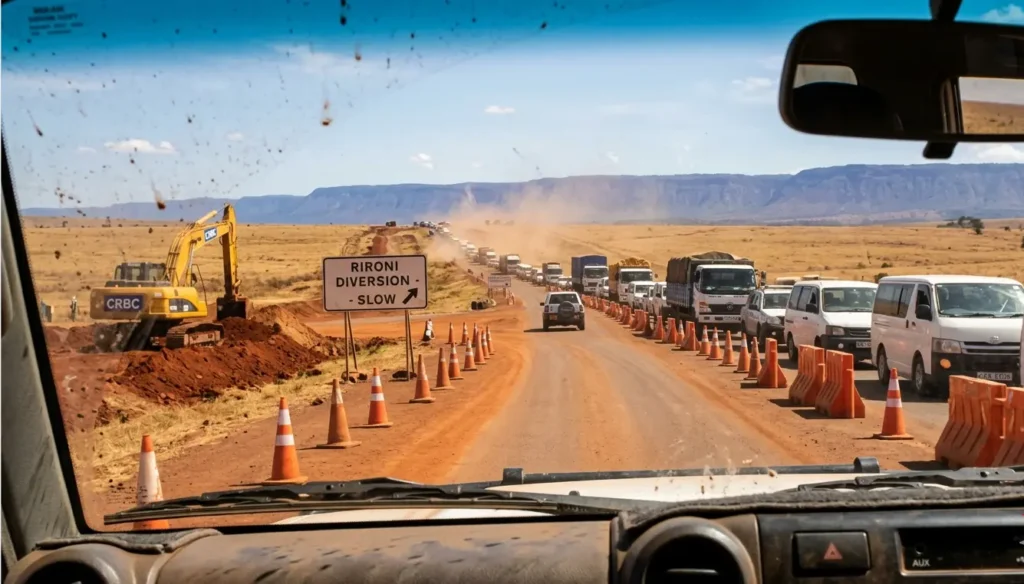
Planning a Lake Nakuru and Masai Mara 5 day safari in 2026 requires more than just a map; it requires navigating the latest eCitizen KWS payment loops and Rironi highway construction. While legacy guides still cite “3-hour drives” and old routes, this ground report provides the 2026 reality: how to use the Lanet Gate shortcut and the high-altitude Mau highlands to bypass traffic and maximize your time at the Makalias Falls mud-traps or the Mara’s golden river crossings.
Insider Note for the Reader: As of 2026, Lake Nakuru’s rising water levels have submerged several traditional tracks in the southern loop. If you are following an old itinerary or a generic PDF guide, you will likely hit a dead end. Always check the updated high-ground map before entering the Park’s Lanet or Main gates.
Quick Navigation: Jump to Your Section
2026 Logistics Snapshot: Times, Distances, and The “Rift Circuit” Reality
A successful Nairobi to Masai Mara via Lake Nakuru itinerary in 2026 depends entirely on clearing the Nairobi exit before the supply chain trucks choke the highway. While Google Maps might suggest a 3-hour journey to Nakuru, the Rironi construction traffic has pushed the ground reality closer to 4 hours for most travelers. To stay ahead of the schedule, we recommend a strict 6:30 AM departure to ensure you reach the Lanet Gate in time for a mid-morning game drive.
Below is the verified 2026 logistical breakdown for the full circuit. This table is designed to help you calculate your total safari cost 2026 by factoring in fuel and transit time.
|
Route Segment |
Distance |
2026 Realistic Drive Time |
Primary Road/Route Hack |
|
Nairobi to Lake Nakuru |
160 km |
3.5 – 4.5 Hours |
Use Lanet Shortcut to bypass Nakuru city gridlock. |
|
Nakuru to Masai Mara |
210 km |
5.5 – 6 Hours |
Mau Narok C12 Route: Avoids backtracking to Mai Mahiu. |
|
Masai Mara to Nairobi |
240 km |
5.5 – 6.5 Hours |
Narok-Mai Mahiu Road (Expect heavy truck traffic). |
The “Mau Narok” Transition: A 2026 Efficiency Hack
Most generic guides advise backtracking toward Nairobi to catch the Narok road at Mai Mahiu—a move that wastes nearly 3 hours of game-viewing time. The expert alternative is the high-altitude transit through the Mau Highlands, an optimized flow that requires exiting Lake Nakuru via the southern Nderit Gate to bypass city gridlock.
However, executing this shortcut in 2026 is no longer a simple “map-follow” exercise due to the shifting silt conditions on the C12 corridor. To navigate the specific Nakuru to Masai Mara distance without hitting the Rironi “time trap” or the Mau Escarpment fuel gaps, you must synchronize your departure with the latest 2026 operator’s ground report.
⚠️ Note: The C12 section remains a technical drive; ensure your 4×4 tire pressure is adjusted for the volcanic dust before leaving the Njoro highlands.
🛡️ OPERATOR INSIGHT: The 2026 Rironi construction traffic is most volatile between 7:30 AM and 10:00 AM. If you miss the early exit, consider taking the A104 up to the Kikopey Junction for a quick break rather than sitting in the stationary queue at the escarpment. To learn more on how to beat the city traffic, see our guide on Nairobi to Nakuru road hacks.
2026 KWS Entry Fees & Payment Warning
You cannot pay for your Lake Nakuru and Masai Mara 5 day safari at the gate with cash or a credit card. Every traveler must have a pre-validated QR code from the eCitizen portal. Failure to have your eCitizen park fees ready can lead to hours of delay at the gate, as network connectivity in the Rift Valley can be unreliable for last-minute account creations.
⚠️ 2026 ROAD ALERT: Be aware that the Mau Summit vs. Mai Mahiu route choice is weather-dependent. During heavy rains, the Mau Narok shortcut can become a “mud trap” for 2WD vehicles; in such cases, sticking to the longer but paved Mai Mahiu road is the only safe bet.
Now that your logistics are timed to perfection, let’s look at why adding Nakuru to your Mara loop is the smartest wildlife decision you’ll make in 2026…….
Why the “Via Nakuru” Route Wins in 2026 (The Comparison Factor)
When planning a Nairobi to Masai Mara via Lake Nakuru itinerary, the most common question we get is whether to swap Nakuru for Lake Naivasha. While Naivasha offers boat rides, it cannot compete with the raw biodiversity of a Lake Nakuru and Masai Mara 5 day safari. In 2026, Nakuru remains the only “heavy hitter” in the Rift Valley where you have a near-guaranteed chance of seeing both black and white rhinos in a single morning.
The choice between Lake Naivasha vs. Lake Nakuru usually comes down to your wildlife priorities. Naivasha is a freshwater lake focused on hippos and walking safaris, but Lake Nakuru is a UNESCO World Heritage site and a fully fenced sanctuary. This enclosure is exactly why rhino sightings in Kenya are most consistent here; the animals are protected and resident year-round, unlike the migratory patterns found in the Mara.
🛡️ OPERATOR INSIGHT: Don’t be misled by 2026 brochures claiming the flamingos have “vanished” from Nakuru. While the flamingo density 2026 fluctuates due to rising water levels, the birds have simply moved to the northern alkaline shallows near the Lion Hill area. See our guide on what to expect on Flamingos in Lake Nakuru.
Beyond the rhinos, this route allows you to check off the “rare” species that the Masai Mara often lacks. You are far more likely to spot the endangered Rothschild’s giraffes and colobus monkeys in the acacia forests of Nakuru than on the open Mara plains. By including both in your Nairobi to Masai Mara via Lake Nakuru itinerary, you effectively secure a “Big Five” checklist before you even reach the Mara gates.
💡 PRO TIP: If your goal is photography, Nakuru offers a distinct advantage over the Mara: “High-Ground” leopard spotting. Because the park is smaller and the leopard territories are well-mapped by our scouts, you spend less time searching and more time shooting.
Choosing this loop also solves a major 2026 logistical headache. While Naivasha is closer to Nairobi, it doesn’t offer the same seamless transition to the Mau Narok shortcut that saves you hours of backtracking. You aren’t just choosing a park; you are choosing an optimized travel flow that keeps you in the wild and out of the suburban traffic jams of the lower Rift.
Now that you understand why Nakuru is the essential “Bridge” to the Mara, let’s break down the Day 1 strategy for beating the highway chaos…
Day 1: Nairobi to Lake Nakuru – Beating the “Rironi Trap”
To kick off your Nairobi to Masai Mara via Lake Nakuru itinerary in 2026, you must conquer the Nairobi exit before the morning rush. Road conditions at the Rironi interchange (historically a bottleneck) require an early exit to avoid the heavy transit trailers that clog the climb toward the escarpment. Aim to be ascending the Rift Valley wall by 6:30 AM to catch the best viewpoints of the Great Rift Valley before the heat haze obscures the floor.
As you descend toward the valley floor, keep a sharp eye on the traffic flow near the Gilgil weighbridge. If you are using public transit, the 2NK matatu fare 2026 is the standard benchmark for quality service, but always confirm the current rate at the Nyamakima stage to avoid “tourist pricing.” For those self-driving, the goal is to reach the Nakuru county line by mid-morning to ensure your first game drive isn’t cut short by the midday sun.
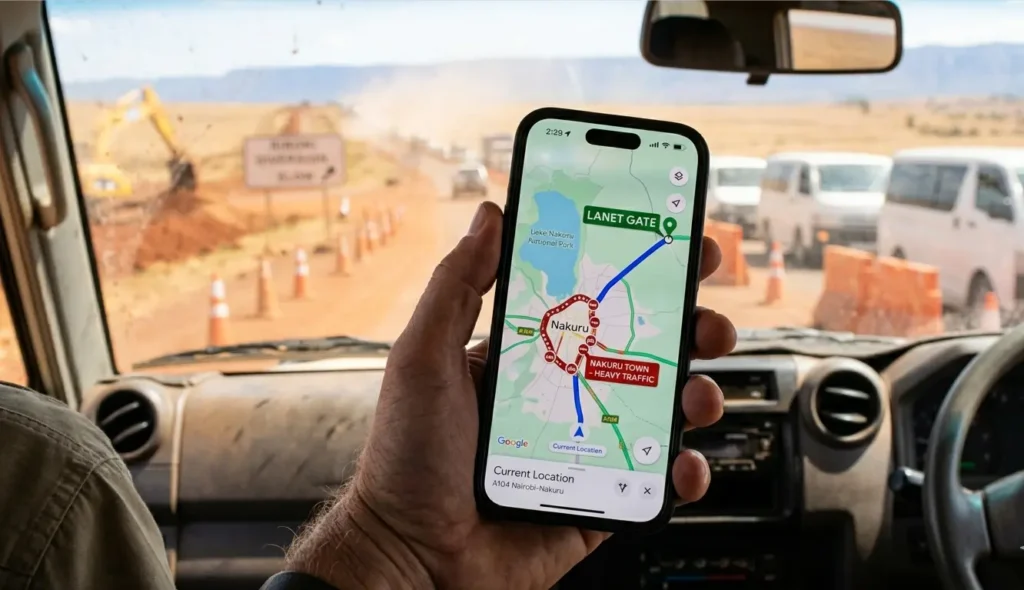
Stop following the herd: The Lanet Gate entrance saves you 45 minutes of urban gridlock. Check the 2026 gate access rules below.🛡️ OPERATOR INSIGHT: Most GPS apps will automatically route you to the Main Gate on the busy A104 highway. However, for a smarter Nairobi to Masai Mara via Lake Nakuru itinerary, you should drive past the city center and enter via the Lanet Gate. This bypasses Nakuru’s urban gridlock and puts you directly into the high-density rhino grazing zones. To learn more about which entrance saves you the most time, see our guide on Lake Nakuru National Park gates.
Before you reach the gate, ensure you have completed your eCitizen park entry validation. KWS rangers in 2026 are strictly enforcing the “No QR, No Entry” rule; since the network signal at the Lanet entrance is notoriously spotty, having a printed copy or a clear screenshot of your validated permit is essential. Note that if the name on your digital ticket does not match your passport or ID, you may face a lengthy delay or be denied entry entirely.
💡 PRO TIP: If you need a final supply run, stop at the Kikopey Junction for snacks or clean restrooms. It is the last reliable pitstop before you commit to the park’s internal tracks.
Once you’ve cleared the gate, the urban noise is replaced by the rustle of yellow-fever acacia forests. Your Lake Nakuru and Masai Mara 5 day safari truly begins here, with your first opportunity to track the “Prehistoric Pair”—the black and white rhino.
Now that you’ve successfully breached the park gates, let’s navigate the shifting tracks and submerged roads of the Nakuru loop…
Day 2: The Full Nakuru Loop & The “Submerged Tracks” Alert
A Lake Nakuru and Masai Mara 5 day safari hits its peak during the full-day exploration of this diverse ecosystem. In 2026, your primary challenge isn’t finding animals—it’s navigating the changing terrain. Due to the historic rise in Lake Nakuru water levels, the traditional lower-lake circuit is partially submerged, forcing a strategic shift in how you track the “Prehistoric Pair” of black and white rhinos.
To see the famous flamingos, you must head toward the northern shores where the water remains shallow enough for feeding. While older maps show a road circling the entire lake, the 2026 reality is that the southern connection near the acacia forests is often impassable for those without a high-clearance 4×4 requirement. We recommend sticking to the higher ground tracks near Lion Hill to ensure your morning isn’t interrupted by a recovery vehicle.
🛡️ OPERATOR INSIGHT: The Makalia Falls area is a high-reward spot for buffalo and leopard sightings, but it is currently the most notorious “mud trap” in the park. If you see water crossing the track near the southern tip, do not attempt to gauge the depth yourself—the silt underneath is deceptively soft and can swallow a vehicle in minutes.
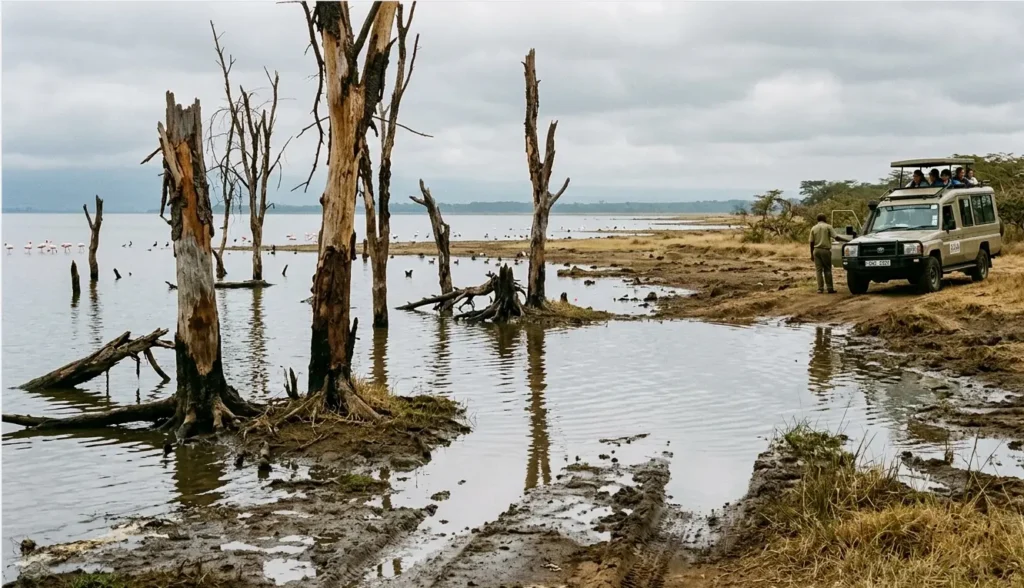
Beyond the water’s edge, focus your search on the woodlands for Rothschild’s giraffe sightings. Because the park is a fenced sanctuary, these endangered giraffes are resident and far easier to photograph here than in the vast, open Mara plains. For the best lighting, aim to reach the Baboon Cliff viewpoint by 4:00 PM, when the sun turns the lake a brilliant silver and the shadows define the distant escarpment.
💡 PRO TIP: Rangers are currently strictly enforcing the “Stay in Vehicle” rule at all points except designated spots like Out of Africa. Being caught with your feet on the ground in a non-designated area can result in an immediate KWS fine of approximately $100—a costly mistake that isn’t listed on generic brochures. Check our Lake Nakuru safety guide to avoid these 2026 compliance traps.
Now that we’ve mastered the Nakuru tracks and filled the memory cards, it’s time to exit the Rift and head for the golden plains of the Mara using the most efficient transition route…
Day 3: The “Mau Narok Shortcut” – Nakuru to Masai Mara Transition
Executing the perfect Nairobi to Masai Mara via Lake Nakuru itinerary in 2026 hinges on your exit strategy from the Rift. While the top of this guide highlighted the Nderit Gate shortcut, the actual drive through the Mau Escarpment is where your safari transitions from “Lakeside” to “Highlands.” As you ascend toward 3,000 meters above sea level, the air thins and the temperature drops—this is the most scenic, non-commercial stretch of tarmac in Kenya.
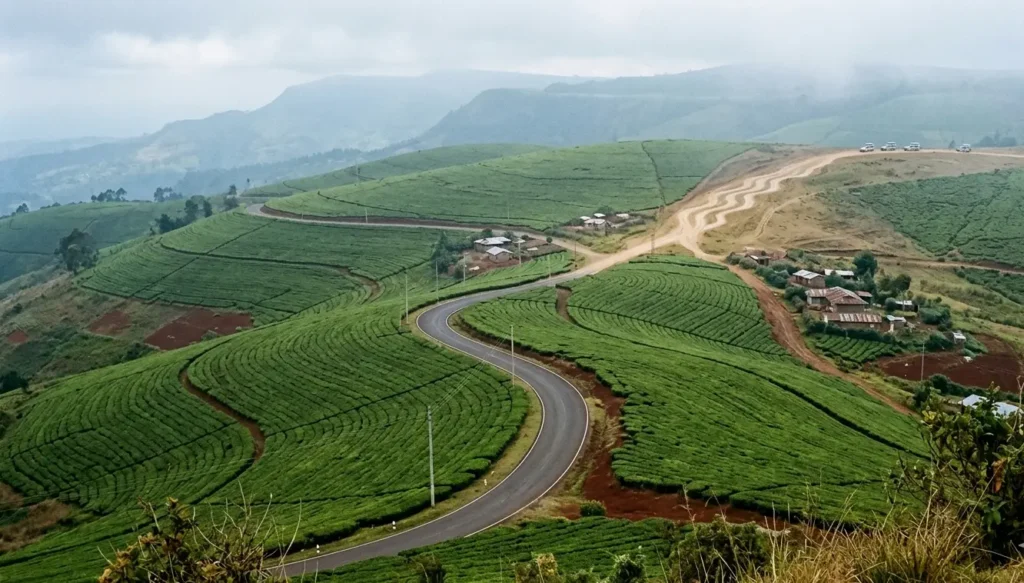
The Njoro-Mau Narok road condition is a dream for drivers until the tarmac abruptly ends at the descent toward the Mara floor. As an operator who navigates this track regularly, I can tell you that the transition to the C12 road is where your safari car is truly tested. Expect a “bone-shaking” 40km stretch of corrugated gravel where lower-clearance SUVs will struggle to maintain more than 20km/h.
🛡️ OPERATOR INSIGHT: The Mau Narok route is a “blind spot” for most generic GPS apps which will try to send you back toward the highway to find a signal. Do not follow them; stay on the C12 and watch for the 2026 dust-trail left by the commercial 4x4s. To ensure your vehicle can handle the steep descent and the jagged volcanic stones of the C12, see our safari car hire survival guide before you leave the yard.
Your Narok town pitstop should be more than just a fuel break. In 2026, the town center is a “congestion trap” for safari-goers; we recommend the outskirts toward the Ewaso Ng’iro side for a quicker, quieter meal. From this point, it is a straight, dusty run toward the park, aiming for a mid-afternoon Sekenani Gate arrival—the perfect time to catch the leopards waking up from their afternoon siesta.
⚠️ 2026 ROAD ALERT: While the Mau shortcut is faster, it is susceptible to “black cotton mud” during sudden highland showers. If you see heavy mist sitting over the Mau Forest, the clay-rich C12 can become impassable for even the best 4x4s.
Crossing the Narok County line triggers a shift from KWS protocols to stricter regional enforcement. You must verify your vehicle against the Masai Mara self drive rules to ensure your 4×4 meets the specific gate clearance required for entry.
As you crest the final hill and see the infinite Mara horizon, the dust of the road becomes a distant memory. Now that we’ve successfully navigated the Mau highlands, let’s dive into the predator-rich plains for the grand finale of your safari…
Day 4: Deep Mara Immersion – Beyond the “Standard” Game Drive
In 2026, the secret to a high-impact Nairobi to Masai Mara via Lake Nakuru itinerary is not more driving, but better positioning. While most 3-day visitors are rushing back to Nairobi today, your extra day allows you to venture deep into the Musiara Marsh or the Mara Triangle. These areas are far less congested and offer the “clean” photography backgrounds that define a professional Lake Nakuru and Masai Mara 5 day safari.
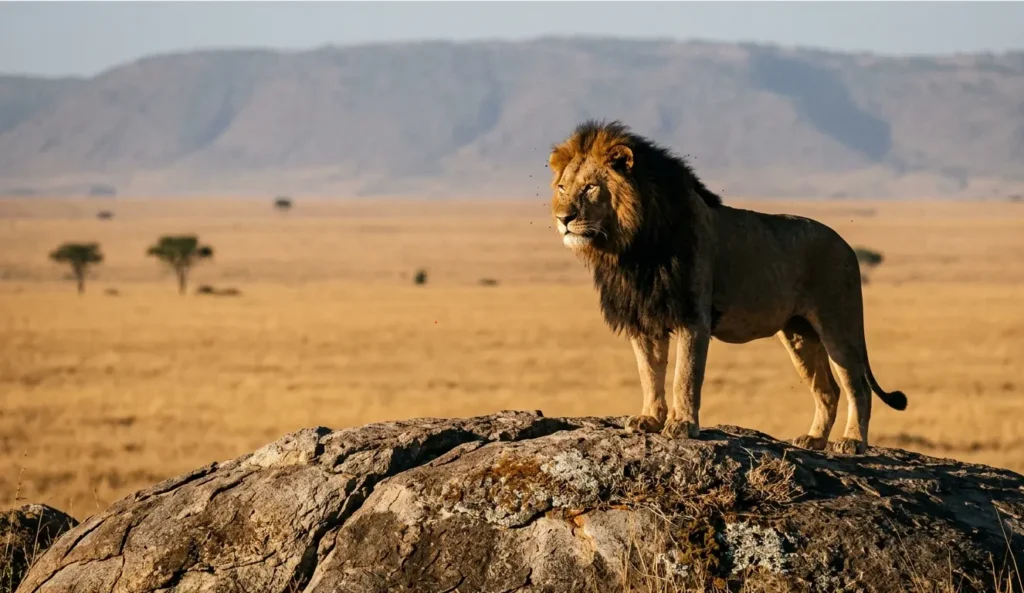
The wildlife behavior in 2026 has shifted due to higher-than-average rainfall, meaning the big cat prides are often found on the granite kopjes rather than the tall grass plains. A full day allows you to pack a picnic breakfast and head toward the Mara River crossing points without the pressure of a return deadline. This is where you’ll witness the raw scale of the savannah, far from the cluster of vehicles often found near the main Sekenani entrance.
🛡️ OPERATOR INSIGHT: Most drivers will stick to the well-beaten tracks near the Talek River to save on fuel. However, for a true 2026 “Information Gain” experience, insist on visiting the Lookout Hill area near the Tanzanian border. It offers the only 360-degree view where you can see the migration herds entering from the Serengeti—a sight most “express” itineraries completely miss.
By mid-afternoon, the Mara’s light turns a deep ochre, perfect for capturing the iconic “Elephants against the Sunset” shots. In 2026, KWS and Narok County rangers are strictly enforcing a 100-meter minimum distance rule for leopard sightings to reduce animal stress. Breaking this rule can result in an immediate on-the-spot fine of $100 or vehicle suspension, so ensure your guide respects the boundaries for both the cats’ safety and your wallet.
💡 PRO TIP: If you are looking for a unique vantage point, the 2026 hot air balloon launches have moved slightly north to accommodate the changing wind patterns. This is an expensive add-on, but it provides the only way to see the “Hidden Loops” of the Mara River that are inaccessible by road.
As the sun dips below the Oloololo Escarpment, you’ll realize why the extra day in the Mara is the “anchor” of this entire circuit. With your memory cards full and the Big Five checked off, let’s plan your strategic exit to bypass the Sunday evening Nairobi traffic…
Day 5: The “Smart Exit” – Masai Mara to Nairobi via the Narok Bypass
On the final day of your Nairobi to Masai Mara via Lake Nakuru itinerary, the goal is to balance a sunrise game drive with a stress-free return to the city. In 2026, the “Sunday Surge” is a real factor; thousands of weekend travelers depart the Mara simultaneously, which can turn the Narok-Mai Mahiu road into a slow-moving convoy. To avoid this, we recommend a 6:00 AM “Power Drive” in the Sopa or Sekenani sectors before initiating your exit by 10:30 AM.
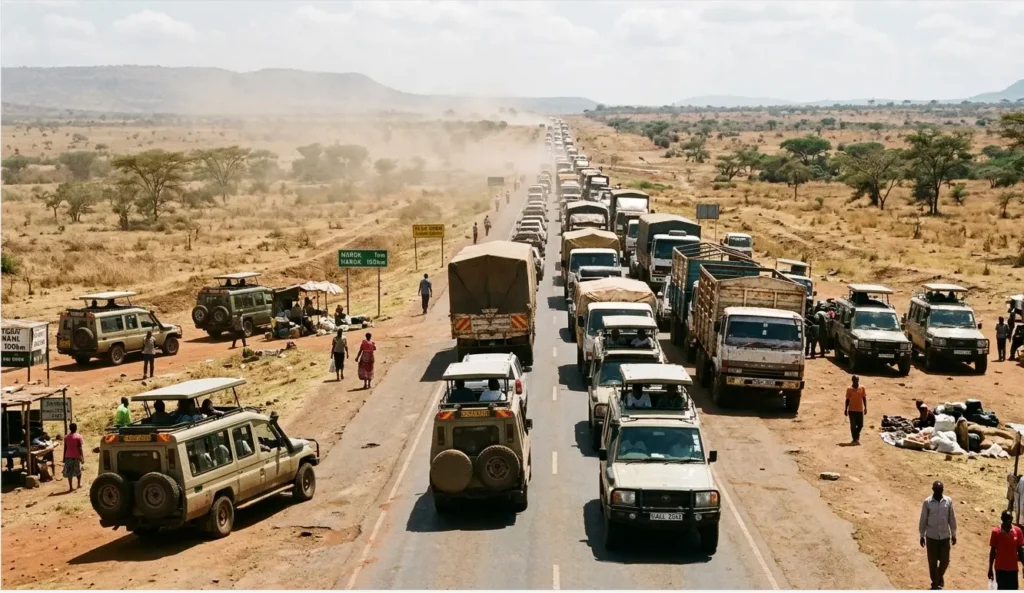
The drive from Sekenani Gate to Narok is now fully paved, but stay alert for the 2026 “speed traps” that have become common near the Maji Moto junction. Once you reach Narok, bypass the crowded downtown petrol stations and head to the newer facilities on the Nairobi side of town for a quicker turnaround. This allows you to reach the Great Rift Valley viewpoints by early afternoon, often before the heavy mist rolls in and obscures the view of Mt. Longonot.
🛡️ OPERATOR INSIGHT: The 2026 Rironi-Mau Summit highway expansion is currently in its most active earthworks phase. While the goal is a world-class dual carriageway, the current reality involves temporary diversions that can add 45 minutes to your arrival time. To see the latest on how to navigate these specific 2026 construction zones without getting stuck in the “limbo” lane, see our Nairobi to Nakuru road hacks.
As you descend the escarpment toward Nairobi, the 2026 Expressway extension offers a vital lifeline for those heading directly to Jomo Kenyatta International Airport (JKIA) or the Southern Bypass. If your flight is after 8:00 PM, you have enough time for a celebratory “farewell to the wild” meal at a suburban cafe in Karen, avoiding the CBD gridlock entirely. This strategic timing ensures your Lake Nakuru and Masai Mara 5 day safari ends on a high note of comfort rather than traffic fatigue.
⚠️ 2026 ROAD ALERT The “Traveller’s Chapel” (the smallest church in Kenya) remains a popular stop, but in 2026, the parking area is being restricted to prevent highway shoulder accidents. If the lot is full, do not park on the grass; the local highway patrol is strictly enforcing a “No Obstruction” policy with fines starting at $50. For a safer, quieter alternative with similar views, check our updated Rift Valley viewpoint guide.
With the skyline of Nairobi appearing on the horizon, your journey across the Rift Valley comes to a close. Whether you are heading home or onto your next adventure, you’ve conquered the most iconic circuit in East Africa with the precision of a seasoned operator.
Final Logistics: Mastering the 2026 Safari Essentials
To ensure your Nairobi to Masai Mara via Lake Nakuru itinerary remains a “Concierge” experience rather than a series of bureaucratic hurdles, you must synchronize your payments and packing with the latest 2026 regulations. Kenya has fully transitioned to a digital-first entry system, and showing up at a gate with cash is a guaranteed way to lose two hours of game-viewing time.
1. 2026 Park Entry Fees & Payment Protocols
As of 2026, all Kenya Wildlife Service (KWS) parks, including Lake Nakuru, require pre-payment through the eCitizen platform. The Masai Mara, managed by the Narok County Government, operates on a separate seasonal tier system that saw a significant price adjustment in 2025.
Understanding the 2026 Masai Mara Park Fees 12-hour rule is critical because the county’s calendar-day billing differs from the KWS 24-hour model. Failing to sync your entry time with this strict window leads to immediate $200 overcharges at the gate.
| Park / Reserve | Visitor Category | Low Season (Jan–June) | High Season (July–Dec) |
| Lake Nakuru NP | Non-Resident Adult | $90 (24 hrs) | $90 (24 hrs) |
| Lake Nakuru NP | Kenyan Citizen | KES 1,500 | KES 1,500 |
| Masai Mara | Non-Resident Adult | $100 (12 hrs) | $200 (12 hrs) |
| Masai Mara | Kenyan Citizen | KES 1,500 | KES 3,000 |
🛡️ OPERATOR INSIGHT: The Masai Mara has shifted from a 24-hour ticket to a 12-hour (6 AM – 6 PM) validity for 2026. If you stay inside the reserve, you must pay for both your entry day and your exit day. To avoid double-paying at Lake Nakuru, ensure your eCitizen QR code is generated for the exact gate you plan to enter (Lanet or Nderit). For a step-by-step breakdown of the digital portal, see our guide on how to pay Lake Nakuru park fees on eCitizen.
2. The 2026 Safari Packing “Moat”
While generic guides suggest “light clothing,” a seasoned operator knows the Mau Highlands (Day 3) and the Mara dawn (Day 4) require technical layering. In 2026, the “Plastic Bag Ban” is strictly enforced at all park gates—even small Ziploc bags for toiletries can result in a lecture or a fine from KWS rangers.
- The “Mau Layer”: A windproof fleece or light down jacket is non-negotiable for the 3,000m ascent through Mau Narok.
- Optics: In 2026, the high grass in the Mara makes a 10×42 binocular superior to the standard 8×42 for spotting leopard movement.
- Power: Most 2026 safari vehicle hires now include USB-C charging ports, but a 20,000mAh power bank is essential for overnight stays in tented camps.
💡 PRO TIP: Avoid wearing dark blue or black clothing during your 2026 safari. These colors are scientifically proven to attract Tsetse flies, which are particularly active in the thicker vegetation near the Mara River. Stick to “Savannah Tones”—khaki, olive, and stone—to stay cool and invisible to biting insects.
3. Strategic Timing for the Return
The final “Information Gain” secret for your 2026 journey: The 1:00 PM Rule. If you are driving back from Narok on a Sunday, you must pass the Mai Mahiu escarpment before 1:00 PM. After this window, the transit lorries and weekend excursionists create a “phantom jam” that can turn a 4-hour drive into a 7-hour ordeal.
Now that you have the logistics, the shortcuts, and the 2026 insider secrets, you are ready to execute the perfect Rift Valley circuit.