Email:
 Phone:
 WhatsApp:

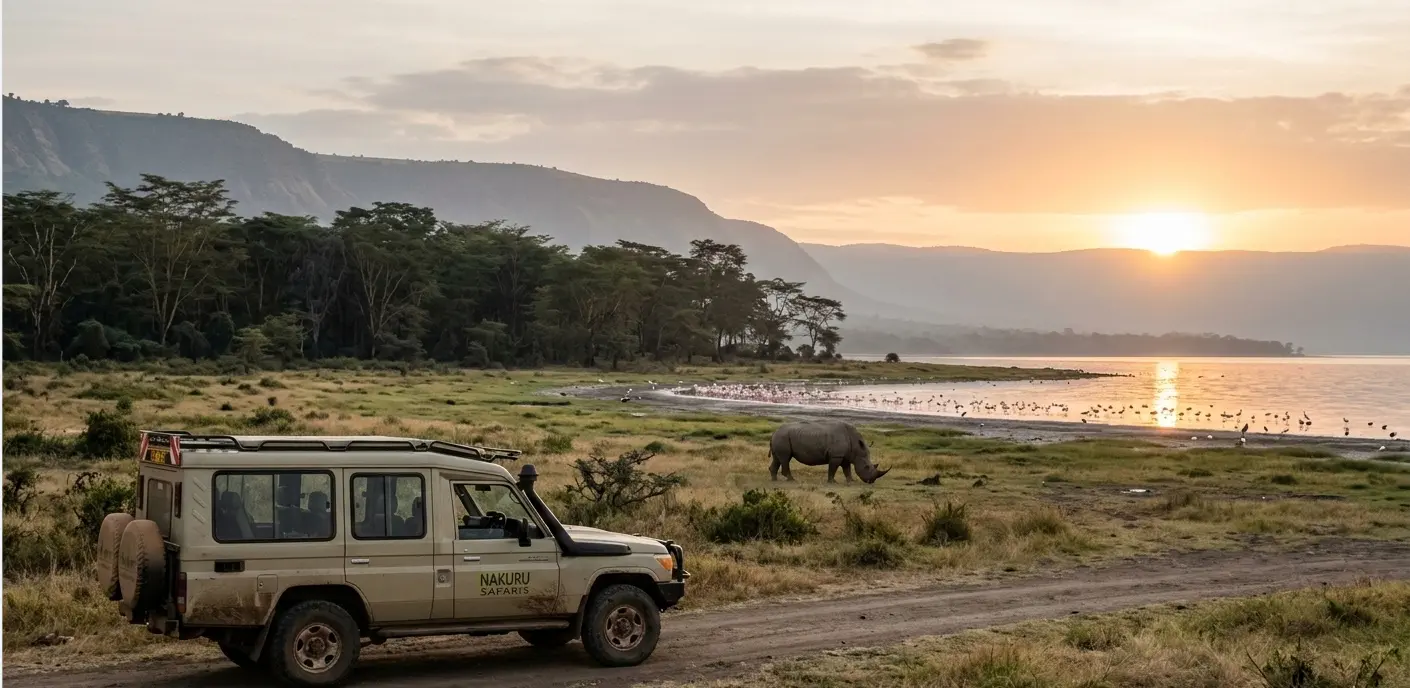
A Nairobi to Lake Nakuru Day Trip is a 12-hour wildlife excursion from Nairobi to a premium rhino sanctuary. In 2026, the trip involves a 160km drive, combining iconic flamingo sightings along the shifting shorelines with high-density encounters of Southern White Rhinos and Rothschild Giraffes.
⚡ 60-Second Operator Summary (Quick Scan)
- Current Status: GO. Wildlife density is at a 3-year high in the southern sector.
- The Rironi Factor: CRITICAL. Expect 45-minute delays due to road construction. Leave by 06:00 AM.
- Flamingo Update: ACTIVE. While the “millions” have become nomadic due to high water levels, Lake Nakuru remains a key feeding ground. You will see pink, but the rhinos are the guaranteed stars this year.
- Direct Booking: View our verified Lake Nakuru National Park Day Trip Package for an all-inclusive experience.
Planning a Nairobi to Lake Nakuru day trip in 2026 is no longer as simple as driving down the escarpment and looking for a pink carpet. While the flamingos remain a seasonal highlight, rising water levels have turned the park into a more diverse “Big Game” destination. Your success now depends on logistical timing rather than just luck.
Most guides repeat outdated “3-hour drive” myths that lead to missed gate entries and frustrated travelers. This operator-led report breaks down the real Lake Nakuru Day Trip Cost 2026, the eCitizen payment hurdles, and the “No-Rush” itinerary required to navigate the Rironi traffic traps effectively while maximizing your time with the park’s famous rhinos and giraffes.
Quick Navigation: Jump to your Section
Is a Nairobi to Lake Nakuru Day Trip Worth it in 2026?
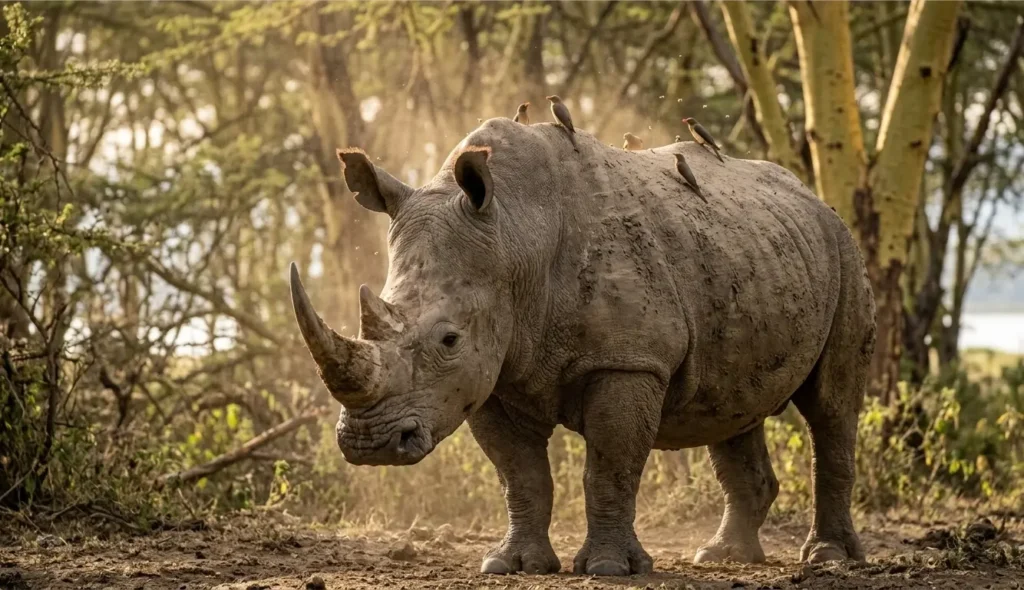
If you are looking for a one day safari in Kenya that guarantees sightings of rare, heavy hitters like the Southern White Rhino and Rothschild’s Giraffe, then Lake Nakuru is absolutely worth it. While many travelers still arrive expecting the “Pink Lake” of the 1990s, the 2026 reality has shifted due to rising water levels that have transformed the park’s ecology. You will still find nomadic colonies of flamingos, but the true “Information Gain” here is that Nakuru has evolved into Kenya’s premier high-density rhino sanctuary.
If your priority is birds over predators, evaluating Lake Nakuru or Lake Elementaita is essential to avoid the deeper waters currently limiting Flamingo bird density. This comparison ensures you don’t pay premium park fees for a landscape that has shifted its famous pink carpets to Elementaita.
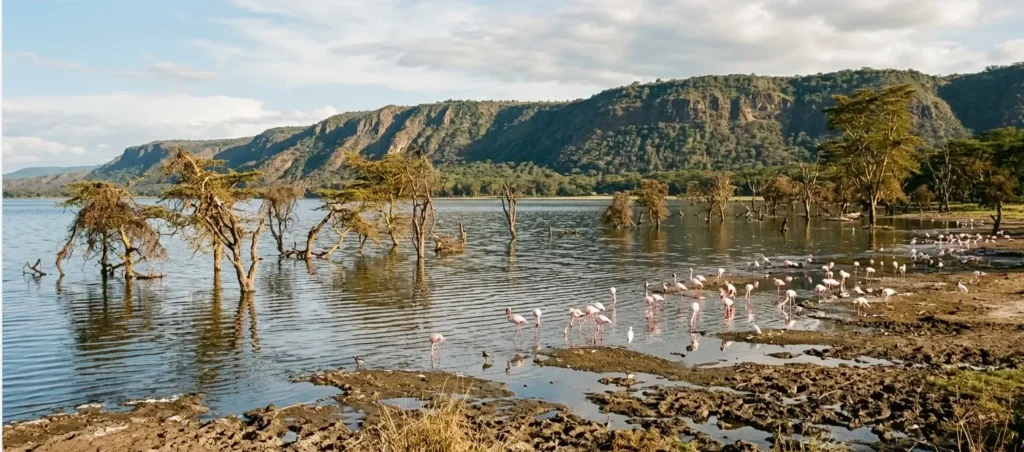
The “Freshwater Pivot” has caused some alkaline-loving birds to migrate, yet it has created a lush, vibrant landscape where wildlife is concentrated in a smaller, manageable area. This makes a Nairobi to Lake Nakuru day trip highly efficient for those with limited time, as you don’t have to drive for hours across vast plains to find the Big Five. In fact, it is often easier to spot leopards and rhinos here than in the massive expanses of the Masai Mara during a short visit.
🛡️ OPERATOR INSIGHT: Be aware that the expanding lake has submerged several old track circuits, meaning some “legacy” viewpoints are now inaccessible. To avoid getting stuck or wasting time on dead-end routes, check out our Lake Nakuru water levels guide to see which parts of the park are currently reachable for a day excursion.
For the photographer or the first-time visitor, is Lake Nakuru worth it given the current landscape? The answer is a resounding yes, provided you trade the expectation of a pink horizon for the thrill of a guaranteed rhino sighting and a forest-dwelling lion population. It remains the most logistically sound way to see heavy-duty African wildlife and return to your Nairobi hotel by dinner.
While the high-density sightings make a single day viable, the decision often comes down to your personal tolerance for the commute versus your desire for the “Golden Hour” photography window. If you are still torn between the two, see our honest comparison of a Lake Nakuru day trip vs overnight stay to see which itinerary fits your 2026 sighting goals and road-fatigue threshold.
Now that we have weighed the value of the park, let’s tackle the biggest hurdle of the day—the Rironi traffic bottleneck…
The Rironi Construction Survival Guide: Managing the Drive
The standard drive time to Lake Nakuru is officially cited as three hours, but in 2026, this is a dangerous underestimate for a one-day visitor. Heavy dualling works on the A8 highway, particularly the Rironi-Mau Summit stretch, have created unpredictable bottlenecks that can turn a morning commute into a half-day ordeal. To ensure your Nairobi to Lake Nakuru day trip doesn’t end before it begins, you must clear the Rironi “choke point” by 6:30 AM at the very latest.

Leaving your Nairobi hotel at 6:00 AM isn’t just a suggestion; it is a tactical necessity to stay ahead of the outbound truck convoys and construction diversions. These Nairobi to Nakuru road hacks are what separate a successful safari from one spent staring at the bumper of a trailer in Limuru. By front-loading your travel time, you secure a four-hour window of prime morning light for wildlife viewing before the midday heat settles over the Rift Valley floor.
Another critical “Operator Secret” for a Nairobi to Lake Nakuru day trip is the Lanet Gate shortcut. Most GPS apps and generic guides will funnel you toward the Main Gate, which requires driving through the congested heart of Nakuru City. Instead, exit the highway at the Lanet turn-off; this bypasses the city’s roundabouts and places you directly into the park’s high-density rhino sector within minutes.
🛡️ OPERATOR INSIGHT: Be aware that traffic police on the A8 construction zones are currently issuing “Instant Fines” for minor lane overlaps and—more importantly—document discrepancies. To avoid a legal delay that could end your Nairobi to Lake Nakuru day trip at a police station, use our Kenya car hire survival guide to verify that your vehicle has valid Commercial PSV Insurance and an active eCitizen portal link before you leave Nairobi.
With the highway logistics mastered and the traffic behind us, let’s look at how to structure your actual hours inside the park for maximum wildlife impact…
The Nairobi-Lake Nakuru Itinerary: A Tactical Hour-by-Hour Breakdown
To maximize a Nairobi to Lake Nakuru day trip in 2026, you must abandon the relaxed “island time” mentality. Success is built on a front-loaded schedule that beats the highway chaos and aligns with the peak activity of the park’s predators. This specific Lake Nakuru itinerary is designed to keep you moving through the best sightings without feeling like you are racing against the clock.
- 06:00 AM: Depart Nairobi. This is the non-negotiable “Golden Hour” to clear the Rironi construction zones before the heavy commercial transit begins.
- 09:30 AM: Arrival via Lanet Gate. Bypassing the town center saves you 30 minutes of urban gridlock, allowing for an immediate start to your morning game drive in the rhino-rich southern sector.
- 10:00 AM – 1:00 PM: Prime Wildlife Circuit. Focus on the acacia woodlands and the lakeside tracks where guaranteed rhino sightings are most frequent before the sun gets too high.
- 01:00 PM: Picnic or Lodge Lunch. Head to Out of Africa Lookout or a nearby lodge to refuel while enjoying an elevated view of the lake’s shifting water levels.
- 02:30 PM: Afternoon “Explorer” Loop. Visit the southern reaches near the Makalia Falls hidden gem or scout the fever tree forests for the park’s famous tree-climbing lions.
- 04:00 PM: Exit and Return. Beginning your journey back now is the “Pro Move” to ensure you clear the Rift Valley escarpment before total darkness makes the A8 highway a safety hazard.
🛡️ OPERATOR INSIGHT: Many tour operators will try to “bundle” a boat ride at Lake Naivasha into your afternoon return leg. My spiky opinion: Skip it!! Attempting to do both on a Nairobi to Lake Nakuru Day Trip in 2026 results in a rushed safari and a midnight arrival back in the city due to the current highway bottlenecks due to ongoing Rironi constructions.
The best time for game drives in Nakuru is undoubtedly the morning window when the air is cool and the leopards are still on the move. By 3:30 PM, the heat often pushes the big cats into deeper thickets, making your exit timing strategically sound for both wildlife viewing and road safety. If you are a photography enthusiast, you’ll find the southern light near the Naishi Airstrip particularly soft and forgiving during this mid-afternoon slot.
Now that we’ve mapped out your minutes on the ground, let’s look at the financial side—specifically the mandatory 2026 fees and payment hurdles you’ll face at the gate…
Lake Nakuru Day Trip Cost 2026: The eCitizen & KWS Breakdown
Navigating the Lake Nakuru day trip cost 2026 requires precise budgeting, as Kenya Wildlife Service (KWS) has implemented a rigid, multi-tier pricing structure. In 2026, Lake Nakuru is classified as a “Premium Park,” meaning its conservation fees are higher than mid-tier parks like Tsavo or Meru. You must complete all payments via the eCitizen portal before arrival, as park gates are strictly cashless and do not accept direct credit card swipes or physical currency.
Calculating your total outlay requires looking beyond base entry fees to account for fuel variables and operator surcharges. For a definitive breakdown of the all-in Lake Nakuru safari cost per person, verify these seasonal price tiers before committing to your eCitizen payment.
The Lake Nakuru entrance fees 2026 for non-resident international visitors are $90 per adult and $45 per child (ages 5–17). For Kenyan citizens, the rate is KES 1,500, while residents and East African citizens pay KES 2,025. It is a common mistake to assume infants pay; however, children under five years of age enjoy free entry, provided you can present proof of age if requested by the gate ranger.
🛡️ OPERATOR INSIGHT: Do not forget that vehicle fees are a separate mandatory charge. For a standard 6-seater safari Land Cruiser or van, the fee is KES 1,500 per day, whereas a private car with less than 6 seats costs KES 600. For a seamless entry, ensure your KWSPay QR code is generated for both the passengers and the specific vehicle registration number before you lose signal on the Rironi highway.
Beyond the gate, your Nairobi to Lake Nakuru day trip budget must account for transport and guide logistics. Professional safari vehicle costs in Kenya typically range from $200 to $250 per day, which includes a certified driver-guide and fuel. While you might see lower quotes for basic saloons, these vehicles often lack the high clearance needed for the lakeside tracks, leading to expensive “off-road recovery” fines if you get stuck.
2026 Cost Breakdown Table (Per 24 Hours)
|
Category |
Adult Fee |
Child Fee (5-17) |
Vehicle Fee (Private) |
|
Non-Resident |
$90 |
$45 |
KES 600 (<6 seats) |
|
African Citizen |
$50 |
$25 |
KES 600 (<6 seats) |
|
Kenya Resident |
KES 2,025 |
KES 1,050 |
KES 600 (<6 seats) |
|
EA Citizen |
KES 1,500 |
KES 750 |
KES 600 (<6 seats) |
💡 PRO TIP: KWS tickets are valid for exactly 24 hours from the time of first entry. If you are a solo traveler or on a budget, you can find more details on updated KWS rates and payment hacks in our full logistical guide to avoid the “convenience fees” often added by third-party booking agents.
With your digital permits and budget confirmed, let’s look at the actual road conditions and why your departure time is the single biggest factor in your day’s success…
Transport Realities: Driving vs. SGR vs. Flying
Choosing the right mode of transport is the most critical decision for your Nairobi to Lake Nakuru day trip. While many international travelers search for a SGR Nairobi to Nakuru map, there is a massive misconception: the standard “Madaraka Express” does not actually reach Nakuru City. It terminates at Suswa, leaving you nearly 140km away from the park gates, making the train a logistical impossibility for a one-day safari.
Booking the Nairobi to Nakuru by SGR train leaves you stranded at the remote railhead, requiring a costly 3-hour transfer just to reach Nakuru city. This detour creates a time-deficit that only direct road transport can solve.
The most viable and flexible option is a self-drive Nakuru mission or hiring a private safari vehicle. This allows you to navigate the Rift Valley floor at your own pace and utilize the specific road hacks for the Lanet shortcut to avoid urban gridlock. If you are driving yourself, ensure your vehicle is equipped for the terrain, as the lakeside tracks can become impassable for standard sedans during sudden Rift Valley showers.
🛡️ OPERATOR INSIGHT: If you are considering flights to Nakuru airstrip, be aware that the Naishi Airstrip located inside the park is primarily for private charters and KWS use. Unlike the Masai Mara where scheduled flights are frequent, a flight here is only cost-effective for high-end groups; otherwise, the 3-hour road journey remains the gold standard for efficiency. For those opting for a rental, check our 7-point car hire survival guide to ensure your 4×4 is actually field-ready before you leave the yard.
For travelers on a strict budget, public transport is an option, but it is not recommended for a Nairobi to Lake Nakuru day trip due to the time lost at matatu termini. If you must use public means, you will need to take a shuttle to Nakuru town and then hire a local taxi-safari jeep to get you into the park. To see the current breakdown of matatu fares and which operators are the most reliable, see our Nairobi to Nakuru transport guide.
With your transport mode locked in and the “SGR myth” debunked, let’s look at where you’ll actually spend your midday break…
Where to Eat & Rest: The Day-Tripper’s “Lodge Hack”
On a Nairobi to Lake Nakuru day trip, your choice of midday base determines whether you recharge in comfort or struggle with sun exhaustion. While many travelers opt for the classic best picnic sites Nakuru offers, such as the famous Out of Africa Lookout, the heat of the Rift Valley floor in 2026 can be taxing. For those seeking a higher standard of comfort, several premium Lake Nakuru lodges for lunch accept “walk-in” day guests, providing a buffet spread and a clean place to freshen up between game drives.
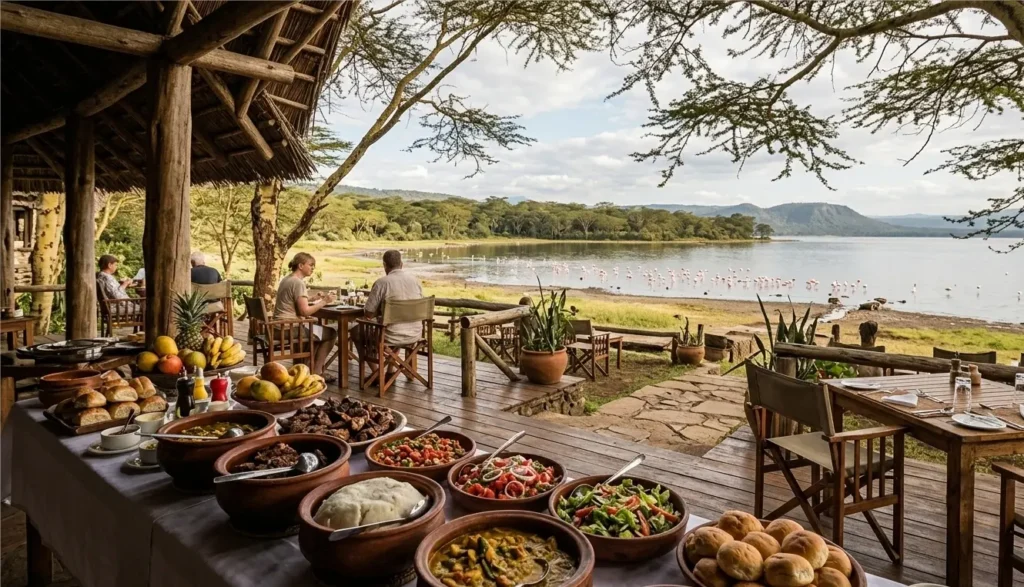
Sarova Lion Hill Game Lodge and Lake Nakuru Lodge are the strategic favorites because they are located deep within the park, minimizing the time spent driving back toward the gates for a meal. This “Lodge Hack” allows you to enjoy a professional meal and use well-maintained facilities without the logistics of a multi-day stay. If your budget is tighter, Baboon Cliff remains the premier picnic spot, though you must stay inside your vehicle to avoid the park’s notoriously bold primates.
🛡️ OPERATOR INSIGHT: For the absolute best panoramic photography without paying for a full lodge room, head to the Cliff House views at the park’s edge. It provides a massive 180-degree perspective of the current water levels and is often less crowded than the standard lookout points. For a full list of accommodation options if you decide to extend your stay, see our complete guide for safari travelers on Lake Nakuru lodges.
If you prefer a more rugged experience, the Makalia Falls area offers a serene, shaded environment, though it is further south and requires careful time management. In 2026, the park rangers have been stricter about “littering fines”—dropping even a small piece of plastic at a picnic site can result in an immediate KES 10,000 penalty. Always pack your waste back into your vehicle to keep your Nairobi to Lake Nakuru day trip smooth and fine-free.
Now that you know where to refuel your body, let’s make sure your gear bag is just as prepared for the specific dust and light conditions of the park…
Essential Packing List for a Nairobi to Lake Nakuru Day Trip 2026
Packing for a Nairobi to Lake Nakuru day trip requires a balance between lightweight comfort and protection against the unique Rift Valley elements. In 2026, the biggest “unseen” factor is the fine volcanic dust stirred up by the extensive A8 road construction and the dry tracks in the park’s southern sector. Unlike a multi-day safari where you can unpack, your safari gear for day trips must be compact and easily accessible within the vehicle.
The Kenya safari dress code for a day excursion is strictly “layers.” Temperatures at the Rift Valley escarpment can be chilling at 6:30 AM, yet they soar once you descend to the lake floor by noon. Opt for neutral, breathable fabrics like linen or moisture-wicking synthetics, and avoid dark blue or black clothing, which can occasionally attract tsetse flies in the thicker acacia woodlands.
🛡️ OPERATOR INSIGHT: Do not make the mistake of bringing only a smartphone for photography; the “Freshwater Pivot” means rhinos and leopards often stay 50–100 meters from the tracks. To avoid coming home with “speck-in-the-distance” photos, check our photography gear guide to understand why a 400mm lens or high-quality binoculars for bird watching are now the minimum requirement for a professional experience.
Beyond clothing, your “survival kit” must include high-SPF sunscreen and a polarized pair of sunglasses to combat the intense glare of the sun reflecting off the alkaline-crusted shorelines. We also recommend carrying a “Dust Buffer”—a simple buff or lightweight scarf—to cover your face and camera gear during the transit through the Rironi construction zones. For a granular look at the specific items we pack in our own operator vehicles, see our ultimate Lake Nakuru safari packing list.
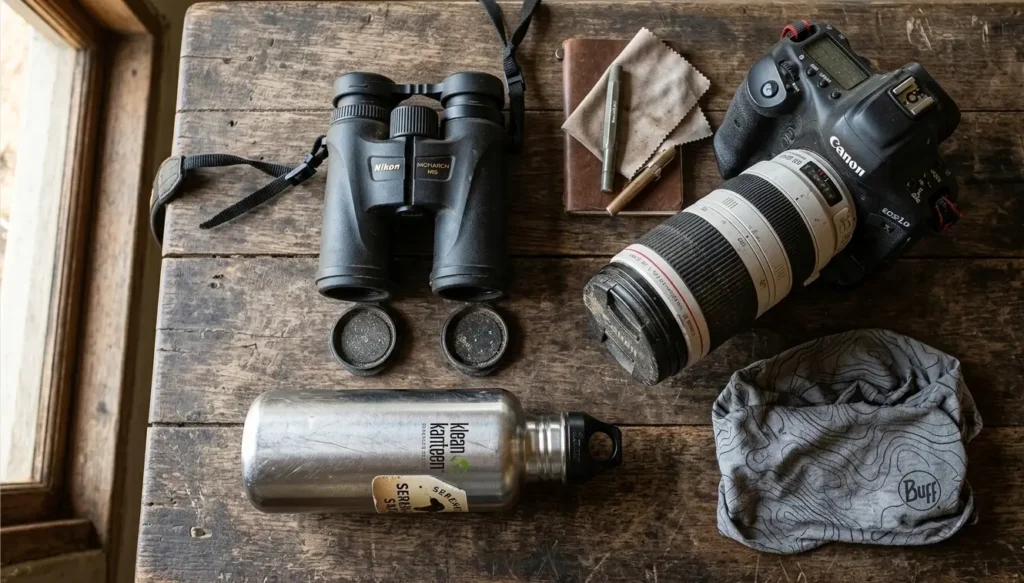
💡 PRO TIP: KWS rangers have recently stepped up enforcement of the “Single-Use Plastic” ban within the park. If you are found with a standard plastic water bottle instead of a reusable flask, you risk an on-the-spot fine of KES 5,000. Carry a refillable metal or BPA-free bottle to stay compliant and protect the rhino habitat.
Now that your gear bag is packed for the dust and the distance, let’s address the most common concern for first-time visitors: staying safe on the Rift Valley roads and inside the park…
Is Lake Nakuru National Park Safe? 2026 Solo & Family Travel Guide
Road and park safety are the top priorities for any Nairobi to Lake Nakuru day trip, especially given the high-speed transit on the A8 highway and the proximity of large predators. While the park itself is a highly controlled environment, the journey from Nairobi involves navigating one of Kenya’s busiest logistical corridors. In 2026, “safety” isn’t just about wildlife—it is about vehicle compliance, road etiquette, and understanding the new Rift Valley traffic patterns.
The A8 highway is generally safe but requires a defensive driving mindset due to the ongoing dualling projects and heavy truck traffic. For those on a one day safari in Kenya, the primary risk is driver fatigue or rushing to beat the 6:30 PM “commuter cutoff” when visibility drops and highway speeds increase. Inside the park, the environment is exceptionally secure, with KWS rangers patrolling the circuits to ensure both animal welfare and tourist safety.
🛡️ OPERATOR INSIGHT: The most overlooked safety risk in 2026 is the “Shoreline Soft-Trap.” As the lake expands, what looks like solid, dry mud can actually be a deep slurry that can swallow a 4×4 up to the axles. To avoid an expensive and dangerous recovery situation, see our self-drive guide to identify which tracks are currently safe for light and heavy vehicles.
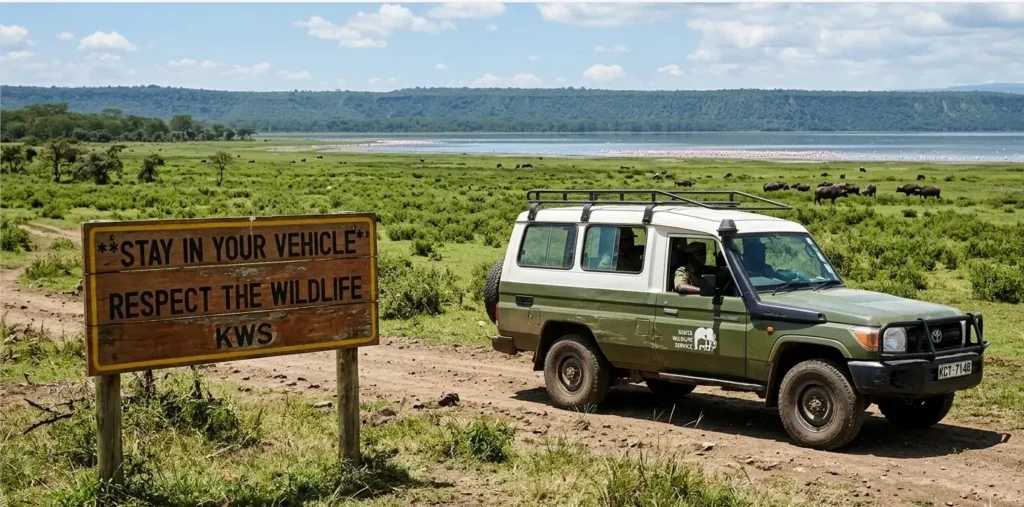
Wildlife safety within the park is based on a simple “Stay in the Car” rule, which is strictly enforced by a KWS fine of KES 10,000 for unauthorized disembarking. The only exceptions are the designated viewpoints and picnic areas like Baboon Cliff or Lion Hill, where you must still remain vigilant for opportunistic primates. For a deeper look at solo travel security and family-specific advice, check out our 2026 solo and family travel guide.
💡 PRO TIP: When driving the Rironi stretch, keep your doors locked and windows rolled up in heavy traffic zones; while rare, “smash-and-grab” incidents can occur in slow-moving construction bottlenecks. Maintaining a “buffer” between your car and the vehicle in front allows you enough space to maneuver if a truck stalls or a diversion suddenly opens up.
With your safety protocols in place and your route mapped out, you are ready to experience the finest rhino sanctuary in East Africa. While Lake Nakuru offers an elite, high-density wildlife encounter in a single day, many travelers find it serves as the perfect “appetizer” for the vast savannahs of the south.
If you have an extra 72 hours in your itinerary, the natural progression from the Rift Valley lakes is to head into the world-famous Great Migration territory. For a smooth transition from the rhinos of Nakuru to the big cats of the plains, check our practical, operator-led guide to a 3-day Masai Mara safari to see why these two destinations are the ultimate Kenyan double-feature.