Email:
 Phone:
 WhatsApp:


Masai Mara Park Fees 2026 are the essential costs for entering Kenya’s premier reserve, currently set at $200 per non-resident adult per day during the peak season (July–December) and $100 during the low season (January–June), following a major structural price change by Narok County.
Don’t pay twice. Most 2026 safari guides are still recycling 2024 rules that will cost you an extra $200 at the Sekenani Gate. If you are planning a trip, you must realize that Maasai Mara entrance fee 2026 has fundamentally changed, moving away from the old $70–$80 rates to a tiered seasonal system that catches many travelers off guard.
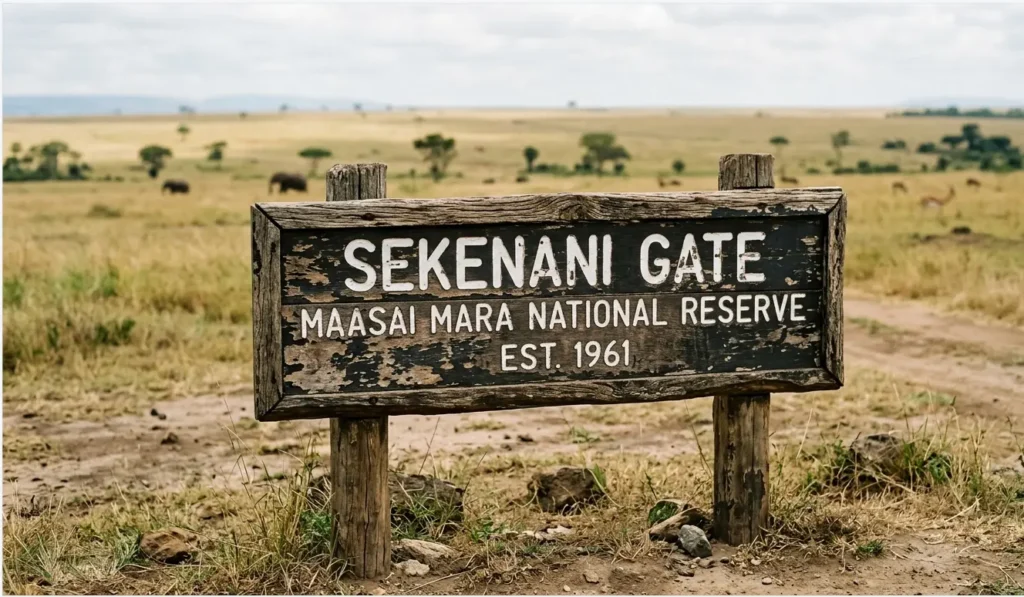
Unlike the Lake Nakuru National Park Entry Fees, which follow a 24-hour KWS rule, the Mara operates on a strict “Calendar Day” or “12-hour” basis. This distinction is the gold standard for your safari budgeting; failing to understand the difference between Narok County regulations and KWS National Park rules is the fastest way to blow your travel budget before you even see a lion.
Whether you are arriving via a 3-Day Masai Mara Safari from Nairobi or driving yourself, this ground-level report ensures you have the exact figures for 2026 without the “sticker shock” typical of outdated travel blogs.
Quick Navigation: Jump to Your Section
Maasai Mara Entrance Fee 2026: Official Rates for High & Low Season
Budgeting for your safari requires more than just picking a lodge; you must account for the significant seasonal price change in the Maasai Mara Entrance Fee 2026. Since Narok County overhauled the pricing structure, the cost of entry now hinges entirely on your travel dates.
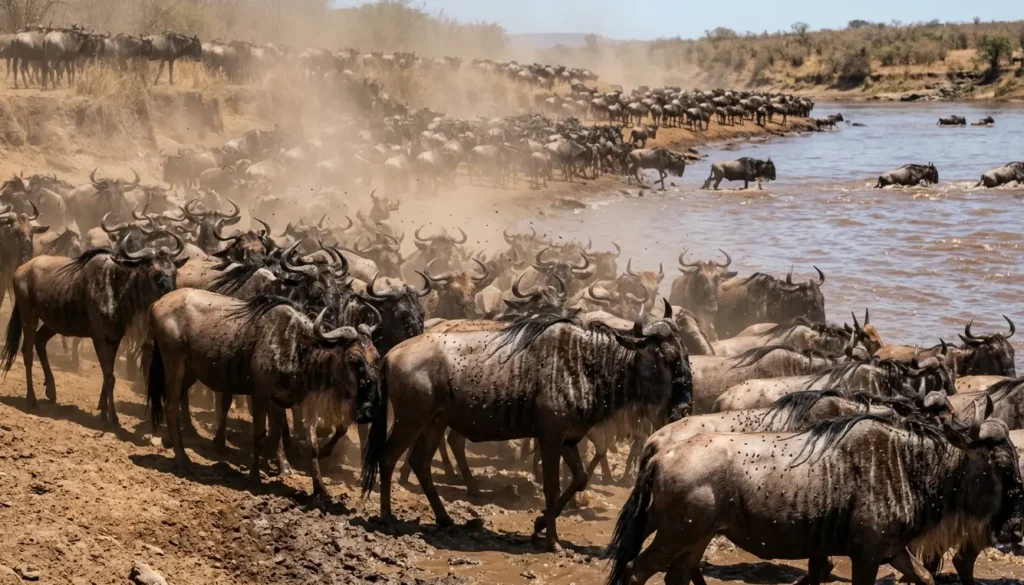
For a non-resident adult, the Masai Mara Park Fees 2026 effectively double if you visit during the Great Migration months. This “July $200 Jump” is designed to manage the high volume of travelers, but it catches many off-guard if they are used to the flatter pricing models of other Kenyan parks.
|
Category (Non-Residents) |
Low Season (Jan 1 – June 30) |
High Season (July 1 – Dec 31) |
|
Adult (Per Day) |
$100 |
$200 |
|
Child 9–17 Years (Per Day) |
$50 |
$100 |
|
Child Under 8 Years |
Free |
Free |
🛡️ OPERATOR INSIGHT: If you are combining your trip with other regions, remember that the Lake Nakuru National Park Entry Fees remain consistent year-round. This makes Nakuru an excellent “budget stabilizer” for a 2026 itinerary when the Mara is at its $200 peak.
The pricing for East African Citizens and Residents also follows this seasonal split, starting at KES 2,500 in the low season and rising to KES 5,000 during the peak months. When calculating your total Masai Mara Park Fees 2026, ensure you are looking at the calendar days of your stay, not just the number of nights at your camp.
If you find the $200 peak price too steep, consider timing your trip for late June. You can often catch the early arrivals of the migration while still paying the $100 low-season rate, effectively cutting your entry costs in half.
Now that the seasonal rates are clear, we need to address the structural trap that costs travelers the most money: the management difference between the Mara and KWS parks.
KWS vs Narok County Fees: Why Your Amboseli Ticket Doesn’t Work Here
One of the most common errors I see at the gates is travelers trying to use their KWS eCitizen QR codes to enter the Mara. While parks like Lake Nakuru, Amboseli, and Tsavo are managed by the Kenya Wildlife Service (KWS), the Masai Mara is managed by the Narok County Government.
Because of this, Masai Mara Park Fees 2026 are collected through a completely different revenue system. This creates a massive headache for those who have pre-loaded funds into a KWS account, thinking it covers all Kenyan parks.
🛡️ OPERATOR INSIGHT: If you have already paid for your other park entries, see our guide on how to pay Lake Nakuru Park Fees on eCitizen to ensure your KWS documentation is correct for that leg of the trip. However, for the Mara, you must use the Narok County portal to avoid being turned away at the gate.
When comparing Masai Mara vs Amboseli park fees, the most striking difference isn’t just the price, but the validity period. KWS parks typically allow for a 24-hour stay, whereas the Mara operates on a strict 12-hour “calendar day” rule, meaning your ticket expires at 6:00 PM regardless of when you entered.
Understanding these KWS vs Narok County fees is the only way to avoid double-paying or getting stranded at the entrance. Unlike the Amboseli National Park which are standardized nationally, the Mara fees are a localized tax meant specifically for the conservation of the Narok region.
This management split is exactly why your Maasai Mara Entrance Fee 2026 cannot be combined with a KWS “Safari Card” or multi-park pass. I’ve seen rangers enforce this strictly: no Narok QR code, no entry, even if you show a receipt for a 3 Days Amboseli Safari.
Now that you know who to pay, let’s look at the “12-hour rule” in detail so you don’t end up paying for an extra day by mistake.
Understanding the Masai Mara 12-Hour Rule (The $200 Departure Trap)
The most expensive mistake a traveler can make is assuming that the Maasai Mara Entrance Fee 2026 works like a standard hotel check-in. Unlike KWS-managed parks where your ticket is valid for 24 hours, the Masai Mara operates on a strict “Calendar Day” system. Failing to grasp the Masai Mara 12 hour rule is how unsuspecting visitors end up being billed for two days within a single 24-hour window.
If you enter the Sekenani or Talek gate at 4:00 PM today, your ticket expires at 6:00 PM tonight—not 4:00 PM tomorrow. This makes your entry timing critical to maximizing your Masai Mara Park Fees 2026 investment.
|
Feature |
KWS Parks (e.g., Nakuru/Amboseli) |
Masai Mara National Reserve |
|
Validity Period |
24 Hours from time of entry |
12 Hours (Calendar Day 6 AM – 6 PM) |
|
Overnight Rule |
Valid until same time next day |
Expires at 10:00 AM on departure day |
|
Late Entry Tip |
Enter late, game drive tomorrow |
Avoid entering after 3 PM without a plan |
This rigid 12-hour clock makes your Nairobi to Masai Mara drive time 2026 the most critical variable in your budget. Arriving late due to predictable escarpment snarl-ups effectively burns half your daily permit before you even clear the gate.
🛡️ OPERATOR INSIGHT: To get the most value for your money, we recommend timing your arrival for early morning. If you are following our 3-Day Masai Mara Safari from Nairobi, we usually target a 10:30 AM arrival at the gate to ensure you get a full day of game viewing for your first payment.
The “10:00 AM Exit” Secret
If you are staying at a lodge inside the reserve, you must be at the exit gate by 10:00 AM on your final day. If you are spotted on a game drive at 10:30 AM without a valid ticket for that new day, the rangers will charge you the full peak-season Maasai Mara entry fee 2026 of $200 on the spot.
This rule is strictly enforced to prevent travelers from “squeezing in” a final game drive without paying for the additional calendar day. It is a sharp contrast to the Lake Nakuru park entry fee structure, where you have until the exact minute of your previous day’s entry to exit.
By planning your exit strategically, you can save hundreds of dollars that would otherwise be lost to simple timing errors. Now that you’ve mastered the clock, let’s navigate the digital hurdles of the Narok County payment system to ensure your transaction actually goes through.
How to Pay Masai Mara Park Fees 2026: Why the KWS eCitizen Portal Will Fail You
The most dangerous assumption you can make in 2026 is that all Kenyan parks share a single payment button. While the National Government has pushed for “One eCitizen,” the reality on the ground at the Sekenani and Talek gates is different. If you try to pay your Masai Mara Park Fees 2026 using the standard KWS (Kenya Wildlife Service) portal, your receipt will be rejected. To avoid being turned away, follow our guide on how to pay Masai Mara entry fees to know which gate to use upon payment since not all gates will allow you into the park.
🛡️ OPERATOR INSIGHT: To see how different this is from the national standard, read our guide on how to pay Lake Nakuru Park Fees on eCitizen. You will quickly notice that the Masai Mara payment system requires a different set of registration steps than the KWSPay system used elsewhere.
2026 Self-Drive Rules: 4WD Requirements & Vehicle Entry Fees
Driving yourself into the Mara is the ultimate test of a traveler’s preparation, but the rules have tightened significantly for 2026. While some generic guides suggest any high-clearance car will do, the reality at the gate is a strict “4WD Only” mandate for all self-drive visitors. Rangers are now empowered to turn away 2WD SUVs at the entrance, regardless of whether you have already paid your Masai Mara Park Fees 2026.
The logic behind this “Citation Loophole” is simple: 2WD vehicles frequently get stuck in the black cotton soil, causing environmental damage and draining ranger resources for rescues. Even if the sun is shining at Sekenani, a sudden downpour can turn the plains into a mud trap within minutes. If you are planning to drive, ensure your rental agreement specifically guarantees a 4WD system with low-range capabilities to satisfy the 2026 entry inspectors.

|
Vehicle Category |
Capacity |
Daily Entry Fee (KES) |
|
Small Cars/Safari Minivans |
Less than 6 Seats |
KES 500 |
|
Large Safari Landcruisers |
6–12 Seats |
KES 1000 |
|
Overlanders/Buses |
13–24 Seats |
KES 3000 |
🛡️ OPERATOR INSIGHT: Before you sign a lease for a self-drive trip, see our Kenya Car Hire Survival Guide to learn how to verify a vehicle’s 4WD engagement. Showing up with the wrong drivetrain is the fastest way to lose your non-refundable Masai Mara entry fees 2026 for that day.
Vehicle fees are paid in Kenya Shillings (KES), even though your personal Masai Mara Park Fees 2026 are charged in USD. It is a strange administrative quirk, but having a small amount of KES on your M-Pesa or card specifically for the car’s entry will save you a logistical headache at the gate. If you are used to the Lake Nakuru National park self drive experience, you’ll find the Mara terrain much more unforgiving and the enforcement of the 4WD rule much more aggressive.
We’ve also observed that vehicles with low ground clearance—even those with 4WD—are being flagged if they lack specialized off-road tires. The rangers’ goal is to prevent the “Mud Trap” scenarios that frequently occur near the Talek River crossings.
With your 4WD cleared for entry, there is one final seasonal mystery to solve: what happens to your wallet when your trip crosses the midnight threshold between June and July?
The June 30th to July 1st Transition: How Fees are Calculated
One of the most complex scenarios for safari-goers is the “Midnight Transition” between the low and peak seasons. If you enter the reserve on June 30th when the rate is $100 and spend the night, you might wake up on July 1st to a $200 reality. Because Masai Mara Park Fees 2026 are based on the calendar date of the permit, each day is billed according to the rate active on that specific date.
Rangers at the gate do not “grandfather” in the lower rate just because you arrived in June. To avoid an unexpected $100 price hike per person, you must ensure your pre-paid permits reflect the price jump for any days falling within the peak season. This is a crucial detail for those following a Nairobi to Masai Mara via Lake Nakuru itinerary during the migration kickoff.
For travelers staying multiple nights, the Narok County portal will automatically calculate the split based on your selected dates. However, human error during the online application can lead to your permit being flagged at the gate if you accidentally select the “Low Season” rate for a “Peak Season” date. Double-checking these Maasai Mara entrance fees 2026 before hitting the “pay” button is the only way to ensure a smooth, non-stop entry at Sekenani.
We generally advise clients to budget for the higher rate if their trip overlaps, as the system rarely refunds the difference if you try to pay manually at the gate later. It is a “spiky” reality of Kenyan safari logistics, but being prepared separates the experienced travelers from the ones paying “emergency” fees at the ranger station.
Now that we’ve secured your permits and balanced the seasonal budget, let’s look at the final logistical checks to ensure your 2026 safari is a total success.
Planning Your 2026 Safari: Beyond the Gate Fees
Mastering the Masai Mara Park Fees 2026 is the first step toward a stress-free safari, but the gate is only the beginning of your adventure. From the 10:00 AM exit rule to the specific 4WD requirements, the difference between a great trip and a budget disaster is always in the details.

If you are still finalizing your gear or logistics, we recommend reviewing our Lake Nakuru Safari Packing List which covers many of the same rugged environmental needs you’ll face in the Mara. You can also see our 3-Day Masai Mara Safari from Nairobi guide for a full breakdown of how we manage these fee logistics for our clients on the ground.
Safe travels, and we’ll see you on the plains!