Email:
 Phone:
 WhatsApp:

Lake Nakuru or Lake Elementaita is the most common dilemma for Rift Valley travelers in 2026. While both offer stunning views, the right choice depends on whether you prioritize high-density Big Five sightings or a tranquil, budget-friendly bird-watching experience.
Lake Nakuru or Lake Elementaita are both UNESCO World Heritage sites, but they serve different goals. Lake Nakuru is a premier rhino sanctuary for Big Five viewing with higher entry fees, whereas Lake Elementaita is a serene conservancy offering superior flamingo consistency and walking safaris in 2026.
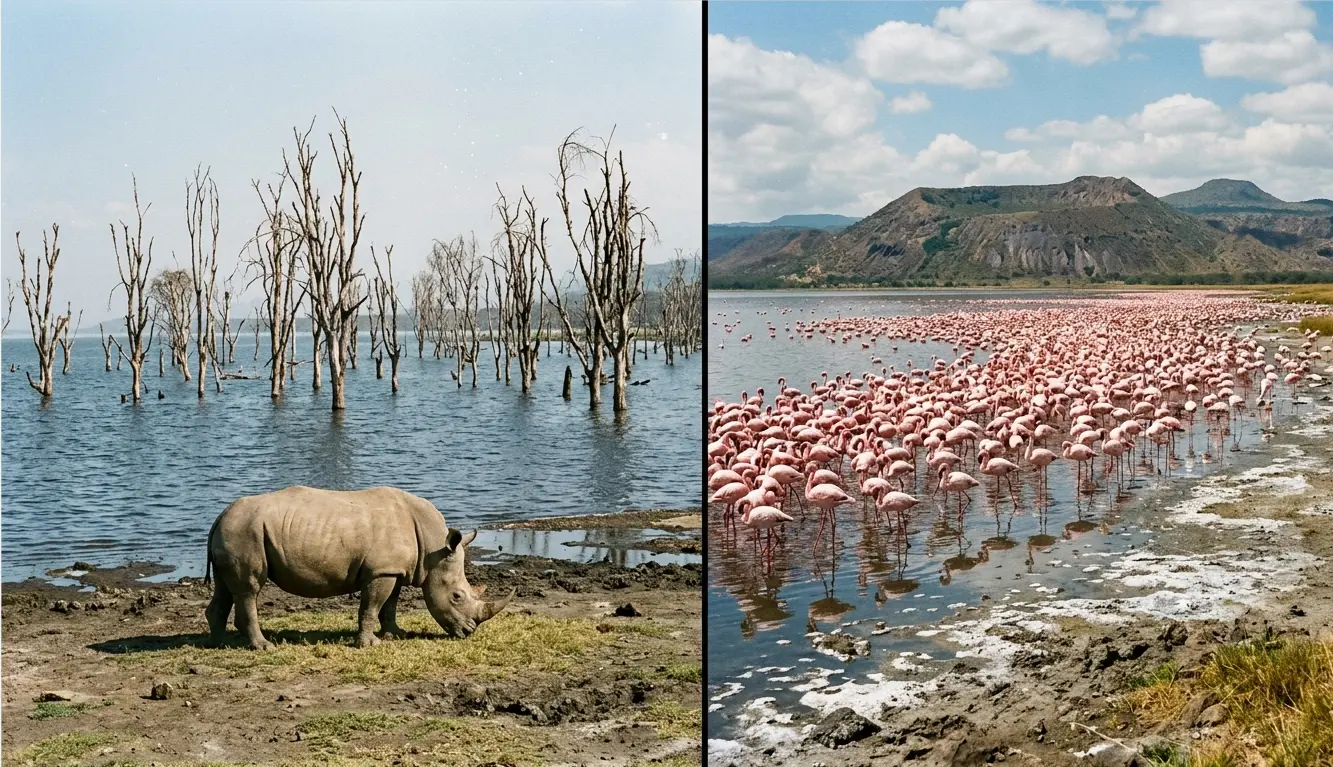
Most 2023 and 2024 travel guides are sending you to a Lake Nakuru that no longer exists. If you are looking for the famous “Pink Carpet,” you might be disappointed to find that the rising Lake Nakuru water levels have shifted the bird populations. In 2026, the “pink” has largely moved to the shores of Elementaita, while Nakuru has evolved into a specialized fortress for lions and leopards.
Choosing between Lake Nakuru or Lake Elementaita isn’t just about distance from Nairobi; it’s about a massive difference in Lake Nakuru National Park entry fees and the type of “Information Gain” you want from your safari. Whether you want to witness the rhinos in Lake Nakuru from a 4×4 or hike the “Sleeping Warrior” hills of Elementaita on foot, this ground-report guide breaks down the 2026 reality.
But that is not all; one of these lakes has a hidden “24-hour fee loophole” that could save you $90 per person—here is the operator’s secret.
Quick Navigation: Jump to your Section
The 2026 Reality Check: Why Most Guides Are Wrong About Lake Nakuru or Lake Elementaita
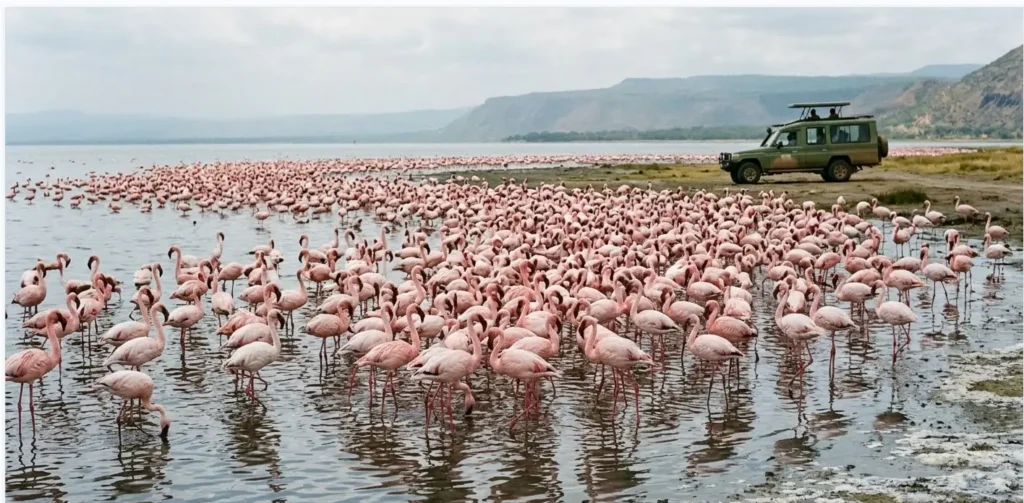
If you’ve been researching the choice between Lake Nakuru or Lake Elementaita, you’ve likely seen dozens of photos of a “Pink Lake” covered in millions of flamingos. While those images are iconic, they often reflect a reality from several years ago rather than the ground truth in 2026. Planning your safari based on these outdated reports can lead to a major disappointment once you reach the park gates.
The ecological shift in the Great Rift Valley has fundamentally changed the Lake Nakuru vs Lake Elementaita comparison. Due to historic Lake Nakuru water levels that have seen the lake expand by over 40%, the water is now significantly deeper and less alkaline. This “freshness” has diluted the spirulina algae that Lesser Flamingos depend on, causing the massive flocks to seek shallower, saltier shores elsewhere.
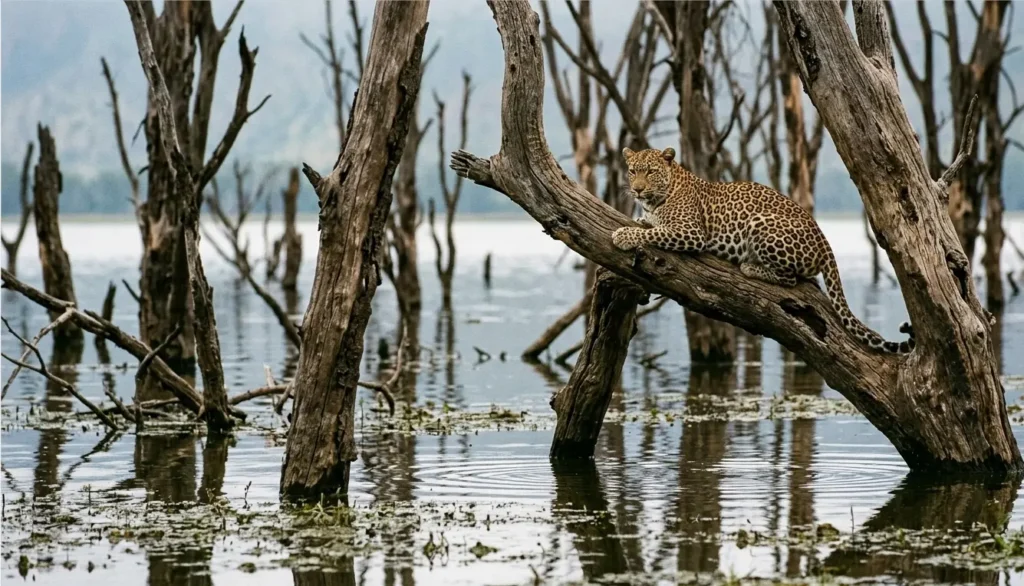
🛡️ OPERATOR INSIGHT: In 2026, Lake Nakuru has technically evolved from a “Soda Lake” into a “Hybrid Lagoon.” While the pink carpets are thinner here now, the rising water has created “Ghost Forests” of drowned acacia trees which have become the ultimate hunting ground for predators. To see how this change actually makes it easier to spot big cats, see our guide to leopards in Lake Nakuru for the specific high-ground coordinates we use.
Because the “pink” has largely moved to the shores of Elementaita, the debate of Lake Nakuru vs Lake Elementaita now boils down to a choice between high-density predator action or serene, accessible bird watching. In 2026, Elementaita has become the “Smart Money” spot for flamingo photography because its stable alkalinity has retained the birds that Nakuru lost.
The physical landscape has also forced a change in how we navigate the choice between Lake Nakuru or Lake Elementaita. Many traditional tracks in Nakuru are permanently submerged, making “old-school” maps a recipe for getting stuck. Before you head out, check our Lake Nakuru self-drive guide to learn which routes are currently mud traps and which gates offer the best access.
Now that we’ve updated your expectations for 2026, let’s dive into the Comparison Matrix to see which lake actually fits your budget and wildlife goals.
The Comparison Matrix: A “Decision Point” Overview
Choosing between Lake Nakuru or Lake Elementaita in 2026 often comes down to a trade-off between “Big Game” intensity and “Exclusive” tranquility. While Nakuru is a heavily managed National Park, Elementaita operates primarily through private conservancies like Soysambu. This fundamental difference affects everything from your Lake Nakuru National Park entry fees to whether you are allowed to step out of your vehicle for a guided walk.
To help you make an immediate call, I’ve designed this 2026 comparison table with the verified 2026 rates.
|
Feature |
Lake Nakuru National Park |
Lake Elementaita (Soysambu) |
|
2026 Adult Entry Fee |
USD 90 (Non-Resident) |
USD 50 (Non-Resident) |
|
2026 Child Entry Fee |
USD 45 (Non-Resident) |
USD 25 (Non-Resident) |
|
Citizen Rates (Adult) |
KES 1,500 |
KES 1,500 |
|
Primary Wildlife |
Rhinos, Lions, Leopards |
Flamingos, Pelicans, Giraffes |
|
Activity Level |
Strict 4×4 Game Drives |
Walking & Night Drives Allowed |
|
Crowd Density |
High (Near Main Gate) |
Very Low (Private & Exclusive) |
🛡️ OPERATOR INSIGHT: While the entry fees for Nakuru are nearly double those of Elementaita for international visitors, remember that Nakuru is a fenced rhino sanctuary. In 2026, if your goal is to see both Black and White rhinos in a single afternoon, the $90 “Premium Park” fee is a mandatory investment. However, if you are after the “Pink Lake” aesthetic for photography, Elementaita offers better value since the flamingos have largely migrated there due to rising water levels in Nakuru.
The distinction between KWS Park Fees vs. Conservancy Fees is the biggest “hidden” factor in your budget. While Nakuru’s fees are high, they grant you access to a massive infrastructure of maintained tracks and ranger-protected sanctuaries. In contrast, Lake Elementaita things to do are more centered around the shoreline and private land, offering a “rawer” feel but without the guaranteed density of a National Park.
Understanding the cost is only half the battle. Now that we’ve looked at the corrected numbers, let’s go deep into the “Rhino Fortress” to see if those higher fees in Nakuru actually pay off in sightings.
Lake Nakuru in 2026: The “Rhino Fortress” of Kenya
If your heart is set on seeing heavy-hitters, the choice between Lake Nakuru or Lake Elementaita leans heavily toward Nakuru. In 2026, Lake Nakuru National Park remains the most reliable sanctuary in East Africa for spotting both Black and White rhinos in a single afternoon. While the flamingos have thinned out, the rhino density has never been higher, making it a non-negotiable stop for a serious Big Game Safari.
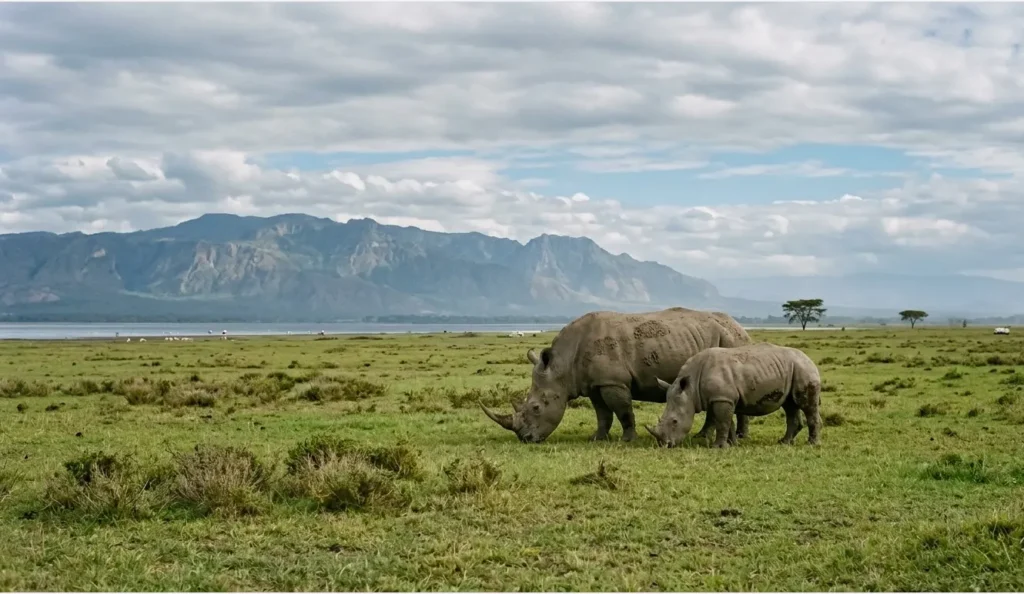
However, the “where” matters more than ever because of the submerged landscape. Most visitors waste hours at the Main Gate, only to find the northern tracks are impassable “Ghost Forests” of drowned acacia. For the best experience, ignore the crowds and head straight for the southern Naishi Plains, where the grass is shorter and the predators are easier to spot against the backdrop of the Lake Nakuru water levels.
🛡️ OPERATOR INSIGHT: To beat the “Main Gate” congestion and get to the animals faster, enter via Lanet Gate or Nderit Gate. These southern entrances place you minutes away from the Naishi rhino territories and the tree-climbing lions of Lake Nakuru, saving you a 45-minute drive through flooded northern routes. For a full breakdown of which gate fits your route, see our 2026 gate guide.
Regardless of whether you choose Lake Nakuru vs Lake Elementaita, you must understand the KWS 24-hour rule to avoid losing money. In 2026, your entry permit is valid for exactly 24 hours from the minute of payment on eCitizen. If you enter at 3:00 PM today, you can enjoy a sunset drive, an overnight stay, and a sunrise drive tomorrow—all on one ticket—provided you exit by 2:59 PM.
⚠️ 2026 ROAD ALERT: The “old” park map sold at the gate is largely obsolete; several lakeside loops are now permanent lagoons. If you are doing a Lake Nakuru self-drive, stick to the higher-ground tracks near Out of Africa lookout to avoid the mud traps that currently plague the lower shoreline.
Now that we’ve mastered the logistics of the “Rhino Fortress,” let’s look at why Lake Elementaita is the “Smart Money” move for those seeking serenity over scale.
Lake Elementaita: The “Pinker” and Cheaper Alternative?
If your primary goal for 2026 is to witness the iconic “pink carpet” of birds, the choice between Lake Nakuru and Lake Elementaita is surprisingly one-sided. While Nakuru’s name is more famous, its rising water levels have created a deep-water environment that Lesser Flamingos find difficult to navigate. In contrast, the shallower, more alkaline shores of Lake Elementaita have become the preferred sanctuary for these birds, offering far more consistent sightings.
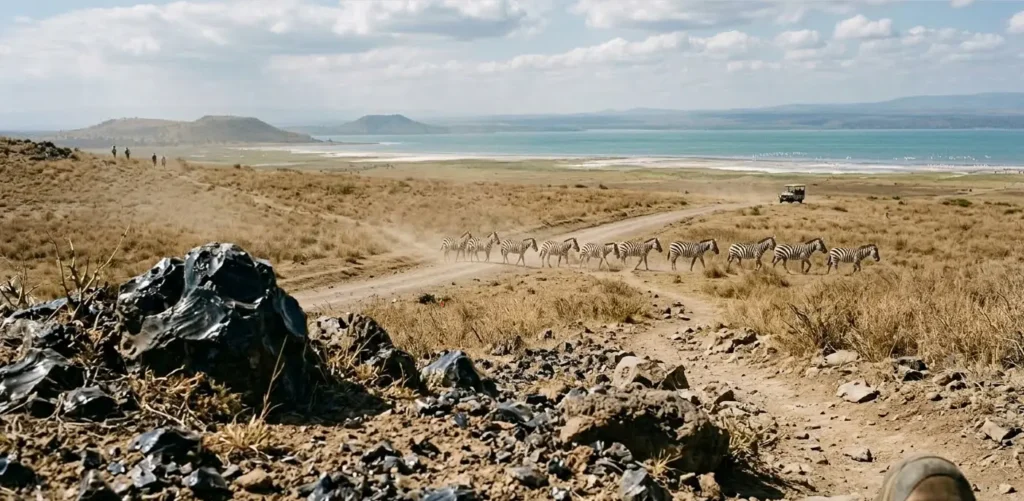
Beyond the birds, the real allure of this area lies in the Soysambu Conservancy secrets that most day-trippers overlook. Unlike the strictly vehicle-bound safaris in Nakuru, the private lands surrounding Elementaita allow for a more intimate connection with the landscape. This is the only place in the immediate region where you can safely engage in walking safaris among zebras and giraffes without the barrier of a 4×4.
🛡️ OPERATOR INSIGHT: For travelers debating Lake Nakuru vs Lake Elementaita on a budget, remember that Elementaita is a “walking lake.” You can save significantly on vehicle fuel and higher KWS fees by opting for a guided shoreline hike.
The list of things to do in Lake Elementaita 2026 extends to the dramatic “Sleeping Warrior” and “Ugali Hill” hikes, which offer the best aerial views of the Rift Valley. These trails provide a perspective of the lake system that you simply cannot get from the road-bound viewpoints in Nakuru. For photographers, the volcanic glass (obsidian) scattered along these trails creates a unique foreground that sets your shots apart from standard safari imagery.
Ultimately, the Lake Nakuru and Lake Elementaita debate ends here for the budget-conscious birder and the active traveler. While you won’t find the “Big Five” predators in the same density here as you would in the rhino fortress of Nakuru, the peace and accessibility of Elementaita are unmatched. This lake offers a “slow safari” experience that feels increasingly rare in Kenya’s more crowded parks.
Now that we’ve uncovered the serene beauty of the shoreline, let’s look at the logistical reality of getting there from the city.
Strategic Logistics: Proximity and 2026 Road Realities
When planning your journey between Lake Nakuru or Lake Elementaita, the map can be deceptive. While the Nairobi to Lake Elementaita distance is roughly 120km, and Nakuru is about 160km, your actual arrival time in 2026 depends entirely on the ongoing Rironi-Mau Summit road construction. In peak traffic, that 40km difference between the two lakes can translate into an extra two hours of transit time.
For those planning a day trip from Nairobi, Elementaita is the far more logical choice to avoid “safari fatigue.” You can realistically enjoy a 4-hour hike and a lakeside lunch while being back in the city by sunset. Conversely, a Nakuru day trip requires a 5:00 AM departure to ensure you get value for your high KWS entry fees before the midday heat settles the predators into the tall grass.
⚠️ 2026 ROAD ALERT: The Rironi-Mai Mahiu escarpment remains a bottleneck for heavy trucks, often adding 60 minutes to the Nairobi to Lake Nakuru distance without warning. To bypass the worst of the congestion, we recommend using the “Njabini-Flyover” route if you are heading to the northern gates; check our Nairobi to Nakuru transport guide to see the latest matatu fares and private vehicle hacks for this month.
If you are using public transport, the logistics of Lake Nakuru vs Lake Elementaita change significantly. Most Nakuru-bound matatus will drop you in Nakuru City, requiring a further taxi to the gate, whereas Elementaita requires a drop-off at the “Kikopey” junction. At Kikopey, the local “boda-boda” (motorcycle) operators are now strictly regulated for tourist safety, but always ensure they provide a helmet before you head toward the conservancy.

🛡️ OPERATOR INSIGHT: For travelers choosing Lake Nakuru or Lake Elementaita for a weekend getaway, the “Kikopey” stop is more than just a junction—it is Kenya’s unofficial “Nyama Choma” (roasted meat) capital. If you are self-driving, stopping here for lunch can save you up to $30 compared to lodge prices, but be sure to park in the “Yellow Zone” to avoid the 2026 municipal towing fines which have recently increased to KES 5,000.
Now that we’ve navigated the highway hurdles, let’s settle the “Spiky Opinion” on why trying to do both in a single day is the biggest mistake you can make.
The “Spiky Opinion”: Why You Shouldn’t Choose “Both” (But that is not all…)
Many tour operators will try to sell you a “Two-Lake Day Trip” to maximize their commission. My spiky opinion? Visiting both Lake Nakuru and Lake Elementaita in a single day is a classic tourist trap. In 2026, the logistical overhead of switching between KWS gates and private conservancies means you will spend four hours in a vehicle for every one hour of actual wildlife viewing.
🛡️ OPERATOR INSIGHT: If you only have 24 hours, pick one lake and commit to it. Choosing Lake Nakuru or Lake Elementaita should be based on your “Must-See” list: if it is Rhinos and the Big Four, head to Nakuru; if it is serenity, birding, and hiking, go to Elementaita. Trying to do both results in “Safari Burnout,” where you miss the best golden-hour lighting because you were stuck at a transit junction or paying separate Lake Nakuru National Park entry fees.
The real “Decision Driver” in 2026 isn’t the distance between the two—it is the depth of the experience. A rushed Nakuru vs Elementaita safari comparison often ignores that Nakuru requires a slow, tactical approach to find leopards in the high ground, while Elementaita requires time on foot to appreciate the shoreline. You cannot appreciate the tree-climbing lions of Lake Nakuru while looking at your watch to make it to a lodge in Elementaita for lunch.
But that is not all; if you are staying overnight, there is a way to bridge these two worlds without the stress of a dual-park itinerary. Some elite properties on the border of the Soysambu Conservancy offer elevated views of both lakes from their balconies, giving you the visual “fix” of both landscapes for the price of one.
With the “One-Lake” rule established, let’s address the final logistical hurdles through the most common questions our ground teams receive every week.
Frequently Asked Questions: Lake Nakuru or Lake Elementaita 2026
These are the direct answers to the most common queries we receive via our ground teams for 2026.
Which is better for flamingos in 2026? Currently, Lake Elementaita is the superior choice for flamingos. While Lake Nakuru’s rising water levels have made the lake too deep for the birds to feed comfortably, the shallower, alkaline shores of Elementaita have retained the perfect conditions for the iconic “pink carpets.”
Can I see the Big Five at Lake Elementaita? No, you cannot see the full Big Five at Lake Elementaita as it is primarily a bird and plains game sanctuary. If your goal is to spot heavy-hitters like the rhinos in Lake Nakuru or the resident lions, you must visit Nakuru National Park. However, Elementaita is unmatched for Rothschild’s giraffes and specialized bird watching.
How do I pay for Lake Elementaita fees on eCitizen? Paying for your entry is now centralized through the eCitizen portal under the KWS or Soysambu Conservancy sections. Because the system can be glitchy during peak hours, we recommend processing your payment at least 24 hours before arrival. For a detailed walkthrough of the new KWS-Pay system, see our 2026 eCitizen payment guide.
🛡️ OPERATOR INSIGHT: Many travelers get “payment-locked” at the gate because of poor network coverage in the Rift Valley. Always download or screenshot your eCitizen QR code before leaving Nairobi. If you arrive at the gate without a pre-paid code and the network is down, the KWS rangers are strictly prohibited from taking cash, which could cost you hours of safari time.
Final Verdict: Which One Should You Choose?
The decision between Lake Nakuru or Lake Elementaita in 2026 isn’t about which lake is “better”—it’s about matching the lake to your specific travel persona:
- Choose Lake Nakuru if: You are a first-time safari-goer who needs to see Rhinos, Leopards, and Lions, and you don’t mind the $90 “Premium Park” entry fee.
- Choose Lake Elementaita if: You are a photographer chasing flamingos, a budget-conscious traveler, or someone who wants to experience a walking safari away from the 4×4 crowds.
Now that you’ve secured the ground truth on the lakes, let’s make sure you aren’t overpaying for the rest of your trip—check our breakdown of Lake Nakuru safari costs to see how to budget for 2026 like a local operator.