Email:
 Phone:
 WhatsApp:

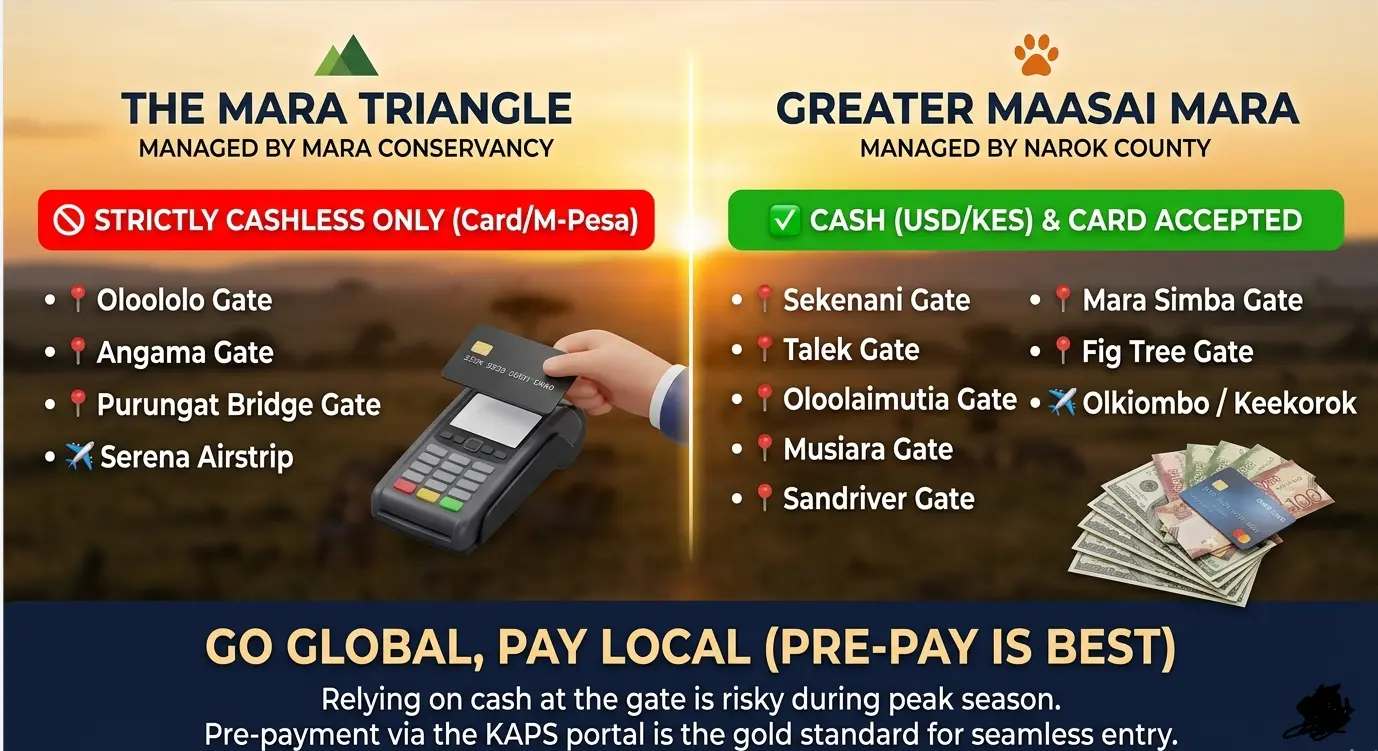
How you pay Masai Mara park fees 2026 determines whether you enter the gate or get stuck in a frustrating digital loop. Unlike other Kenyan parks, the Mara is not a KWS-managed entity, meaning the standard national eCitizen portal will not work for your entry.
To pay Masai Mara park fees, you must first identify your entry sector. For the main reserve (Narok Side), payments are made via the official Narok County KAPS portal or via USD/KES cash and Card at the gate. For the Mara Triangle, you must pay online via the Mara Conservancy KAPS portal or via M-Pesa and Card at the gate (strictly cashless). Once paid, you will receive an official E-slip or QR code for gate validation.
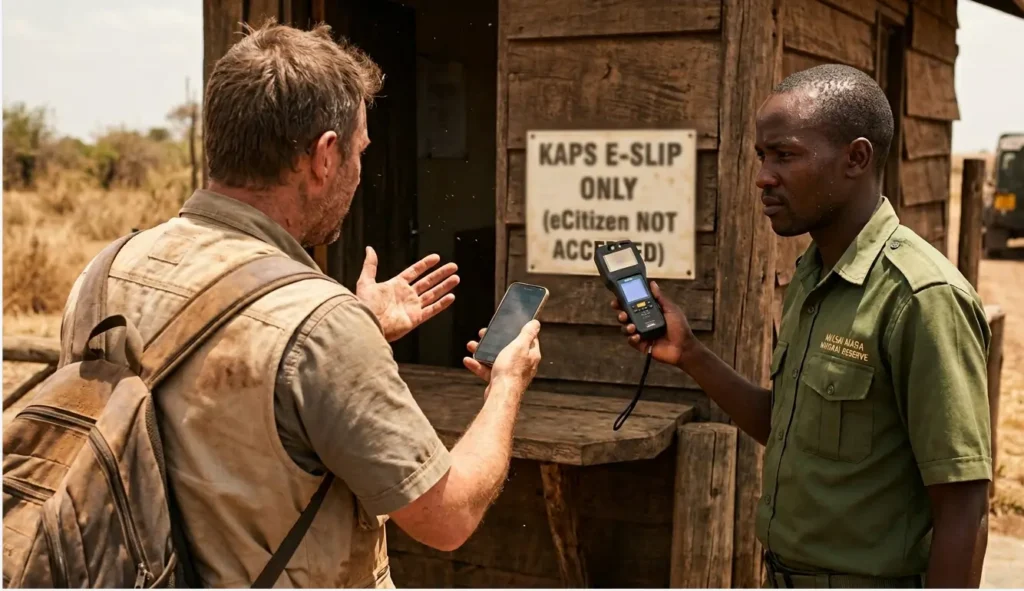
One of the most expensive mistakes I see travelers make is pre-loading funds into the KWS eCitizen portal used for parks like Lake Nakuru. Because the Mara is managed by the Narok County Government, those national receipts are invalid here; our partner, a seasoned Masai Mara guide, Sosio Kirokor, has witnessed dozens of groups at Sekenani Gate forced to pay a second time because they lacked the specific county-validated E-slip.
If you are currently on the road from Nairobi, you must understand that the “One-Gov” system is split into two distinct management zones when it comes to the Mara. Paying the wrong office is the fastest way to lose $200 per person with no hope of a refund.
Quick Navigation: Jump to your Section
The “Two-Kingdom” Reality: Narok vs. The Triangle
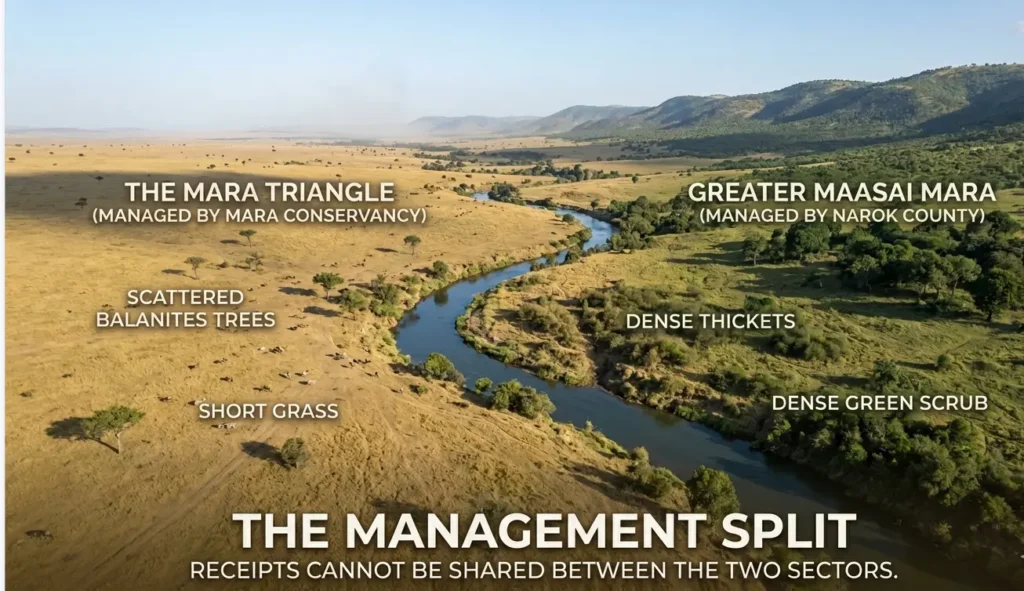
To understand how to pay Masai Mara park fees 2026, you must first identify exactly where you are staying. The Masai Mara is not a single administrative unit; it is split into two distinct management zones with completely different payment infrastructures. Paying the wrong entity is the most common way travelers lose money, as receipts from one side are strictly rejected by the other.
1. The Narok Side (Eastern & Central Mara)
The larger portion of the reserve, including popular entry points like Sekenani, Talek, Musiara, and Oloolaimutia, is managed by the Narok County Government. When planning your Masai Mara park fees, this is the sector that covers the vast majority of safari lodges and camps. Because this side serves the highest volume of traffic, the gates here offer the most diverse payment flexibility including cash in KES or USD.
2. The Mara Triangle (Western Mara)
The area west of the Mara River, accessed via Oloololo Gate or Purungat Bridge, is managed by the Mara Conservancy. This “Kingdom” operates under a strictly cashless mandate and does not use the same digital portal as the Narok side. It instead uses the KAPS Management System for online booking and payments. If you are booked into a lodge within the Triangle, ensure your driver knows to head directly to these specific gates to avoid administrative delays.
⚠️ IMPORTANT
If you are staying in the Mara Triangle but driving through Sekenani Gate on the Narok side, do not pay park fees at the Sekenani desk. Inform the rangers you are “In Transit” to the Triangle; you must only pay once you reach the Purungat Bridge or Oloololo Gate. Paying at the wrong gate means your funds go to the wrong management, and you will be forced to pay a second time to enter the Triangle.
The “Driver’s License” Rejection Rule
A critical update for 2026 is the strict enforcement of identification documents at all entry points. To secure Citizen or Resident rates, you must present an original National ID, Passport, or an official Birth Certificate for children. Rangers are no longer authorized to accept a Driver’s License as proof of citizenship; failing to provide the correct ID will result in you being charged the full Non-Resident rate of $200 during peak season.
🛡️OPERATOR INSIGHT: Our team has noted that the entry process remains remarkably efficient if you follow the “Physical Document” rule. A recent Hilmuks client experienced zero delays at the gate by simply having their physical passport ready for the ranger to verify their status. While the digital push is strong, having your hard-copy documents eliminates the risk of system timeouts or verification errors during peak hours.
Once you have identified which “Kingdom” your lodge falls under, the next step is navigating the digital hurdles that trip up most self-drive travelers.
Why Your KWS eCitizen Account Will Fail at the Mara Gates
The single most common error travelers make when researching how to pay Masai Mara park fees 2026 is assuming that the eCitizen KWS portal covers the entire country. While this system works flawlessly for paying Lake Nakuru park fees, the Masai Mara is a National Reserve, not a National Park. This means it is governed by the Narok County Government, and KWS-issued receipts are worth zero at the gate.
Falling into the eCitizen KWS trap is a costly mistake because government refunds for “wrong park” payments can take months to process, if they happen at all. If you show up at Sekenani with a receipt for Amboseli or Nakuru, the rangers will politely but firmly require you to pay again using the correct recipient details. This administrative split is the primary reason we advise travelers to double-check their booking destination before authorizing any digital transaction.
The “Reserve vs. Park” Technicality
In Kenya, National Parks are state-owned and managed by the Kenya Wildlife Service (KWS), while National Reserves like the Mara are managed by local county authorities. Because of this, the Mara does not currently appear on the standard “KWS Pay” dropdown menus. You must use the KAPS-integrated system specifically designed for Narok County to ensure your revenue is captured by the correct treasury.
If you have already pre-loaded your eCitizen wallet for a 3-day Masai Mara safari, do not attempt to use those funds for your Mara entry. Those credits stay within the KWS ecosystem. You will need a separate budget for the Mara, ideally held in KES or USD Cash, M-Pesa or on a physical card, to settle the Narok County fees upon arrival or via their specific portal.
🛡️OPERATOR INSIGHT: Despite the heavy push for digital integration via the Narok County Government, the ground reality is surprisingly human. Mr.Sosio, a Mara-based safari guide and Hilmuks ground partner with 750+ documented wildlife sightings confirms that manual processing is alive and well at the main gates. Unlike KWS parks that have moved toward an “eCitizen-only” barrier, non-residents at the Mara can still pay in cash (USD) or swipe a physical card to receive a physical receipt directly from the ranger.
Now that you know which portal to avoid, let’s walk through the exact steps for generating a valid 2026 E-slip.
Step-by-Step: Masai Mara E-Slip Generation for 2026
Generating a valid Masai Mara e-slip generation for 2026 is a straightforward process if you use the correct portal from the start. Unlike the automated systems used when paying Lake Nakuru park fees on eCitizen, the Mara’s KAPS-powered system requires you to manually input your entry gate and lodge details to calculate the correct total. Following this click-by-click workflow ensures you don’t arrive at the gate with a pending transaction or an incorrect tariff.
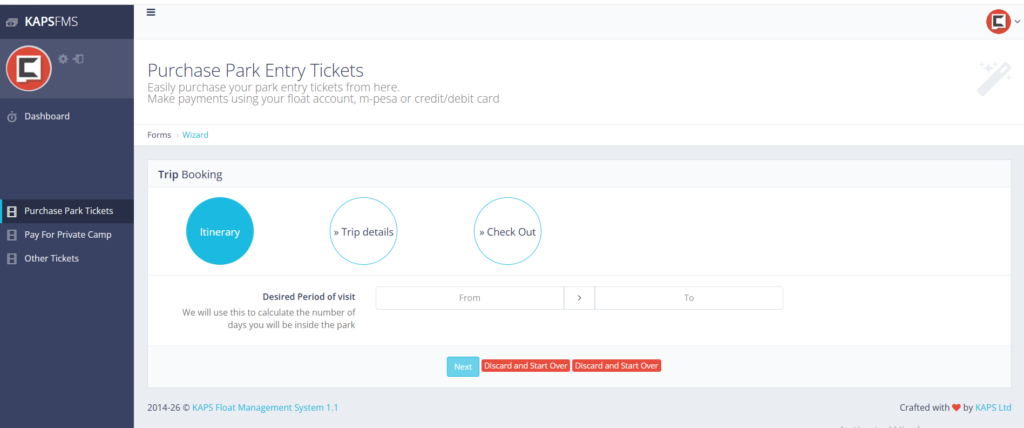
The KAPS Portal Workflow
To begin, navigate to the official KAPS booking portal. You will be required to select your category (Citizen, Resident, or Non-Resident) and specify your intended entry gate, such as Sekenani or Talek. Once you input the number of adults and children, the system will generate a total based on the current seasonal rates—ensure you have your M-Pesa or Credit Card ready to finalize the payment and download the PDF e-slip.
Validation at the Gate
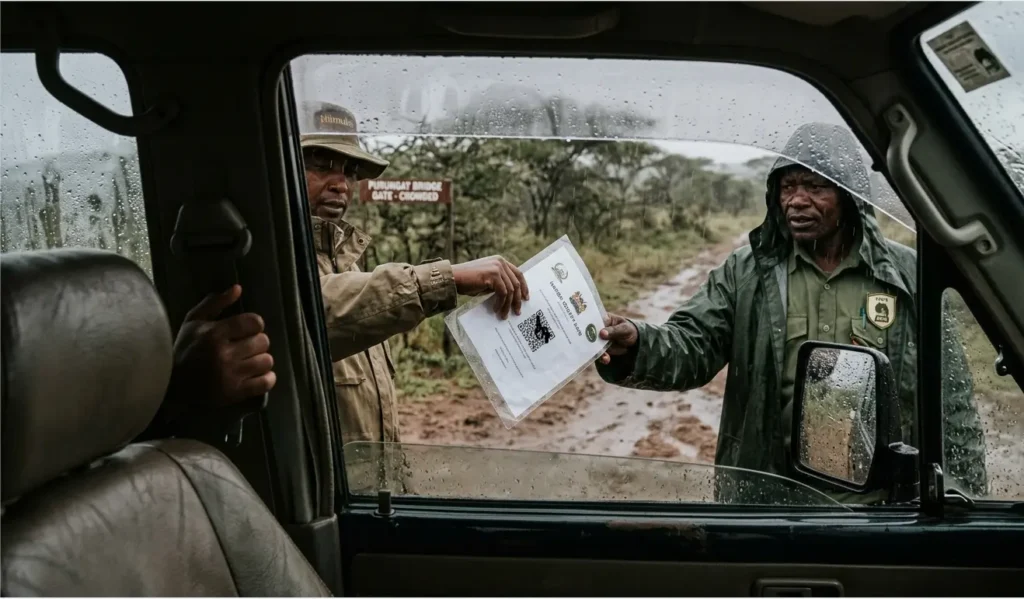
Once you have your e-slip, you must present the digital or printed copy to the rangers for scanning. For those on a safari, this e-slip is your primary entry document and must be kept safe for the duration of your stay. The rangers will verify the QR code against your physical identification to confirm that the names on the ticket match your passport or National ID.
🛡️OPERATOR INSIGHT: While the digital push is significant, do not panic if the portal times out while you are on the road. Mr.Sosio assures that at Talek and Sekenani Gate , non-residents can still pay via physical card or cash (USD) to receive a manual receipt. However, avoid paying in Kenya Shillings for fees quoted in USD at the gate. If you attempt this, you will be hit with a “Gate Rate”—an exchange rate set by the county that is significantly higher than the standard bank rates in Nairobi. To avoid losing $20–$30 on the exchange alone, always carry the exact amount in US Dollars or pay via a card that handles the conversion at your bank’s preferred rate.
Avoid the “System Offline” Delay
If you choose to pay upon arrival rather than using the Masai Mara park fees payment online portal, be prepared for a 15-minute wait during peak morning hours. Pre-generating your e-slip allows you to bypass the manual entry queue and head straight to the wildlife action. This is especially helpful if you are trying to maximize your time for Masai Mara photography during the golden hour.
Now that your digital paperwork is in order, we need to address the “Ugly Truth” about paying in person—the hidden cost of currency exchange at the gate.
At the Gate: Sekenani and Talek Gate Payment Options 2026
If you arrive at the reserve without a pre-paid e-slip, navigating the Sekenani and Talek Gate payment options 2026 is your last hurdle before the game drive begins. While many regional parks have moved to restrictive digital-only entries, Sekenani remains one of the most flexible entry points in the Mara ecosystem. Here, the infrastructure allows for a mix of traditional and mobile payments, provided you understand the specific technical requirements for each.
The Cash vs. Card Reality
Unlike the rigid eCitizen requirements seen when checking Lake Nakuru National Park entry fees, Sekenani Gate still facilitates on-site transactions for international travelers. Non-residents can pay their fees using major credit cards (Visa or Mastercard) or physical US Dollars. However, the system is sensitive to the condition of your currency; ensure any dollar bills used are crisp, un-torn, and printed after 2013 to avoid rejection by the automated verification tools.
Using M-Pesa at the Gate
For Kenyan citizens and residents, the most efficient way of how to pay Masai Mara park fees 2026 at the gate is via M-Pesa. The rangers will provide a specific paybill number or a prompt for the Narok County KAPS system to initiate the transaction. Once the payment is confirmed on your phone, a physical receipt is printed at the gate house, which serves as your official permit for the duration of your stay.
Now that your fees are settled and your receipt is in hand, you must understand the unique timing rules that could result in an unexpected double charge on your way out.
The 10:00 AM Departure Rule & 12-Hour Validity
The most critical tactical detail for 2026 is the “expiration trigger.” Unlike the 24-hour KWS rule used when paying Lake Nakuru park fees, the Mara operates on a strict 12-hour calendar day. Your payment expires at 6:00 PM on the day of entry, meaning a 3:00 PM arrival only buys you three hours of game viewing.
Managing the 10:00 AM “Checkout” Scan
For those staying inside the reserve, the system allows a “Grace Window” until exactly 10:00 AM on your departure day for the purpose of exiting. If a ranger scans your QR code during a game drive at 10:15 AM, the handheld KAPS devices will flag it as expired, forcing a full daily payment on the spot. See our Masai Mara Park Fees 12-Hour Rule Guide for a deep dive into the specific logic that prevents these $200 departure traps.

Operator Secrets: Infrastructure Risks (The “Talek Rain” Factor)
While the push for Masai Mara park fees payment online 2026 is meant to streamline entry, the ground reality at gates like Talek or Musiara often tells a different story. In the remote stretches of the Mara, digital infrastructure is at the mercy of the elements. During the rainy season, a heavy afternoon downpour can knock out local cellular towers for hours, rendering cloud-based payment portals and QR scanners completely useless just as you arrive at the gate.
The “Digital Blackout” Trap
Relying solely on a live internet connection to show your e-slip is a high-stakes gamble. If the ranger’s device cannot “talk” to the Narok County server due to a network outage, they cannot verify your payment, and you may be denied entry despite having a valid receipt in your email. We have seen travelers stranded at the Talek gate for over 30 minutes while rangers climb nearby ridges just to get enough signal to process a single transaction.
Printing QR Codes: Your 2026 Insurance Policy
To bypass these technical hurdles, the ultimate operator secret is physical redundancy. Printing QR codes 2026 before you leave Nairobi or your hotel in Narok is not just “old school”—it is a logistical necessity. A printed PDF or a high-resolution screenshot saved to your phone’s offline gallery ensures that even if the gate is in a total digital blackout, the ranger can still manually record your permit numbers and grant access.
⚠️IMPORTANT:
The Management Split is a critical trap: The Mara Triangle (Oloololo Gate) and Narok County (Sekenani/Talek) are separate entities. If you pay for your permit via the Narok portal and arrive at the Oloololo Gate, your receipt will not be accepted. The Triangle is strictly cashless and uses its own KAPS-integrated system, while the Narok side still maintains the flexibility to accept physical dollars for last-minute adjustments.
The System Reality
According to recent reports from the Narok County KAPS department, while the transition to a fully digital “GAVA” ecosystem is nearly complete, manual overrides remain a sanctioned backup for infrastructure failures. This means that if you have your documents in order—specifically your physical passport for non-resident verification—rangers have the protocol to assist you even when the screens go dark.