Email:
 Phone:
 WhatsApp:

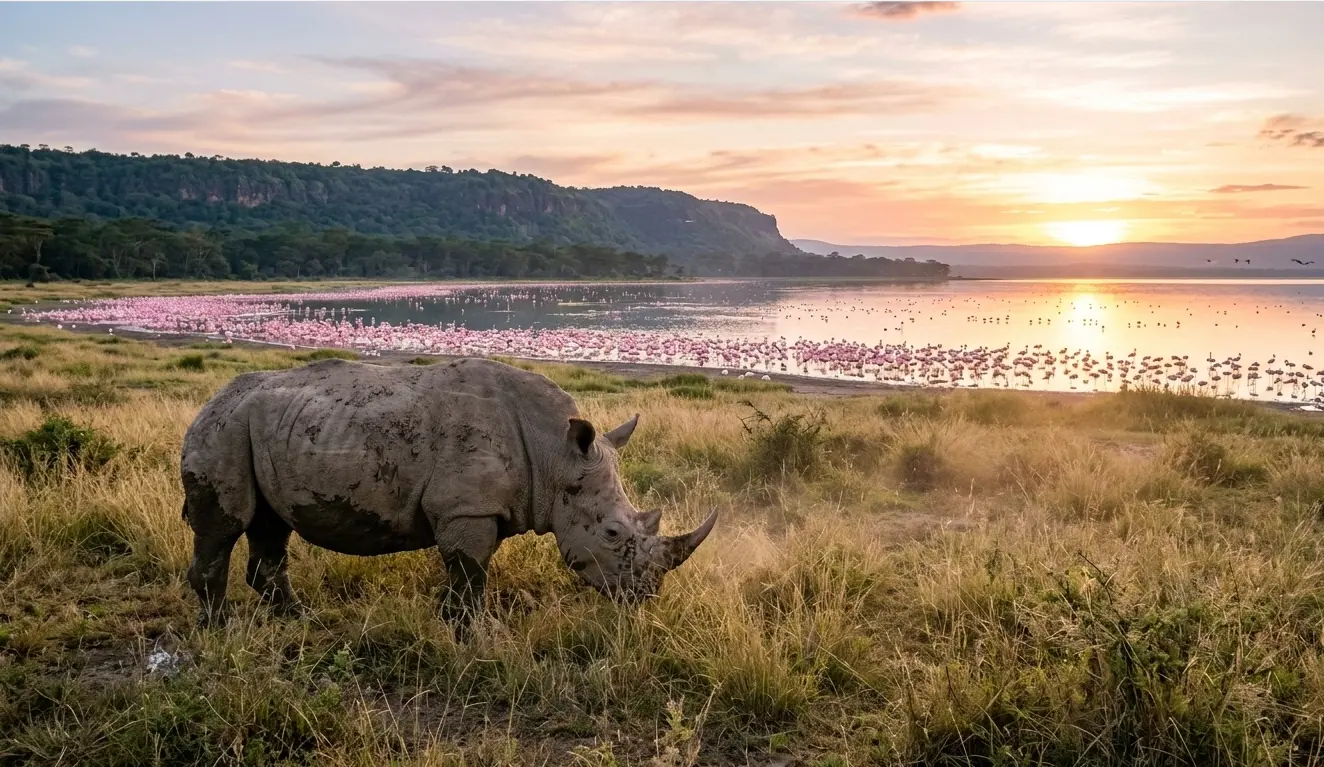
Choosing between a Lake Nakuru day trip vs overnight stay is the most critical decision for your 2026 Kenya itinerary. The direct answer is: A Lake Nakuru day trip is best for time-sensitive travelers focusing on rhinos, while an overnight stay is superior for photography enthusiasts who need the 6:00 AM predator activity and sunset “Golden Hour” sightings.
A Lake Nakuru day trip vs overnight stay is a choice between logistical efficiency and sighting quality. In 2026, a day trip is a viable four-hour “Power Safari” for spotting White Rhinos, whereas an overnight stay is essential to avoid the eight-hour Nairobi commute and access peak leopard activity.

The “Trust Bridge”: Beyond the 12-Hour Dash
If you are currently in Nairobi with only 24 hours to spare, 1-day safari is a resounding Yes. We have already mapped out the technical Nairobi to Nakuru day trip guide for those who need to execute a one day itinerary.
However, as an operator on the ground, I must ask: Is Lake Nakuru worth it if you spend more time on the highway than with the wildlife? With the 2026 lake Nakuru water levels drastically altering animal movement, the debate of a Lake Nakuru day trip vs overnight has shifted from a matter of “budget” to a matter of “behavior.”
Before you book your transport, you need to understand the “Sighting Gap”—the specific window of time when the park’s tree-climbing lions and leopards are actually visible versus when they disappear into the high-ground thickets.
Quick Navigation: Jump to your Section
The “1 PM Sighting Gap”: Why Day-Trippers Miss the Predators
The most significant “hidden cost” of a Lake Nakuru day trip vs overnight stay is what I call the 1 PM Sighting Gap. While day-trippers are usually just arriving at the gate or settling for a mid-day picnic, the park’s most elusive residents are already clocking out. In 2026, the Lake Nakuru water levels have forced a behavioral shift that makes timing more critical than ever for a successful safari.
🛡️ OPERATOR INSIGHT: The record flooding has created what rangers call “Wet-Paw Syndrome.” Because the ground is humid and the grass is often saturated, the tree-climbing lions of Lake Nakuru now spend up to 80% of their day in the canopy to escape the dampness. If you arrive after 11:00 AM, you aren’t just fighting the heat; you are looking for lions that are effectively invisible in the thick acacia shade.
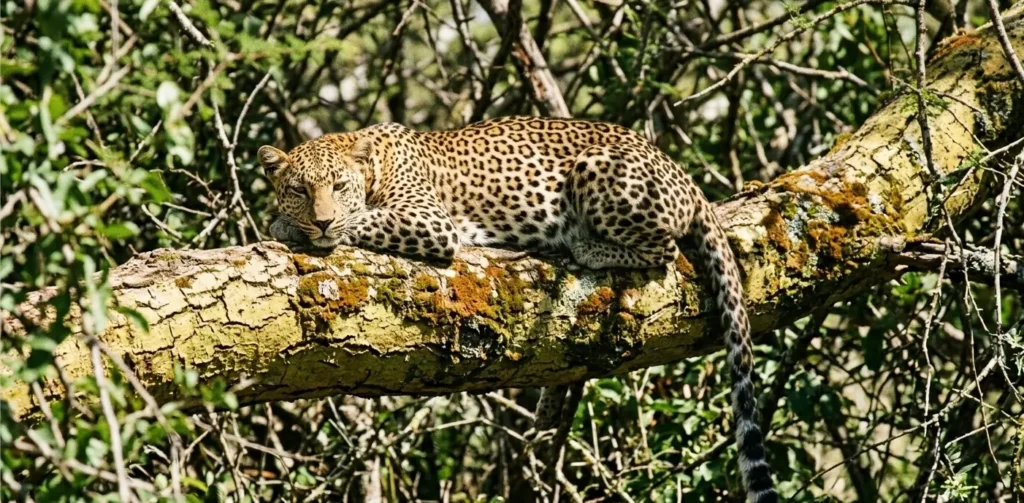
The “Predator Window” in 2026 is strictly between 6:00 AM and 8:30 AM. During this time, leopards are frequently spotted descending from the high-ground ridges near Lion Hill to hunt. Contrast this with the “Mid-Day Slump” (11:00 AM – 3:00 PM), which is exactly when the majority of Nairobi-based day tours are circulating the park.
When weighing a Lake Nakuru day trip vs overnight, you must consider the 60% sighting variance. Overnight guests can be at the Baboon Cliff viewpoint before the first day-trip van even clears the Rironi traffic. This head start is often the difference between seeing a leopard drag a kill into a bush and simply seeing a very beautiful, but empty, landscape of Makalia Falls.
💡 PRO TIP: If you are determined to do a one-day dash, skip the Main Gate entirely and use the Lanet Gate. This “Operator Shortcut” places you directly in the rhino-rich eastern sector within minutes, helping you claw back precious time lost to the Nairobi commute. To master this route, see our guide on which Lake Nakuru gate to use in 2026.
Now that we’ve exposed the predator timing gap, let’s look at the grueling reality of the 8-hour commute and whether your body can handle the “No-Rush” pace…
The 8-Hour Commute Reality Check: Is 4 Hours in the Park Enough?
The biggest logistical hurdle in the Lake Nakuru day trip vs overnight debate is the disparity between “Windshield Time” and “Wildlife Time.” On a standard 2026 day trip, you will spend approximately 6 to 8 hours inside a vehicle just to reach the gate and return to Nairobi. This leaves a narrow 4-hour window for actual game viewing, which can feel rushed for those wanting to explore the deeper southern circuits.
⚠️ 2026 ROAD ALERT: The ongoing Rironi-Mau Summit road construction has made travel times highly unpredictable, often adding 45 minutes to the return leg. To avoid losing your entire afternoon to a traffic jam, see our guide on Nairobi to Nakuru route to learn more on how to beat the city traffic using specific departure windows.
For many, a Lake Nakuru 1 day itinerary feels more like a long-distance commute than a relaxed safari. You are effectively racing against the clock to see the White Rhinos before the 6:00 PM gate closure forces you back onto the highway. If your goal is a peaceful connection with nature, the “one-day dash” might leave you more fatigued than inspired.
🛡️ OPERATOR INSIGHT: KWS rangers are increasingly strict about the 6:00 PM exit rule in 2026, and late exits can result in an immediate 5,000 KES fine per vehicle. To ensure you aren’t rushing your sightings, we recommend entering through the Lanet Gate by 9:00 AM at the latest. This gives you a solid block of time to navigate the self-drive route hacks without the stress of a looming deadline.
Ultimately, a Lake Nakuru 1 day itinerary can satisfy a “Big Five” enthusiast if you focus strictly on the core wildlife zones near the lake’s eastern shore. However, if you prefer to wait for the perfect leopard shot or enjoy a slow lunch at a viewpoint, the clock becomes your biggest enemy.
Now that we’ve calculated the road toll, let’s look at the actual sighting success rates and what you gain (or lose) by staying the night…
Sighting Success: What You Gain (and Lose) by Staying the Night
When analyzing the Lake Nakuru day trip vs overnight trade-off, the most significant “loss” for day-trippers is the loss of the Golden Hour. By 5:30 PM, the Rift Valley sun hits the Baboon Cliff at a low angle, illuminating the Rothschild’s Giraffes in a way that mid-day light simply cannot match. Most one-day visitors have already exited the park by this time to avoid the dangerous evening fog on the Nairobi-Nakuru highway.
🛡️ OPERATOR INSIGHT: The 2026 “Birding Shift” is a reality you won’t find on generic travel sites. Because the lake water has become fresher due to high rainfall, the flamingos have become nomadic, often moving between the northern and southern shores based on algae blooms. If you are asking how many days in Lake Nakuru are needed for birding, an overnight stay is now mandatory to allow enough time to track these shifting colonies across the expanded shoreline.
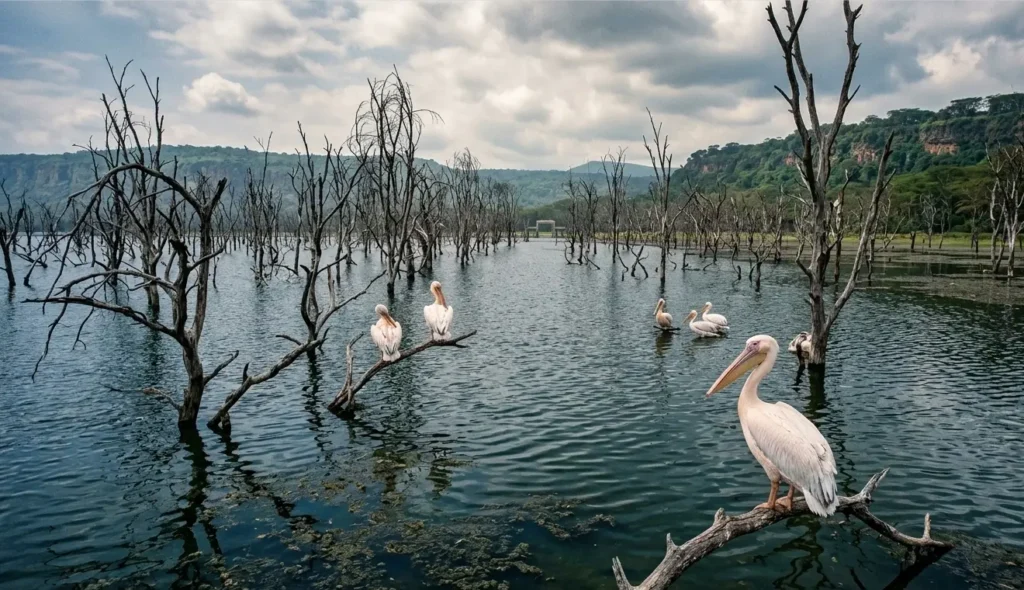
Staying overnight essentially doubles your “high-value” sighting loops. You gain access to the 6:30 AM dawn patrol, which is the only time leopards in Lake Nakuru are reliably seen patrolling the high-ground tracks. For a photographer, this second loop is often the difference between a blurry long-distance shot and a professional-grade encounter.
The Decision Matrix: Quality vs. Quantity
To help you decide how many days in Lake Nakuru fits your goals, consider this: an overnight stay effectively “guarantees” your rhino sightings. While a day trip offers a high probability, the guaranteed rhino sightings usually happen in the southern “Mud-Circuit,” an area that is often too time-consuming for those on a tight one-day schedule.
If you choose to stay the night, prioritize the lodges located on the higher ridges. These locations offer a tactical advantage, allowing you to scan the lake with binoculars before breakfast to see where the herds are congregating.
To secure these sightings, positioning is everything. Our 2026 best safari lodge Lake Nakuru verdict identifies the specific ridge-line properties that remain high above the new flood levels. Choosing one of these tactical bases ensures you are already inside the predator’s hunting radius before the first day-trip van clears the gate.
Now that we’ve looked at the sighting advantages of a longer stay, let’s get down to the numbers and see if the extra cost actually pays off in your pocket…
Financial Breakdown: Does a Day Trip Actually Save You Money?
When evaluating if a Lake Nakuru day trip vs overnight stay is better for your wallet, most travelers only look at the lodge invoice. However, a single-day dash carries “hidden” logistical costs, including high-speed fuel consumption and the intense wear-and-tear of a 320km round trip. In 2026, with fluctuating fuel prices and the Nairobi to Nakuru transport costs increasing, the “cheap” day trip often loses its edge.
🛡️ OPERATOR INSIGHT: Many visitors don’t realize that Lake Nakuru KWS entry permits are valid for 24 hours. If you enter the park at 2:00 PM on Day 1 and stay overnight, you can perform a second “dawn patrol” game drive the next morning without paying a second entry fee. This hack effectively slashes your “per-hour” safari cost in half compared to a rushed 4-hour day visit.
The “Value Play” here is about maximizing your Lake Nakuru park fees. A day-tripper pays the full non-resident rate (currently $90) for just a few hours of viewing. Meanwhile, an overnight guest amortizes that same fee over two high-activity periods—the evening sunset and the predator-rich sunrise.

The Verdict: Time vs. Money
So, is Lake Nakuru worth it as a budget day trip? If you are a solo traveler using public transport to reach Nakuru town, the savings are real but the exhaustion is high. For families or groups hiring a private van, the cost of the vehicle and driver remains the same whether you stay 6 hours or 24 hours, making the overnight stay the superior financial choice in 2026.
💡 PRO TIP: To avoid being overcharged or stuck at the gate, remember that all payments must now go through the eCitizen portal. We have created a step-by-step eCitizen payment guide to help you navigate the 2026 KWS billing system before you arrive.
Now that we’ve balanced the books, let’s look at the final logistical hurdles like gate selection and road hacks to ensure your journey is seamless…
The “Where” Secrets: Choosing the Right Gate for Your Timeline
Your choice of entrance is the “make or break” factor in the Lake Nakuru day trip vs overnight debate. For 2026, the park’s topography has changed, and using the wrong gate can cost a day-tripper up to 90 minutes of viewing time due to internal road washouts. While the Main Gate is the most famous, it is currently the least efficient for those on a tight schedule.
🛡️ OPERATOR INSIGHT: Day-trippers should almost exclusively use the Lanet Gate. Located off the main Nairobi-Nakuru highway, this “short-cut” bypasses the heavy Nakuru town traffic and drops you immediately into the eastern acacia woodlands—the primary habitat for White Rhinos and Rothschild’s giraffes. To master this entry point, see our guide on which Lake Nakuru gate to use to see the 2026 transit times.
Conversely, if you are opting for an overnight stay, the Main Gate near Nakuru town becomes more viable. Staying at a lodge inside the park allows you the luxury of navigating the slower, more scenic northern tracks without the pressure of an early exit. This distinction is vital because the central crossing road between the west and east shores is currently submerged.
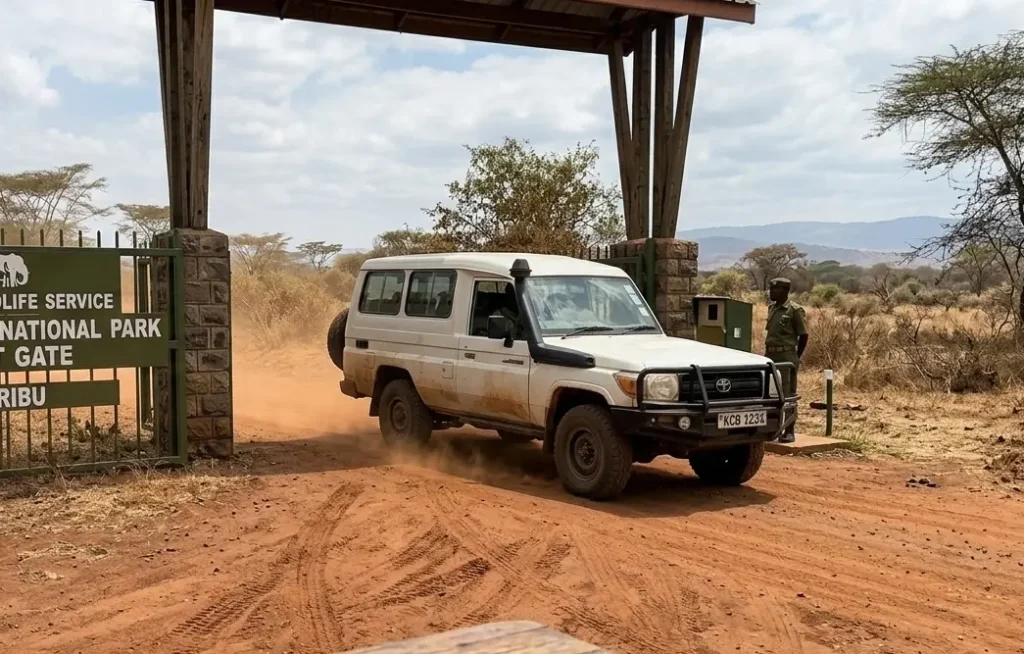
⚠️ 2026 ROAD ALERT: Parts of the “Old Lake Circuit” are now completely underwater and strictly off-limits to small vehicles. If your Lake Nakuru day trip vs overnight choice involves a 2WD vehicle, you will be restricted to the upper ridge roads, significantly limiting your “Big Four” sightings. Check our survival guide for car hire to ensure your vehicle is rated for the 2026 “Mud-Circuit” conditions.
Because of the high Lake Nakuru water levels, the park has effectively split into two zones. The Lanet side is for efficiency and rhinos; the Main Gate side is for leisure and baboon cliff views. Choosing your gate correctly ensures that your limited time is spent watching wildlife rather than winching a van out of a swamp.
With the logistical secrets of the gates secured, let’s move to the final verdict on exactly how many days you need to truly conquer this park…
How Many Days Do You Really Need?
Deciding how many days in Lake Nakuru to book ultimately depends on your tolerance for road fatigue versus your desire for a “National Geographic” moment. While a day trip is a functional way to tick off the park, it often misses the soulful quiet of the Rift Valley. If you are a casual traveler, one day is enough; if you are a wildlife enthusiast, you will regret not staying for two.
🛡️OPERATOR INSIGHT: For 2026, the “sweet spot” is 2 days and 1 night. This allows you to enter through the Lanet Gate on day one for a rhino-focused game drive, stay at a lodge to catch the sunrise leopard hunt, and exit by noon on day two. This strategy maximizes your 24-hour KWS permit and ensures you aren’t driving the dangerous escarpment road back to Nairobi in the dark.
To help you finalize your Lake Nakuru day trip vs overnight choice, use this operator’s decision tree:
- The Solo Backpacker: A day trip via public transport is viable but exhausting. See our guide on Nairobi to Nakuru transport to learn more on how to beat the city traffic using matatus.
- The Big Five Photographer: Overnight is mandatory. You need the 6:00 AM window for the leopards of Lake Nakuru to get clear shots before the heat haze sets in.
- The Family Group: Overnight is highly recommended. The 8-hour round trip from Nairobi is often too much for children, and staying at one of the Lake Nakuru lodges provides a much-needed “safari reset.” Travelers staying overnight can further justify the transit by exploring the other fun things to do in Nakuru located just outside the park. Adding these urban and volcanic landmarks to your morning creates a balanced 24-hour circuit that outlasts the mid-day heat.
Strategic depth is the only way to counter the “Windshield-to-Wildlife” imbalance that plagues standard regional tours. Executing a 2-day Lake Nakuru safari itinerary transforms your transit time into a tactical advantage by leveraging the 24-hour permit for back-to-back predator windows. This approach removes the guesswork from the 2026 landscape, ensuring you are positioned at the basalt ridges before the leopard activity peaks at dawn.
The Final Answer for 2026
If you are still asking how many days in Lake Nakuru are optimal, the answer is 24 hours. This timeframe allows you to experience the park’s two distinct personalities: the mid-day heat where the rhinos congregate at the water, and the cool dawn where the predators rule the trees. It turns a “drive-through” experience into a legitimate Kenyan safari.
💡 PRO TIP: Don’t let the weather ruin your decision at the last minute. Because the park’s “Black Cotton” soil turns into a literal glue during the rains, check the best time to visit Lake Nakuru for 2026 seasonal updates before you finalize your booking.
Now that we’ve settled the “Should I stay or should I go” debate, it’s time to double-check your gear and ensure you aren’t bringing the wrong lenses for the new 2026 flooded landscape…
Equipment Checklist: Capturing the “New” Lake Nakuru
If you are relying on Lake Nakuru photography tips from a 2022 travel blog, you are likely planning for a park that no longer exists. The dramatic 2026 water expansion has fundamentally changed the “distance-to-subject” ratio. While a 400mm lens was once the gold standard for the Rift Valley, the increased shoreline distances in 2026 make this focal length feel like a wide-angle lens, forcing heavy crops that destroy the detail in a leopard’s coat.
🛡️ OPERATOR INSIGHT: In 2026, the 600mm vs 400mm debate is over; you absolutely need the extra reach or a high-quality 1.4x teleconverter. Because the lake levels have pushed the wildlife back from traditional tracks, a 600mm equivalent is now the minimum requirement to capture a frame-filling shot of a rhino without risking a “harassment” fine for off-roading. To protect this heavy glass, see our Lake Nakuru safari packing list for the specific support gear we recommend.
The most striking visual change is the “Dead Forest”—thousands of submerged acacia trees bleached white by alkaline water. These skeletal structures provide a haunting, high-contrast background, but they also create a massive amount of horizontal glare. A Circular Polarizer (CPL) filter is no longer optional; it is essential to cut through this mirror-effect and see “through” the water to spot submerged hippos.

⚠️ 2026 SENSOR ALERT: The Rironi road construction on the way from Nairobi has made the dust environment more aggressive than usual. If you arrive at the gate with a contaminated sensor, every shot of the “New Nakuru” shoreline will be marred by dark “dust bunnies.” We strictly advise against changing lenses anywhere along the A104 highway or inside the park; instead, use a two-camera body setup to handle both landscape and wildlife shots.
Now that your gear is optimized for the flooded landscape, let’s ensure you have the right digital permits to actually get past the gate without a two-hour delay…
The Digital Permit “Time-Tax”
Whether you choose a Lake Nakuru day trip vs overnight stay, your biggest enemy isn’t the distance—it’s the gate. In 2026, KWS operates a strictly cashless eCitizen system. For day-trippers, a 30-minute delay at the gate isn’t just an inconvenience; it’s 25% of your total game-viewing time gone.
🛡️ OPERATOR INSIGHT: Don’t rely on the gate’s Wi-Fi to generate your invoice. We’ve seen the “GavaPay” system stall during peak 2026 weekend hours, leading to a 2-hour “Digital Deadlock.” To protect your “Predator Window,” you must pay your Lake Nakuru park fees on eCitizen and have a printed or offline screenshot of your QR code before leaving Nairobi.
The 24-Hour “Single Entry” Rule: Your permit is a “Single Entry” pass. If you are staying overnight at a lodge outside the park, you cannot leave for dinner in town and return without paying the full fee again. Plan to stay inside the gates until your final exit to avoid this “Double-Tax” mistake.
Final Verdict: Is a Lake Nakuru Day Trip Worth It in 2026?
The ultimate answer to the Lake Nakuru day trip vs overnight debate depends on your “Safari ROI” (Return on Investment). If your goal is to check a world-class rhino sanctuary off your bucket list with precision, a day trip is a tactical win. However, if you want to experience the park’s true wild soul—the mist rising off the lake and the territorial calls of leopards at dawn—you must stay the night.
🛡️ OPERATOR INSIGHT: If you are still undecided, look at your watch. If you can’t be at the Lanet Gate by 9:00 AM, the “Sighting Gap” will work against you. In that case, we strongly recommend shifting to an overnight itinerary to ensure you aren’t just paying for a very expensive lunch in a van.
Your 2026 Safari Execution Checklist
To ensure your choice results in a #1 experience, follow these final operator steps:
- For Day Trippers: Use the Nairobi to Nakuru transport guide to pick your departure window and avoid the Rironi traffic traps.
- For Overnight Guests: Select your base from our complete guide to Lake Nakuru lodges to secure a “high-ground” advantage.
- For Everyone: Ensure your eCitizen park fees are settled 24 hours in advance to avoid the “Gate Deadlock.”
Lake Nakuru remains one of Kenya’s most dynamic ecosystems. Whether you dash in for a few hours or linger for a few days, the sight of a White Rhino grazing against the backdrop of a “Pink-and-Blue” shoreline is a memory that defines the Kenyan safari experience.
Frequently Asked Questions: Lake Nakuru Day Trip vs Overnight
Is a Lake Nakuru day trip from Nairobi too exhausting?
A Lake Nakuru day trip involves approximately 6 to 8 hours of total driving time. While it is a long day, it is the most efficient way to see White Rhinos if you have limited time in Kenya. To minimize exhaustion, we recommend departing Nairobi by 5:30 AM to beat the Rironi traffic and ensure you have at least 4 to 5 hours of high-quality game viewing.
How much are the Lake Nakuru park fees in 2026?
As of 2026, Lake Nakuru National Park fees are tiered. For non-residents, the fee is $90 per adult. Kenyan citizens pay approximately Ksh 2,025, while residents pay Ksh 1,500. All payments must be made via the eCitizen portal before arrival at the gate, as KWS no longer accepts cash or direct credit card payments at the entrance.
Can you see the Big Five on a Lake Nakuru 1 day itinerary?
You can see four of the “Big Five” (Rhino, Lion, Leopard, and Buffalo) in Lake Nakuru. However, there are no elephants in the park due to its size and fenced perimeter. For a day-tripper, seeing a rhino and buffalo is almost guaranteed, but spotting a leopard or lion usually requires the early morning entry that only an overnight stay provides.
What is the best time of year to see flamingos in 2026?
The best time to see flamingos is during the dry seasons (June–September and January–February). During these months, lower water levels increase the salinity and algae concentration, which attracts the birds. However, due to the 2026 flooded landscape, flamingo populations have become nomadic; an overnight stay gives you more time to track their current location along the expanded shoreline.
Which gate is best for a Lake Nakuru day trip?
For a day trip, the Lanet Gate is the superior choice. It is located directly off the Nairobi-Nakuru highway, allowing you to skip the heavy traffic of Nakuru town. Entering through Lanet puts you immediately in the prime rhino and giraffe habitats, saving you nearly 60 minutes of transit time compared to the Main Gate.
Do I need a 4×4 for a Lake Nakuru safari in 2026?
While some ridge roads are accessible by 2WD, a 4×4 vehicle is highly recommended for 2026. The increased water levels have made the lower “lake-level” circuits muddy and prone to washouts. To reach the best rhino sighting spots near the southern shore without getting stuck, a 4×4 with high ground clearance is essential.